
Navigating the complexities of business litigation often begins with a single, formal interaction: the receipt of a complaint summons. For business owners, executives, and financial stakeholders, understanding the legal weight of this document is not merely a matter of legal compliance—it is a critical component of risk management and corporate financial health. When a lawsuit is initiated, the summons serves as the formal gateway into the judicial process, carrying significant implications for a company’s balance sheet, reputation, and operational continuity.
The Legal Anatomy of a Complaint Summons
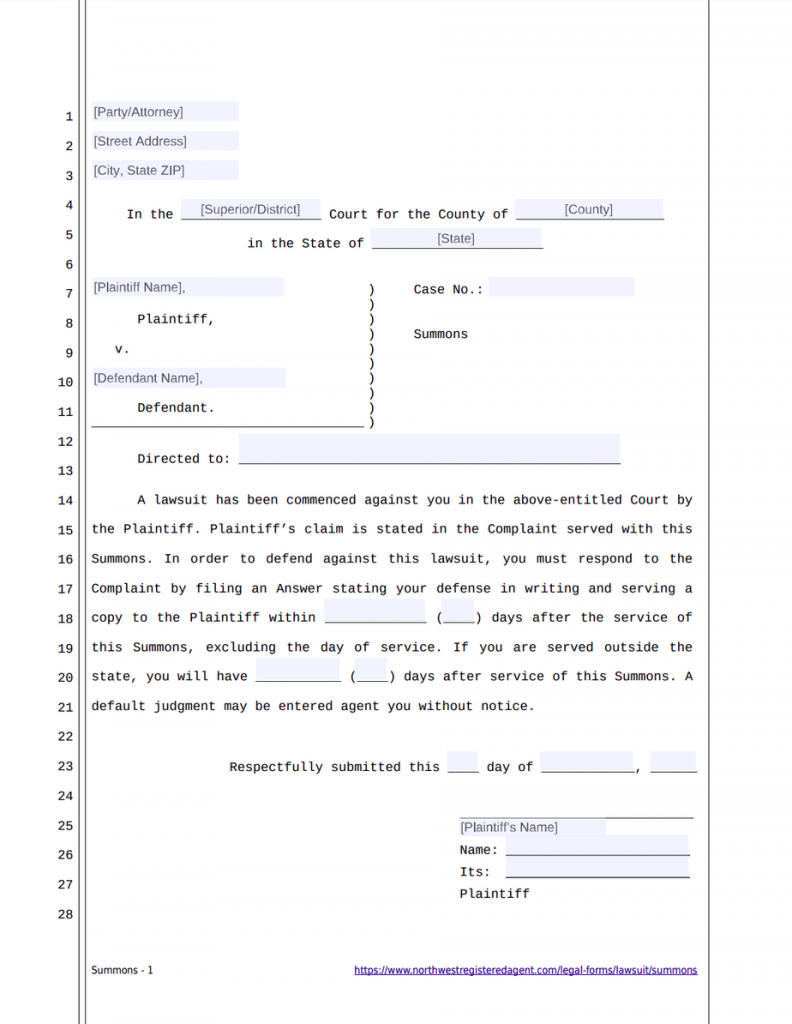
At its core, a complaint summons is a dual-purpose legal instrument. It functions as both a notification and a command. In the realm of business finance and litigation, it is the primary vehicle through which a plaintiff formally serves a defendant notice that a legal action has been filed against them.

Defining the Complaint
The “complaint” portion of the document is the narrative segment of the filing. It details the grievances the plaintiff has against the defendant. From a financial perspective, this is where the stakes are set. It outlines the specific allegations—such as breach of contract, failure to deliver services, or intellectual property disputes—and, crucially, specifies the damages or remedies the plaintiff is seeking. This section provides the basis for an initial financial impact assessment, allowing the defendant’s legal and accounting teams to estimate potential liabilities.
Defining the Summons
The “summons” is the procedural mandate issued by the court. It instructs the defendant that they are officially being sued and mandates a formal response within a specific timeframe—typically 20 to 30 days, depending on the jurisdiction. Failure to respond to the summons within this window often results in a default judgment, which can lead to court-ordered financial levies, asset seizures, or bank account freezes. Understanding this deadline is the most immediate financial priority when a company is served.
Financial Risks and the Cost of Litigation
When a complaint summons lands on a corporate desk, it represents a significant disruption to financial stability. The cost of litigation is rarely limited to the amount claimed in the lawsuit; it encompasses a complex web of direct and indirect expenses that can severely impact the bottom line.
Direct Costs: Legal Fees and Retainers
The moment a summons is acknowledged, the meter begins running. The immediate need for counsel necessitates hiring attorneys, often requiring substantial upfront retainers. For small to mid-sized businesses, these legal fees can quickly spiral, potentially draining cash reserves intended for growth or operational investment. It is essential to treat legal expenses as a variable line item in the budget that requires strict monitoring as the case progresses through the discovery and trial phases.
Indirect Costs: Operational Disruption and Opportunity Loss
Beyond legal fees, the time expenditure required by leadership and key staff to gather evidence, sit for depositions, and consult with counsel creates a significant “opportunity cost.” When top-tier management is focused on defending a lawsuit, they are not focused on revenue generation, market expansion, or product innovation. This diversion of human capital often results in suppressed quarterly earnings, a reality that investors and shareholders must eventually navigate.
Reputational Damage and Market Valuation
In the digital age, legal filings are often public records. A high-profile complaint summons can trigger negative sentiment among stakeholders, suppliers, and clients. For publicly traded companies, such news can lead to increased volatility in share prices. The perceived risk associated with a lawsuit can also hinder access to credit or increase the cost of insurance premiums, creating a long-term financial drag that persists long after the court case concludes.
Strategic Financial Response to a Summons
Receiving a summons does not mean the battle is lost. A proactive, financially grounded strategy can mitigate the damage and, in many cases, lead to an early or favorable resolution.
Immediate Triage and Documentation
Upon receipt of the complaint summons, the first step is to preserve all relevant financial and operational data. Document retention policies should be activated immediately to ensure that no digital or physical records—which might be crucial for the defense—are inadvertently destroyed. This includes correspondence, contracts, and ledger entries related to the dispute.
Assessing the Settlement vs. Trial Balance
One of the most critical financial decisions involves analyzing the viability of a settlement versus the risks of proceeding to trial. This requires a cost-benefit analysis conducted in tandem with legal counsel.
- The “Nuisance” Valuation: Sometimes, the cost of litigating a meritless claim exceeds the cost of a nuisance settlement. Making the tactical decision to pay a smaller amount to avoid the protracted costs of a trial is a common, if distasteful, financial strategy.
- The “Principle” Risk: Conversely, settling too early can set a precedent that invites future frivolous litigation. Companies must weigh the short-term financial savings of a settlement against the long-term risk of appearing vulnerable.
Leveraging Insurance Coverage
Many businesses carry General Liability or Directors and Officers (D&O) insurance that may cover the costs of defense or even potential payouts. Reviewing these policies immediately upon receiving a summons is vital. Failure to notify an insurer within the window specified by the policy can lead to a denial of coverage, which would be a catastrophic financial oversight.
Mitigating Future Liability and Financial Vulnerability
While a complaint summons is a reactive event, the lessons learned from the process should be used to fortify the business against future legal-financial risks.
Contractual Safeguards
Many lawsuits arise from ambiguities in contracts. Reviewing standard terms and conditions to include robust limitation-of-liability clauses, arbitration agreements, and clear dispute resolution protocols can drastically reduce the potential for expensive litigation. Arbitrations are often faster and more cost-effective than jury trials, providing a more predictable financial outcome.
Compliance and Audit Culture
Financial transparency and rigorous internal auditing are the best defenses against the allegations typically found in complaints. By maintaining meticulous financial records, a company can easily disprove claims of fraud or negligence. When a company operates with high standards of corporate governance, it is better positioned to defend against, or even avoid, the circumstances that lead to a formal complaint.
Emergency Reserves for Litigation
Just as a business maintains an emergency fund for operational shortfalls, sophisticated organizations should consider allocating a contingency fund specifically for legal defense. Having liquidity earmarked for unforeseen legal challenges ensures that the company can secure high-quality legal representation without jeopardizing its core business operations or disrupting its cash flow cycles.

Navigating the Legal-Financial Intersection
The complaint summons is an inevitable reality in the life cycle of many growing businesses. While it is an intimidating document, it should be viewed as a signal to transition into a defensive financial posture. By treating the summons with the same rigor as an audit or a tax assessment, business leaders can manage the situation as a business problem rather than an existential crisis.
The intersection of legal action and corporate finance requires a steady hand and a clear-eyed assessment of risk. By focusing on document integrity, early settlement analysis, insurance utilization, and long-term contractual refinement, firms can navigate the judicial process while protecting the capital and the reputation they have worked so hard to build. Ultimately, the objective is to resolve the matter with the least possible disruption to the bottom line, ensuring that the company emerges from the litigation with its assets and future prospects intact.
aViewFromTheCave is a participant in the Amazon Services LLC Associates Program, an affiliate advertising program designed to provide a means for sites to earn advertising fees by advertising and linking to Amazon.com. Amazon, the Amazon logo, AmazonSupply, and the AmazonSupply logo are trademarks of Amazon.com, Inc. or its affiliates. As an Amazon Associate we earn affiliate commissions from qualifying purchases.