
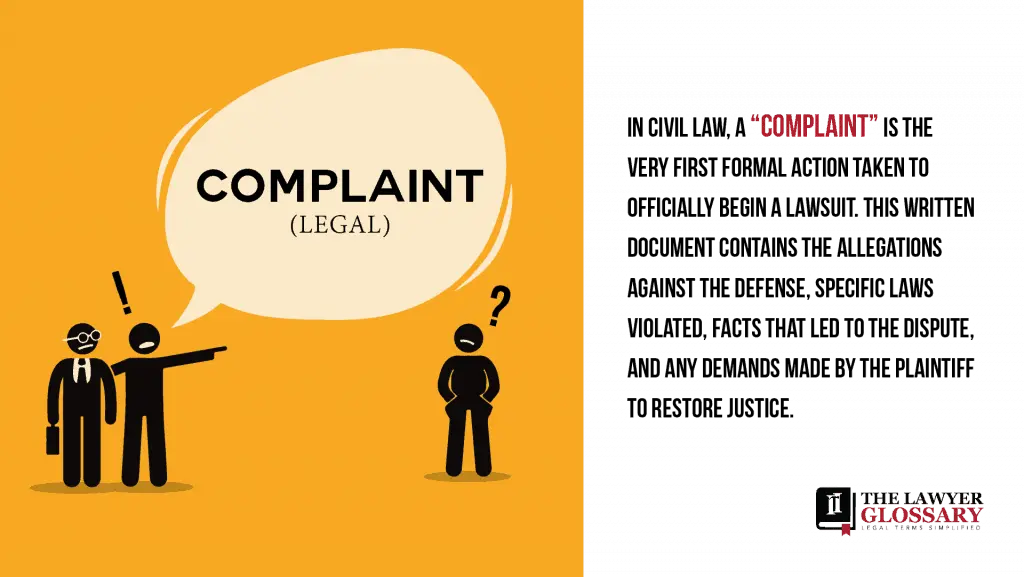
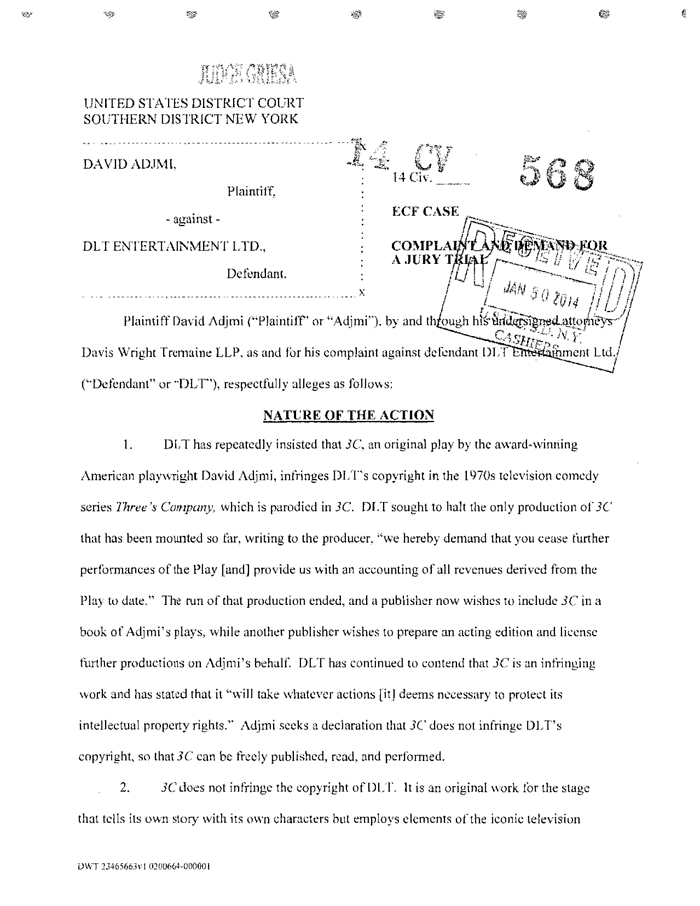
At its core, a complaint in law serves as the bedrock of nearly every civil lawsuit, a formal document that initiates legal proceedings. While seemingly a dry, procedural legal term, its real-world ramifications are profoundly financial, affecting individuals’ personal finances and businesses’ bottom lines in significant ways. For anyone engaged in commerce, investing, or managing their personal wealth, understanding what a legal complaint entails is not merely an academic exercise; it is crucial for financial risk management, strategic planning, and safeguarding assets.
A legal complaint isn’t just a grievance; it’s a formal articulation of alleged wrongdoing, presented by a plaintiff (the party bringing the suit) against a defendant (the party being sued), seeking a specific remedy from a court. And in the vast majority of cases, that remedy—whether direct or indirect—has a monetary value. From disputes over unpaid debts and breached contracts to allegations of financial fraud and regulatory non-compliance, the legal complaint is the primary vehicle through which financial wrongs are addressed and restitution or damages are sought. This article delves into the essence of a legal complaint, examining its constituent parts and, more importantly, exploring its pervasive financial and business implications within the “Money” niche.
The Core Elements of a Legal Complaint and Their Financial Basis
To appreciate the financial weight of a legal complaint, it’s essential to dissect its fundamental components. Each element, though rooted in legal procedure, inevitably points back to an economic impact or dispute.
Initiating a Legal Action with Financial Stakes
A legal complaint is the first formal step in a civil lawsuit. It signals the plaintiff’s intent to seek judicial intervention to resolve a dispute. Critically, these disputes very often originate from financial disagreements. For instance, a vendor might file a complaint for non-payment of goods, an investor for losses due to alleged misrepresentation, or a former business partner for a breach of a profit-sharing agreement. The act of filing itself immediately creates a financial burden, both in terms of court filing fees and, more significantly, the inevitable attorney fees that begin to accrue. The decision to file is a calculated financial one, weighing the potential recovery against the costs of litigation.
Identifying the Parties and the Financial Claim
A complaint clearly identifies the plaintiff(s) and defendant(s). The plaintiff must establish “standing,” meaning they have suffered a direct financial injury or are directly impacted by the defendant’s actions. The core of the complaint is the “prayer for relief,” where the plaintiff explicitly states what they want the court to do. This relief almost always includes monetary damages, which can be compensatory (to cover actual losses), punitive (to punish egregious behavior), or statutory (prescribed by law). Beyond direct money, relief might involve specific performance of a contract (e.g., forcing a party to complete a sale, which has a financial equivalent), or the recovery of specific assets, all of which represent clear financial value.
The “Cause of Action” and Its Economic Roots
Every complaint must articulate one or more “causes of action”—the legal grounds or theories under which the plaintiff believes they are entitled to relief. These causes of action are frequently underpinned by economic harm. For example:
-
Breach of Contract: A common cause of action in business. If one party fails to uphold their end of a contract, leading to financial losses for the other, a complaint will be filed seeking compensation for those losses.
-
Negligence: While sometimes associated with physical injury, professional negligence (e.g., by a financial advisor or accountant) can lead to significant financial harm, forming the basis of a complaint.
-
Fraud: This cause of action directly involves intentional misrepresentation leading to financial detriment, such as investment fraud or embezzlement.
-
Unjust Enrichment: A claim that one party has unfairly benefited at another’s financial expense, requiring restitution.
Understanding these economic roots of legal causes of action is paramount for businesses and individuals alike, as it helps in identifying potential liabilities and understanding the financial risks inherent in various transactions and relationships.
Types of Legal Complaints with Significant Financial Impact
Legal complaints manifest in diverse forms, but many share a common thread: their profound financial implications. Recognizing these types helps in anticipating and mitigating financial risks.
Contractual Disputes and Business Finance
Breach of contract complaints are perhaps the most common legal actions impacting business finance. These arise when one party fails to fulfill the terms of an agreement, leading to financial damages for the other. Examples include:
-
Vendor non-performance: A supplier fails to deliver goods, causing production delays and lost revenue.
-
Service agreement violations: A consultant doesn’t provide agreed-upon services, leading to a waste of upfront payments and potential downstream costs.
-
Partnership disputes: Disagreements over profit sharing, responsibilities, or asset division within a business partnership can lead to financially devastating legal battles.
These complaints directly affect a company’s cash flow, profitability, and operational stability. The costs associated with litigation, potential settlement payments, and the disruption to business operations can be substantial.
Debt Collection and Personal/Business Finance
Legal complaints are a primary tool for debt recovery. When individuals or businesses fail to repay loans, credit card balances, mortgages, or other financial obligations, creditors often file complaints to legally enforce collection. This can lead to:
-
Wage garnishment: A court order allowing a portion of a debtor’s wages to be withheld for payment.
-
Bank account levies: Seizure of funds directly from a debtor’s bank account.
-
Property liens: Placing a legal claim against a debtor’s property, making it difficult to sell or refinance until the debt is paid.
For debtors, such complaints can lead to significant financial distress, impacting their credit score, potentially forcing bankruptcy, and long-term financial hardship. For creditors, filing complaints is part of managing accounts receivable and protecting their financial assets, though it comes with its own collection costs.

Financial Fraud and Investor Protection
Complaints alleging financial fraud are particularly impactful, aiming to recover money lost due to deceptive practices. These can include:
-
Investment fraud: Misleading investors about the nature or risks of an investment, Ponzi schemes, or unauthorized trading.
-
Embezzlement: Theft or misappropriation of funds entrusted to an individual, often within a corporate setting.
-
Misrepresentation: False statements made to induce someone into a financial transaction, causing loss.
Such complaints not only seek the restitution of lost funds but often include demands for punitive damages to deter future fraudulent behavior. For victims, these complaints are crucial for financial recovery, while for alleged perpetrators, they can lead to severe financial penalties and criminal charges.
Regulatory Non-Compliance and Business Penalties
Government agencies or regulatory bodies can file complaints against businesses for non-compliance with laws and regulations. These often pertain to financial regulations, environmental standards, consumer protection, or labor laws. The financial implications are immediate and severe:
-
Fines and penalties: Significant monetary sanctions imposed by regulatory bodies.
-
Disgorgement of profits: Forcing a company to give up profits obtained through illegal activities.
-
Cease and desist orders: Stopping a business from engaging in certain practices, potentially impacting revenue streams.
-
Reputational damage: The financial cost of a damaged reputation can be immense, affecting customer trust, investor confidence, and ultimately, sales and market value.
These types of complaints underscore the critical link between legal compliance and financial health, emphasizing the need for robust internal controls and due diligence.
The Financial Costs and Risks Associated with Legal Complaints
Engaging with a legal complaint, whether as a plaintiff or a defendant, is rarely a financially neutral event. The costs can be direct, indirect, and long-lasting, influencing personal wealth and corporate profitability.
Direct Financial Costs of Litigation
The most apparent costs are the direct expenses of pursuing or defending a lawsuit:
-
Attorney fees: Often the largest expense, these can quickly accumulate, whether charged hourly, as a flat fee, or on a contingency basis (a percentage of the award).
-
Court costs and filing fees: Mandatory fees required by the judicial system.
-
Discovery expenses: Costs associated with gathering evidence, including document production, depositions (witness interviews under oath), and e-discovery (reviewing electronic data).
-
Expert witness fees: In complex financial or technical cases, expert testimony is crucial, and these professionals charge significant fees.
-
Settlement payments or judgments: If the case settles or goes to trial and a judgment is issued, the losing party typically pays a substantial monetary award. These payments directly impact cash flow and financial reserves.
Indirect Financial Costs and Opportunity Loss
Beyond direct expenses, legal complaints can incur substantial indirect costs:
-
Diversion of resources: Business owners, executives, and employees must dedicate significant time and attention to the lawsuit, diverting resources from core business activities, innovation, and growth.
-
Impact on business operations: Legal disputes can disrupt supply chains, delay projects, or even halt operations, leading to lost revenue and increased operational costs.
-
Damage to reputation and brand: Negative publicity from a lawsuit can erode customer trust, deter new clients, and harm investor confidence, impacting sales, stock prices, and access to capital. This “brand damage” has a quantifiable financial cost.
-
Increased insurance premiums: A history of litigation can lead to higher premiums for liability insurance or make it difficult to secure coverage.
-
Opportunity cost: The capital and personnel resources tied up in litigation could otherwise be invested in expansion, product development, or other value-generating activities.
Impact on Personal Finance and Credit
For individuals, a legal complaint can have devastating effects on personal finance:
-
Financial strain: Legal fees alone can quickly deplete savings.
-
Credit score damage: Judgments, liens, and bankruptcies resulting from legal complaints significantly harm credit scores, making it difficult to obtain loans, mortgages, or even employment.
-
Asset seizure: In some cases, personal assets (e.g., homes, vehicles, bank accounts) can be seized to satisfy a judgment.
-
Emotional and psychological toll: While not directly financial, the stress and anxiety of litigation can impact productivity and decision-making, indirectly affecting earning potential.
Mitigating Financial Risk: Preventing and Managing Legal Complaints
Given the significant financial ramifications, proactive prevention and strategic management of legal complaints are paramount for both individuals and businesses.
Proactive Legal and Financial Due Diligence
The best defense against costly litigation is often prevention. This involves:
-
Clear and comprehensive contracts: Ensuring all agreements, whether personal loans, investment contracts, or business partnerships, are well-drafted, unambiguous, and legally sound. This minimizes potential misunderstandings that can escalate into disputes.
-
Robust financial policies and controls: Implementing strong internal accounting controls, regular audits, and clear financial governance to prevent fraud, mismanagement, and errors that could lead to complaints.
-
Compliance checks: Regularly reviewing and updating adherence to all relevant laws and regulations (financial, environmental, labor, consumer protection) to avoid regulatory complaints and associated penalties.
-
Thorough due diligence: Before entering into significant financial transactions, partnerships, or investments, conducting comprehensive background checks and financial analyses to identify potential red flags and mitigate risks.
Early Dispute Resolution and Negotiation
If a dispute arises, resolving it early can save significant financial resources:
-
Mediation and arbitration: These alternative dispute resolution (ADR) methods are typically less expensive, faster, and more private than traditional litigation. They allow parties to reach mutually agreeable settlements with the help of a neutral third party, avoiding costly court battles.
-
Direct negotiation: Often, the cheapest and quickest resolution comes from direct, good-faith negotiations between the parties before a formal complaint is even filed.
-
Structured settlements: For ongoing financial obligations, structured settlements can provide a predictable payment schedule that is manageable for the defendant and acceptable to the plaintiff.
Financial Planning for Legal Contingencies
Even with the best preventative measures, legal complaints can arise. Preparing financially is crucial:
-
Legal expense insurance: Some policies offer coverage for legal fees, similar to how health insurance covers medical costs.
-
Establish a legal reserve fund: Businesses, especially, should set aside funds specifically for potential litigation expenses, treating it as a legitimate financial risk.
-
Review and understand insurance policies: Ensure adequate liability insurance coverage (e.g., general liability, professional liability/E&O, Directors & Officers/D&O insurance) that can cover legal defense costs and potential judgments. Understanding policy limits and exclusions is vital.
-
Seek early legal counsel: Consulting with an attorney at the first sign of a potential dispute can help formulate a strategy that minimizes financial exposure, even if it means settling early.
Conclusion
A “complaint in law” is far more than a mere legal formality; it is a critical juncture with profound financial implications for individuals and businesses operating within the “Money” sphere. From the direct costs of litigation and potential judgments to the indirect impacts on reputation, operational efficiency, and creditworthiness, the financial shadow cast by a legal complaint is undeniable. Understanding its components, the types of financially-rooted complaints, and the associated risks is not just good practice—it’s essential for sound financial management. By embracing proactive legal and financial due diligence, exploring early dispute resolution mechanisms, and implementing robust financial planning for contingencies, individuals and businesses can better protect their financial well-being and navigate the complex legal landscape with greater resilience.
aViewFromTheCave is a participant in the Amazon Services LLC Associates Program, an affiliate advertising program designed to provide a means for sites to earn advertising fees by advertising and linking to Amazon.com. Amazon, the Amazon logo, AmazonSupply, and the AmazonSupply logo are trademarks of Amazon.com, Inc. or its affiliates. As an Amazon Associate we earn affiliate commissions from qualifying purchases.