
The world of finance, from personal budgeting to complex investment strategies, is fundamentally built upon numbers. While whole numbers provide a basic understanding, it is the mastery of fractions that unlocks a deeper, more nuanced comprehension of financial health, opportunities, and risks. A “common fraction” might sound like a simple concept from elementary school arithmetic, but its implications in managing money are vast and often underestimated. For anyone seeking to build wealth, make informed financial decisions, or simply understand their bank statement, a solid grasp of what a common fraction represents and how it functions is not just helpful—it’s essential.

The Foundational Role of Fractions in Financial Literacy
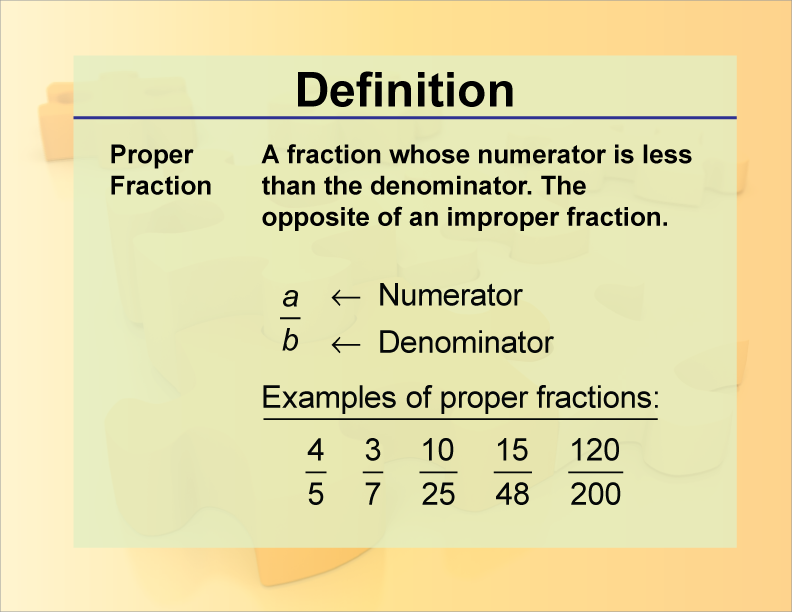
At its core, a common fraction represents a part of a whole. It’s typically expressed as one integer (the numerator) over another integer (the denominator), separated by a line (e.g., 1/2, 3/4, 5/8). The denominator tells us how many equal parts the whole has been divided into, and the numerator tells us how many of those parts we are considering. This simple construct is the bedrock for understanding proportions, ratios, percentages, and rates—all critical components of financial analysis.
Defining the Common Fraction
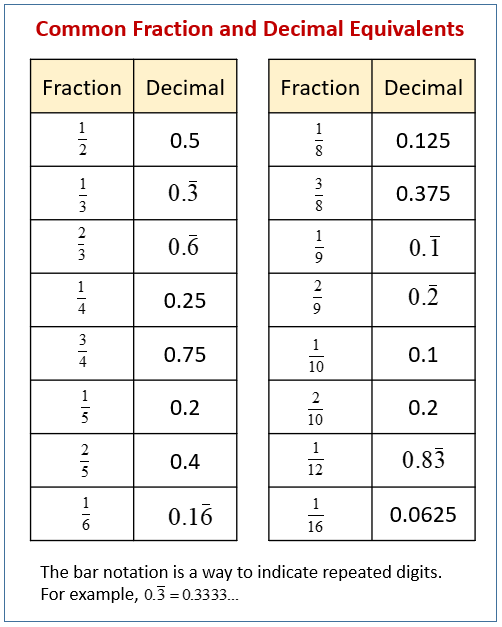
In practical terms, a common fraction provides a precise way to describe a portion without resorting to decimals, though decimals are merely another representation of fractions (e.g., 1/2 is 0.5, 3/4 is 0.75). The common fraction form often simplifies mental calculations and can offer clearer insight into the underlying relationship between parts and a whole. For instance, knowing you spent 1/3 of your income on housing feels more direct than saying 33.33% if you are thinking in terms of dividing your income into equal parts.
Beyond Simple Division: Representing Parts of a Whole
The power of fractions extends beyond mere division; they communicate relationships. When we discuss a stock split, a profit share, a budget allocation, or an interest rate, we are inherently dealing with fractional concepts. These concepts allow us to compare quantities, evaluate performance, and distribute assets equitably. Without understanding how different parts relate to a total, making sound financial judgments becomes significantly more challenging.
Why This Mathematical Basis Matters for Your Wallet
A robust understanding of fractions empowers individuals to:
-
Accurately interpret financial statements: From expense ratios in mutual funds to debt-to-equity ratios in company reports.
-
Optimize personal budgets: Allocating specific fractions of income to different categories like savings, housing, and discretionary spending.
-
Evaluate investment opportunities: Understanding returns as a fraction of initial investment, or a stock’s earnings per share.
-
Negotiate better deals: Recognizing the true value of discounts and offers.
-
Understand loan and interest structures: Deconstructing annual percentage rates (APRs) and repayment schedules.
Fractions in Everyday Personal Finance
Personal finance is replete with situations where fractions are indispensable. From the moment you receive your paycheck to planning for retirement, fractional thinking guides your decisions.
Budgeting and Expense Allocation
One of the most practical applications of fractions in personal finance is budgeting. Many financial advisors suggest allocating your income using simple fractional rules, such as the 50/30/20 rule (50% for needs, 30% for wants, 20% for savings and debt repayment). These percentages are, at their core, common fractions: 1/2, 3/10, and 1/5, respectively. Understanding these as fractions can help you visualize how your money is divided and where adjustments might be made to achieve financial goals. For example, if you realize 1/4 of your income goes to transportation, you might explore options to reduce that fraction.
Discounts, Sales, and Percentages
Shopping often involves discounts expressed as percentages (e.g., “25% off,” “buy one, get one 50% off”). Recognizing that 25% is equivalent to 1/4, or 50% is 1/2, simplifies mental calculations and helps you quickly grasp the actual savings. A “half-price sale” is immediately understood as paying 1/2 of the original amount. This direct translation from percentage to common fraction provides clarity and speed in assessing value.
Understanding Interest Rates and Loan Terms
Interest rates for savings accounts, loans, and mortgages are typically quoted as percentages per annum (e.g., 5% APR). This 5% can be seen as a fraction, 5/100, which is the fraction of the principal that will be charged or earned as interest over a year. Understanding how this fraction compounds over time is crucial for both borrowers and lenders. When you pay off a loan, a certain fraction of your payment goes towards interest, and another fraction reduces the principal.
Investment Portfolios and Asset Allocation
Diversifying an investment portfolio means allocating different fractions of your total investment capital to various asset classes (stocks, bonds, real estate, commodities) or different industries. For example, an investor might decide to put 1/2 of their portfolio in equities, 1/4 in bonds, and 1/4 in real estate. Within equities, they might further divide it, with 1/3 in large-cap stocks, 1/3 in mid-cap, and 1/3 in small-cap. These fractional allocations are strategic decisions aimed at balancing risk and return.
Business Finance and Fractional Understanding
Beyond personal finances, fractions are indispensable in the corporate and entrepreneurial world, from analyzing financial statements to structuring deals.
Profit Sharing and Equity Distribution
In partnerships or startups, ownership stakes and profit distributions are often defined by fractions. A founding team might agree to split equity 1/3, 1/3, 1/3, or an employee profit-sharing scheme might allocate a certain fraction of annual profits to eligible staff. These fractional agreements dictate financial rights and responsibilities.
Stock Splits and Share Ownership
Publicly traded companies sometimes execute stock splits to make their shares more accessible to investors. A “2-for-1” stock split means that for every one share an investor owned, they now own two. The price per share, however, is theoretically cut in half (multiplied by 1/2). While the total value of the investment remains the same immediately after the split, understanding the fractional change in share count and individual share price is vital.
Analyzing Financial Ratios
Business health is frequently assessed using financial ratios, which are essentially common fractions comparing two related financial figures.
-
Debt-to-Equity Ratio: (Total Debt / Shareholder Equity) – indicates how much debt a company uses to finance its assets relative to the value of shareholders’ equity. A high fraction suggests higher risk.
-
Current Ratio: (Current Assets / Current Liabilities) – measures a company’s ability to pay off its short-term obligations with its short-term assets. A fraction greater than 1 typically indicates good short-term liquidity.
-
Price-to-Earnings (P/E) Ratio: (Share Price / Earnings Per Share) – compares a company’s current share price to its per-share earnings, offering insight into market valuation.
Each of these ratios is a common fraction, providing critical insights into a company’s financial performance, efficiency, and solvency.
Revenue Segmentation and Cost Allocation
Businesses often break down their revenue by product line, geographic region, or customer segment, expressing each as a fraction of total revenue. Similarly, costs are allocated across different departments or projects using fractional methods to understand profitability centers and areas for cost reduction. This fractional segmentation provides a granular view necessary for strategic decision-making.
Advanced Financial Concepts Rooted in Fractions
Even in complex financial instruments and strategies, the underlying principles often trace back to the simple concept of a common fraction.
Understanding Derivatives and Options
Derivatives, such as options and futures, derive their value from an underlying asset. Options contracts often represent the right to buy or sell a “fraction” (often 100 shares) of a stock at a specified price. The probabilities of an option expiring in-the-money or out-of-the-money are also often thought of in fractional terms, influencing pricing models.
Real Estate Investment Trusts (REITs) and Fractional Ownership
REITs allow investors to own a fraction of a portfolio of income-generating real estate. Instead of buying an entire building, individuals can buy shares (fractions) of a REIT, thereby gaining exposure to large-scale real estate investments and their proportional rental income, without the complexity of direct property management. Similarly, fractional ownership models are emerging for luxury assets like private jets or vacation homes, dividing the cost and usage among multiple parties.
Cryptocurrency and Microtransactions
The world of cryptocurrency also heavily relies on fractions. Most cryptocurrencies are divisible into very small units (e.g., Bitcoin can be divided into 100 million “satoshis”). This allows for microtransactions and precise investment amounts, where you can buy a fraction of a Bitcoin or Ethereum token. Understanding these fractional units is key to tracking values and executing trades in the digital asset space.
The Power of Compound Interest as a Series of Fractions
Compound interest, often hailed as the “eighth wonder of the world,” is the process of earning interest on both the initial principal and the accumulated interest from previous periods. Each period, a fraction of the principal (the interest rate) is added, and then in the next period, that new total becomes the principal for calculating the next fraction of interest. This continuous fractional addition leads to exponential growth, making a clear understanding of interest rates (as fractions) and compounding periods essential for long-term wealth building.
Leveraging Fractional Knowledge for Smarter Financial Decisions
Mastering common fractions transcends academic exercises; it translates directly into tangible financial benefits. By viewing financial scenarios through a fractional lens, individuals and businesses can make more informed, strategic, and ultimately more profitable decisions.
Improving Budgeting Accuracy
Instead of vague estimates, defining budget categories as specific fractions of your income allows for precise allocation and easier tracking. This clarity helps identify overspending in certain areas and reallocate funds to savings or debt repayment more effectively.
Evaluating Investment Opportunities
From comparing the earnings yield of a stock (Earnings Per Share / Price Per Share, which is the inverse of the P/E ratio) to understanding the dividend payout ratio, fractional analysis provides critical metrics for assessing an investment’s potential and risk profile. It helps you dissect how much return you’re getting for the amount you’re putting in.
Negotiating Deals and Understanding Offers
Whether it’s a discount on a purchase, a raise in salary, or the terms of a loan, understanding the fractional components empowers you to negotiate from a position of knowledge. You can quickly quantify the impact of a “1/8th of a point” difference in an interest rate or a “1/10th” increase in your profit share.
Building a Stronger Financial Foundation
Ultimately, a strong grasp of common fractions equips you with a fundamental tool for lifelong financial literacy. It fosters a quantitative mindset necessary for managing personal wealth, understanding market dynamics, and making strategic choices that lead to financial security and growth. Far from being a relic of grade-school math, the common fraction remains an active, powerful force in navigating the complexities of the modern financial landscape.
aViewFromTheCave is a participant in the Amazon Services LLC Associates Program, an affiliate advertising program designed to provide a means for sites to earn advertising fees by advertising and linking to Amazon.com. Amazon, the Amazon logo, AmazonSupply, and the AmazonSupply logo are trademarks of Amazon.com, Inc. or its affiliates. As an Amazon Associate we earn affiliate commissions from qualifying purchases.