
In the current digital landscape, the phrase “the cloud” has transitioned from a buzzword to the foundational bedrock of global technology. But when we strip away the marketing jargon, what is a cloud platform? At its core, a cloud platform refers to the integrated suite of hardware and software services delivered over the internet that allow businesses and developers to build, run, and manage applications without the complexity of maintaining physical servers or data center infrastructure.
The evolution from traditional on-premise computing—where companies owned stacks of physical hardware—to cloud-based ecosystems has redefined the speed of innovation. Today, a cloud platform is not just a storage space; it is a sophisticated environment offering everything from raw processing power and database management to advanced artificial intelligence (AI) and machine learning (ML) capabilities.
The Core Architecture: Understanding Service Models
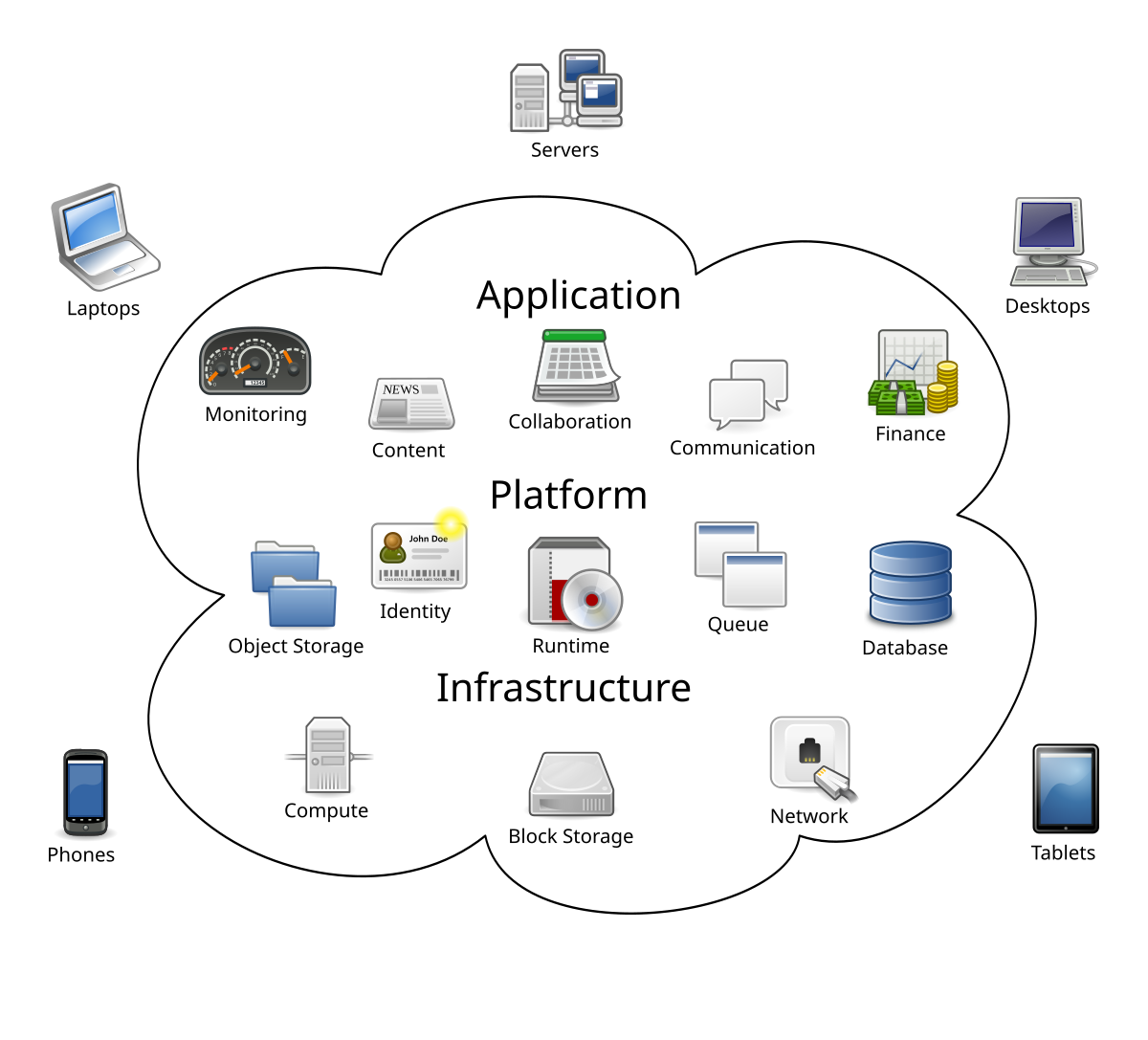
To truly understand what a cloud platform is, one must look at the “stack” of services it provides. These are generally categorized into three distinct models, often referred to as the SPI model (SaaS, PaaS, and IaaS). Each represents a different level of control and abstraction for the user.
Infrastructure as a Service (IaaS)
IaaS is the most fundamental level of a cloud platform. It provides the “virtualized” versions of physical computing resources. Instead of buying a rack of servers, a business rents virtual machines (VMs), storage, and networking from a provider like Amazon Web Services (AWS) or Microsoft Azure.
The primary advantage of IaaS is “elasticity.” In a traditional setup, if your website experienced a sudden surge in traffic, your servers might crash. With IaaS, the platform can automatically scale up resources to meet demand and scale down when the surge subsides. This pay-as-you-go model ensures that companies only pay for the “compute” they actually use.
Platform as a Service (PaaS)
PaaS sits one layer above IaaS. It is designed specifically for software developers. Instead of worrying about the underlying operating system, runtime, or server maintenance, developers use PaaS to focus entirely on writing code.
A PaaS provider offers a framework that includes development tools, database management systems, and business intelligence services. For example, Google App Engine or Heroku allows a developer to upload their application code, and the platform handles the deployment, scaling, and hardware management automatically. This significantly reduces the “time-to-market” for new software products.
Software as a Service (SaaS)
SaaS is the most visible layer of the cloud for the average user. These are fully functional applications delivered via a web browser. Examples include Salesforce, Microsoft 365, and Slack. In the SaaS model, the cloud platform provider manages everything: the hardware, the middleware, the data, and the application itself. The user simply logs in and utilizes the service, usually via a monthly or annual subscription.
Deployment Models: Public, Private, and Hybrid Clouds
The “where” and “how” of a cloud platform’s deployment are just as important as the services it offers. Not all clouds are created equal, and the choice of deployment model often depends on a company’s specific needs for security, cost, and performance.
Public Cloud: The Engine of Scalability
The public cloud is the most common deployment model. In this setup, the cloud resources (like servers and storage) are owned and operated by a third-party cloud service provider and delivered over the public internet. All customers on a public cloud share the same pool of hardware—a concept known as “multi-tenancy.”
While you share hardware, your data remains isolated and secure. The public cloud is ideal for startups and enterprises alike because it requires zero capital expenditure (CapEx) for hardware and offers virtually infinite scalability.
Private Cloud: Security and Control
A private cloud consists of cloud computing resources used exclusively by one business or organization. It can be physically located at the organization’s on-site data center, or it can be hosted by a third-party service provider.
The private cloud offers the highest level of security and control, making it the preferred choice for government agencies, financial institutions, and healthcare providers who must adhere to strict regulatory requirements. However, it lacks the cost-efficiency of the public cloud because the organization is responsible for the costs of the hardware and maintenance.
Hybrid and Multi-Cloud: The Modern Enterprise Choice
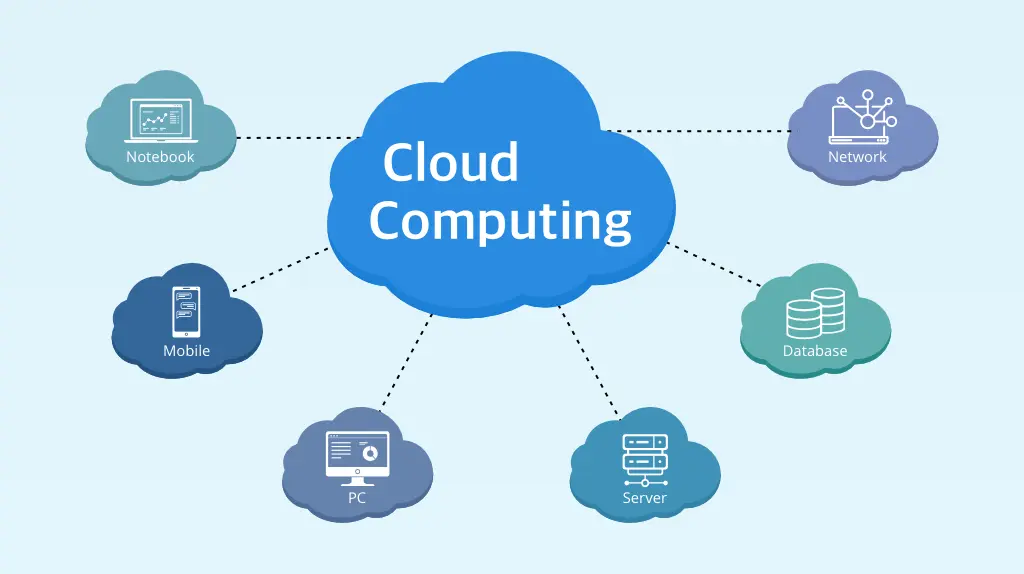
Most modern enterprises do not choose just one model; they use a hybrid cloud approach. This involves a combination of private and public clouds, bound together by technology that allows data and applications to be shared between them. For instance, a bank might keep sensitive customer data on a private cloud while using a public cloud to run its customer-facing mobile app.
Multi-cloud, a slight variation, involves using services from multiple different public cloud providers (e.g., using AWS for storage and Google Cloud for AI tools). This prevents “vendor lock-in” and ensures that if one provider experiences an outage, the business remains operational.
Essential Components of a Cloud Platform
Beyond the broad categories of IaaS and PaaS, a cloud platform is made up of several critical technical components that work in harmony to provide a seamless user experience.
Compute and Serverless Architectures
“Compute” refers to the processing power required to run applications. In the early days of the cloud, this meant renting virtual servers. However, the industry has shifted toward “Serverless Computing” (such as AWS Lambda). In a serverless model, the developer doesn’t even see a server; they simply write a function, and the cloud platform executes it only when triggered by an event. This is the pinnacle of efficiency, as costs are only incurred when the code is actually running.
Storage and Data Lakes
Data is the lifeblood of modern technology. Cloud platforms offer various storage tiers, from “Hot Storage” (fast access for frequently used data) to “Cold Storage” (low-cost archiving for data rarely accessed). Furthermore, cloud platforms facilitate “Data Lakes”—vast repositories that store raw data in its native format until it is needed for analysis. This allows organizations to store petabytes of information at a fraction of the cost of traditional on-premise databases.
Networking and Content Delivery Networks (CDNs)
For a cloud platform to be effective, it must be fast. Networking components like Virtual Private Clouds (VPCs), Load Balancers, and CDNs ensure that data moves efficiently. A CDN, for example, caches website content on servers located geographically close to the user, drastically reducing latency (the delay before a transfer of data begins).
The Role of AI and Machine Learning in Cloud Evolution
Perhaps the most exciting aspect of modern cloud platforms is their role as an accelerant for Artificial Intelligence. Building and training an AI model requires massive amounts of specialized hardware, such as GPUs (Graphics Processing Units) and TPUs (Tensor Processing Units). For most companies, purchasing this hardware is prohibitively expensive.
Cloud platforms have democratized AI by offering these resources on a rental basis. Providers now offer “AI-as-a-Service,” providing pre-built models for image recognition, natural language processing (NLP), and predictive analytics. Developers can integrate these sophisticated tools into their apps via simple API calls. This has shifted the focus from building AI infrastructure to implementing AI solutions to solve real-world problems.
Security and Compliance in the Cloud Era
One of the primary concerns when moving to a cloud platform is security. If your data is “out there” on the internet, how is it protected? Modern cloud providers invest billions of dollars annually in security—far more than most individual companies could ever afford.
The Shared Responsibility Model
A critical concept in cloud tech is the “Shared Responsibility Model.” In this framework, the cloud provider is responsible for the security of the cloud (the physical servers, the power, the cooling, and the virtualization layer). The customer, however, is responsible for security in the cloud (the data they upload, the passwords they set, and the way they configure their firewalls).
Identity and Access Management (IAM)
To maintain security, cloud platforms utilize robust Identity and Access Management (IAM) systems. IAM allows administrators to define exactly who can access what resource and under what conditions. By implementing the “principle of least privilege”—giving users only the access they absolutely need to do their jobs—companies can significantly reduce the risk of data breaches.

Conclusion: The Future of Cloud Platforms
The cloud platform is no longer a destination; it is an operating system for the entire planet. As we look forward, the boundaries of the cloud are expanding toward the “Edge.” Edge computing brings processing power closer to the source of the data—such as IoT sensors or autonomous vehicles—to provide near-instantaneous response times.
Whether it is through the integration of quantum computing, the continued rise of microservices, or the democratization of generative AI, cloud platforms will continue to be the primary engine of technological progress. For any business or developer, understanding the nuances of these platforms is no longer optional; it is the key to building a scalable, secure, and innovative future.
aViewFromTheCave is a participant in the Amazon Services LLC Associates Program, an affiliate advertising program designed to provide a means for sites to earn advertising fees by advertising and linking to Amazon.com. Amazon, the Amazon logo, AmazonSupply, and the AmazonSupply logo are trademarks of Amazon.com, Inc. or its affiliates. As an Amazon Associate we earn affiliate commissions from qualifying purchases.