
In an increasingly digitized world, the foundational principles of human language might seem like relics of a bygone era, secondary to algorithms and data streams. Yet, at the heart of every AI interaction, every piece of software documentation, and every engaging digital experience lies the sophisticated architecture of language itself. Among its most crucial building blocks is the clause. Far from being a mere academic construct, understanding what a clause is in the English language provides a potent lens through which we can better comprehend, design, and optimize our technological tools and digital communications. For developers, content creators, UX writers, and AI engineers, grasping the mechanics of clauses is not just about grammatical correctness; it’s about enabling clearer communication, more intelligent systems, and superior user experiences in the digital realm.

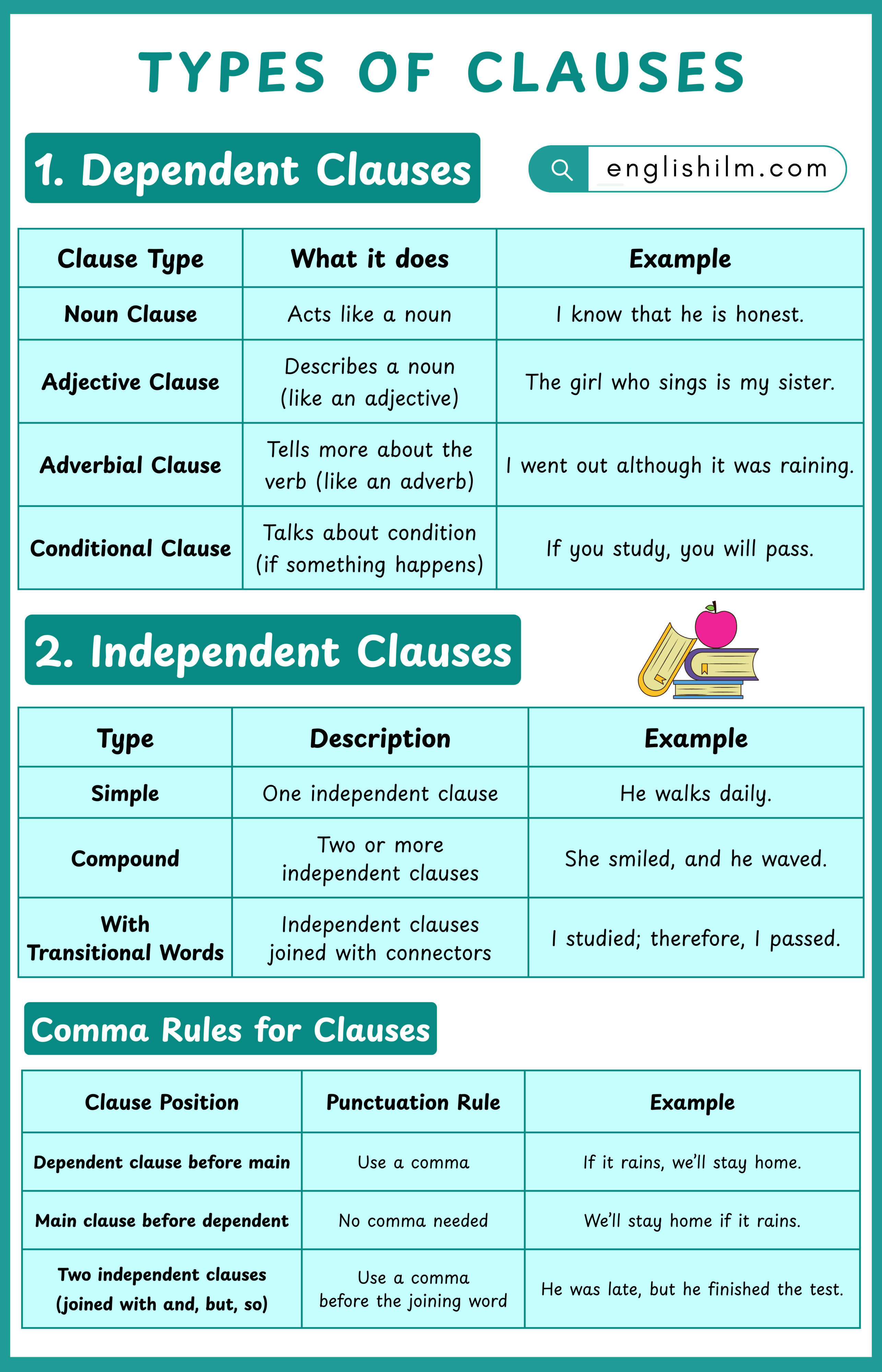
A clause, at its simplest, is a group of words containing a subject and a predicate. This fundamental unit of meaning forms the bedrock of sentences, allowing us to convey complete thoughts or contribute to larger, more complex ideas. Its significance transcends traditional grammar lessons, becoming a critical component in the evolution of Natural Language Processing (NLP), the clarity of software tutorials, and the efficacy of search engine algorithms. As we dive deeper into the symbiotic relationship between language and technology, the humble clause emerges as an unsung hero, silently powering much of the digital landscape we navigate daily.
The Grammatical Foundation for AI and NLP
The rise of artificial intelligence, particularly in areas like natural language processing (NLP), has brought the intricate structures of human language under an unprecedented level of scrutiny. For AI to truly understand, interpret, and generate human-like text, it must first be able to dissect sentences into their constituent parts, with clauses playing a pivotal role in this analytical process. The ability to identify subjects, verbs, and their relationships within a clause allows machines to move beyond mere keyword matching to genuinely grasping meaning and context.
Parsing Sentences: How Machines Understand Structure
At the core of many NLP systems lies the process of “parsing.” This involves breaking down a sentence into its grammatical components to determine its syntactic structure. When an AI system parses a sentence, it’s essentially trying to identify clauses – both independent and dependent – and understand how they relate to each other. For instance, in the sentence “The user reported a bug (independent clause) because the application crashed (dependent clause),” an NLP model must identify both clauses and the causal relationship between them. This structural understanding is vital for tasks like sentiment analysis, where the system needs to know who did what and why, or for entity recognition, where accurately identifying the subject of a clause helps pinpoint key information. Without a robust understanding of clause structure, AI models would struggle to differentiate between similar-sounding phrases with vastly different meanings, leading to misinterpretations and poor performance.
Generating Coherent Text: The Clause as a Building Block
The impressive capabilities of large language models (LLMs) like GPT-4 in generating human-quality text are largely predicated on their ability to construct grammatically sound and logically coherent sentences. This isn’t achieved by simply stringing words together randomly; it involves an internal, probabilistic understanding of how clauses fit together to form meaningful sentences. When an AI generates a response, it’s implicitly constructing clauses that include subjects, predicates, and modifiers, ensuring that each segment of the generated text conveys a complete thought or contributes meaningfully to the overall message. The coherence, flow, and grammatical correctness we observe in AI-generated content are direct testaments to the models’ learned ability to manipulate and combine clauses effectively, crafting sentences that resonate with human linguistic patterns.
Semantic Analysis and Intent Recognition
Beyond mere structure, clauses are critical for semantic analysis – understanding the meaning embedded within language – and for intent recognition, a cornerstone of conversational AI and virtual assistants. Consider a voice command like “Schedule a meeting with John for next Tuesday.” An AI assistant doesn’t just hear individual words; it identifies the main clause (“Schedule a meeting”) and recognizes the dependent clauses or phrases that modify it (“with John,” “for next Tuesday”). Each clause carries specific semantic weight: “schedule” implies an action, “meeting” specifies the object, and “with John” and “for next Tuesday” provide crucial context for who and when. By accurately segmenting and interpreting these clauses, the AI can deduce the user’s intent – to create a calendar event – and extract the necessary parameters to fulfill the request. This sophisticated level of understanding is impossible without a precise analysis of clause structure and function.
Clauses in Software Documentation and User Interfaces
While AI focuses on the interpretation and generation of language, the human-facing aspects of technology demand impeccable clarity and precision. Software documentation, user manuals, API specifications, and the text within user interfaces (UI) must be unambiguous to be effective. Here, a deep understanding of clauses ensures that instructions are clear, errors are minimized, and the user experience is intuitive and frustration-free.
Clarity and Precision in Code Comments and APIs
For developers, clear communication isn’t just polite; it’s essential for maintaining code, collaborating with teams, and building robust systems. Code comments, variable names, and, most importantly, API documentation rely heavily on precise language. An API endpoint description, for example, needs to succinctly state what it does, what inputs it expects, and what output it returns. Ambiguous or poorly structured sentences can lead to misinterpretations, bugs, and wasted development time. By constructing simple, direct clauses, developers can ensure that their documentation is easily understood, minimizing cognitive load for those who need to integrate with or troubleshoot the code. Every clause in an API description or a system log message contributes to the overall intelligibility, acting as a guidepost for other developers navigating complex systems.
User Experience (UX) Writing: Crafting Intuitive Instructions
UX writing is the art of crafting text that guides users through a product, making their interactions seamless and intuitive. From button labels and error messages to onboarding tutorials and confirmation dialogues, every word counts. In this domain, the structure of clauses directly impacts user comprehension and decision-making. Overly long, convoluted sentences with multiple clauses can overwhelm users, leading to confusion and abandonment. Conversely, concise, well-structured clauses deliver information efficiently. An effective error message like “Your password must contain at least one uppercase letter and one number” (two independent clauses joined by ‘and’) is far more helpful than a vague “Password invalid.” UX writers meticulously craft each clause to provide just enough information, precisely when and where it’s needed, ensuring that users can understand instructions and navigate interfaces without friction.

Localization and Internationalization Challenges
When software and apps are designed for a global audience, the role of clauses becomes even more pronounced, particularly in localization efforts. Internationalization (i18n) and localization (l10n) involve adapting products for different languages and cultures. Direct, grammatically distinct clauses are often easier to translate accurately than long, complex sentences with multiple interwoven dependent clauses. Linguistic variations in word order, verb conjugation, and clause subordination across languages mean that a simple, clear clause structure in the source English text can significantly reduce translation errors and ambiguities. For example, breaking down a complex English sentence into several independent clauses before translation allows localization teams to maintain the original intent and grammatical integrity in the target language, preventing costly reworks and ensuring a consistent global user experience.
Digital Content Creation and SEO
In the vast ocean of digital content, visibility is paramount. Search Engine Optimization (SEO) aims to make content discoverable, and readability ensures it resonates with human readers. Both depend significantly on how language is structured, with clauses playing a silent but powerful role in influencing search engine algorithms and human engagement alike.
Optimizing Readability for Online Audiences
Online readers are notoriously impatient. They scan, skim, and demand clarity. Long, complex sentences packed with multiple clauses can quickly deter them, leading to higher bounce rates and reduced engagement. Therefore, effective digital content prioritizes readability, often achieved through shorter sentences and clearly defined clauses. By structuring content with a mix of simple independent clauses and well-placed dependent ones, writers can create a rhythm that is easier to follow. Tools that analyze readability often assess sentence length and complexity, implicitly evaluating the density and arrangement of clauses. Crafting content where each clause adds clear, digestible information helps maintain reader attention and ensures that the message is conveyed efficiently, a critical factor for blogs, news articles, and marketing copy.
Grammatical Accuracy and Search Engine Algorithms
While Google’s algorithms have evolved far beyond simple keyword stuffing, grammatical accuracy and overall content quality remain significant ranking factors. Search engines are designed to identify and prioritize high-quality, authoritative content that provides real value to users. Content riddled with grammatical errors, including poorly constructed or confusing clauses, signals lower quality to these algorithms. Furthermore, well-formed clauses contribute to the semantic clarity of content, allowing search engines to better understand the topic and context of a page. This enhanced understanding helps match user queries with the most relevant results. Google’s sophisticated NLP models analyze text for coherence, authority, and readability, and strong grammatical foundations, including the correct use of clauses, contribute directly to these quality signals.
AI-Powered Grammar Tools and Their Reliance on Clause Understanding
The proliferation of AI-powered grammar checkers, writing assistants, and content optimization tools (e.g., Grammarly, Hemingway Editor, Jasper) highlights the critical role of understanding clauses in practical applications. These tools don’t merely spot spelling errors; they analyze sentence structure, identify awkward phrasing, suggest improvements for clarity, and even rewrite sentences to enhance readability. Their ability to do this stems directly from their internal models that parse sentences into clauses, identify subjects and verbs, and understand how they interact. When such a tool suggests changing a passive voice clause to an active one, or splitting a run-on sentence, it’s leveraging its understanding of clause structure to improve the quality and impact of the writing, ensuring that digital content is not only correct but also engaging and effective.
The Future of Language in Technology
As technology continues its rapid advancement, the intricate dance between human language and machine intelligence will only deepen. Our understanding of foundational linguistic units like clauses will become even more indispensable, influencing the very fabric of human-computer interaction and the evolution of AI.
Advancements in AI-Driven Language Processing
Future advancements in AI are poised to push the boundaries of language processing even further. We can anticipate AI models that not only identify clauses but also grasp more nuanced semantic relationships between them, enabling truly contextual understanding and highly sophisticated reasoning from text. This will manifest in more intelligent virtual assistants, more accurate translation services, and AI content generation that is virtually indistinguishable from human writing, capable of producing complex narratives and analytical reports with perfect grammatical precision and logical flow. The ability of AI to construct and deconstruct clauses will be a key determinant of its capacity to emulate and augment human cognitive abilities related to language.
Human-Computer Interaction and Natural Language
The ultimate goal of many technological interfaces is to make interaction as natural and intuitive as human conversation. This vision hinges on the seamless integration of natural language understanding into our devices and applications. From smart home gadgets responding to complex commands to advanced diagnostic software interpreting spoken symptoms, the efficacy of these interactions will depend on how well the underlying technology understands the subtle nuances conveyed through clauses. As we move towards a future where interacting with technology feels less like commanding a machine and more like conversing with an intelligent entity, the precise analysis and generation of clauses will be the invisible engine driving this profound transformation, making technology truly accessible and responsive to human intent.
Conclusion
The question “what is a clause in English language” transcends its grammatical definition to become a pivotal inquiry in the technological age. From the intricate algorithms of AI and NLP that dissect and generate human language, to the precise instructions required for software documentation and intuitive user interfaces, and the strategic crafting of digital content for optimal SEO and readability, the humble clause underpins much of our digital world. Its accurate identification and thoughtful construction are not just academic exercises but practical necessities for innovation and effective communication in tech. As technology continues to evolve, pushing the boundaries of human-computer interaction, the fundamental understanding of clauses will remain an indispensable skill, ensuring that our machines speak our language, and that we, in turn, can communicate with them with unprecedented clarity and precision. The grammar of the past is indeed the algorithm of the future.
aViewFromTheCave is a participant in the Amazon Services LLC Associates Program, an affiliate advertising program designed to provide a means for sites to earn advertising fees by advertising and linking to Amazon.com. Amazon, the Amazon logo, AmazonSupply, and the AmazonSupply logo are trademarks of Amazon.com, Inc. or its affiliates. As an Amazon Associate we earn affiliate commissions from qualifying purchases.