
While the term “clastic rock” might conjure images of ancient geological formations, its underlying principles – the aggregation of distinct components to form a cohesive whole – resonate deeply with themes explored across technology, branding, and finance. In essence, a clastic rock is a composite, built from fragments, much like a robust tech product is an assembly of code and hardware, a strong brand is a mosaic of customer experiences and messaging, or a diversified investment portfolio is a collection of individual assets. Understanding clastic rocks, therefore, offers a surprising yet insightful lens through which to view the construction and resilience of the systems we interact with daily.
The Fragmented Origins: Understanding Clastic Rocks
At its core, a clastic rock is defined by its origin: it’s formed from the accumulation and cementation of pre-existing rock fragments, mineral grains, and sometimes organic material. These fragments, or “clasts,” are the building blocks, weathered and eroded from parent rocks by natural forces like wind, water, ice, and gravity. Imagine a mountain range, battered by centuries of storms. Pieces break off, are carried downstream by rivers, ground down into smaller particles, and eventually settle in basins. Over geological time, these accumulated sediments are buried, compacted by the weight of overlying material, and cemented together by minerals precipitating from groundwater. This process transforms loose sediment into solid rock.
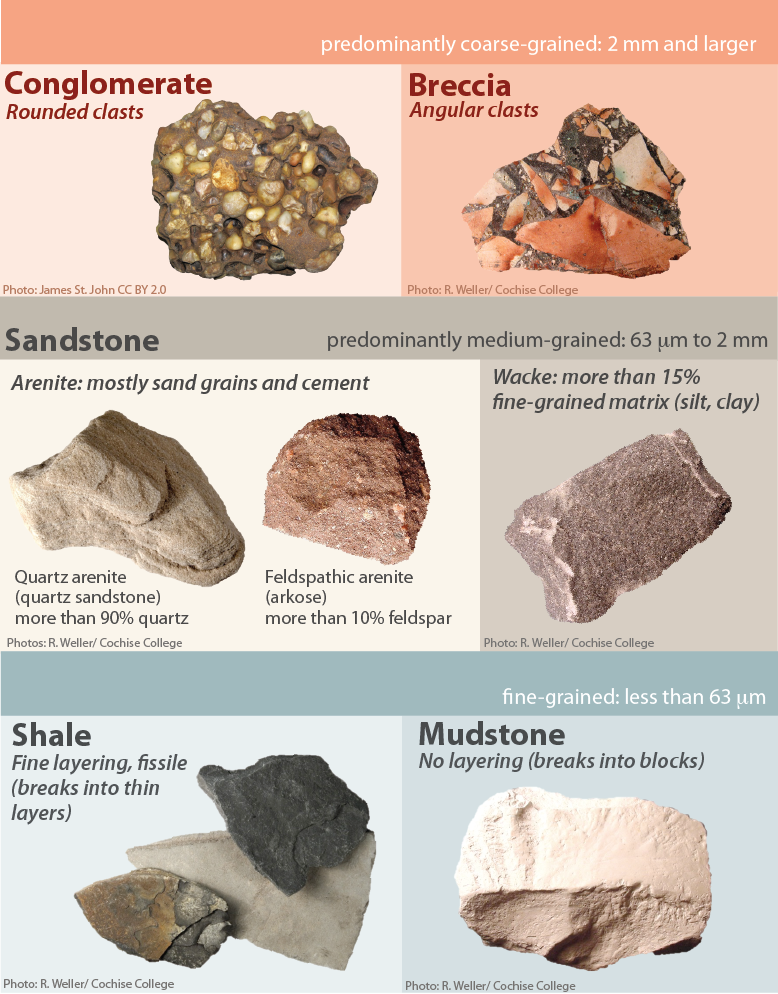
The size of these clasts is a primary classification factor. We talk about:
Conglomerates and Breccias: The Chunky Foundations
- Conglomerates are characterized by rounded pebbles and cobbles embedded in a finer matrix. The rounding suggests that these fragments have traveled significant distances, their sharp edges smoothed by abrasion during transport. Think of riverbeds or ancient shorelines where materials are constantly tumbled and worn. The strength and stability of a conglomerate often depend on the nature of the cementing material and the packing of the clasts.
- Breccias, on the other hand, consist of angular fragments. This angularity indicates that the clasts haven’t traveled far from their source, suggesting rapid deposition, perhaps from rockfalls, landslides, or glacial environments where fragmentation is common but transport is less prolonged. Their structural integrity can be more variable than conglomerates, depending heavily on how well the sharp edges interlock and the effectiveness of the cement.
Sandstones: The Gritty Middle Ground
- Sandstones are composed of sand-sized grains, typically quartz, feldspar, or rock fragments. These grains are smaller than pebbles but larger than silt. The type of sand grains and the cementing material significantly influence the sandstone’s properties. Quartz-rich sandstones are often very durable due to quartz’s hardness. Sandstones can be porous, allowing fluids like water and oil to pass through, making them important reservoirs in the earth’s crust. Their formation often occurs in environments like beaches, deserts, and river deltas.
Siltstones and Mudstones: The Fine Grains of History
- Siltstones are made of silt-sized particles, finer than sand but coarser than clay. They often feel slightly gritty to the touch.
- Mudstones are even finer, composed primarily of clay minerals and very fine silt. These rocks are formed from the deposition of mud in low-energy environments, such as deep ocean floors, lakes, or quiet lagoons. Mudstones are often less permeable and can be more easily eroded than coarser-grained clastic rocks.
The journey from fragmented debris to solid rock is a testament to time, pressure, and the binding power of natural cements. This process mirrors how individual ideas, data points, or financial instruments, when brought together and “cemented” by strategy and purpose, can form something substantial and enduring.
Clastic Principles in the Tech Landscape
The concept of clastic rocks finds surprising parallels in the world of technology. Here, “fragments” aren’t mineral grains but rather lines of code, hardware components, user data, and even individual user interactions.
Software as a Layered Conglomerate: Assembling Functionality
Modern software development is inherently clastic. Operating systems, applications, and even complex AI models are not built from scratch in one monolithic piece. Instead, they are assembled from countless modules, libraries, APIs, and pre-existing code snippets.
- APIs (Application Programming Interfaces) act as the “cement” that binds different software components together. They define how these fragments can communicate and interact, much like mineral cements hold clastic rock grains in place. A weather app, for instance, might utilize APIs from a weather service, a mapping service, and a notification service. Each is a distinct “clast” of functionality, brought together to create a user-facing product.
- Open-source software is a prime example of clastic construction. Developers leverage and contribute to a vast array of pre-built components, forming complex ecosystems. A new app might be built upon an open-source database, a particular JavaScript framework, and a cloud hosting platform.
- AI Models: Even sophisticated AI models, especially large language models, are built upon layers of pre-trained components and vast datasets. The training process itself can be seen as a form of “cementation,” where the model learns to associate and integrate these fragmented pieces of information to generate coherent outputs.
Hardware: The Modular Breccia of Gadgets
Our everyday gadgets are also clastic. Smartphones, laptops, and smart home devices are intricate assemblies of chips, sensors, screens, batteries, and casings.
- Modular Design: The trend towards modularity in some hardware (though not universally adopted) highlights this clastic nature. Users can sometimes replace individual components, demonstrating that the device is a collection of distinct, replaceable “clasts.”
- Supply Chains: The global nature of hardware manufacturing means that individual components – the “clasts” – are often produced in different factories across the globe. These are then assembled into the final product, much like eroded fragments are transported and deposited before lithification. The reliability of the final gadget depends on the quality and integration of each component.
Digital Security: Fortifying the Clastic Structure
In digital security, the clastic principle is crucial for building robust defenses.
- Layered Security: Just as geological layers protect underlying structures, digital security employs layered approaches. Firewalls, antivirus software, intrusion detection systems, and user authentication protocols are all distinct “clasts” of security measures working in concert. A weakness in one layer doesn’t necessarily compromise the entire system if other layers are strong.
- Data Integrity: Ensuring the integrity of fragmented data is paramount. Techniques like hashing and digital signatures verify that data “clasts” have not been tampered with during transmission or storage.

Branding: Constructing a Cohesive Identity from Diverse Elements
Branding, much like building a clastic rock, involves aggregating diverse elements into a unified and recognizable entity. The “clasts” here are not physical but conceptual: brand messaging, visual identity, customer experiences, marketing campaigns, and public perception.
The Visual Conglomerate: Logo, Colors, and Typography
A brand’s visual identity is a classic example of a conglomerate.
- Logo: The central, often rounded or smoothed, element that is instantly recognizable.
- Color Palette: Specific hues that evoke certain emotions and associations, acting as the finer matrix that binds the visual elements together.
- Typography: The chosen fonts that lend a specific personality and readability, akin to the texture and grain of a sandstone.
These elements, when consistently applied across all touchpoints, create a coherent visual language, the “cement” that solidifies the brand’s appearance.
The Experiential Breccia: Customer Interactions and Touchpoints
Customer experiences, both positive and negative, are the angular fragments that shape a brand’s reputation.
- Touchpoints: Every interaction a customer has with a brand – from browsing a website and making a purchase to receiving customer support and unboxing a product – is a “clast.”
- Brand Loyalty: A history of consistently positive interactions creates a strong, interlocking “breccia” of customer trust. Conversely, negative experiences can create fissures and weaken the brand’s structural integrity.
- Word-of-Mouth: Customer reviews and testimonials act as a form of geological record, documenting the nature of these experiential fragments and their impact on the brand’s overall composition.
Strategic Cementation: Marketing and Brand Strategy
Brand strategy is the overarching process of selecting, arranging, and “cementing” these disparate elements.
- Target Audience: Understanding the “geology” of the target market – their needs, preferences, and existing perceptions – informs how brand fragments are assembled.
- Marketing Campaigns: These are deliberate efforts to expose specific “clasts” (e.g., a new product feature, a charitable initiative) to the desired audience, reinforcing the brand’s message and cohesive structure.
- Brand Storytelling: Weaving narratives that connect these fragments into a compelling whole is the ultimate form of brand “cementation,” making the brand memorable and relatable. A strong brand narrative ensures that individual campaigns and touchpoints don’t feel like isolated debris but integral parts of a larger, robust structure.
Financial Foundations: Clastic Principles in Investing and Business
The world of finance, both personal and corporate, relies heavily on the principle of aggregation and diversification, mirroring the formation of clastic rocks.
Investment Portfolios: The Diversified Conglomerate
A well-managed investment portfolio is a clastic structure designed for resilience and growth.
- Asset Classes: Stocks, bonds, real estate, commodities, and alternative investments are the distinct “clasts” within a portfolio. Each has its own risk and return profile.
- Diversification: The act of spreading investments across these different asset classes is akin to mixing various sediment sizes and types. This diversification reduces the impact of poor performance in any single “clast,” providing a more stable overall return. Just as a conglomerate is strengthened by the interlocking of varied rounded pebbles, a diversified portfolio is strengthened by the uncorrelated movements of its different components.
- Rebalancing: Periodically adjusting the proportions of different assets in a portfolio is like a geological process that refines the composition, ensuring it remains balanced and aligned with investment goals.
Business Finance: Assembling Capital and Resources
For businesses, clastic principles apply to the aggregation of capital, assets, and operational components.
- Startup Funding: A startup often begins as a fragmented idea. Funding rounds – seed, Series A, B, etc. – bring in different sources of capital (the “cement” and reinforcing “clasts”) to build the business. Venture capitalists invest in the potential of these aggregated resources.
- Mergers and Acquisitions (M&A): When companies merge or acquire others, they are essentially combining distinct “clastic” entities. The success of such integrations depends on how effectively the different organizational structures, cultures, and operational fragments are cemented together.
- Operational Efficiency: Businesses strive to create efficient operational “rock” by integrating various departments, technologies, and processes. Supply chain management, for example, involves coordinating numerous fragmented suppliers and logistics providers into a cohesive whole.

Online Income and Side Hustles: Building a Financial Aggregate
Even in the realm of personal online income and side hustles, clastic principles are at play.
- Multiple Revenue Streams: Relying on a single source of income is like having a sedimentary rock made of only one type of grain; it’s vulnerable. Building multiple income streams – from freelance work, affiliate marketing, digital products, online courses – creates a diversified financial “clastic” structure.
- Platform Aggregation: Online platforms themselves often act as aggregators of services and users, forming their own clastic structures. Think of marketplaces that bring together buyers and sellers, or social media platforms that aggregate content creators and consumers.
In conclusion, while the study of clastic rocks might seem confined to geology classrooms, its fundamental concept of formation through the aggregation of distinct fragments offers a powerful framework for understanding the construction and resilience of our modern technological, brand, and financial landscapes. From the intricate layers of software to the diverse assets in a portfolio, the principle of bringing together smaller pieces to create something larger and more enduring is a universal theme, shaping the very foundations of our interconnected world.
aViewFromTheCave is a participant in the Amazon Services LLC Associates Program, an affiliate advertising program designed to provide a means for sites to earn advertising fees by advertising and linking to Amazon.com. Amazon, the Amazon logo, AmazonSupply, and the AmazonSupply logo are trademarks of Amazon.com, Inc. or its affiliates. As an Amazon Associate we earn affiliate commissions from qualifying purchases.