
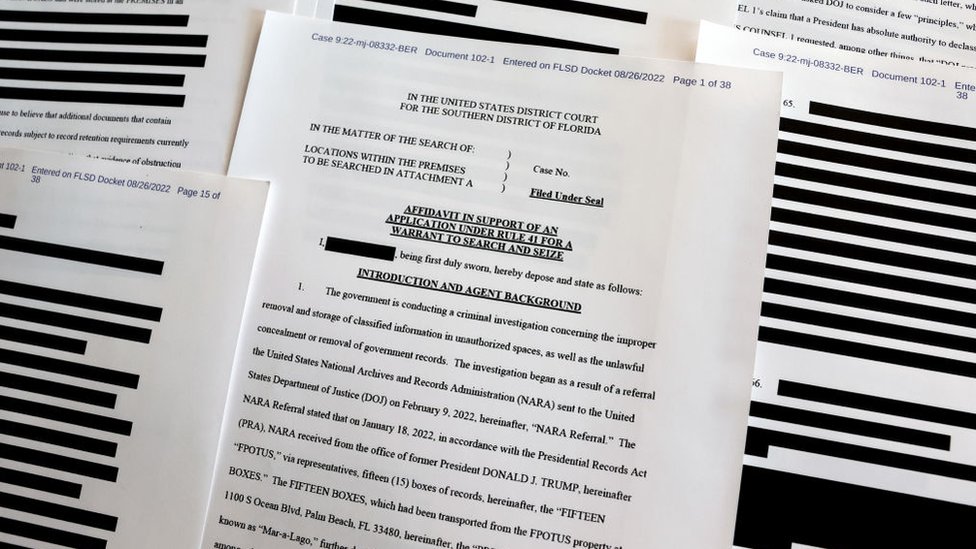
In an era defined by the rapid flow of information, the concept of a “classified document” has evolved far beyond the manila folders and red “Top Secret” stamps popularized by 20th-century spy cinema. Today, a classified document is a sophisticated digital asset, protected by layers of encryption, rigorous access protocols, and complex cybersecurity frameworks. As our global infrastructure becomes increasingly digitized, understanding what constitutes a classified document—and the technology required to protect it—is essential for grasping the current state of digital security.
At its core, a classified document is any piece of information that a government or authorized entity deems sensitive enough to require protection against unauthorized disclosure. The “classification” refers to the specific level of protection assigned to that data based on the potential damage its release could cause to national security, diplomatic relations, or technological superiority. In the tech world, this is the ultimate exercise in data integrity and confidentiality.

The Architecture of Secrecy: Defining Classified Information in a Tech-Driven World
To understand a classified document, one must first understand the hierarchy of sensitivity. Not all secrets are created equal; therefore, the technology used to guard them varies in complexity and intensity.
The Levels of Classification
Traditionally, classified information is categorized into three primary tiers:
- Confidential: This is the lowest level of classification. Disclosure of confidential information would be “prejudicial” to national interests. In technical terms, this often involves internal memos or operational details that, while not catastrophic if leaked, would provide competitors or adversaries with an unfair advantage.
- Secret: The unauthorized disclosure of “Secret” information is expected to cause “serious damage” to national security. This often includes technical specifications for military hardware, sensitive diplomatic communications, or intelligence reports.
- Top Secret: This is the highest level. The release of Top Secret data would cause “exceptionally grave damage.” This category includes information regarding nuclear programs, deep-cover intelligence operations, and advanced cryptographic methods.
The Transition from Physical to Digital Assets
Historically, classification was a physical process. Today, however, a classified document is rarely just a piece of paper. It is more likely to be a high-resolution satellite image, a database of biometric markers, a line of proprietary code, or an encrypted communication packet. This shift has forced a total revolution in how “documents” are defined. A “document” in the modern sense is any data object—whether it is a PDF, a CAD file for a stealth drone, or a structured query language (SQL) entry—that requires protection under a classification mandate.
The Technology Behind Data Protection and Access Control
Once a document is classified, it enters a digital ecosystem designed to be impenetrable. The technology used to secure these documents represents the pinnacle of modern cybersecurity.
Encryption and Cryptographic Protocols
The first line of defense for any classified document is encryption. Unlike standard consumer-grade encryption, classified data often utilizes “Type 1” encryption, which is certified by the National Security Agency (NSA) for protecting classified information. This involves complex algorithms that scramble data so that it is unreadable without a specific, highly guarded cryptographic key.
Advanced Encryption Standard (AES) with 256-bit keys is the baseline, but classified systems often employ even more robust, multi-layered encryption techniques. This ensures that even if a hard drive containing classified documents is physically stolen, the data remains a useless jumble of bits to anyone without the decryption infrastructure.
Identity and Access Management (IAM) and RBAC
In the realm of classified documents, “who” can see the data is just as important as “how” the data is stored. This is managed through Role-Based Access Control (RBAC) and strict Identity and Access Management (IAM) systems.
A user does not simply “log in” to see a classified document. Access usually requires multi-factor authentication (MFA) involving biometric scans (fingerprint or iris), hardware tokens (PIV cards), and frequently rotating passwords. Furthermore, the system operates on the “Principle of Least Privilege.” This means a user is only granted access to the specific files necessary for their current task—even if they possess a high-level security clearance. Every time a document is opened, edited, or printed, a digital audit trail is created, ensuring total accountability.
Air-Gapped Systems and Hardware Security
The most sensitive classified documents are often kept on “air-gapped” systems. This is a security measure where a computer or network is physically isolated from any other networks, especially the public internet. By removing the physical connection to the web, the risk of remote hacking is virtually eliminated.
Furthermore, the hardware itself is specialized. Classified documents are often processed on TEMPEST-shielded equipment. TEMPEST is a standard aimed at limiting the electromagnetic radiation emitted by electronic devices, which sophisticated hackers could theoretically intercept to reconstruct what is being displayed on a screen or typed on a keyboard.
Cybersecurity Threats to Classified Data
Despite the formidable technological barriers, classified documents are constant targets. The threats have evolved from physical espionage to highly sophisticated cyber warfare.
Insider Threats and Data Exfiltration
One of the most significant challenges in protecting classified documents is the “insider threat.” This occurs when an individual with legitimate access decides to leak information. Technologically, preventing this requires Data Loss Prevention (DLP) software. These tools monitor the movement of data across a network. If a user attempts to copy a classified file to a USB drive or upload it to a cloud service, the system automatically flags the activity and blocks the transfer. Modern DLP systems use behavioral analytics to identify “anomalous” behavior—such as a user accessing documents outside of their usual working hours—before a breach occurs.
Advanced Persistent Threats (APTs)
Classified documents are the primary targets of Advanced Persistent Threats (APTs)—usually state-sponsored hacking groups. Unlike “script kiddies” or common cybercriminals, APTs have the resources to conduct long-term, multi-stage attacks. They use customized malware, zero-day exploits (vulnerabilities unknown to the software vendor), and social engineering to penetrate secure networks. Protecting classified documents against APTs requires a “Defense in Depth” strategy, incorporating firewalls, intrusion detection systems (IDS), and continuous network monitoring.
The Role of AI and Automation in Document Classification
As the volume of digital data grows exponentially, the manual process of classifying documents has become impossible. This is where Artificial Intelligence (AI) and Machine Learning (ML) are stepping in to transform the field.
Automated Redaction and Sensitivity Labeling
AI algorithms are now being trained to recognize sensitive patterns within massive datasets. Natural Language Processing (NLP) allows a system to “read” a document and automatically suggest a classification level based on the keywords, context, and entities mentioned. This ensures that sensitive information is not accidentally saved on unclassified servers. Additionally, AI can automate the redaction process, instantly stripping secret details from a document so that it can be shared with a wider audience without compromising security.
Machine Learning for Pattern Recognition
In the context of digital security, ML models are used to monitor the integrity of classified document repositories. These models can detect “micro-signatures” of a cyber-attack that would be invisible to human analysts. For example, if an encrypted file’s metadata changes in a way that suggests a slow-motion brute-force attack or unauthorized tampering, the ML system can isolate the document and lock down the server in milliseconds.
The Future of Classified Information: Quantum Computing and Beyond
The definition and protection of classified documents are currently facing a “quantum leap.” The development of quantum computing poses a significant threat to current encryption standards. A powerful quantum computer could theoretically break the RSA and AES encryption that currently protects the world’s secrets.
To combat this, the tech community is developing “Quantum-Resistant Cryptography.” This involves new mathematical algorithms that are thought to be secure against even the most powerful quantum attacks. Furthermore, Quantum Key Distribution (QKD) is being explored as a way to share classified keys using the laws of physics—specifically, the behavior of photons—to ensure that any attempt to eavesdrop on the key transfer would be immediately detectable.
In conclusion, a classified document is no longer just a static record; it is a dynamic, highly protected digital entity at the center of a global technological arms race. From the hardware it sits on to the AI that monitors its use, the technology surrounding classified documents defines the bleeding edge of digital security. As we move further into the 21st century, the ability to define, categorize, and protect these documents will remain the cornerstone of national and technological sovereignty.
aViewFromTheCave is a participant in the Amazon Services LLC Associates Program, an affiliate advertising program designed to provide a means for sites to earn advertising fees by advertising and linking to Amazon.com. Amazon, the Amazon logo, AmazonSupply, and the AmazonSupply logo are trademarks of Amazon.com, Inc. or its affiliates. As an Amazon Associate we earn affiliate commissions from qualifying purchases.