
In an era defined by constant connectivity, the most critical notification you may ever receive on your device is the Civil Emergency Message (CEM). While most smartphone users are familiar with the jarring, high-pitched tone that accompanies these alerts, few understand the sophisticated technological infrastructure that powers them. A Civil Emergency Message is more than just a text notification; it is a high-priority digital transmission designed to bypass network congestion and deliver life-saving information in real-time.
From a technological standpoint, the CEM represents a pinnacle of interoperability, merging satellite communications, cellular broadcast protocols, and automated software triggers into a seamless national defense mechanism. Understanding what a civil emergency message is requires a deep dive into the hardware and software ecosystems that keep modern society informed during its most vulnerable moments.
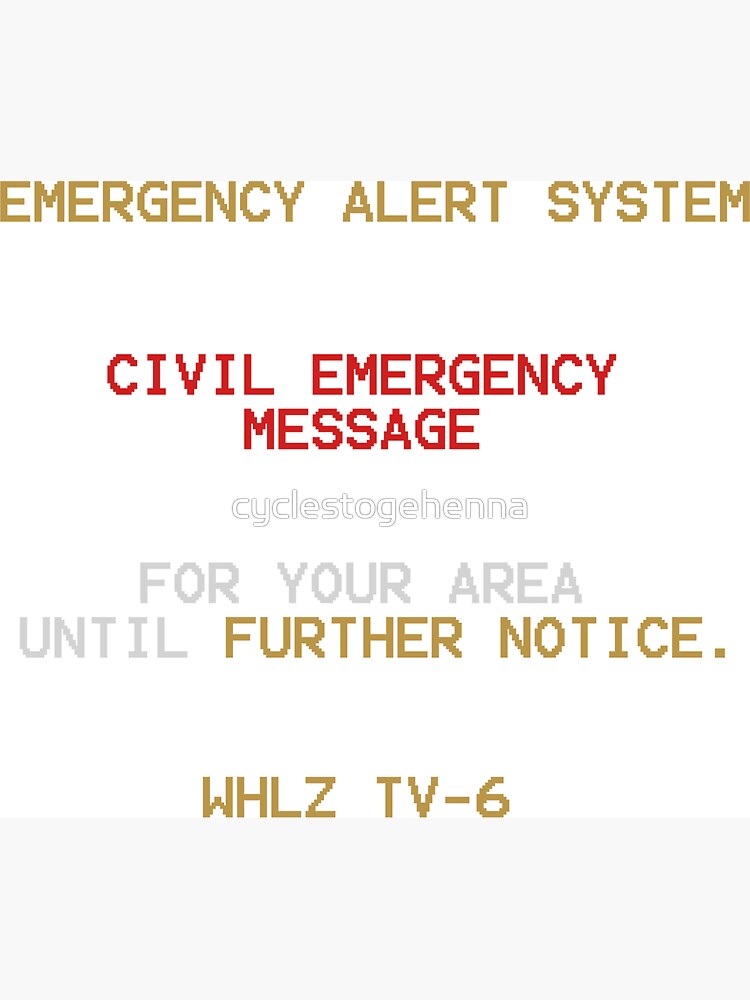
The Digital Architecture of Public Warnings: IPAWS and EAS
The foundation of any Civil Emergency Message is not a single app or server, but a complex, multi-layered system managed by federal authorities. In the United States, this is governed primarily by FEMA through the Integrated Public Alert and Warning System (IPAWS).
The Role of the Integrated Public Alert and Warning System (IPAWS)
IPAWS serves as the central “message broker” for all civil emergency communications. It is an internet-based system that allows federal, state, local, tribal, and territorial authorities to write a single alert and disseminate it through multiple communication pathways. Technically, IPAWS is a gateway that authenticates the sender and ensures the message adheres to specific digital standards before pushing it out to various “delivery “nodes,” such as cellular towers and internet service providers.
Emergency Alert System (EAS) and Broadcast Media
While many associate CEMs with mobile phones, the Emergency Alert System (EAS) remains a vital component of the tech stack. The EAS is a national public warning system that requires broadcasters, cable television systems, and satellite radio providers to provide the communications capability to the President or local authorities. On a technical level, EAS utilizes a “daisy-chain” protocol where “Primary Entry Point” stations transmit a signal that is then picked up and rebroadcast by other stations. This ensures that even if the primary internet backbone fails, the message can still propagate via analog and digital radio waves.
Wireless Emergency Alerts (WEA): How Your Smartphone Receives Urgent Data
The most common way modern citizens interact with a Civil Emergency Message is through their mobile devices. This is achieved via Wireless Emergency Alerts (WEA), a technology that differs significantly from the standard SMS or push notifications we use daily.
Cell Broadcast Technology vs. Standard SMS
A common misconception is that a Civil Emergency Message is sent as a text message. From a network engineering perspective, this would be catastrophic. If a government tried to send a standard SMS to 10 million people in a single city simultaneously, the cellular network would suffer from massive “signaling congestion” and likely crash.
Instead, WEA utilizes Cell Broadcast (CB) technology. Unlike SMS, which is a point-to-point communication requiring a “handshake” between the sender and receiver, Cell Broadcast is a point-to-area technology. It allows messages to be broadcast to all phones connected to a specific tower simultaneously without needing to know the individual phone numbers. This “one-to-many” approach uses a dedicated channel on the cellular frequency, ensuring that the message is delivered even if voice and data traffic are at peak capacity.
Geofencing and Location-Based Targeting
One of the most impressive technical feats of the CEM is its precision. Modern WEA 3.0 standards allow for “geofencing,” where an alert can be targeted to a specific geographic area with an accuracy of within one-tenth of a mile.
When an emergency manager draws a polygon on a digital map in the IPAWS interface, the system identifies the specific cellular towers within that boundary. The towers then broadcast the message with an embedded “location bit.” Modern smartphones (those with integrated GPS and updated firmware) will only trigger the audible alarm if the device’s internal location matches the coordinates specified in the message. This prevents “alert fatigue” by ensuring people outside the danger zone are not unnecessarily disturbed.
The Common Alerting Protocol (CAP): The Universal Language of Emergencies
At the heart of every Civil Emergency Message is a technical standard known as the Common Alerting Protocol (CAP). CAP is an XML-based data format used for exchanging public warnings and emergencies between different alerting technologies.

Why Standardization Matters in Digital Communication
Before the adoption of CAP, different emergency systems (radio, sirens, digital signs, and mobile networks) all spoke different “languages.” This led to delays and errors in translation. CAP solved this by creating a standardized template that includes:
- Event Category: (e.g., Geo, Met, Safety, Security).
- Urgency: The time frame for the response.
- Severity: The intensity of the impact.
- Certainty: The probability of the event occurring.
Because the data is structured in XML, it can be parsed by almost any digital device. A single CAP message can be converted into a text-to-speech announcement for a radio station, a scrolling banner on a news channel, and a pop-up on a smart refrigerator simultaneously.
Interoperability Across Hardware and Software Platforms
The beauty of the CAP standard is its hardware-agnostic nature. Whether you are using an iPhone running iOS, a Samsung device running Android, or a specialized Linux-based emergency receiver, the device knows exactly how to interpret the CAP data. It tells the device’s hardware abstraction layer (HAL) to override silent modes, maximize volume, and trigger the specific vibration pattern associated with a high-level civil emergency.
Cybersecurity and System Integrity in Emergency Messaging
Because a Civil Emergency Message has the power to move millions of people and cause widespread shifts in behavior, the security of the transmission is of paramount importance. The technology must be resilient against both accidental false alarms and malicious hacking.
Preventing False Alarms and System Hijacking
We have seen the real-world consequences of technical errors, such as the 2018 Hawaii false missile alert. That incident was a failure of User Interface (UI) design rather than the protocol itself. Since then, the software used by emergency managers has been updated with “two-step” verification processes and clearer visual cues to prevent human error from triggering a national alert.
Technically, IPAWS uses a Public Key Infrastructure (PKI) to sign every message. When a message is sent, it includes a digital signature. The receiving device (the cell tower or the phone) can verify this signature against a trusted certificate authority. If the signature doesn’t match, the message is discarded, preventing “spoofing” where a rogue actor might try to send a fake alert via a portable “stingray” cell site.
Encryption and Authentication Protocols
Security is handled at the transport layer as well. All communications between the local emergency operations center and the federal IPAWS servers are encrypted using TLS (Transport Layer Security). This ensures that the contents of a message cannot be intercepted or altered while in transit across the open internet.
The Future of Emergency Communication: AI, IoT, and Satellite Connectivity
As we look toward the next decade of technology, the Civil Emergency Message is set to evolve from a simple text-based alert into a multi-dimensional data event integrated into the “Internet of Things” (IoT).
Integrating Warnings into Smart Home Ecosystems
The next frontier for CEMs is the smart home. Future iterations of the CAP protocol will allow IPAWS to communicate directly with smart thermostats, lighting systems, and security hubs. In the event of a chemical emergency, for example, a CEM could automatically trigger a home’s HVAC system to shut down its external air intake or turn all smart bulbs red to alert those with hearing impairments.
AI-Driven Predictive Alerting and Real-Time Translation
Artificial Intelligence is already being integrated into the backend of emergency management software. AI can analyze sensor data from seismic monitors or flood gauges to automatically draft a Civil Emergency Message before a human operator even sees the data.
Furthermore, AI-driven natural language processing (NLP) is being used to provide real-time translation. Currently, many alerts are limited to English and Spanish. Future updates to the cellular broadcast firmware will allow devices to automatically translate a CAP message into the user’s preferred language set in their phone’s OS, ensuring that critical safety information is accessible to everyone, regardless of their linguistic background.
Finally, the integration of satellite-to-cell technology—led by companies like SpaceX and T-Mobile—promises to eliminate “dead zones.” Soon, a Civil Emergency Message will be deliverable even in the most remote wilderness, as satellites will be able to broadcast the alert directly to standard smartphones without the need for terrestrial towers.

Conclusion
A Civil Emergency Message is a marvel of modern engineering. It represents a rare instance where competing tech giants, government agencies, and international standards bodies have come together to create a unified, robust, and nearly instantaneous communication network. By leveraging Cell Broadcast technology, the Common Alerting Protocol, and advanced geofencing, the CEM system ensures that when the unthinkable happens, technology serves its highest purpose: the preservation of human life. As we move into an era of AI and satellite connectivity, these messages will only become more precise, more resilient, and more integrated into the digital fabric of our daily lives.
aViewFromTheCave is a participant in the Amazon Services LLC Associates Program, an affiliate advertising program designed to provide a means for sites to earn advertising fees by advertising and linking to Amazon.com. Amazon, the Amazon logo, AmazonSupply, and the AmazonSupply logo are trademarks of Amazon.com, Inc. or its affiliates. As an Amazon Associate we earn affiliate commissions from qualifying purchases.