
In the annals of cinematic history, few innovations have reshaped the viewing experience and the very fabric of filmmaking as profoundly as Cinemascope. More than just a technical specification, Cinemascope emerged as a colossal force that saved Hollywood from an existential crisis, redefined visual storytelling, and marked a significant chapter in the intersection of technology, brand strategy, and economic survival in the entertainment industry.
At its core, Cinemascope is an anamorphic lens system developed by 20th Century Fox in the early 1950s. Its primary purpose was to project an image with an aspect ratio significantly wider than the standard 1.37:1 ratio of the time, often referred to as the Academy ratio. This wider format was designed to immerse audiences more deeply in the cinematic experience, offering a panoramic sweep that television, the fledgling competitor threatening to bankrupt Hollywood, simply couldn’t replicate. Launched in 1953 with the biblical epic The Robe, Cinemascope wasn’t merely a new way to shoot film; it was a declaration of war against the small screen, a bold technological gamble that paid off immensely, permanently altering how movies were made, marketed, and consumed.
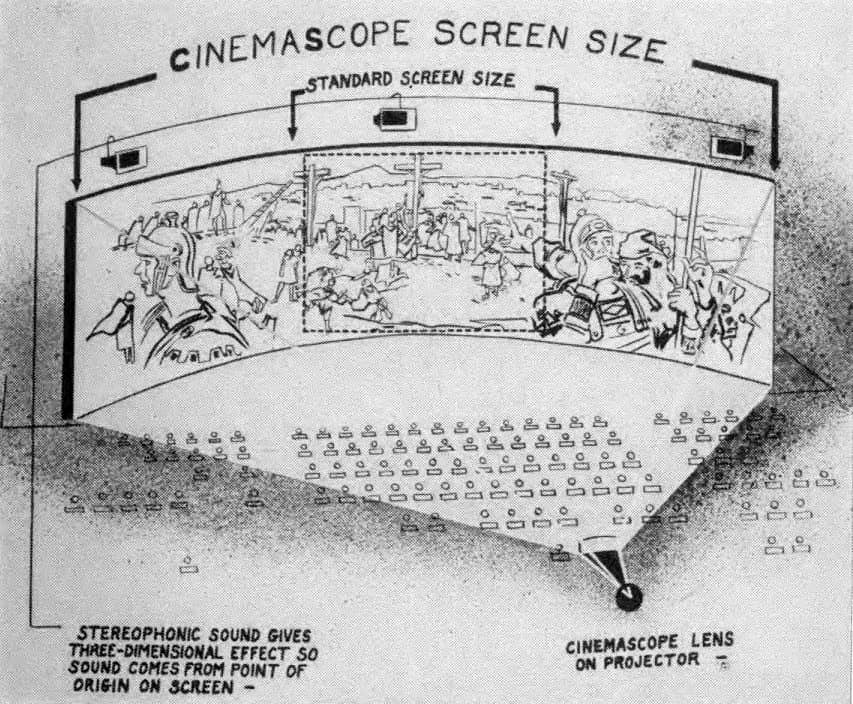
The Technological Marvel Behind Cinemascope
The advent of Cinemascope was a direct response to a burgeoning technological shift: the widespread adoption of television in American homes. As living rooms across the nation became equipped with TV sets, cinema attendance plummeted. Hollywood desperately needed a unique selling proposition, something spectacular and immersive that would lure audiences back into the grand movie palaces. Cinemascope was that answer, a feat of optical engineering designed to deliver unparalleled visual grandeur.
The Anamorphic Lens System: Squeeze and Unsqueeze
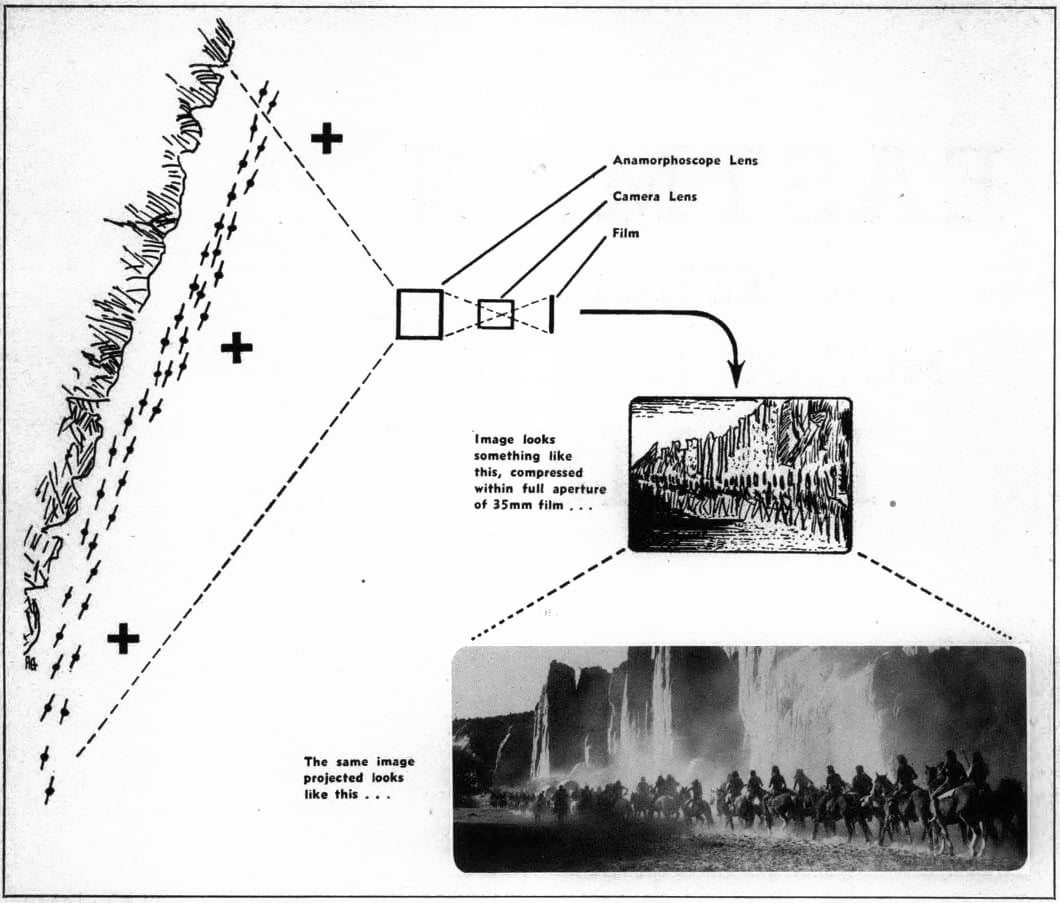
The genius of Cinemascope lies in its unique anamorphic lens system. Traditional filmmaking captures a scene directly onto film without altering its horizontal or vertical proportions. Anamorphic lenses, however, work differently. During filming, a special anamorphic lens “squeezes” a wide image horizontally onto a standard 35mm film frame. This results in a distorted, elongated image on the film itself. Then, during projection, another anamorphic lens, attached to the projector, “unsqueezes” the image, expanding it horizontally to restore its original proportions and fill a much wider screen. This elegant solution allowed studios to achieve a wide aspect ratio without having to redesign film stock or significantly alter existing projection equipment beyond adding the anamorphic attachment. The technical wizardry was relatively simple yet incredibly effective, allowing for the capture of breathtaking vistas and intimate close-ups within a single, expansive frame.
The Wider Canvas: Aspect Ratios and Visual Impact
The most striking feature of Cinemascope was its dramatically wider aspect ratio. While the Academy ratio was a squarish 1.37:1, early Cinemascope films boasted an expansive 2.55:1 ratio, later standardized to 2.35:1 (and eventually 2.40:1). This shift was revolutionary. It opened up entirely new possibilities for mise-en-scène and composition. Filmmakers could now capture sweeping landscapes, complex crowd scenes, and multiple characters within a single shot, forcing a re-evaluation of blocking, set design, and camera movement. The wider frame transformed the viewing experience from a window into a world to an immersive panoramic vista, creating a sense of scale and depth previously unimaginable in mainstream cinema. It encouraged a different kind of visual storytelling, one that embraced horizontal composition and allowed for a richer, more detailed cinematic canvas.
Sound Innovation: Four-Track Magnetic Stereo Sound
Cinemascope wasn’t just about vision; it was also about sound. Alongside the anamorphic image, 20th Century Fox introduced four-track magnetic stereo sound. This was a monumental leap from the monaural optical sound that was standard at the time. The four tracks—left, center, right, and a separate surround channel for ambient effects—were printed directly onto the film strip alongside the picture. This innovation provided a far more immersive and dynamic audio experience, allowing for directional sound, richer music scores, and a greater sense of presence within the cinematic world. The synchronized deployment of wide visuals and multi-channel audio was a powerful combination, offering a sensory spectacle that television could not hope to match. This dual technological assault on the senses was key to Cinemascope’s success in revitalizing the theatrical experience.
The Equipment Ecosystem: Cameras, Projectors, and Screens
Implementing Cinemascope required a significant overhaul of exhibition infrastructure. The original Bausch & Lomb anamorphic lenses, patented by Henri Chrétien (whose “Hypergonar” system was the basis for Cinemascope), had to be manufactured in quantity. Film cameras needed adaptations for these new lenses. More critically, every theater wanting to show Cinemascope films had to invest in new anamorphic projector lenses and, often, entirely new, much wider screens. These screens were curved to enhance immersion and mitigate distortion at the edges of the wide image. This ecosystem of specialized equipment – from the camera on set to the projector in the booth and the screen in front of the audience – represented a complete technological paradigm shift, demanding substantial investment but promising a superior viewing experience.
Cinemascope’s Impact on the Brand of Cinema
Beyond its technical specifications, Cinemascope profoundly influenced the “brand” of cinema itself. It wasn’t just a format; it became a symbol of Hollywood’s resilience, its capacity for innovation, and its commitment to spectacle.
Reclaiming the Spectacle: Competing with Television
In the early 1950s, the brand of cinema was under siege. Television was free, convenient, and increasingly sophisticated. Movie attendance was dwindling, and studios were desperate for a way to differentiate their product. Cinemascope provided that differentiation. It presented cinema as a grand, communal event, an experience that transcended the confines of a small living room screen. The sheer scale and immersive nature of Cinemascope films positioned them as premium entertainment, a form of art and spectacle worth leaving home for. This aggressive marketing of “widescreen magic” helped re-establish cinema as a distinct and superior form of visual entertainment, successfully combating television’s encroachment and preserving the viability of the theatrical model.
A Differentiator for Hollywood: Marketing and Aspiration
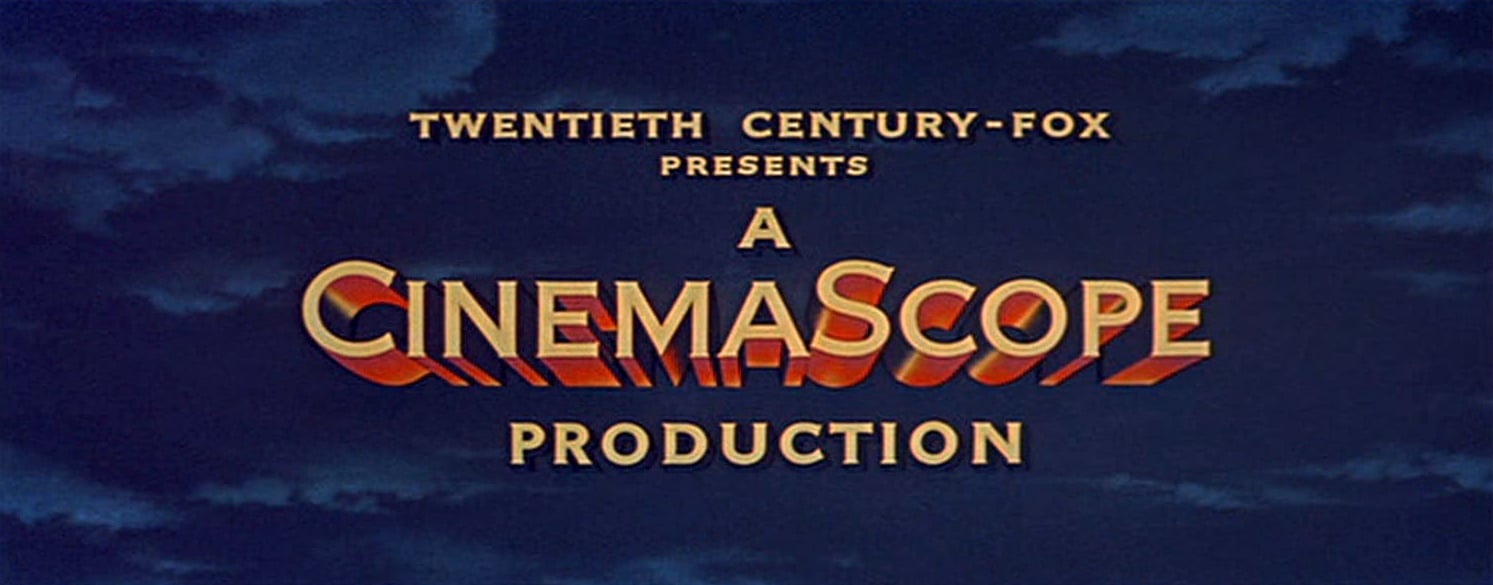
20th Century Fox, the studio behind Cinemascope, shrewdly leveraged its invention as a powerful brand differentiator. Films shot in Cinemascope were heavily advertised with phrases like “The Magic of Cinemascope!” and “You See It Without Glasses!” (a jab at early 3D films, another attempt to combat TV). The Cinemascope logo became synonymous with big-budget blockbusters, epic storytelling, and an unparalleled visual experience. Other studios, initially reluctant to pay licensing fees to Fox, quickly realized the commercial appeal and adopted their own widescreen formats (like Paramount’s VistaVision or MGM’s Panavision, which eventually became the dominant anamorphic standard). The brand of “widescreen” itself became a powerful draw, signaling to audiences that they were in for something special, something grander and more ambitious than anything they could watch at home. It elevated the aspiration of cinema, transforming it from mere storytelling into an immersive artistic journey.
Shaping Cinematic Storytelling and Aesthetics
The wide canvas of Cinemascope didn’t just change how films looked; it fundamentally altered how stories were told. Directors like Otto Preminger, Nicholas Ray, and David Lean embraced the format, using its expansive frame to craft intricate compositions, emphasize environmental storytelling, and explore new dramatic possibilities. A typical shot in the Academy ratio might feature one or two characters in close-up; a Cinemascope shot could comfortably frame multiple characters, a detailed background, and crucial foreground elements, all contributing to the narrative. This encouraged long takes, minimized cuts, and allowed for more complex visual arrangements that immersed the viewer in the scene’s geography and emotional landscape. It became a powerful tool for building mood, revealing character relationships through spatial dynamics, and making the setting an active participant in the narrative, cementing Cinemascope’s influence on the aesthetic brand of cinema.
The Legacy and Evolution: From Film to Digital Wide-screens
While the original Cinemascope brand eventually gave way to other anamorphic systems like Panavision, its legacy is undeniable. The concept of the widescreen cinematic experience, initiated by Cinemascope, became the industry standard. Today, virtually all major feature films are presented in a widescreen format, whether shot anamorphically on film, spherical with digital sensors cropped to a wide ratio, or digitally mimicking the anamorphic look. Cinemascope’s brand promise – a grand, immersive visual spectacle – continues to resonate. Modern display technologies, from high-definition televisions to IMAX theaters, owe a conceptual debt to Cinemascope’s initial drive to deliver a bigger, more encompassing picture, solidifying its place as a cornerstone in the evolution of cinematic branding.
The Economics of Cinemascope: Investment, Returns, and Risks
The technological leap and brand reimagining brought about by Cinemascope were underpinned by significant financial considerations. Hollywood was a business, and the adoption of any new technology had to make economic sense, especially in a period of financial distress.
The High Cost of Innovation: Studio and Exhibitor Investments
The initial investment in Cinemascope was substantial. For 20th Century Fox, developing and patenting the anamorphic system, manufacturing lenses, and adapting production studios represented a considerable outlay. However, the greater financial burden often fell on the exhibitors. To show Cinemascope films, theaters had to purchase new anamorphic projection lenses (costing hundreds, sometimes thousands, of dollars), install larger, often curved screens, and upgrade their sound systems for four-track stereo. Many smaller, independent theaters struggled with these costs, leading to a divide between those who could afford the upgrade and those who couldn’t, which impacted their ability to show the most popular, high-grossing films. This was a risky economic gamble for many, betting on the format’s appeal to justify the expenditure.
Box Office Boost and Financial Revival
Despite the upfront costs, Cinemascope proved to be an economic savior for Hollywood. The novelty and spectacle of the widescreen format were powerful draws. Films like The Robe, How to Marry a Millionaire, and later epics like The Ten Commandments (though shot in VistaVision, it capitalized on the widescreen trend) brought audiences back in droves, generating massive box office returns. These films often broke attendance records, demonstrating that audiences were willing to pay for a superior theatrical experience. This surge in revenue helped stabilize the struggling studios, providing the capital needed for future productions and investments. Cinemascope didn’t just save films; it saved jobs and an entire industry’s financial model, proving that strategic technological investment could yield significant economic returns.
Licensing and Royalties: Fox’s Financial Strategy
20th Century Fox, having invested heavily in developing Cinemascope, shrewdly protected its financial interests through licensing agreements. Other studios wishing to use the Cinemascope process had to pay a royalty fee to Fox. This licensing model ensured that Fox not only profited from its own Cinemascope productions but also from the success of films made by its competitors using the same technology. This intellectual property strategy was a crucial element of Fox’s overall business plan, transforming a technological innovation into a continuous revenue stream. While some studios sought alternatives to avoid these fees, the undeniable popularity and established brand of Cinemascope often made it a necessary cost of doing business for other major players, highlighting the financial power of proprietary technology.
Production Challenges and Budgetary Considerations
While Cinemascope boosted the box office, it also introduced new budgetary challenges for filmmakers. The expansive frame required more elaborate set designs, often extending beyond the traditional boundaries of a sound stage. Lighting became more complex, needing to illuminate a wider area evenly. Blocking actors effectively across such a wide canvas required careful planning and more extensive rehearsals. These factors could increase production costs, making Cinemascope films inherently more expensive to produce than their Academy ratio counterparts. Filmmakers had to learn a new cinematic grammar, and studios had to adjust their budgets accordingly, weighing the increased production expenditure against the anticipated higher box office revenue. It was a constant economic balancing act, but one that ultimately proved worthwhile for the industry.
Modern Echoes: Cinemascope in the Digital Age
While the specific “Cinemascope” brand of anamorphic lenses is now largely a historical artifact (superseded by Panavision, Cooke, and other manufacturers), its influence reverberates powerfully through modern filmmaking. The core principle of a widescreen, immersive experience remains central to contemporary cinema.
From Anamorphic Lenses to Digital Workflows
Today, the pursuit of the wide aspect ratio continues, though the methods have evolved. Many filmmakers still choose to shoot with anamorphic lenses, albeit modern versions from companies like Panavision, Cooke, and Atlas Lens Co., to achieve the distinctive elliptical bokeh, shallow depth of field, and subtle optical distortions that hark back to the classic Cinemascope look. Others, especially in the digital realm, achieve wide aspect ratios by shooting with spherical lenses on high-resolution digital cameras and then cropping the image in post-production. The “Cinemascope look” has become an aesthetic choice, a visual language that signifies a certain grandeur and cinematic quality, regardless of the precise technical pipeline used. Digital tools and workflows have streamlined the process, making it easier to achieve and manipulate wide aspect ratios, but the desired visual impact remains directly linked to Cinemascope’s pioneering efforts.
The Enduring Appeal of Scope: Why Filmmakers Still Choose Wide Formats
The enduring appeal of the widescreen, or “scope,” format speaks to its intrinsic value in storytelling. It’s not merely a technical choice; it’s an artistic one. Directors opt for scope to convey scale, isolation, or the vastness of a landscape. It allows for rich ensemble compositions and the detailed presentation of elaborate sets. From epic sci-fi blockbusters to intimate dramas that seek to envelop the viewer in a character’s world, the wide frame provides a unique canvas. It’s a visual shorthand that instantly communicates a sense of cinematic ambition and high production value, a direct legacy of Cinemascope’s original brand promise.
The Viewer Experience: Home Theaters and Streaming
Ironically, the technology designed to lure audiences away from their television sets now finds a robust home on those very screens. Modern flat-panel TVs and projectors are often designed to display widescreen content beautifully, with aspect ratios that mirror or closely approximate theatrical scope. Streaming services frequently deliver films in their original wide formats, allowing viewers to experience the panoramic vision even outside the cinema. While the communal magic of the theater remains unique, the technological advancements in home entertainment mean that the immersive, widescreen experience pioneered by Cinemascope is now more accessible than ever, influencing everything from premium streaming subscriptions to the design of high-end home theater equipment. The economic value of a compelling visual experience, first proven by Cinemascope in cinemas, now drives a significant portion of the consumer electronics and digital content markets.
In conclusion, Cinemascope was far more than a technical gadget. It was a visionary answer to a crisis, a bold statement of Hollywood’s innovative spirit, and a masterclass in brand revitalization. Its anamorphic lenses, immersive sound, and grand aspect ratios pulled the film industry back from the brink, forever changing the landscape of cinematic storytelling. Its legacy continues to shape how we conceive of, create, and consume movies today, a testament to its enduring impact on technology, brand identity, and the economic fortunes of an entire art form.
aViewFromTheCave is a participant in the Amazon Services LLC Associates Program, an affiliate advertising program designed to provide a means for sites to earn advertising fees by advertising and linking to Amazon.com. Amazon, the Amazon logo, AmazonSupply, and the AmazonSupply logo are trademarks of Amazon.com, Inc. or its affiliates. As an Amazon Associate we earn affiliate commissions from qualifying purchases.