
In an increasingly technologically driven world, the intricate dance of atoms and molecules often underpins the most groundbreaking innovations. From the silicon in our microchips to the complex formulations of our medicines, everything we interact with on a daily basis is, at its core, a testament to the principles of chemistry. Central to this understanding is the concept of a chemical mixture – a seemingly simple idea that forms the bedrock of materials science, advanced engineering, and the very fabric of technological progress.
At its most fundamental, a chemical mixture is a substance comprising two or more different chemical substances that are not chemically bonded together. Unlike compounds, where elements combine in fixed ratios to form entirely new substances with distinct properties, the components of a mixture retain their individual identities. They are merely physically combined, allowing for separation by physical means. This fundamental distinction is not just a scientific curiosity; it is a critical differentiator that dictates material properties, processing methods, and ultimately, technological application.

The air we breathe, the alloys in our smartphones, the plastics in our cars, and even the solutions used in advanced biotechnology are all examples of chemical mixtures. Their ubiquity in natural processes and industrial applications underscores their importance. As we delve deeper, we will explore the nuances of mixtures, their classification, and most importantly, their indispensable role in shaping the technological landscape of today and tomorrow. Understanding “what is a chemical mixture” is the first step towards appreciating the intricate chemical engineering behind every piece of technology we use.
The Fundamental Building Blocks of Technological Innovation
Before diving into complex technological applications, it’s crucial to establish a solid understanding of the basic chemical concepts that lead to mixtures. These foundational principles are not abstract academic exercises but practical considerations that govern the design and performance of every technological product.
Elements, Compounds, and the Nature of Mixtures
Everything in the universe is composed of elements, the simplest chemical substances that cannot be broken down further by chemical means. Think of gold, oxygen, or silicon – each with its unique atomic structure. When two or more elements chemically combine in fixed ratios, they form a compound, such as water (H₂O) or carbon dioxide (CO₂). Compounds possess properties entirely different from their constituent elements, and their formation involves the breaking and making of chemical bonds.
Chemical mixtures, however, are different. They represent a physical blending of two or more substances (elements, compounds, or both) where no new chemical bonds are formed. Each component retains its original chemical identity and properties. For instance, dissolving salt (a compound) in water (another compound) creates a saline solution – a mixture where both salt and water molecules are present but not chemically bound to each other. Understanding how these basic units interact and combine to form mixtures is the absolute prerequisite for any material scientist or engineer aiming to innovate. The ability to precisely control the components of a mixture is paramount to achieving desired functionalities in everything from semiconductor doping to advanced battery electrolytes.
Homogeneous vs. Heterogeneous: A Practical Distinction in Tech
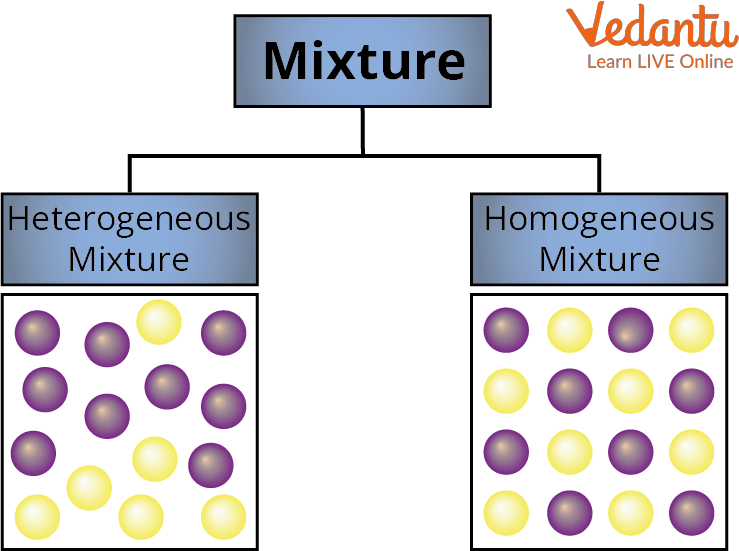
The way components are distributed within a mixture provides a crucial classification that has direct implications for technological applications:
-
Homogeneous Mixtures: These mixtures have a uniform composition and appearance throughout. A sample taken from any part of the mixture will have the same properties as a sample taken from any other part. Examples include air (a mixture of gases), sugar dissolved in water, or alloys like brass (a mixture of copper and zinc). In the tech world, homogeneous mixtures are vital for applications requiring consistent properties throughout a material, such as the uniform electrical conductivity of a metal alloy in circuit boards, or the precise refractive index of glass in optical fibers.
-
Heterogeneous Mixtures: In contrast, heterogeneous mixtures do not have a uniform composition. Their components are visibly distinct and can often be separated manually or by simple physical means. Examples include sand and water, oil and vinegar, or granite rock. In technology, heterogeneous mixtures are equally critical. Think of composite materials like fiberglass (glass fibers in a polymer matrix) or carbon fiber (carbon fibers in a resin), where distinct components are deliberately combined to achieve superior strength-to-weight ratios or specific thermal properties. Their non-uniformity is leveraged to create materials with tailored, often anisotropic, characteristics essential for aerospace, automotive, and sports equipment.
The choice between a homogeneous or heterogeneous mixture is a fundamental design decision in engineering, directly influencing the performance, durability, and cost-effectiveness of countless technological products.
Chemical Mixtures in Modern Technology
The concept of a chemical mixture is not merely theoretical; it is deeply embedded in the practical realities of modern technological development. From the smallest electronic components to large-scale industrial processes, the manipulation and understanding of mixtures drive innovation.
Advanced Materials and Manufacturing
The creation of advanced materials relies heavily on precisely formulated chemical mixtures.
-
Alloys: Metals like steel (iron and carbon) or superalloys (complex mixtures of metals) are designed for specific properties – increased strength, corrosion resistance, or high-temperature stability – crucial for aerospace, automotive, and energy industries.
-
Polymers and Composites: Plastics themselves are complex mixtures of polymers with additives (stabilizers, colorants, flame retardants). Composite materials, which combine different materials to achieve superior properties, are heterogeneous mixtures. Carbon fiber reinforced polymers (CFRPs), for example, are a game-changer for lightweight yet strong structures in aircraft, racing cars, and sporting goods.
-
Semiconductors: The performance of silicon chips is enhanced by doping, where precise amounts of impurity elements are introduced into the silicon crystal structure, essentially creating a controlled solid-state mixture to alter electrical conductivity. This tiny alteration, a carefully controlled chemical mixture, is what enables modern electronics.
Energy Storage and Generation
The pursuit of sustainable and efficient energy solutions is another domain profoundly influenced by chemical mixtures.
-
Batteries: Lithium-ion batteries, prevalent in everything from smartphones to electric vehicles, rely on complex mixtures of chemicals within their electrodes and electrolytes. The electrolyte, a precisely formulated chemical mixture, facilitates the movement of ions between the anode and cathode, driving the battery’s performance and lifespan. Future battery technologies, such as solid-state batteries, are also exploring novel solid chemical mixtures as electrolytes.
-
Fuel Cells: These devices generate electricity through electrochemical reactions involving various chemical mixtures, typically hydrogen and oxygen, combined with catalysts. The efficiency and durability of fuel cells depend critically on the composition and stability of these catalytic mixtures.
-
Solar Cells: While silicon is a primary component, newer photovoltaic technologies often involve layers of various chemical mixtures, such as perovskites or quantum dots, designed to capture different wavelengths of light more efficiently.

Biotechnology and Pharmaceutical Development
In the life sciences, chemical mixtures are foundational to drug discovery, diagnostics, and biomedical engineering.
-
Drug Formulations: A pharmaceutical drug is rarely a single active ingredient. It’s typically a complex mixture of the active pharmaceutical ingredient (API) along with excipients – binders, fillers, stabilizers, and coatings – all precisely mixed to ensure proper dosage, stability, bioavailability, and controlled release in the body.
-
Diagnostic Reagents: Medical diagnostic tests rely on specific chemical mixtures (reagents) that react with biological samples to detect biomarkers for diseases. The accuracy and sensitivity of these tests hinge on the precise composition and purity of these mixtures.
-
Biomaterials: Implants, prosthetics, and tissue engineering scaffolds are often composed of intricate chemical mixtures designed to be biocompatible, biodegradable, and provide desired mechanical properties, allowing them to integrate safely and effectively with biological systems.
The Role of Technology in Understanding and Manipulating Mixtures
Just as chemical mixtures underpin technology, technology itself plays a pivotal role in advancing our understanding, analysis, and control over these complex systems. This symbiotic relationship accelerates discovery and innovation.
AI, Simulation, and Predictive Chemistry
The sheer complexity of predicting how different substances will behave when mixed has historically been a significant challenge. However, advancements in computational power and artificial intelligence (AI) are revolutionizing this field.
-
Materials Informatics: AI algorithms can analyze vast datasets of material properties and chemical compositions to predict the behavior of new mixtures, significantly speeding up the discovery of novel alloys, polymers, and catalysts.
-
Molecular Dynamics Simulations: Sophisticated software can simulate the interactions of atoms and molecules within a mixture at a microscopic level, providing insights into their structural, thermal, and electrical properties without the need for extensive physical experimentation. This allows engineers to virtually test thousands of mixtures before synthesizing the most promising ones.
-
Predictive Manufacturing: AI is used to optimize industrial mixing processes, ensuring consistent quality and minimizing waste by predicting how variations in raw materials or environmental conditions might affect the final mixture.
Advanced Analytical Tools and Sensors
The ability to precisely analyze the composition and structure of chemical mixtures is paramount. Modern technology provides an array of sophisticated tools:
-
Spectroscopy (e.g., Mass Spectrometry, NMR, IR): These techniques allow scientists to identify the individual components within a mixture and determine their relative concentrations, providing a detailed chemical fingerprint.
-
Chromatography (e.g., GC, HPLC): These methods physically separate the components of a complex mixture, enabling individual identification and quantification, critical in quality control for pharmaceuticals and environmental monitoring.
-
Microscopy (e.g., Electron Microscopy): For heterogeneous mixtures, advanced microscopy allows visualization of the distribution and morphology of individual components at nanoscale, vital for understanding composite materials or nanoparticles.
-
Real-time Sensors: Smart sensors embedded in industrial processes or environmental monitoring stations can continuously track the composition of mixtures, providing instant feedback for process control and safety.
Process Optimization and Automation
Manufacturing and processing often involve large-scale handling of chemical mixtures. Technology, particularly automation and control systems, ensures efficiency, safety, and consistency.
-
Automated Blending Systems: Robotics and automated dosing systems ensure precise measurement and mixing of components, reducing human error and improving product consistency, particularly in industries like pharmaceuticals and specialty chemicals.
-
Advanced Control Systems: Integrated sensors and software dynamically adjust mixing parameters (temperature, pressure, agitation speed) in real-time, optimizing reaction yields, minimizing energy consumption, and ensuring the desired properties of the final mixture.
-
Modular Chemical Plants: The concept of modular, often automated, chemical plants allows for flexible production of various mixtures on demand, reducing infrastructure costs and speeding up market entry for new chemical products.
Navigating the Complexities and Future of Chemical Mixtures in Tech
The mastery of chemical mixtures is not without its challenges, yet it presents immense opportunities for future technological advancement. As our world demands more sophisticated materials and sustainable solutions, the understanding and intelligent manipulation of mixtures will remain at the forefront of innovation.
Ensuring Performance and Purity
One of the primary challenges in dealing with chemical mixtures in a technological context is ensuring their consistent performance and purity. Even trace amounts of impurities can drastically alter the properties of a mixture, leading to product failure or inefficiency. For instance, ultra-pure chemical mixtures are essential for semiconductor manufacturing; any contamination can render a microchip useless. Developing advanced purification techniques and robust quality control protocols remains a critical area of technological development. The future will see even more stringent purity requirements and sophisticated in-line monitoring systems to guarantee the integrity of these complex formulations.
Sustainable Chemistry and Circular Economy
As environmental concerns grow, the focus shifts towards sustainable chemistry – designing chemical mixtures and processes that minimize environmental impact. This involves:
-
Green Solvents: Developing less toxic and more environmentally friendly solvents for reactions and extractions, moving away from hazardous organic compounds.
-
Recycling and Upcycling: Creating new technologies that can efficiently separate and repurpose components from complex waste mixtures (e.g., plastics, electronic waste) to support a circular economy model. This requires sophisticated separation techniques and innovative chemical processes.
-
Biodegradable Materials: Designing polymer mixtures that degrade safely in the environment, reducing plastic pollution.
The future of technology will be heavily reliant on our ability to create and manage chemical mixtures in a way that aligns with ecological sustainability.
The Interdisciplinary Frontier
The future of chemical mixtures in tech lies at the intersection of multiple disciplines. It’s not just about chemistry anymore; it’s about:
-
Computational Chemistry: Leveraging quantum mechanics and machine learning to predict mixture behavior from first principles.
-
Nanotechnology: Designing and assembling mixtures at the nanoscale to create materials with unprecedented properties (e.g., self-assembling materials, advanced catalysts).
-
Bio-engineering: Integrating chemical mixtures with biological systems for novel drug delivery systems, biocompatible implants, and synthetic biology applications.
-
Materials Engineering: Developing new processing techniques to achieve precise control over the morphology and distribution of components in heterogeneous mixtures, pushing the boundaries of material performance.
In conclusion, understanding “what is a chemical mixture” is far more than a basic scientific definition. It is the gateway to comprehending the very essence of technological innovation. From the microscopic world of atoms to the macroscopic world of advanced gadgets, chemical mixtures are the silent, yet powerful, orchestrators of progress. As technology continues its relentless march forward, the ability to design, analyze, and control these fundamental building blocks will remain paramount, driving the next generation of breakthroughs across every sector.
aViewFromTheCave is a participant in the Amazon Services LLC Associates Program, an affiliate advertising program designed to provide a means for sites to earn advertising fees by advertising and linking to Amazon.com. Amazon, the Amazon logo, AmazonSupply, and the AmazonSupply logo are trademarks of Amazon.com, Inc. or its affiliates. As an Amazon Associate we earn affiliate commissions from qualifying purchases.