
The Foundational Skeleton of Vehicle Engineering
At the core of every automobile lies a sophisticated piece of engineering known as the chassis. Far more than just a simple frame, the chassis is the fundamental structural component that dictates a vehicle’s integrity, performance, and safety characteristics. In essence, it is the backbone upon which all other components, from the engine and transmission to the body and suspension, are mounted. Understanding the chassis is to grasp the very essence of automotive design and its continuous evolution driven by technological advancements.
Defining the Chassis: Beyond Just a Frame
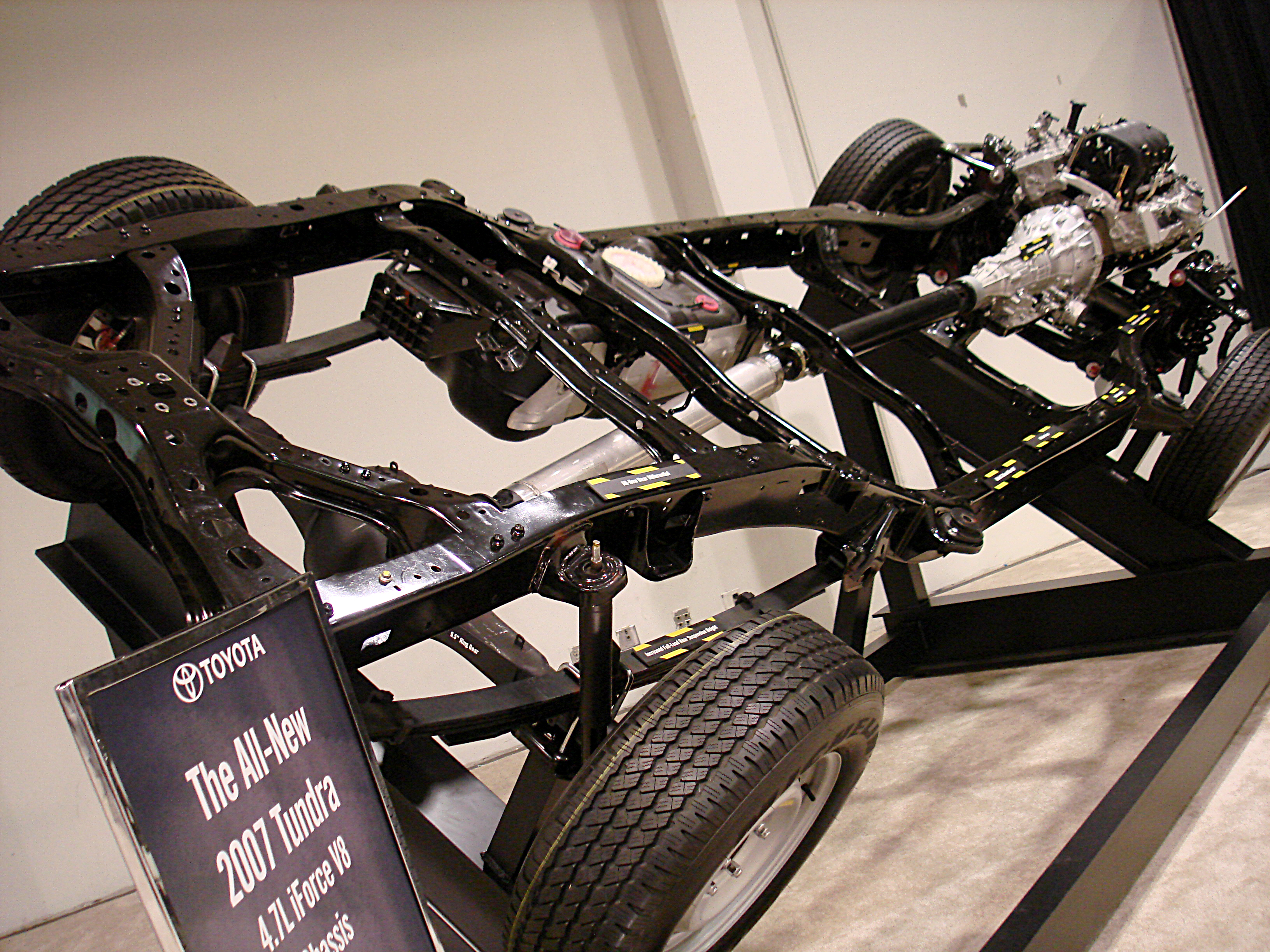
While often used interchangeably with “frame,” the term “chassis” encompasses a broader concept in modern vehicle design. Historically, a chassis referred specifically to the structural frame and the essential running gear (engine, transmission, axles, suspension) before the body was fitted. Today, especially with unibody construction, the distinction blurs, but the underlying principle remains: the chassis provides the structural rigidity and mounting points for all mechanical systems. It’s the primary load-bearing structure, responsible for enduring the stresses of driving, braking, accelerating, and cornering, as well as absorbing impacts during collisions. In the context of “Tech,” the chassis represents a critical application of material science, structural engineering, and design optimization that underpins the entire automotive ecosystem.
Core Functions: Support, Safety, and Performance
The chassis serves multiple critical functions that directly influence a vehicle’s overall operation and appeal:
- Structural Support: It carries the weight of the engine, drivetrain, suspension, steering system, and passengers, distributing these loads evenly to maintain stability and prevent deformation. Without a robust chassis, a vehicle would simply crumble under its own weight and the forces exerted during motion.
- Mounting Platform: The chassis provides precise mounting points for every major component. This exact placement is crucial for ensuring proper alignment, reducing vibrations, and allowing systems like the engine and transmission to operate efficiently and harmoniously.
- Safety Cell: In modern vehicles, the chassis is engineered as a primary safety feature. It incorporates crumple zones designed to absorb and dissipate kinetic energy during an impact, protecting the occupants within the rigid passenger compartment or “safety cell.” This sophisticated energy management is a testament to advanced structural engineering and impact simulation technologies.
- Handling and Dynamics: The stiffness and geometry of the chassis directly influence a vehicle’s handling characteristics. A well-designed chassis minimizes flex and twist, allowing the suspension system to work optimally, translating into precise steering, predictable cornering, and a stable ride. This aspect is paramount for performance vehicles where driver feedback and dynamic control are key.
- Durability and Longevity: By providing a strong and resilient foundation, the chassis contributes significantly to a vehicle’s overall durability and lifespan, protecting mechanical components from excessive stress and wear.
Diverse Designs: Exploring Chassis Architectures
Over the decades, automotive engineers have developed various chassis architectures, each suited to different vehicle types and performance requirements. The choice of chassis design is a fundamental engineering decision that impacts everything from manufacturing costs to crash performance and vehicle dynamics.
Ladder Frame Chassis: The Workhorse
The ladder frame, also known as body-on-frame, is one of the oldest and most robust chassis designs. It consists of two long, heavy beams (rails) running parallel, connected by several cross members, resembling a ladder. The vehicle body is then bolted onto this frame as a separate unit.
- Advantages: Exceptional strength and rigidity, making it ideal for heavy-duty applications like trucks, SUVs, and commercial vehicles that require high towing capacity and off-road capability. It’s also relatively inexpensive to manufacture and repair, and allows for greater body design flexibility as the body is not load-bearing.
- Disadvantages: Typically heavier than other designs, leading to lower fuel efficiency and a higher center of gravity, which can negatively impact on-road handling and ride comfort.
Monocoque Chassis: The Modern Standard
The monocoque (French for “single shell”) or unibody construction is the predominant chassis type for most passenger cars, crossovers, and many SUVs today. In this design, the vehicle’s body and chassis are integrated into a single, load-bearing structure. The entire shell, including the floor pan, roof, pillars, and body panels, is engineered to share the structural loads.
- Advantages: Significantly lighter than a ladder frame, leading to improved fuel economy and better acceleration. The integrated structure also offers superior rigidity, enhancing handling, ride comfort, and crash safety by distributing impact forces across the entire body shell. Its lower center of gravity improves stability.
- Disadvantages: More complex and expensive to manufacture due to the intricate stamping and welding processes. Crash repair can also be more complicated and costly, as structural damage affects the entire body.
Space Frame Chassis: Performance and Lightness
A space frame chassis consists of a three-dimensional network of interconnected tubes, typically made from steel or aluminum, forming a lightweight yet incredibly rigid cage. The body panels are then attached to this structure, primarily for aesthetics and aerodynamics, rather than for structural support.
- Advantages: Exceptionally lightweight and rigid, making it ideal for high-performance sports cars and racing vehicles where minimizing weight and maximizing structural integrity are paramount. The design allows for optimized stress distribution and can be very efficient in absorbing impact energy.
- Disadvantages: Highly complex to design and manufacture, often requiring specialized fabrication techniques, leading to higher production costs. This limits its application to niche, high-end vehicles.
Skateboard Chassis: The Electric Future
With the rise of electric vehicles (EVs), the skateboard chassis has emerged as a revolutionary design. It’s a flat, modular platform that houses the battery pack, electric motors, and other powertrain components, typically between the axles, underneath the passenger compartment. The vehicle body, often a unibody structure, is then mounted on top of this platform.

- Advantages: Offers significant design flexibility for the vehicle’s upper body, allowing manufacturers to create diverse models on a common platform. The low-slung battery pack contributes to an extremely low center of gravity, enhancing handling and stability. It also maximizes interior space due to the compact nature of electric drivetrains and the flat floor. Its modularity is a key technological advantage for mass production of EVs.
- Disadvantages: The substantial weight of the battery pack can make the chassis heavy. Battery placement also dictates certain design constraints for crash protection and thermal management.
Materials Science and Manufacturing Innovation
The evolution of chassis design is inextricably linked to advancements in materials science and manufacturing processes. The pursuit of lighter, stronger, and safer vehicles continuously drives innovation in these areas.
Traditional Steel and Modern Alloys
For decades, steel has been the staple material for chassis construction due to its excellent balance of strength, ductility, and cost-effectiveness. Modern automotive steel, however, is far from basic mild steel. High-strength steel (HSS), ultra-high-strength steel (UHSS), and advanced high-strength steel (AHSS) alloys are now extensively used. These steels offer significantly higher tensile strength and yield strength, allowing engineers to design thinner, lighter components without compromising structural integrity or safety. Specific types like boron steel are strategically placed in critical areas to resist deformation during impacts.
Lightweighting with Aluminum and Carbon Fiber
To further reduce vehicle weight and improve fuel efficiency or EV range, manufacturers increasingly turn to lighter materials. Aluminum alloys offer a weight saving of up to 40% compared to steel for equivalent strength. Its excellent strength-to-weight ratio makes it popular for body panels, suspension components, and even entire space frames in premium vehicles. Carbon fiber reinforced polymer (CFRP) represents the pinnacle of lightweight material technology. While significantly more expensive and complex to manufacture, CFRP offers an unparalleled strength-to-weight ratio, making it the material of choice for exotic supercars, high-performance sports cars, and racing applications. Its ability to be molded into complex shapes also offers aerodynamic advantages.
Manufacturing Techniques for Strength and Rigidity
Beyond the materials themselves, the manufacturing processes are crucial for optimizing chassis performance.
- Stamping and Welding: For monocoque designs, large steel or aluminum sheets are stamped into complex shapes and then robotically welded together. Advanced welding techniques, such as laser welding and spot welding with precision control, ensure strong, consistent bonds.
- Extrusion: Aluminum is often extruded into various profiles for space frames or structural members, allowing for custom shapes that optimize strength and minimize weight.
- Casting: Certain complex components, like suspension mounting points or engine cradles, can be cast from aluminum or other alloys, offering precise shapes and high strength.
- Bonding and Riveting: In multi-material chassis constructions (e.g., combining steel and aluminum), advanced adhesives and self-piercing rivets are used in conjunction with or instead of welding to create strong, durable joints that also help mitigate galvanic corrosion between dissimilar metals.
The Chassis’s Role in Vehicle Dynamics and Driver Experience
The chassis is not just a static support structure; it’s a dynamic element that fundamentally shapes how a vehicle feels to drive, how it responds to driver input, and how it protects its occupants. Its design heavily influences the overall driving experience, from the everyday commute to high-speed track performance.
Impact on Handling and Ride Comfort
The stiffness and geometry of the chassis are paramount for vehicle dynamics. A rigid chassis minimizes flex and torsion, which allows the suspension system to operate independently and predictably. This translates directly into:
- Precise Handling: When the chassis doesn’t twist, steering inputs are accurately transmitted to the wheels, leading to sharper turn-in, better cornering stability, and more predictable behavior. Drivers feel more connected to the road.
- Improved Ride Comfort: A stiff chassis provides a stable platform for the suspension to absorb road imperfections effectively. Without excessive chassis flex, the suspension can do its job of isolating occupants from bumps and vibrations, resulting in a smoother, more composed ride. Conversely, a flexible chassis can lead to vague handling and a harsher, less refined ride quality as the structure itself deforms under load.
- Reduced NVH (Noise, Vibration, and Harshness): A well-engineered chassis, combined with strategic use of sound-deadening materials and structural adhesives, significantly reduces unwanted noise and vibrations from the road, engine, and other components from entering the cabin, contributing to a quieter and more pleasant interior environment.
Crucial for Crashworthiness and Occupant Protection
Modern chassis designs are a masterpiece of passive safety engineering. They are meticulously designed to manage collision forces and protect occupants.
- Energy Absorption: Crumple zones, integrated into the front and rear sections of the chassis, are engineered to deform progressively in a controlled manner during an impact. This deformation absorbs kinetic energy, preventing it from reaching the passenger compartment.
- Safety Cell Integrity: The central passenger compartment, or safety cell, is built to be extremely rigid and resistant to intrusion. Strategic use of ultra-high-strength steels and reinforcing structures ensures that this cell remains largely intact during severe collisions, creating a survival space for occupants.
- Load Path Management: Engineers design specific load paths within the chassis to channel impact forces away from the occupants and into areas designed to deform safely. This complex interaction ensures that forces are distributed efficiently to protect the most vulnerable areas.

Platform for Future Automotive Technology
As the automotive industry pivots towards electrification, autonomy, and advanced connectivity, the chassis continues to evolve as a key technological enabler.
- Electric Vehicle Integration: The skateboard chassis, as mentioned, is a prime example of a chassis designed specifically for EVs, optimizing battery packaging, weight distribution, and interior space. Future advancements will focus on integrating charging infrastructure and thermal management systems directly into the chassis.
- Autonomous Driving: A highly rigid and stable chassis is essential for accurate sensor mounting and consistent data collection in autonomous vehicles. The precision required for self-driving systems demands a stable and predictable platform to ensure sensors maintain their calibration and function effectively.
- Modular Architectures: Manufacturers are increasingly developing highly modular chassis platforms that can underpin a wide range of vehicles, from sedans to SUVs, with minimal modifications. This approach, enabled by advanced engineering and manufacturing, allows for economies of scale, faster development cycles, and greater flexibility in responding to market demands.
In conclusion, the chassis is far more than just metal and welds; it is the ultimate expression of structural integrity, safety engineering, and dynamic performance in a vehicle. Its continuous technological evolution is fundamental to how cars are designed, how they perform, and how they protect us on the road.
aViewFromTheCave is a participant in the Amazon Services LLC Associates Program, an affiliate advertising program designed to provide a means for sites to earn advertising fees by advertising and linking to Amazon.com. Amazon, the Amazon logo, AmazonSupply, and the AmazonSupply logo are trademarks of Amazon.com, Inc. or its affiliates. As an Amazon Associate we earn affiliate commissions from qualifying purchases.