
In the dynamic world of software development, where agility, speed, and quality are paramount, the concept of a “done increment” stands as a cornerstone of successful project delivery. More than just a buzzword, a done increment represents a tangible, valuable, and potentially shippable piece of software, embodying the collective effort and commitment of a development team. It’s the heartbeat of iterative development, providing concrete evidence of progress and a solid foundation for future growth. But what precisely defines a done increment, and what are its essential characteristics?
At its core, a done increment is the outcome of a Sprint (in Scrum) or an iteration in other Agile frameworks, representing a cohesive, fully integrated, and tested chunk of functionality that adheres to a predefined set of quality criteria. It’s not merely “code complete” or “feature complete”; rather, it’s a step closer to a deployable product, ready for user feedback, internal review, or even direct release to market. This article will delve into the critical characteristics that define a truly “done” increment, exploring its significance, benefits, and the best practices for achieving it consistently within the technology landscape.

The Core Concept of a “Done Increment” in Agile Development
The notion of a “done increment” is intrinsically linked to Agile principles, particularly those championing iterative development, continuous feedback, and the delivery of working software over comprehensive documentation. It challenges traditional Waterfall models where integration and testing often occurred at the very end of a lengthy project lifecycle, leading to late discovery of issues and high-cost rework. In Agile, the done increment ensures that quality and functionality are built-in from the start, not bolted on later.
Defining “Done”: The Definition of Done (DoD)
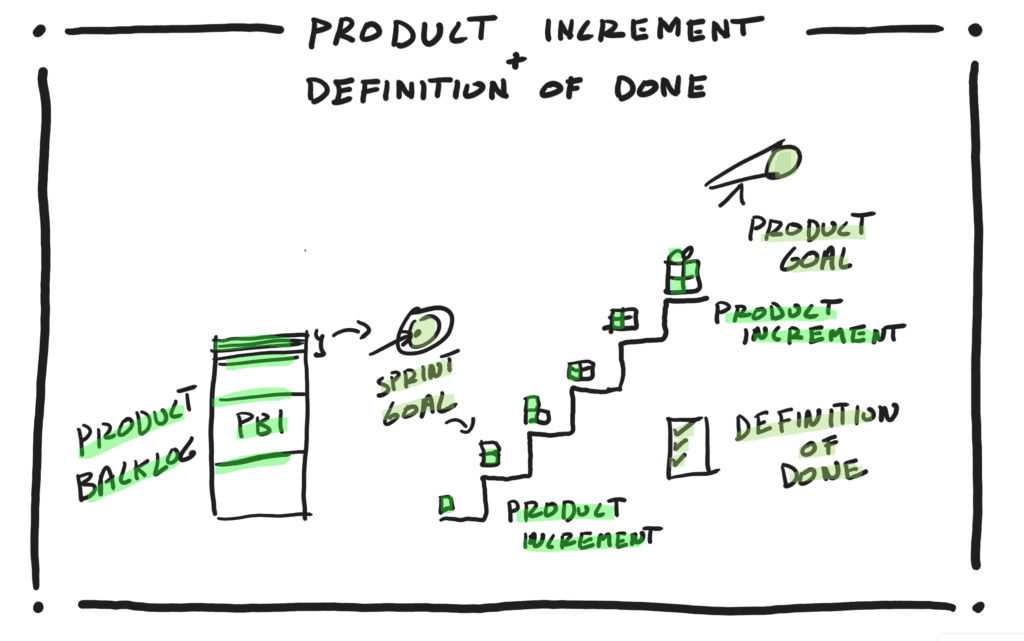
The most fundamental characteristic that dictates whether an increment is “done” is its adherence to a team’s Definition of Done (DoD). The DoD is a shared understanding within the development team and stakeholders about what it means for work to be complete. It’s a checklist of activities that must be performed for every Product Backlog Item (PBI) to be considered part of a releasable increment. This isn’t just a list of tasks; it’s a commitment to quality and readiness.
For example, a DoD might include:
- Code is written and peer-reviewed.
- Unit tests pass with X% code coverage.
- Integration tests pass.
- Acceptance criteria are met and verified by Product Owner/QA.
- Documentation (e.g., user stories, API docs) is updated.
- No critical bugs exist.
- Deployed to a staging environment.
The DoD is dynamic; it evolves as the team matures and as the product’s needs change. It serves as a clear quality gate, preventing incomplete work from being declared “done” and accumulating technical debt.
The Importance of a Shipped, Potentially Releasable Product
A crucial characteristic of a done increment is its potential for release. This means that upon the completion of a Sprint, the increment is in a state where it could be deployed to production, even if the decision is made not to release it immediately. This readiness for release forces teams to maintain high quality standards throughout the development process. It’s not about actually releasing every increment, but about being able to release it. This characteristic emphasizes:
- Zero known critical defects: An increment with critical bugs cannot be considered potentially releasable.
- Production-grade quality: The code, infrastructure, and user experience should be robust enough for actual users.
- No dependencies blocking release: All necessary components, configurations, and external integrations must be functional.
This “potentially releasable” characteristic fosters discipline and ensures that the team isn’t just building features, but building a robust product piece by piece.
Beyond Code Complete: Quality and Functionality
Many novice teams mistakenly equate “code complete” with “done.” However, a truly done increment goes far beyond merely having all lines of code written. It encompasses verifiable quality and fully realized functionality. This means:
- Functionality is fully implemented: All aspects of the user story or PBI are working as intended.
- Robustness and error handling: The feature behaves gracefully under various conditions, including unexpected inputs or system states.
- Performance considerations: The increment meets predefined performance benchmarks, where applicable.
- Security compliance: Any relevant security requirements are met and tested.
This holistic view ensures that what is delivered is not just an assembly of code, but a valuable, working solution that satisfies its intended purpose and adheres to established non-functional requirements.
Key Characteristics of a Truly Done Increment
Building on the core concepts, several specific characteristics define a truly done increment, distinguishing it from merely “almost done” or “partially complete” work.
Functional and Tested: Meeting Acceptance Criteria
Perhaps the most tangible characteristic is that the increment is fully functional and rigorously tested, meeting all specified acceptance criteria. Each user story or feature typically comes with a set of acceptance criteria that define the conditions under which the feature is considered complete and correct from a user’s perspective.
- User Story Fulfillment: The increment delivers all the functionality described in the associated user stories.
- Successful Test Execution: All levels of testing—unit, integration, system, and potentially user acceptance testing (UAT)—have been executed, and all relevant tests have passed. This includes both positive and negative test cases to ensure robustness.
- Verification by Product Owner: The Product Owner or a designated stakeholder has reviewed the increment and verified that it meets their expectations and the defined acceptance criteria.
Without this characteristic, the increment is incomplete and cannot reliably deliver value.
Integrated and Cohesive: Part of the Larger Product
A done increment is not an isolated piece of work; it is fully integrated into the main codebase and works cohesively with existing functionality. This means:
- Merged to main branch: The code has been merged into the product’s main development branch (e.g.,
mainormaster). - No regression: The new functionality does not break or negatively impact existing features. Continuous integration practices are crucial here, running automated tests upon every code commit.
- Interoperability: If the increment interacts with other system components or external services, these interactions are functional and stable.
This integration characteristic prevents the accumulation of integration debt, which can become incredibly complex and costly to resolve later in the development cycle.
Reviewed and Approved: Stakeholder Validation
Another critical characteristic is that the increment has undergone necessary reviews and received approval from relevant stakeholders. This extends beyond internal code reviews to include validation from product owners, business analysts, and sometimes even end-users.
- Code Review: Peers have reviewed the code for quality, adherence to coding standards, maintainability, and potential bugs.
- Product Owner Review: The Product Owner has actively engaged in reviewing the functionality, often during the Sprint Review, to confirm it aligns with the vision and requirements.
- User Feedback (Optional but valuable): For certain increments, early user feedback might be incorporated to ensure the solution genuinely meets user needs.
This review and approval process ensures alignment, catches discrepancies early, and builds shared understanding and confidence in the delivered work.
Documented and Understood: Maintainability and Future Development
While Agile prioritizes working software over comprehensive documentation, a done increment still possesses sufficient documentation to ensure its maintainability and facilitate future development. This isn’t about writing lengthy manuals but about providing clear, concise, and relevant information.
- Technical Documentation: API documentation, architectural decisions, and complex algorithms are documented where necessary for future developers.
- User-facing Documentation: If the feature requires user guides, release notes, or help articles, these are drafted or updated.
- Knowledge Transfer: The development team understands the new functionality well enough to support it and build upon it in subsequent Sprints.
This characteristic ensures that the value delivered by the increment can be sustained and expanded upon without unnecessary friction.
Benefits of Adhering to a Strong Definition of Done
The consistent delivery of done increments brings a multitude of benefits that resonate throughout the entire product lifecycle and organization.
Enhanced Predictability and Transparency
When an increment is truly “done” according to a clear DoD, it dramatically improves predictability and transparency. Stakeholders know exactly what they are getting and when, fostering trust and reducing uncertainty. The progress reported is tangible and verifiable, moving away from subjective “percent complete” metrics.
Reduced Technical Debt and Rework
A rigorous DoD acts as a proactive measure against technical debt. By ensuring quality, testing, and integration are part of every increment, teams avoid accumulating shortcuts and incomplete work that would inevitably require costly rework down the line. This leads to cleaner codebases and more stable products.
Increased Stakeholder Trust and Satisfaction
Delivering a steady stream of high-quality, functional increments cultivates stronger trust and satisfaction among stakeholders. They see tangible progress, can provide early feedback on working software, and feel more involved in the product’s evolution. This collaborative relationship is vital for long-term project success.
Improved Team Morale and Autonomy
For development teams, consistently achieving “done” increments boosts morale and fosters a sense of accomplishment. It provides clear milestones, reduces frustration from unfinished work, and empowers the team with greater autonomy and self-organization, knowing they are delivering real value regularly.
Challenges and Best Practices in Achieving a Done Increment
While the benefits are clear, consistently achieving “done” increments comes with its own set of challenges, particularly for teams new to Agile or those with complex legacy systems.
Common Pitfalls: Incomplete or Ambiguous DoD
One of the most common pitfalls is an incomplete or ambiguous Definition of Done. If the DoD is not clearly articulated, understood, and agreed upon by the entire team, different interpretations can lead to inconsistent quality and increments that are not truly “done.” Regular review and refinement of the DoD are essential.
Evolving the Definition of Done
The DoD is not static; it should evolve with the team’s maturity and the product’s needs. As teams gain experience, improve their automation, or face new quality requirements (e.g., security certifications), their DoD should adapt to reflect these higher standards. This continuous improvement ensures that the “done” state remains meaningful and challenging.
Tools and Techniques for Ensuring “Doneness”
Leveraging the right tools and techniques can significantly aid in consistently delivering done increments:
- Test Automation: Automated unit, integration, and UI tests are crucial for quickly verifying functionality and preventing regressions.
- Continuous Integration/Continuous Delivery (CI/CD): CI/CD pipelines automate the build, test, and deployment processes, ensuring that code is continuously integrated and ready for release.
- Code Review Tools: Platforms that facilitate peer code reviews are essential for maintaining code quality and knowledge sharing.
- Version Control Systems: Robust version control (e.g., Git) ensures proper code management, branching strategies, and collaboration.
- Definition of Done Checklist: A visible, agreed-upon checklist helps ensure all DoD items are addressed for every PBI.
The “Done Increment” as a Foundation for Continuous Delivery
Ultimately, the concept of a done increment is not just about finishing a Sprint; it’s a foundational element for sophisticated modern development practices like Continuous Delivery (CD).
From Increment to Release: The Pipeline
In a true CD environment, every done increment can potentially flow through an automated pipeline directly to production. The “potentially releasable” characteristic becomes “actually releasable” with minimal additional effort. This allows organizations to deploy changes multiple times a day, responding rapidly to market demands and user feedback.
The Role of Automation and CI/CD
The robust testing, integration, and quality assurance inherent in a done increment are precisely what CI/CD pipelines automate. Without a clear and consistently met DoD, an automated pipeline would simply push broken or incomplete software faster. Thus, the done increment serves as the quality gate for the entire delivery process.

The Business Value of Rapid, Reliable Delivery
By embracing the “done increment” philosophy, organizations unlock the ability to deliver value to customers more frequently, reliably, and with higher quality. This rapid, reliable delivery translates directly into increased business value, competitive advantage, and ultimately, greater customer satisfaction.
In conclusion, a done increment is far more than just a task completed; it is a fully functional, thoroughly tested, integrated, and quality-assured piece of software that aligns with a shared Definition of Done and is potentially ready for release. It is the bedrock of Agile success, enabling predictable progress, reducing risk, fostering collaboration, and empowering teams to consistently deliver tangible value in the ever-evolving landscape of technology.
aViewFromTheCave is a participant in the Amazon Services LLC Associates Program, an affiliate advertising program designed to provide a means for sites to earn advertising fees by advertising and linking to Amazon.com. Amazon, the Amazon logo, AmazonSupply, and the AmazonSupply logo are trademarks of Amazon.com, Inc. or its affiliates. As an Amazon Associate we earn affiliate commissions from qualifying purchases.