
In the landscape of modern personal finance, healthcare is often the largest “wildcard” expense. For many professionals and families, the traditional model of high-premium, low-deductible health insurance is becoming a relic of the past. Enter the Consumer-Driven Health Plan (CDHP). While it is technically a health insurance product, a CDHP is more accurately described as a financial strategy that integrates insurance coverage with tax-advantaged savings.
Understanding what a CDHP is, how it functions, and the financial leverage it provides is essential for anyone looking to optimize their annual budget and long-term wealth accumulation. In this guide, we will break down the mechanics of CDHPs through the lens of personal finance, focusing on how these plans can serve as powerful tools for both immediate cost-cutting and retirement planning.
The Mechanics of a Consumer-Driven Health Plan (CDHP)
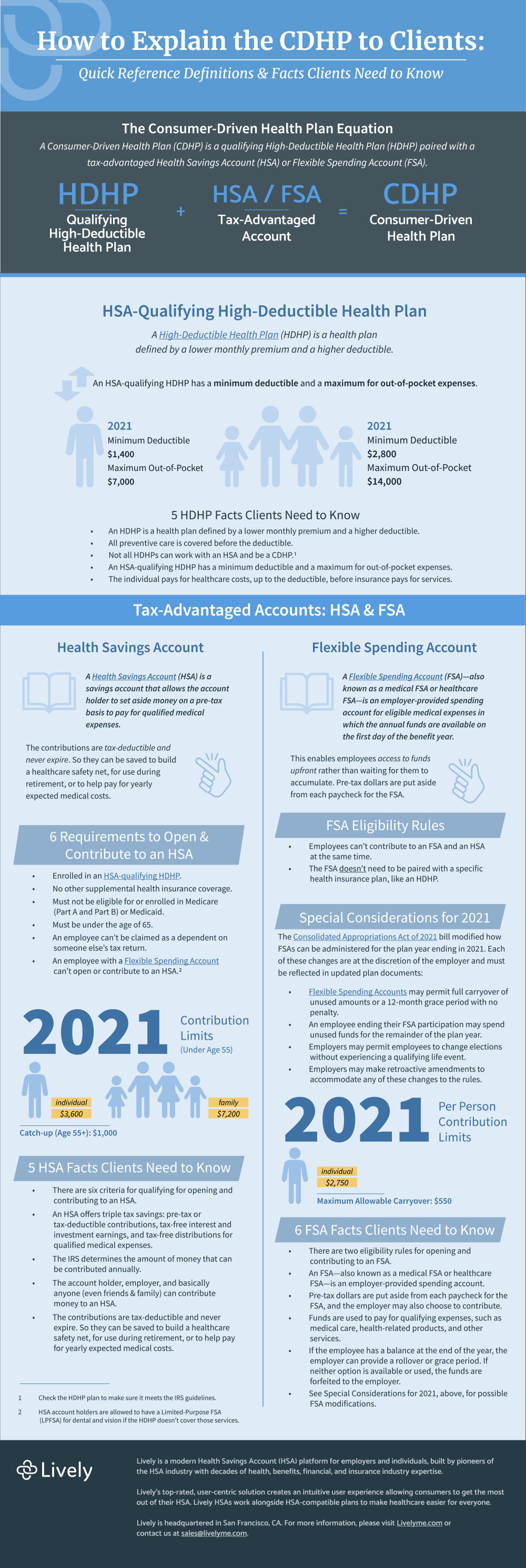
At its core, a Consumer-Driven Health Plan is a type of health insurance that gives the policyholder more control over how their healthcare dollars are spent. It is characterized by lower monthly premiums and higher deductibles compared to traditional plans like Health Maintenance Organizations (HMOs) or Preferred Provider Organizations (PPOs). The “consumer-driven” aspect refers to the shift in responsibility: the individual takes on a more active role in managing their healthcare costs, often incentivized by the ability to save the money they don’t spend.
The Core Components of a CDHP
A CDHP is typically composed of two distinct parts. The first is a High-Deductible Health Plan (HDHP). This is the actual insurance policy that protects you against catastrophic medical costs once you meet a certain spending threshold. The second component is a tax-advantaged funding account, most commonly a Health Savings Account (HSA) or, in some corporate settings, a Health Reimbursement Arrangement (HRA).
To qualify as a CDHP, the plan must meet specific IRS guidelines regarding the minimum deductible and the maximum out-of-pocket limit. For 2024 and 2025, these thresholds are adjusted for inflation, ensuring that the plan maintains its status as a high-deductible vehicle that allows for HSA contributions.
How CDHPs Differ from Traditional PPO or HMO Plans
Traditional plans operate on a “co-pay” model. When you visit a doctor, you pay a fixed $20 or $40 fee, and the insurance company covers the rest. In exchange for this predictability, you pay a high monthly premium—essentially a “subscription fee” for healthcare access.
A CDHP flips this model. You pay a much lower monthly premium, but you are responsible for the full negotiated cost of your medical care until you reach your deductible. For example, a doctor’s visit might cost $150 instead of a $20 co-pay. However, the money you save on premiums can be diverted into a savings account, where it remains your property rather than disappearing into the insurance company’s coffers.
The Financial Engine: Health Savings Accounts (HSAs) and Tax Benefits
The primary reason financial advisors often recommend CDHPs is the associated Health Savings Account (HSA). In the world of personal finance, the HSA is frequently cited as the most tax-efficient investment vehicle available in the United States—even surpassing the 401(k) and the Roth IRA.
Triple Tax Advantages of the HSA
The HSA offers a “triple tax advantage” that is unique in the financial world:
- Tax-Deductible Contributions: Every dollar you contribute to your HSA reduces your taxable income for the year. If you contribute $4,000 and are in the 24% tax bracket, you effectively save $960 in federal taxes.
- Tax-Deferred Growth: Any interest or investment gains earned on the funds within the HSA are not taxed. Unlike a standard brokerage account, you do not pay capital gains or dividend taxes as your balance grows.
- Tax-Free Withdrawals: As long as the funds are used for “qualified medical expenses,” the withdrawals are completely tax-free. This includes everything from doctor visits and prescriptions to dental work and vision care.
Using the HSA as a Long-Term Investment Vehicle
The true power of a CDHP is realized when you treat the HSA as a retirement account rather than a checking account. Many HSAs allow you to invest your balance in mutual funds or ETFs once you cross a certain cash threshold (usually $1,000).
By paying for current out-of-pocket medical expenses using your regular cash flow and letting the HSA funds compound over decades, you can build a massive tax-free “healthcare war chest” for retirement. Furthermore, after age 65, the HSA functions much like a traditional IRA: you can withdraw funds for non-medical expenses at your normal income tax rate without penalty. If you use them for medical expenses, they remains tax-free.

Analyzing the Cost-Benefit Ratio of CDHPs
Choosing a CDHP is a math problem. To determine if a CDHP is the right financial move, you must look beyond the deductible and analyze the “total cost of ownership.”
Lower Premiums vs. Higher Deductibles
The most immediate benefit of a CDHP is the premium savings. It is not uncommon for a CDHP to cost $100 to $300 less per month than a traditional PPO. This represents a “guaranteed return” on your choice. If you save $2,400 a year in premiums, that is $2,400 that stays in your pocket or goes into your HSA.
However, you must be prepared to hit the deductible. If you have a $3,000 deductible, you are essentially self-insuring for those first three thousand dollars. The financial “break-even point” occurs when the premium savings plus any employer contributions to your HSA exceed the additional out-of-pocket costs you might incur under the high deductible.
Out-of-Pocket Maximums: Your Safety Net
A common fear regarding CDHPs is the “unlimited” cost of a major illness. This is a misconception. All CDHPs are required by law to have an Out-of-Pocket (OOP) Maximum. Once you reach this limit through deductibles and coinsurance, the insurance company pays 100% of all covered expenses for the remainder of the plan year.
From a financial planning perspective, the OOP Maximum is your “worst-case scenario.” If you have enough liquidity in your emergency fund or HSA to cover the OOP Maximum, the CDHP actually offers excellent financial protection against catastrophic events while saving you money on the “front end” via lower premiums.
Strategies for Managing a CDHP Effectively
A CDHP requires a different mindset than traditional insurance. Because you are spending “your” money (from the HSA) rather than the “insurance company’s” money, you are incentivized to act as a savvy consumer.
Budgeting for the Deductible
Financial success with a CDHP depends on liquidity. You should never enroll in a CDHP if you do not have the cash flow or savings to cover a surprise $1,000 or $2,000 medical bill. A proactive strategy is to take the money you would have spent on a higher PPO premium and automate a transfer of that exact amount into your HSA. This ensures that the funds are available when a medical bill arrives, maintaining the integrity of your monthly budget.
Shopping for Healthcare as a Consumer
One of the goals of CDHPs is to drive down healthcare costs by encouraging transparency. When you have a CDHP, you should ask about the “cash price” or “negotiated rate” for procedures. For example, an MRI might cost $1,500 at a hospital-affiliated imaging center but only $500 at a standalone clinic.
Many insurance providers offer transparency tools that allow CDHP members to compare the costs of prescriptions and procedures at different providers in their area. By spending ten minutes researching a procedure, a CDHP member can save hundreds of dollars that stay in their HSA, whereas a PPO member with a fixed co-pay has no incentive to find a more cost-effective provider.
Is a CDHP Right for Your Financial Portfolio?
While the financial benefits of a CDHP and HSA are significant, they are not a one-size-fits-all solution. Your choice should be dictated by your current health status, your financial liquidity, and your long-term investment goals.
The Ideal Candidate for a CDHP
The CDHP is often a “no-brainer” for two types of people:
- The Healthy Professional: If you rarely go to the doctor and only use insurance for an annual physical (which is covered at 100% under the ACA), the CDHP allows you to stop overpaying for insurance you don’t use.
- The High-Earner/Investor: If you have the cash flow to cover your deductible and want to maximize every possible tax-advantaged investment vehicle, the CDHP is the gateway to the HSA, which is a peerless wealth-building tool.
When to Stick with Traditional Coverage
A CDHP may not be the best financial choice if you have a known chronic condition that requires expensive monthly prescriptions or frequent specialist visits that would cause you to hit your deductible very early every year without the premium savings to offset it. Furthermore, if you live paycheck-to-paycheck and cannot afford a sudden $500 bill, the “safety” of a higher-premium PPO with a low co-pay might be worth the extra cost for the sake of cash-flow predictability.
Conclusion
A Consumer-Driven Health Plan is more than just an insurance policy; it is a sophisticated financial tool that rewards proactive management and long-term thinking. By shifting the focus from “pre-paying” for healthcare through high premiums to “investing” in healthcare through an HSA, individuals can gain greater control over their net worth. When managed correctly, a CDHP doesn’t just provide medical coverage—it becomes a cornerstone of a robust personal finance strategy.
aViewFromTheCave is a participant in the Amazon Services LLC Associates Program, an affiliate advertising program designed to provide a means for sites to earn advertising fees by advertising and linking to Amazon.com. Amazon, the Amazon logo, AmazonSupply, and the AmazonSupply logo are trademarks of Amazon.com, Inc. or its affiliates. As an Amazon Associate we earn affiliate commissions from qualifying purchases.