
The world around us is a complex web of interactions, where events seem to follow one another in an endless chain. Understanding these connections, particularly which events genuinely cause others, is not merely a philosophical pursuit but a mathematical imperative, especially in the realm of technology. In mathematics, defining and identifying a causal relationship moves beyond simple observation, demanding rigorous frameworks to distinguish true cause-and-effect from mere correlation. This distinction underpins much of the advancements in AI, data science, and system design, allowing engineers and scientists to build more intelligent, predictable, and robust technological solutions.

The Foundational Concepts of Causality
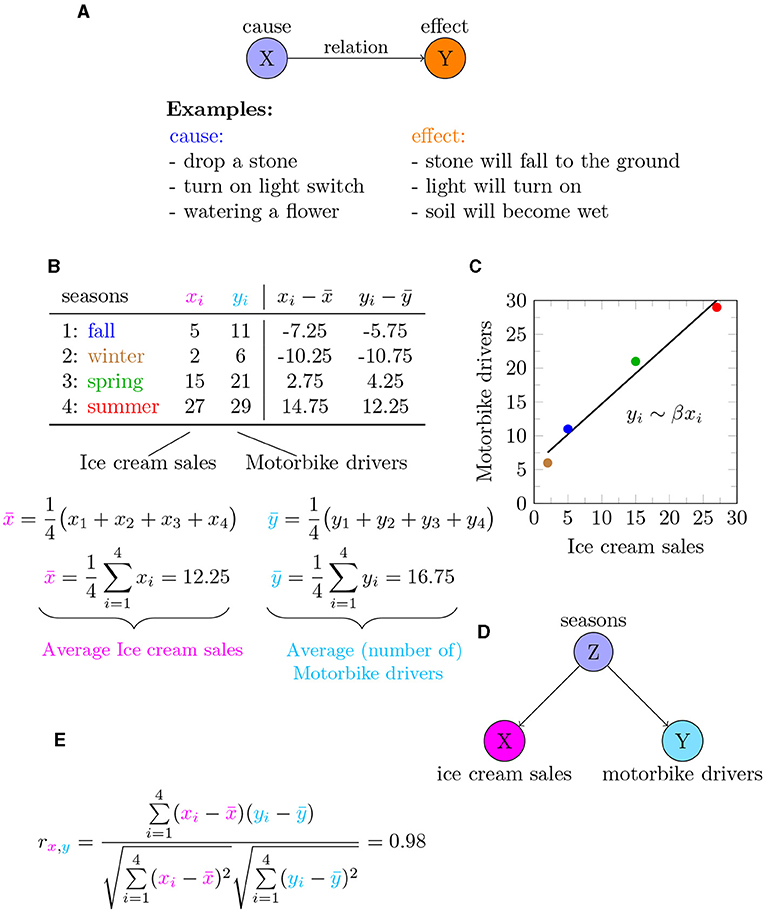
At its core, a causal relationship implies that a change in one variable (the cause) directly leads to a change in another variable (the effect), assuming all other relevant factors remain constant. While seemingly intuitive, formalizing this concept mathematically is a nuanced task.
Correlation vs. Causation: A Critical Distinction
Perhaps the most fundamental lesson in causal inference is the stark difference between correlation and causation. Correlation quantifies the extent to which two variables move together. If variable A tends to increase when variable B increases, they are positively correlated. If A increases when B decreases, they are negatively correlated. Mathematically, correlation is often measured by coefficients like Pearson’s r.
However, correlation does not imply causation. A classic example is the observed correlation between ice cream sales and shark attacks. Both tend to increase in summer. The common cause is warm weather, which leads to more people eating ice cream and more people swimming (and thus encountering sharks). Ice cream sales do not cause shark attacks, nor vice versa. In technology, mistaking correlation for causation can lead to faulty predictions, ineffective interventions, and wasted resources. For instance, an increase in website traffic might correlate with an increase in sales, but the traffic itself might be an effect of a separate marketing campaign that is the true cause of both traffic and sales. Understanding this distinction is paramount for building robust AI models and data-driven strategies.
The Philosophical Roots in Mathematics and Logic
The concept of causality has deep roots in philosophy, stretching back to Aristotle and Hume, and these philosophical inquiries have profoundly influenced its mathematical formalization. In mathematics and logic, causality often hinges on counterfactuals: “If X had not occurred, Y would not have occurred.” This idea forms the basis for many modern causal inference techniques. Mathematician and computer scientist Judea Pearl, a pioneer in causal inference, brought these philosophical ideas into a computable framework using probability theory and graph theory. His work allowed for the representation of causal assumptions and the derivation of causal effects from data, even in observational studies where direct experimentation is impossible. This formalization provides the mathematical language necessary for discussing and testing causal hypotheses within complex systems.
Counterfactuals and Potential Outcomes
The “potential outcomes” framework, often attributed to Donald Rubin, provides another mathematical lens through which to view causality. It imagines what would have happened to an individual (or a unit of observation) under different treatment conditions. For example, if we want to know the causal effect of a new software feature on user engagement, we imagine two potential outcomes for the same user: their engagement level if they had the new feature, and their engagement level if they did not have the new feature. The causal effect is the difference between these two potential outcomes.
The challenge, of course, is that we can only observe one of these potential outcomes for any given user. This missing data problem is central to causal inference. Mathematical methods are then employed to estimate this unobservable counterfactual, typically by comparing groups that are as similar as possible except for their exposure to the cause. This framework provides the quantitative basis for evaluating interventions and understanding “what-if” scenarios crucial for decision-making in tech, from A/B testing user interfaces to assessing the impact of new algorithms.
Mathematical Frameworks for Causal Inference
Moving beyond the conceptual, mathematics provides concrete tools and frameworks to identify and quantify causal relationships. These frameworks are the backbone of data-driven decision-making and AI development.
Structural Causal Models (SCMs) and Directed Acyclic Graphs (DAGs)
Judea Pearl’s Structural Causal Models (SCMs) are a powerful mathematical framework for representing causal relationships. An SCM consists of a set of structural equations that describe how variables are generated from other variables and unobserved disturbances, coupled with a Directed Acyclic Graph (DAG) that visually represents these relationships.
In a DAG, nodes represent variables, and directed arrows indicate a direct causal influence. For example, an arrow from A to B means A causes B. The “acyclic” part means there are no feedback loops where a variable can indirectly cause itself. DAGs allow us to:
- Visualize causal assumptions: Clearly show which variables are assumed to cause others.
- Identify confounding factors: Spot variables that influence both the cause and the effect, potentially creating spurious correlations.
- Determine identification strategies: Mathematically ascertain whether a causal effect can be uniquely estimated from the available data, even when direct experimentation is impossible.
- Derive testable implications: Predict statistical associations that must hold if the causal model is correct.
SCMs and DAGs are increasingly used in AI and data science to design experiments, understand algorithmic bias, and build explainable AI systems by explicitly modeling the underlying causal mechanisms.
Randomized Controlled Trials (RCTs) as the Gold Standard
Mathematically and statistically, the Randomized Controlled Trial (RCT) is often considered the “gold standard” for establishing causal relationships. In an RCT, subjects are randomly assigned to either a treatment group (exposed to the cause) or a control group (not exposed). The key here is randomization. If the assignment is truly random and the sample size is sufficiently large, then, on average, the two groups will be statistically identical in all characteristics except for their exposure to the treatment. Any subsequent difference in outcomes between the groups can then be causally attributed to the treatment.
In technology, RCTs manifest as A/B tests, where different versions of a product, feature, or algorithm are shown randomly to different user groups. For example, a social media company might randomly show half its users a new feed algorithm (treatment) and the other half the old algorithm (control). By comparing engagement metrics, they can causally determine the impact of the new algorithm. The mathematical beauty lies in its simplicity and the strong causal claims it allows, provided the randomization is executed flawlessly.
Quasi-Experimental Designs and Observational Data
While RCTs are ideal, they are not always feasible or ethical in real-world technological contexts. For instance, it’s difficult to randomly assign users to “be exposed to a data breach” or “not be exposed to a data breach” to study its impact. In such cases, mathematicians and statisticians turn to quasi-experimental designs and methods for causal inference from observational data.
These methods employ statistical techniques to mimic the conditions of an RCT. Techniques include:
- Regression Discontinuity: Analyzing effects around a cutoff point for treatment assignment.
- Instrumental Variables: Using a variable that affects the treatment but not the outcome directly, except through the treatment.
- Difference-in-Differences: Comparing changes in outcomes over time between a treated group and a control group.
- Propensity Score Matching/Weighting: Statistically balancing confounding variables between treated and control groups to make them comparable.
These methods require strong assumptions, often involving the unobservability of confounding factors. The mathematical challenge lies in articulating these assumptions clearly and then using complex statistical models to adjust for biases and estimate causal effects. These are crucial for tech companies analyzing the impact of historical changes, policy decisions, or large-scale product rollouts where randomized experimentation wasn’t possible.
Causal Relationships in Modern Technology
The mathematical understanding of causality is no longer confined to academic papers; it is actively shaping the development and deployment of cutting-edge technology.
AI and Machine Learning: Beyond Prediction to Understanding
Traditional machine learning models are primarily geared towards prediction: given inputs, what is the most likely output? For example, a model might predict whether a user will click an ad. However, simply predicting correlation can lead to brittle models. If a correlation changes due to underlying causal shifts, the model’s performance can degrade.
Causal AI aims to move beyond prediction to understanding. It seeks to answer “why” questions:
- “Why did this user click on the ad?” (i.e., what caused the click?)
- “If we change the price, what will be the causal effect on sales?”
- “What caused this system failure, and how can we intervene to prevent it?”
By incorporating causal inference, AI systems can become more robust, adaptable, and explainable. For example, in personalized recommendations, instead of just showing items correlated with past purchases, a causal recommender might identify items that cause higher long-term user satisfaction. This paradigm shift enables AI to suggest interventions that truly drive desired outcomes, rather than just identifying patterns.
Data Science and A/B Testing: Optimizing User Experience
A/B testing is a direct application of RCTs in the digital realm. Data scientists meticulously design experiments to causally evaluate the impact of changes to websites, apps, and software features. Whether it’s the color of a button, the layout of a page, or a new algorithm for content delivery, A/B tests allow tech companies to measure the causal effect on key metrics like click-through rates, conversion rates, and user engagement.
The mathematical rigor behind these tests ensures that observed differences are statistically significant and genuinely attributable to the changes made. This iterative process of hypothesis formulation, causal experimentation, and data analysis is fundamental to optimizing user experience, product development, and overall business strategy in the tech industry.
Software Engineering and System Diagnostics
In software engineering, understanding causal relationships is critical for debugging, performance optimization, and building resilient systems. When a system fails or performs poorly, engineers need to pinpoint the root cause. This isn’t always straightforward, as complex software architectures involve many interdependent components.
Causal inference techniques, sometimes leveraging event logs and system metrics, can help identify which component or sequence of events caused a particular issue, rather than just which events were correlated with it. For instance, an increase in database load might correlate with slower response times, but causal analysis might reveal that a specific recent code deployment caused the database load increase, which then caused the slower response times. This allows engineers to fix the actual problem rather than chasing symptoms. Furthermore, in designing distributed systems, understanding causal dependencies between services helps in architecting fault-tolerant and predictable systems.
Challenges and Ethical Considerations in Causal AI
While the mathematical formalization of causality offers immense promise for technology, it also introduces significant challenges and ethical dilemmas that demand careful consideration.
The Problem of Confounding Variables
A major hurdle in establishing causal relationships, especially from observational data, is the presence of confounding variables. These are variables that influence both the cause and the effect, creating a spurious correlation that can mislead analysis. Mathematically identifying and properly accounting for confounders is crucial but often difficult. If a confounder is unobserved or not correctly modeled, any causal claim derived from the data could be incorrect. In complex tech environments with vast amounts of interconnected data, ensuring all relevant confounders are considered is a constant challenge, requiring deep domain expertise and sophisticated statistical methods.
Explainable AI (XAI) and Trust
Causal inference is a cornerstone of Explainable AI (XAI). While traditional “black box” AI models can make predictions, they often struggle to explain why they made a particular prediction. Causal models, by their very nature, aim to uncover the underlying “why.” If an AI system can articulate the causal factors leading to a decision or prediction (e.g., “this loan was denied because of factors X, Y, and Z, which causally contribute to default risk”), it fosters greater transparency and trust. The mathematical challenge here is to develop methods that can extract and present these causal explanations in an understandable way, bridging the gap between complex algorithms and human intuition.

Bias and Fairness in Causal Models
The application of causal models in technology also brings ethical concerns related to bias and fairness. If a causal model is trained on biased data or reflects existing societal biases, it can perpetuate or even amplify those biases. For instance, if a causal model for hiring decisions learns that certain demographic groups are causally linked to lower performance (due to systemic biases in historical data or evaluation criteria), it could lead to discriminatory outcomes.
Mathematically, ensuring fairness in causal models involves rigorous methods to detect and mitigate bias. This often includes counterfactual fairness, where an outcome for an individual should be the same in a counterfactual world where only sensitive attributes (like race or gender) were different. Developing robust causal fairness metrics and intervention strategies is an active area of research, emphasizing that the mathematical pursuit of causality must always be coupled with ethical responsibility in its technological application.
The quest to understand “what is a causal relationship in math” is a journey into the very fabric of how we understand the world and build intelligent systems. From foundational philosophical concepts to advanced mathematical frameworks and their critical role in modern tech, causality remains a central, evolving, and indispensable field for innovation.
aViewFromTheCave is a participant in the Amazon Services LLC Associates Program, an affiliate advertising program designed to provide a means for sites to earn advertising fees by advertising and linking to Amazon.com. Amazon, the Amazon logo, AmazonSupply, and the AmazonSupply logo are trademarks of Amazon.com, Inc. or its affiliates. As an Amazon Associate we earn affiliate commissions from qualifying purchases.