
In our increasingly interconnected world, the invisible threads that weave through our homes and offices are more crucial than ever. While Wi-Fi has become ubiquitous, the silent workhorse for many of our digital connections remains the humble network cable. Among the various types, the Cat5 cable has played a significant role in shaping the landscape of wired networking. But what exactly is a Cat5 cable, and why has it been so important? This article will dive deep into the world of Cat5, exploring its technical specifications, its evolution, and its place in the broader ecosystem of technology, brand perception, and even financial considerations.

The Foundation: Understanding Network Cabling and Cat5’s Place
Before we dissect Cat5 specifically, it’s essential to understand the broader concept of network cabling. At its core, a network cable, also known as an Ethernet cable, is a physical medium used to transmit data between devices on a computer network. These cables are the arteries that carry digital information, enabling everything from browsing the web and streaming movies to conducting business transactions and controlling smart home devices.
The “Cat” in Cat5 stands for “Category.” This designation signifies a standardized classification system developed by the Telecommunications Industry Association (TIA) and the Electronic Industries Alliance (EIA) to define the performance characteristics of twisted-pair cabling. Each category represents a step up in speed, bandwidth, and signal integrity, designed to meet the ever-increasing demands of modern data transfer.
Cat5 was one of the earliest widely adopted categories, paving the way for faster and more robust networking standards. It was designed to support Ethernet standards operating at speeds of up to 100 Mbps (Megabits per second), primarily through Fast Ethernet (100BASE-TX). This was a monumental leap forward from earlier networking technologies that operated at much slower speeds. For a long time, Cat5 was the de facto standard for wired home and office networks, forming the backbone of countless LANs (Local Area Networks).
Technical Specifications: The Anatomy of a Cat5 Cable
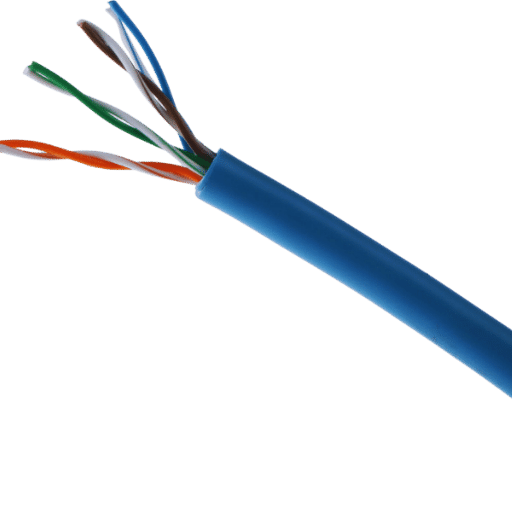
To truly understand what makes a Cat5 cable tick, we need to delve into its technical makeup. These cables are constructed with multiple pairs of insulated copper wires twisted together. This twisting is not arbitrary; it’s a critical engineering element designed to reduce electromagnetic interference (EMI) and crosstalk, which are both detrimental to data transmission.
The Twist: A Crucial Design Element
Each pair of wires within a Cat5 cable is twisted at a specific rate. The rate of twist varies between pairs, and this is a key differentiator between different categories. The twisting helps to cancel out the magnetic fields generated by adjacent wires, preventing them from interfering with each other’s signals. Think of it as a sophisticated form of noise cancellation for your data.
Unshielded vs. Shielded Twisted Pair (UTP vs. STP)
Cat5 cables can come in two main configurations: Unshielded Twisted Pair (UTP) and Shielded Twisted Pair (STP).
-
UTP (Unshielded Twisted Pair): This is the most common type of Cat5 cable. It relies solely on the twisting of the wire pairs to combat interference. UTP is generally more flexible, easier to install, and less expensive than STP, making it the go-to choice for most home and office environments where extreme interference is not a major concern.
-
STP (Shielded Twisted Pair): STP cables add an extra layer of protection in the form of a metallic foil or braid shield around the twisted pairs or around individual pairs. This shielding provides enhanced protection against EMI and crosstalk, making it suitable for environments with high levels of electrical noise, such as industrial settings or near powerful machinery. However, STP cables are typically more rigid, harder to terminate, and more expensive.
Connectors: The RJ45 Standard
At each end of a Cat5 cable, you’ll typically find an RJ45 connector. This is a modular plug that is standardized for Ethernet networking. The RJ45 connector has eight pins, and each pin is connected to a specific wire within the cable, ensuring that data flows in the correct pathways. The design of the RJ45 connector allows for a secure and reliable physical connection between devices like computers, routers, switches, and modems.
Evolution and Limitations: The Rise of Cat5e and Beyond
While Cat5 was revolutionary in its time, the relentless march of technology quickly outpaced its capabilities. As network speeds increased and bandwidth demands grew, newer, more advanced categories of Ethernet cable emerged. The most direct successor and a significant improvement on Cat5 is Cat5e (Enhanced Category 5).
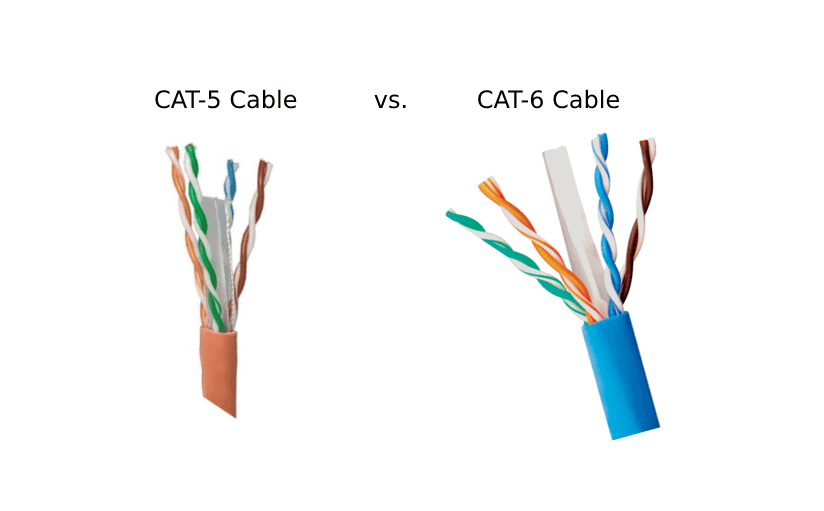
Cat5 vs. Cat5e: A Subtle but Significant Difference
Cat5e builds upon the foundation of Cat5 by offering improved specifications. The key enhancements in Cat5e include:
- Higher Performance: Cat5e is rated for speeds of up to 1,000 Mbps (1 Gigabit per second) over shorter distances, a tenfold increase over Cat5’s 100 Mbps. This makes it suitable for Gigabit Ethernet networks.
- Reduced Crosstalk: Cat5e features tighter twists in the wire pairs and improved construction techniques that significantly reduce crosstalk, leading to a cleaner signal and better performance.
- Stricter Standards: Cat5e adheres to more rigorous testing and performance standards, ensuring greater reliability and consistency.
For most modern networking applications, Cat5e has largely superseded Cat5. If you are setting up a new network or upgrading an existing one, Cat5e is generally the recommended minimum standard.
The evolution didn’t stop at Cat5e. Subsequent categories like Cat6, Cat6a, Cat7, and Cat8 have been developed to support even higher speeds (10 Gbps, 40 Gbps, and beyond) and greater bandwidths, catering to the demands of data centers, high-performance computing, and the burgeoning Internet of Things (IoT).
Practical Applications and Considerations: Where Cat5 Still Matters
Despite the advancements in newer categories, Cat5 cables are not entirely obsolete. Understanding their capabilities and limitations is still valuable for a variety of reasons, especially from a technology and financial perspective.
When Cat5 Might Still Suffice:
- Legacy Networks: Many older offices and homes still have existing Cat5 infrastructure. For networks that operate at 100 Mbps or less, and where performance demands are not high, these cables can still function perfectly adequately. Replacing them might not be a priority if the current performance is acceptable.
- Non-Critical Connections: For devices that don’t require high bandwidth or consistent high speeds, such as basic network printers or some older smart home devices, a Cat5 cable might be sufficient.
- Budget Constraints: In situations where budget is a primary concern and the performance needs are modest, utilizing existing Cat5 infrastructure can save money compared to a full upgrade to newer cabling standards. This touches on the Money aspect of our website’s focus. While investing in future-proof technology is often advisable, understanding the cost-benefit of different solutions is crucial.
Considerations for Cat5:
- Speed Limitations: The primary limitation of Cat5 is its speed. If you are experiencing slow internet speeds or network performance issues, the cable type could be a bottleneck. Upgrading to Cat5e or Cat6 can dramatically improve performance for devices connected via Ethernet.
- Future-Proofing: Investing in newer cable categories like Cat5e or Cat6 is a form of future-proofing your network. As technology advances, so will the demands on your network infrastructure. Using higher-rated cables ensures your network can handle future speed increases and bandwidth requirements. This also ties into the Brand aspect, as a reliable and fast network contributes to a positive user experience, which can reflect well on a business or service.
- Identification: Distinguishing between different cable categories can sometimes be challenging, as they often look very similar. Look for markings on the cable jacket. Cat5 cables are typically labeled as such, as are Cat5e and other categories.
Beyond the Wire: Network Performance and Brand Perception
The performance of your network infrastructure, including the type of cables used, has a direct impact on the user experience. In the realm of Technology, a fast and reliable network is paramount. Slow loading times, buffering, and dropped connections can lead to frustration and dissatisfaction.
This directly influences Brand perception. For businesses, a sluggish network can translate to lost productivity for employees, a poor customer experience for clients interacting with online services, and a general impression of inefficiency. Conversely, a robust and responsive network reflects positively on a company’s technological prowess and commitment to providing a seamless experience. This can be particularly important for tech companies, online service providers, and any business that relies heavily on digital operations.
From a Money perspective, while upgrading network infrastructure can involve an initial investment, it can lead to long-term cost savings through increased productivity, reduced downtime, and potentially lower energy consumption by more efficient networking equipment that higher bandwidth supports. Furthermore, understanding the capabilities and limitations of your current cabling can help you make informed decisions about when an upgrade is truly necessary, rather than investing in unnecessary hardware.
Conclusion: The Enduring Legacy of Cat5
In the grand tapestry of digital connectivity, the Cat5 cable, while perhaps overshadowed by its more advanced successors, holds a significant place. It was a foundational technology that enabled the widespread adoption of Ethernet networking, bringing wired internet speeds to homes and businesses at an unprecedented scale.
While Cat5’s 100 Mbps speed is a far cry from the multi-gigabit speeds we expect today, its legacy lies in its role as a stepping stone. It laid the groundwork for the faster and more robust cabling standards that followed, including the ubiquitous Cat5e, Cat6, and beyond. Understanding what a Cat5 cable is, its technical specifications, and its historical context provides valuable insight into the evolution of networking technology.
For individuals and businesses alike, a mindful approach to network infrastructure is crucial. While Cat5 might still serve specific, limited purposes, embracing newer categories like Cat5e and Cat6 is often the key to unlocking optimal performance, ensuring future scalability, and ultimately contributing to a seamless and efficient digital experience. The humble Cat5 cable may be aging, but its impact on the connected world we inhabit is undeniable.
aViewFromTheCave is a participant in the Amazon Services LLC Associates Program, an affiliate advertising program designed to provide a means for sites to earn advertising fees by advertising and linking to Amazon.com. Amazon, the Amazon logo, AmazonSupply, and the AmazonSupply logo are trademarks of Amazon.com, Inc. or its affiliates. As an Amazon Associate we earn affiliate commissions from qualifying purchases.