
In the intricate landscape of business finance, profitability is rarely determined by revenue alone. While sales figures grab headlines, the silent erosion of capital often occurs in the warehouse, the balance sheet, or the investment portfolio. One of the most critical, yet frequently underestimated, components of fiscal management is the “carrying cost.” Understanding this metric is the difference between a lean, agile operation and one shackled by unnecessary overhead.
At its core, a carrying cost—also known as a holding cost—represents the total expenses associated with storing unsold inventory or maintaining an asset over a specific period. Whether you are managing a retail supply chain, operating a manufacturing plant, or curating a portfolio of financial securities, carrying costs act as a constant drag on your bottom line. To master your cash flow, you must first master the art of calculating and minimizing these often invisible expenditures.
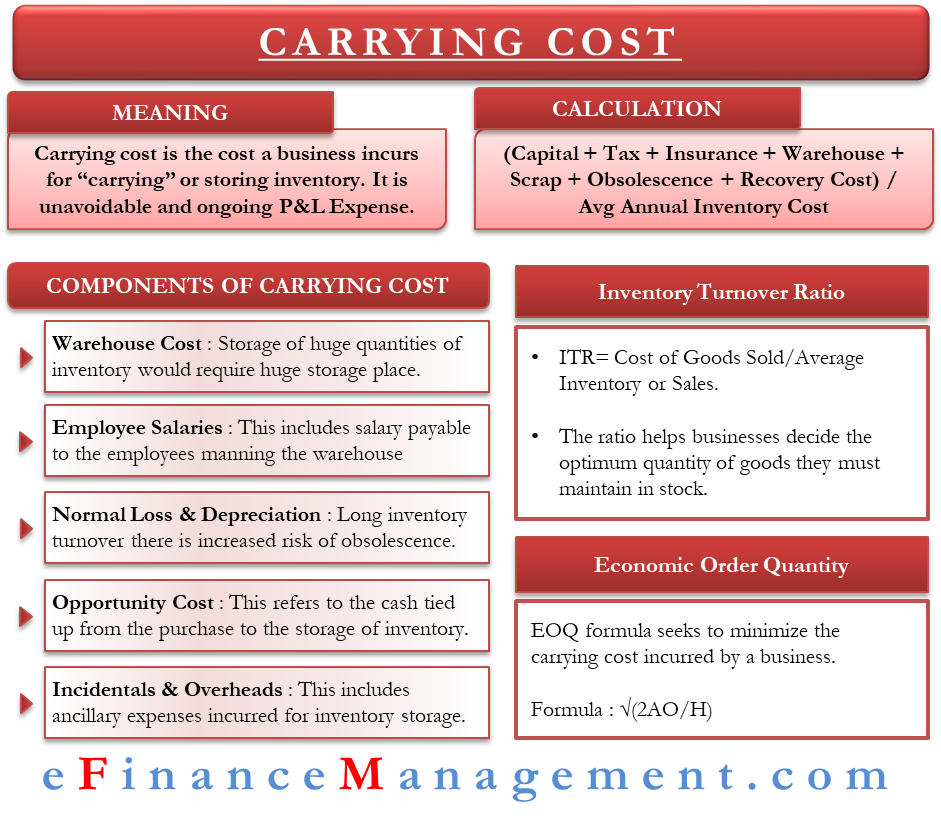
The Components of Carrying Costs in Inventory Management
For businesses dealing in physical goods, carrying costs are a primary metric of efficiency. If you are sitting on products that haven’t been sold, you are effectively paying rent for the privilege of keeping those items in your possession. These costs generally fall into four distinct categories: storage space, insurance, service costs, and depreciation.
Storage and Capital Tied Up
The most obvious component is the physical storage space. This includes warehouse rent, utilities, climate control, and facility maintenance. However, the more insidious element is the “opportunity cost” of capital. Money tied up in inventory is money that cannot be invested in marketing, product development, or debt reduction. If you have $100,000 worth of stock sitting on a shelf, that is $100,000 that isn’t earning interest or generating a return elsewhere in your business ecosystem.
Insurance and Risk
Inventory is an asset, but it is also a liability. To protect against theft, fire, floods, or natural disasters, businesses must carry insurance. These premiums are a direct carrying cost. Beyond insurance, there is the risk of obsolescence or spoilage. In fast-moving industries—such as consumer electronics or fashion—the value of inventory often declines the longer it remains in storage. If a product becomes outdated before it sells, the carrying cost effectively consumes the entirety of the potential profit margin.
Service and Handling Costs
Inventory does not magically maintain itself. It requires labor to receive, organize, move, count, and track. Furthermore, sophisticated inventory management systems (IMS) and the personnel required to operate them represent ongoing expenses. Every time a product is moved or processed, labor costs accumulate. When inventory levels are bloated, the complexity of managing that stock increases, leading to higher administrative overhead.
Carrying Costs in Financial Markets
While the term is most common in retail and supply chain management, carrying costs are equally pivotal in the world of investing and derivatives. In the financial sector, a carrying cost refers to the cost of holding a financial position. This is particularly relevant when dealing with margin accounts, futures contracts, and commodities.
Margin Interest and Leverage
When an investor buys securities on margin, they are borrowing money from a brokerage to increase their position size. The interest paid on that borrowed capital is a classic carrying cost. If an investor holds a long position, they must weigh the potential capital appreciation against the daily or monthly interest expense. If the cost of carrying that position exceeds the yield or growth of the asset, the trade is essentially hemorrhaging capital, even if the asset price remains stable.
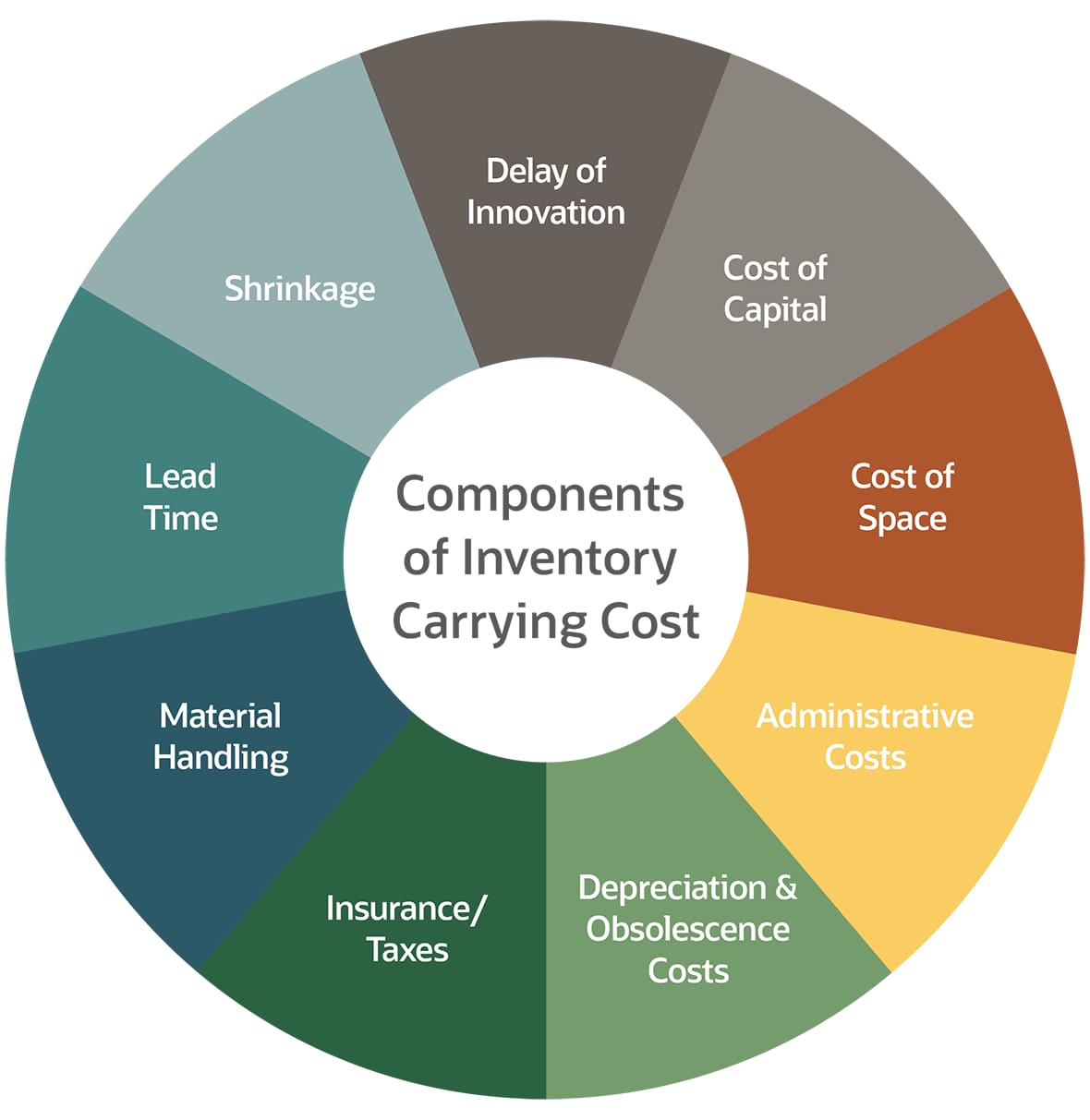
The Cost of Carry Model
In the futures market, the “Cost of Carry” model is a theoretical framework used to determine the fair price of a derivative. It is calculated by summing the storage costs, insurance, and the interest paid on borrowed funds, minus any income generated by the underlying asset (such as dividends or interest payments).
For example, if you are looking at a futures contract for gold, the carrying cost includes the secure storage of the physical metal and the interest lost on the cash used to purchase it. If you are looking at a stock, the dividend yield acts as a “negative” carrying cost, effectively reducing the expense of holding the position. Traders use this model to identify arbitrage opportunities; if the actual market price of a future deviates significantly from the calculated cost of carry, traders can execute trades to capture the spread.
Strategies to Optimize and Reduce Carrying Costs
The goal of any fiscal strategy is to minimize carrying costs without compromising operational effectiveness. Excessive inventory reduction can lead to “stock-outs”—losing sales because you don’t have enough product on hand—which is just as damaging as high carrying costs. Finding the equilibrium is the hallmark of sophisticated financial management.
Just-in-Time (JIT) and Lean Methodology
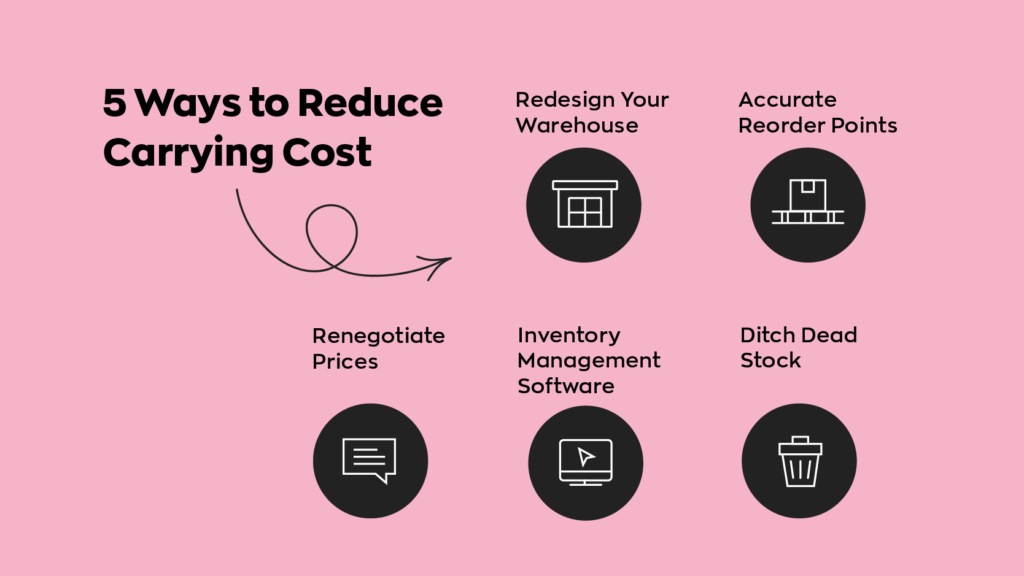
The Just-in-Time inventory model is designed specifically to slash carrying costs. By coordinating supply chains so that materials and products arrive exactly when they are needed for production or sale, companies can minimize the amount of stock they hold at any given time. While this requires a highly reliable supply chain and robust data forecasting, the reduction in warehousing and insurance expenses can significantly improve a company’s return on assets (ROA).
Data-Driven Forecasting
Modern businesses leverage predictive analytics and AI-driven software to anticipate demand cycles. Instead of relying on gut feeling, companies use historical sales data, seasonal trends, and macroeconomic indicators to optimize stock levels. When you accurately predict how much inventory you need, you stop paying for space that you don’t utilize. This shift from “pushing” inventory to “pulling” inventory is fundamental to cost optimization.
Asset Liquidation and Rebalancing
In the realm of personal finance and investing, optimizing carrying costs means regularly reviewing your portfolio. Are you holding underperforming assets that cost you in margin interest or management fees? Are you keeping too much capital in low-yield accounts?
Periodically rebalancing your portfolio allows you to shed assets that no longer serve your financial objectives. By liquidating stagnant positions, you free up cash flow that can be reallocated to higher-growth opportunities. In the context of business finance, this involves identifying “dead stock”—products that have been on the books for too long—and aggressively discounting them to recover the capital, rather than continuing to pay the storage and opportunity costs of holding them indefinitely.
The Long-Term Impact on Profitability
Every dollar spent on a carrying cost is a dollar that cannot be reinvested into the growth of the business. In competitive markets, firms that manage their carrying costs effectively have a distinct advantage. They are not merely more profitable; they are more resilient.
By maintaining lower carrying costs, a company can operate with tighter margins, allowing them to lower prices to capture market share or increase spending on innovation and customer acquisition. Conversely, companies burdened by excessive holding costs often find themselves stuck in a cycle of cash flow problems, forcing them to take on debt or dilute equity just to keep the lights on.
Ultimately, carrying costs are a measure of your business’s efficiency. They reveal how effectively you are converting capital into profit. Whether you are managing a warehouse full of raw materials or a brokerage account full of derivatives, your ability to track, analyze, and minimize these costs is a fundamental skill in financial literacy. By viewing every asset as a commitment that carries a price tag, you develop the disciplined mindset required to build a sustainable, scalable, and highly profitable financial future.
aViewFromTheCave is a participant in the Amazon Services LLC Associates Program, an affiliate advertising program designed to provide a means for sites to earn advertising fees by advertising and linking to Amazon.com. Amazon, the Amazon logo, AmazonSupply, and the AmazonSupply logo are trademarks of Amazon.com, Inc. or its affiliates. As an Amazon Associate we earn affiliate commissions from qualifying purchases.