
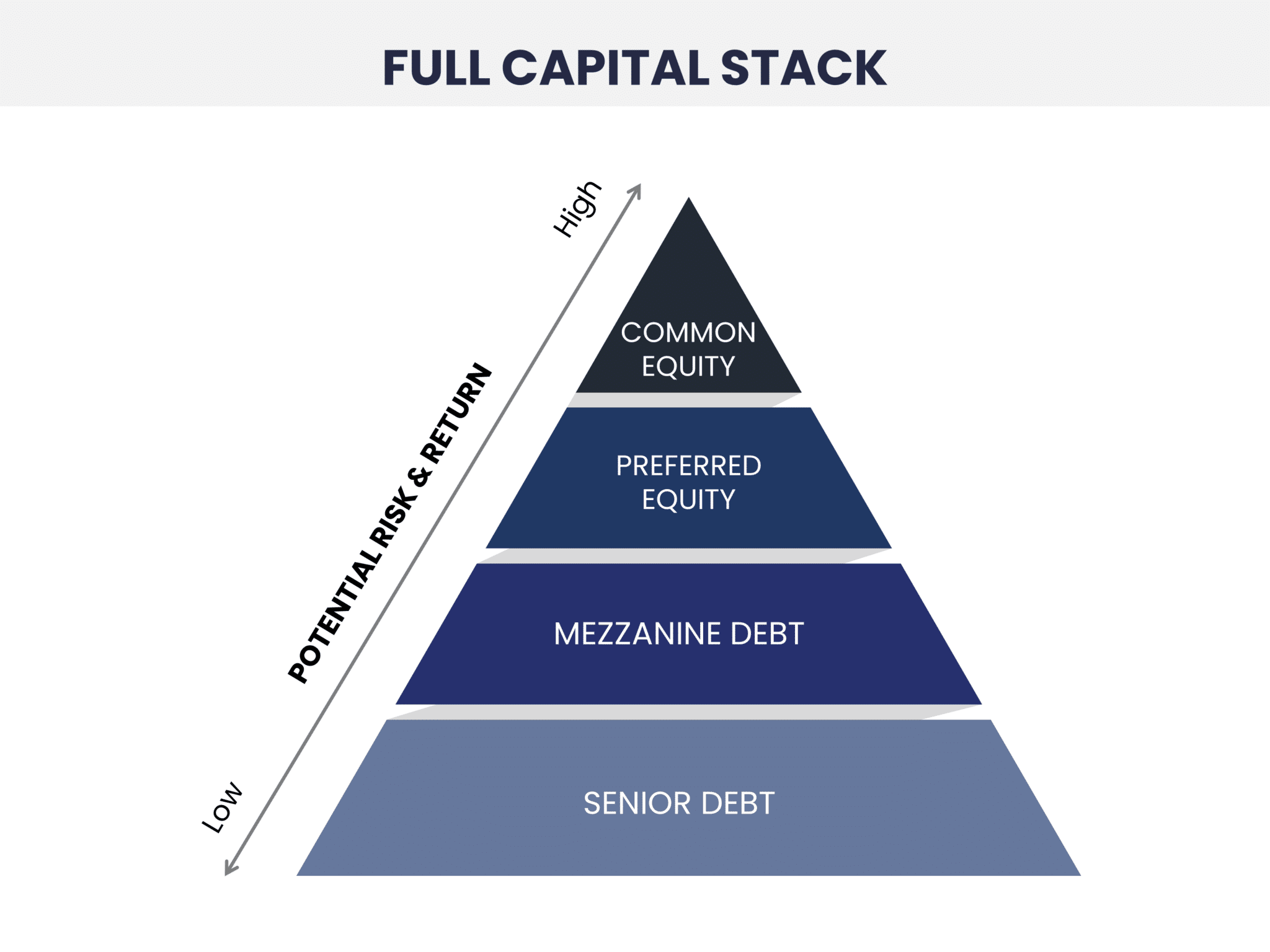
In the world of commercial real estate and corporate finance, the term “capital stack” refers to the layered hierarchy of financing sources that fund a project. Understanding this structure is essential for anyone looking to invest in large-scale ventures, as it dictates the risk, return, and payment priority for every participant involved. Think of the capital stack as a tiered wedding cake: the bottom layers provide the structural support and stability, while the top layers represent the potential for higher rewards tempered by increased exposure to risk.
By dissecting the stack, investors and developers can align their goals with specific risk tolerances. Whether you are a general partner managing a development project or a limited partner providing equity, understanding how these layers interact is the cornerstone of professional investment analysis.

The Architecture of the Capital Stack
The capital stack is traditionally divided into two primary buckets: Debt and Equity. Each level within these buckets has a specific claim on the assets and cash flow generated by the project. Generally, the lower you are in the stack, the lower your risk and the lower your expected return. Conversely, the higher you climb, the greater the potential upside, but the higher the risk of total loss.
Senior Debt: The Foundation
At the very bottom of the stack sits senior debt. This is typically provided by institutional lenders, such as banks or life insurance companies. Because senior debt is secured by a first-lien position on the property, it is the safest portion of the capital stack. In the event of a foreclosure or default, senior debt holders are the first to be paid out from the proceeds of a sale. Because their risk is mitigated by this priority position, they accept lower interest rates compared to other participants.
Mezzanine Debt and Preferred Equity: The Middle Layers
The middle portion of the stack is often referred to as the “bridge” or the “gap.” Mezzanine debt and preferred equity sit between the senior lender and the common equity investors. These instruments are often used when the senior lender does not provide 100% of the required funding (which they rarely do). Mezzanine debt is technically debt but is often structured with an equity-like kicker, providing a higher yield to compensate for its subordinate position. Preferred equity, on the other hand, acts like a hybrid; it receives a preferred return before common equity holders see a dime but does not have the same foreclosure rights as a lender.
Common Equity: The Peak
At the top of the stack is the common equity. This is the “risk capital.” It is provided by the developers, sponsors, and limited partners (investors). Common equity holders are the last to be paid, receiving their share of profits only after all debt service, interest, and preferred returns have been satisfied. However, they also possess the greatest upside potential. If a property appreciates significantly in value or experiences high rental yields, common equity holders reap the lion’s share of the profit. They are the true owners of the project, bearing the brunt of any market downturns or operational failures.
Risk vs. Reward: Navigating the Waterfall
The distribution of cash flow within the capital stack is governed by what is known in the industry as the “waterfall.” This is a predetermined legal structure that dictates how money flows from the property’s revenue to the various stakeholders.
The Waterfall Mechanism
The waterfall ensures that the capital stack functions in an orderly fashion. First, gross revenue is used to pay operating expenses, such as maintenance, insurance, and taxes. Next, the remaining net operating income (NOI) is used to service the senior debt. Once the senior debt is satisfied, the remaining cash flow moves down the line to mezzanine lenders and preferred equity holders. Finally, whatever remains—the “residual”—is distributed to the common equity holders.
Understanding Risk Profiles
Risk is not distributed equally across the stack. Senior debt holders care primarily about the Loan-to-Value (LTV) ratio and the Debt Service Coverage Ratio (DSCR). If a project is valued at $10 million, a senior lender might provide $6 million. This 60% LTV provides a “cushion” for the lender; the property would have to lose 40% of its value before their principal is at risk.
Equity holders, however, do not have this buffer. They look at the Internal Rate of Return (IRR) and the Equity Multiple. They are banking on the successful execution of the project—the lease-up, the renovation, or the appreciation of the asset. Their risk is compounded by the fact that they are essentially underwriting the entire project’s performance.
The Evolution of the Capital Stack in Modern Finance
The capital stack is not a static concept; it evolves based on market conditions, interest rates, and the sophistication of financial instruments. In the current economic climate, we are seeing more creative approaches to layering capital to bridge the gap left by more cautious banking institutions.
Market Volatility and Debt Constraints
When interest rates rise or banks tighten their lending standards, the senior debt portion of the stack often shrinks. A bank that previously offered 70% leverage might drop to 50% or 60% during a recession. This creates a “funding gap.” To fill this void, developers turn to private credit, crowdfunding platforms, and family offices to provide mezzanine debt or preferred equity. This shift demonstrates the fluidity of the capital stack—as one layer retreats, others must expand or become more expensive to keep the project viable.
The Rise of Alternative Funding
In recent years, the democratization of investing has changed who can participate in the capital stack. Through syndication platforms and real estate crowdfunding, individual investors can now act as common equity partners or even preferred equity providers in large-scale developments that were once reserved for institutional players. This diversification of capital sources has made the stack more complex but also more accessible, allowing developers to raise funds from a wider pool of participants.
Practical Implications for Investors
If you are considering an investment in a commercial project, your first step should always be to request the capital stack breakdown. Never assume your position in the stack; instead, demand clarity on where your capital sits and what your rights are in a downside scenario.
Evaluating Your Position
Ask yourself: “What happens if this project fails?” If you are investing as a preferred equity partner, you should understand what triggers your preferred return and whether your position is “cumulative” (meaning missed payments accrue and must be paid later). If you are investing in common equity, you must perform deep due diligence on the sponsor, as you are relying entirely on their ability to execute the business plan and generate the projected returns.
The Impact of Leverage
One critical element that investors often overlook is the cost of capital at each layer of the stack. A project with a massive amount of high-interest mezzanine debt is inherently riskier than one funded primarily by senior debt and equity. High leverage (the “debt-heavy” stack) can amplify returns during boom times, but it can also be a death knell during a downturn, as the cost of servicing that debt can quickly consume all potential profits.

Conclusion
The capital stack is the financial anatomy of a project. By understanding the layers—senior debt, mezzanine debt, preferred equity, and common equity—investors can better evaluate the risk-return profile of any opportunity. It is a system built on priority and hierarchy, designed to balance the needs of cautious lenders against the ambitions of entrepreneurial developers. Whether you are an institutional player or a retail investor, mastering the dynamics of the capital stack is essential for building a resilient and profitable portfolio. Always remember that while the top of the stack offers the brightest horizon, it is the strength of the foundation at the bottom that determines whether the entire structure stands when the market weather turns.
aViewFromTheCave is a participant in the Amazon Services LLC Associates Program, an affiliate advertising program designed to provide a means for sites to earn advertising fees by advertising and linking to Amazon.com. Amazon, the Amazon logo, AmazonSupply, and the AmazonSupply logo are trademarks of Amazon.com, Inc. or its affiliates. As an Amazon Associate we earn affiliate commissions from qualifying purchases.