
A cap and trade system stands as a sophisticated market-based mechanism designed to achieve environmental goals through economic incentives. Within the realm of business finance and economic policy, it represents a pivotal financial tool deployed by governments to regulate and reduce pollutants, most commonly greenhouse gas emissions. Fundamentally, it operates by setting an aggregate limit (the “cap”) on the total amount of a specific pollutant that can be emitted, and then allowing entities covered by the system to buy and sell (the “trade”) allowances or permits to emit within that cap. This creates a market for pollution, transforming a previously unpriced externality into a quantifiable financial asset or liability, profoundly influencing business strategy and investment decisions.

The Financial Mechanics of a Capped Market
At its core, a cap and trade system introduces financial instruments—emission allowances—into the economic landscape. Each allowance typically grants the holder the right to emit one unit (e.g., one metric ton) of a specific pollutant. The total number of allowances issued is set by the governing authority and decreases over time, ensuring a gradual reduction in overall emissions.
Setting the Cap: A Financial Policy Decision
The initial cap is a critical policy decision with significant financial implications. It dictates the overall scarcity of emission allowances and thus influences their market price. A tighter cap (fewer allowances) will generally lead to higher allowance prices, creating a stronger financial incentive for businesses to reduce emissions. Conversely, a looser cap might result in lower prices and less pressure for immediate abatement. This cap is often determined based on scientific targets for environmental improvement, balanced against economic feasibility and potential impacts on industrial competitiveness. The long-term trajectory of the cap is often published years in advance, providing businesses with crucial financial foresight for strategic planning and capital investments.
Trading Allowances: A Market for Emission Rights
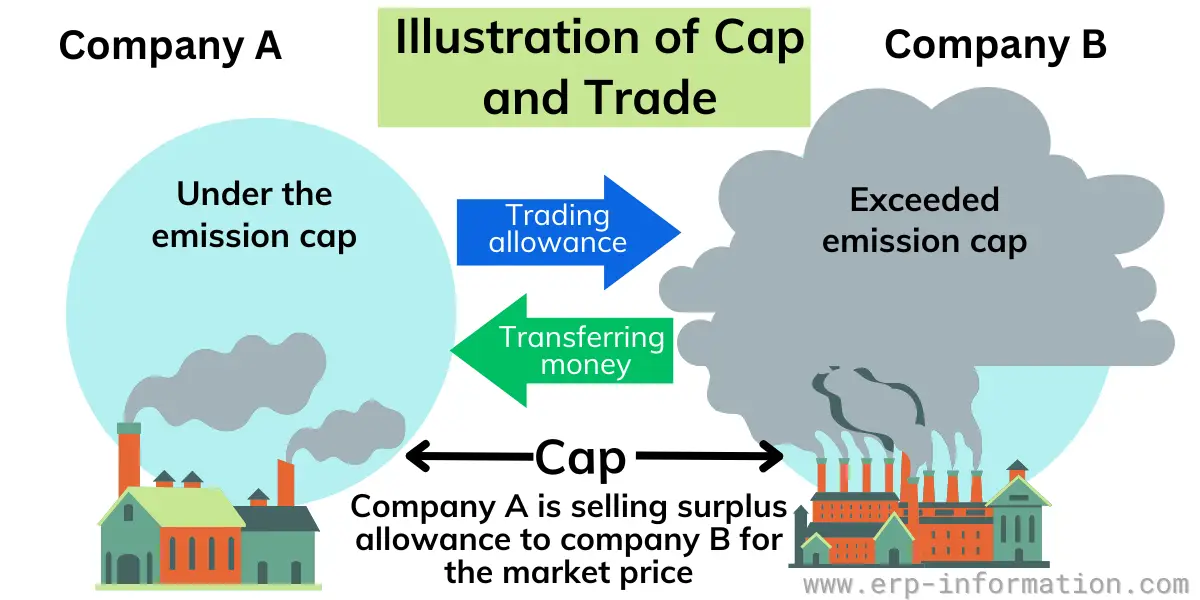
Once allowances are distributed, either through free allocation, auction, or a hybrid model, a secondary market emerges. This market allows companies to trade allowances among themselves.
- Companies that can reduce emissions below their allocated or purchased allowances find themselves with a surplus. They can sell these surplus allowances on the market, generating revenue. This provides a direct financial reward for innovation and investment in cleaner technologies.
- Companies that face higher costs to reduce emissions may find it more economical to purchase additional allowances from others. This allows them to continue operating while contributing to the overall emissions reduction goal, as the total cap remains constant.
This trading mechanism ensures that emissions reductions occur where they are most cost-effective across the economy. From a financial perspective, allowances become a tangible asset for businesses, subject to supply and demand dynamics, price volatility, and opportunities for arbitrage. Financial institutions and brokers often play a role in facilitating these trades, further integrating emission markets into the broader financial ecosystem.
Economic Impacts and Business Finance Implications
The implementation of a cap and trade system introduces a new dimension to business finance, affecting operational costs, investment strategies, and competitive positioning. Understanding these financial impacts is crucial for firms operating within regulated sectors.
Compliance Costs and Investment Incentives
For regulated entities, emission allowances represent either a direct cost (if purchased or if freely allocated allowances could have been sold) or a potential revenue stream. Businesses must budget for these costs, which become an integral part of their operational expenses, similar to raw materials or labor.
- Cost of Compliance: Firms with high emissions intensity or limited abatement options may face significant allowance purchasing costs. This drives a powerful incentive to invest in technologies and processes that reduce emissions, such as energy efficiency upgrades, fuel switching, or carbon capture and storage. These investments, while initially capital-intensive, can lead to long-term cost savings by reducing reliance on allowance purchases.
- Capital Allocation: The cap and trade system directly influences capital allocation decisions. Projects that reduce emissions gain an added financial advantage, making them more attractive for investment. Conversely, highly emissive projects may become less viable unless significant mitigation measures are integrated. This steers corporate investment towards a more sustainable and financially resilient future.
Market Volatility and Risk Management
The price of emission allowances can fluctuate based on various factors, including economic activity, energy prices, weather patterns, policy changes, and the overall supply of allowances. This market volatility introduces financial risk for businesses.
- Hedging Strategies: Companies often employ financial risk management strategies to mitigate price volatility. This can include entering into long-term purchase agreements for allowances, utilizing futures and options contracts on emission markets, or diversifying their portfolio of abatement technologies.
- Financial Forecasting: Accurate financial forecasting becomes more complex but also more critical. Businesses must develop sophisticated models to predict future allowance prices and their impact on profitability, incorporating these variables into their financial statements and long-term business plans.
Revenue Generation and Redistribution
Cap and trade systems can also generate substantial revenue, particularly when allowances are auctioned rather than freely allocated.
- Government Revenue: Funds generated from allowance auctions can be used by governments for various purposes: funding further environmental initiatives, investing in green infrastructure, providing tax relief, or compensating low-income households for potential energy price increases. This represents a significant financial flow that can be strategically deployed to foster economic transitions.
- Impact on Consumers: While the immediate financial burden falls on regulated businesses, a portion of these costs may be passed through to consumers in the form of higher prices for goods and services. Economic analysis often accompanies policy design to assess and mitigate these potential regressive impacts, sometimes through direct rebates or subsidies funded by auction revenues.
Cap and Trade vs. Carbon Tax: A Financial Comparison
While both cap and trade and a carbon tax aim to reduce emissions through economic means, their financial mechanisms and implications differ significantly, making them distinct financial tools for policy makers and distinct financial realities for businesses.
Price vs. Quantity Control
The fundamental difference lies in what each system directly controls:
- Cap and Trade: Directly controls the quantity of emissions. The government sets the cap, guaranteeing a specific environmental outcome (total emissions), but the market determines the price of emissions (allowance price). This certainty in emission reduction is a key advantage from an environmental policy perspective.
- Carbon Tax: Directly controls the price of emissions. The government sets a fixed tax rate per unit of emission, providing certainty on the cost of emitting. However, the exact quantity of emissions reduction achieved is less certain, as it depends on how businesses and consumers respond to that fixed price.
Financial Predictability and Risk
From a business finance perspective, this distinction translates into different forms of financial predictability and risk:
- Cap and Trade: Offers greater certainty about the environmental outcome, but businesses face price volatility for allowances. This requires robust financial risk management and hedging strategies. The cost of compliance is variable.
- Carbon Tax: Offers greater certainty about the per-unit cost of emissions, simplifying financial forecasting for compliance. However, businesses face uncertainty regarding the total quantity of emissions they will pay for. The total cost of compliance is variable based on emissions volume.
Market Development and Innovation
Both systems incentivize innovation in low-carbon technologies, but the mechanisms differ:
- Cap and Trade: The creation of a tradable asset (allowances) fosters the development of a carbon market, complete with brokers, traders, and financial instruments. This market dynamism can attract investment in abatement solutions and create opportunities for financial speculation and arbitrage. The potential for revenue from selling surplus allowances directly rewards early and effective emission reductions.
- Carbon Tax: Provides a clear, stable price signal that encourages long-term investment in emission reduction technologies. The certainty of the tax rate allows for more predictable return on investment calculations for green projects.
Ultimately, the choice between cap and trade and a carbon tax often involves balancing desired financial outcomes, such as price stability for businesses versus certainty in emission reduction, alongside broader economic and political considerations. Both are powerful financial tools, but they operate through different financial incentives and present distinct financial challenges and opportunities for businesses and investors.

The Role of Cap and Trade in Modern Business Strategy
As economies worldwide grapple with environmental challenges, cap and trade systems are becoming an increasingly prevalent feature of the regulatory landscape. For businesses, this is no longer just an environmental concern but a significant factor in financial planning, competitive analysis, and strategic positioning. Integrating the dynamics of carbon markets into financial models, supply chain management, and long-term investment decisions is paramount. Companies that effectively manage their emissions footprint and actively participate in these markets can transform compliance into a competitive advantage, securing long-term financial resilience in a carbon-constrained world.
aViewFromTheCave is a participant in the Amazon Services LLC Associates Program, an affiliate advertising program designed to provide a means for sites to earn advertising fees by advertising and linking to Amazon.com. Amazon, the Amazon logo, AmazonSupply, and the AmazonSupply logo are trademarks of Amazon.com, Inc. or its affiliates. As an Amazon Associate we earn affiliate commissions from qualifying purchases.