
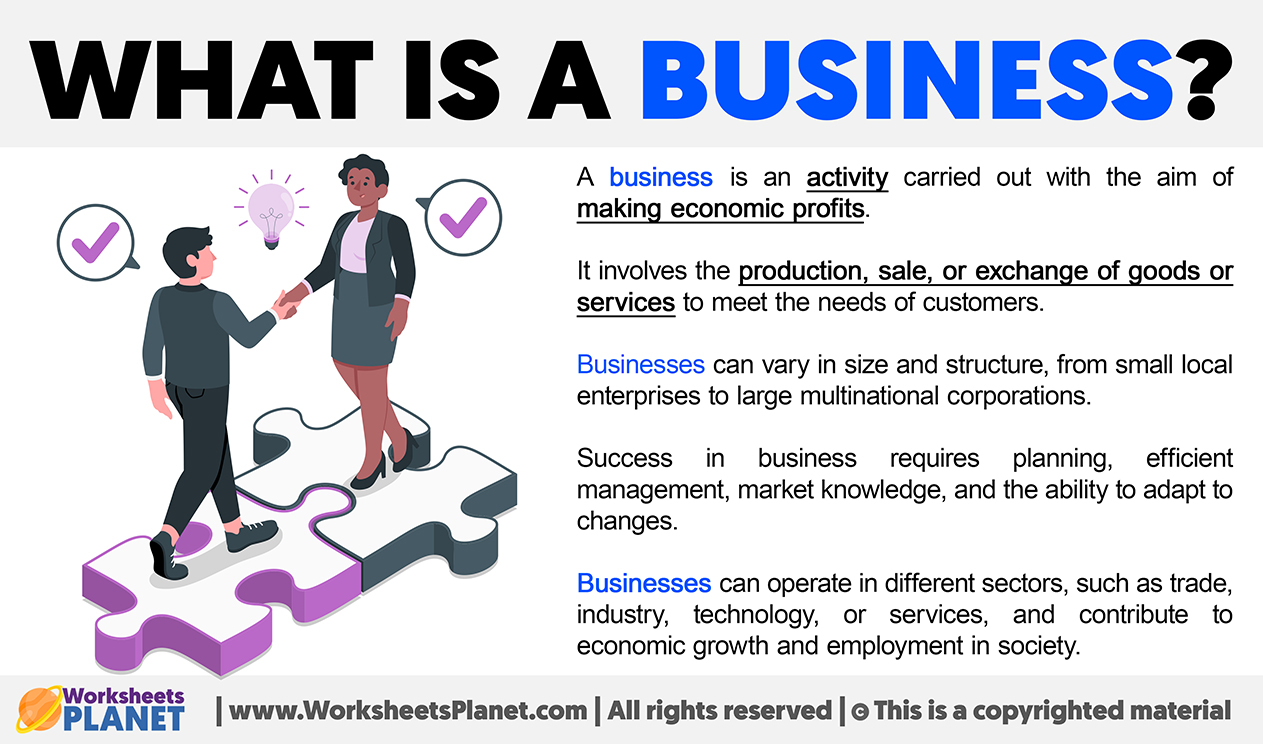
In its most fundamental sense, a business is an organized entity or enterprise engaged in commercial, industrial, or professional activities with the primary aim of generating revenue, covering costs, and ultimately making a profit. It’s an economic engine, a structured endeavor where resources—be they human capital, financial assets, intellectual property, or raw materials—are strategically deployed to create and deliver value in the form of goods or services. Beyond a simple definition, understanding “what is a business” requires delving into its multifaceted role in the economy, its diverse operational structures, and the intricate financial mechanisms that drive its existence and growth. At its core, every business, regardless of its size or sector, is a financial proposition, built upon the premise of converting investment and effort into sustainable economic returns.
The Fundamental Definition: An Economic Entity
At the heart of every business lies a set of interwoven economic activities designed to create value and facilitate transactions. This core function defines its existence and differentiates it from non-commercial endeavors.
Purpose-Driven Economic Activity
A business exists to fulfill a perceived need or desire in the market. This fulfillment takes the form of producing goods or delivering services that customers are willing to pay for. The very act of exchange—money for goods or services—is a financial transaction, and it is this continuous cycle of transactions that forms the economic pulse of a business. Whether manufacturing cars, providing software solutions, or offering consultancy, the underlying objective is to generate revenue from these exchanges. This revenue must, at a minimum, cover the operational costs, and ideally, exceed them to yield a profit. This profit motive, while not the sole driver for all businesses (e.g., social enterprises), is a defining characteristic for the vast majority, providing the capital for reinvestment, growth, and rewarding stakeholders. Without a clear pathway to economic sustainability through revenue generation, an entity cannot long endure as a business.
Resource Allocation and Risk Bearing
Operating a business is inherently an exercise in strategic resource allocation and calculated risk-taking. Financial capital, human talent, technology, and physical assets are finite resources that must be meticulously managed and deployed to maximize efficiency and output. Businesses constantly evaluate where to invest their capital – in new machinery, research and development, marketing campaigns, or talent acquisition – to achieve their objectives. Each decision carries an inherent financial risk: the possibility that the investment may not yield the anticipated returns, or worse, may result in a loss. Entrepreneurs and business owners, therefore, are economic agents who accept these financial risks in anticipation of future financial rewards. This willingness to bear risk, coupled with the ability to strategically allocate resources, is central to the entrepreneurial spirit and the functioning of a vibrant market economy. The careful balancing act between maximizing returns and mitigating financial exposure is a continuous challenge for any enterprise.
Diverse Structures, Common Financial Goals
Businesses come in a myriad of legal and operational forms, each with distinct implications for ownership, liability, and financial management. Yet, beneath these structural differences, a common thread ties them together: the pursuit of financial viability and often, profitability.
Sole Proprietorships and Partnerships: Simplicity and Direct Financial Link
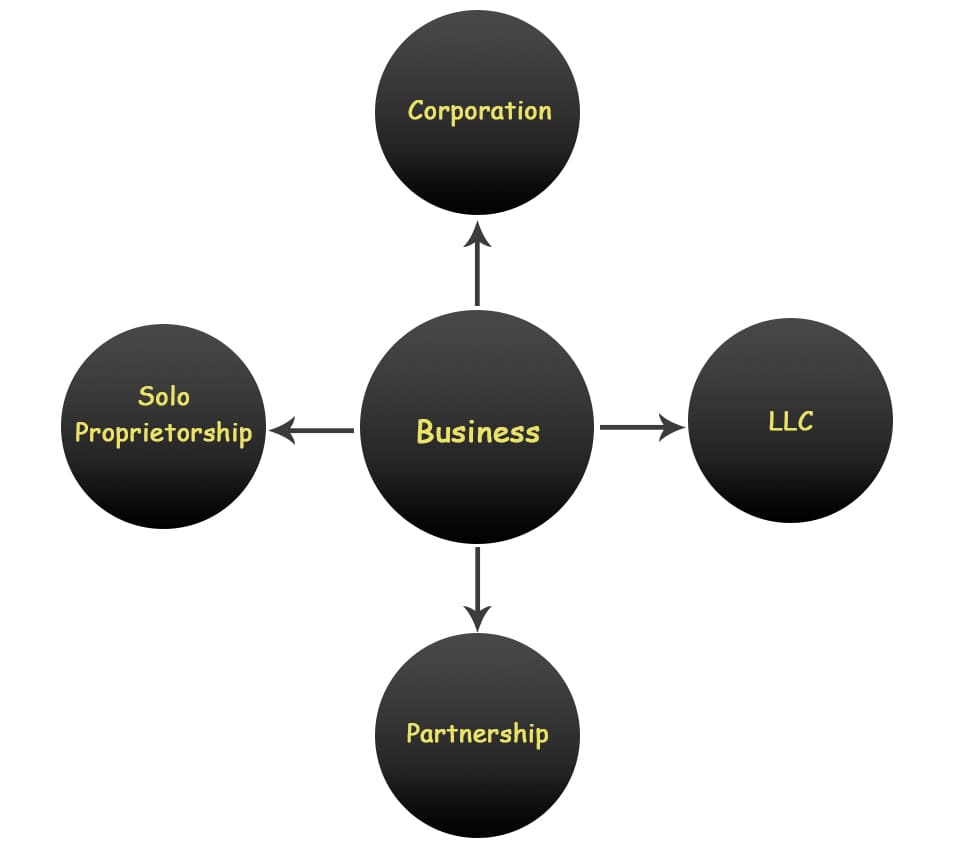
For many aspiring entrepreneurs, the journey begins with a sole proprietorship or a partnership. A sole proprietorship is the simplest business structure, where an individual owns and operates the business. Financially, there is no legal distinction between the owner and the business; all profits are personal income, and all debts and liabilities are personal responsibilities. This “unlimited liability” means the owner’s personal assets are at risk. Partnerships extend this concept to two or more individuals who agree to share in the profits or losses of a business. While offering shared resources and expertise, partners also face unlimited liability for the business’s debts, though specific partnership agreements can define profit-sharing ratios and responsibilities. The financial advantage of these structures lies in their ease of formation and minimal regulatory burden, allowing owners to directly access profits with fewer corporate tax layers. However, the direct personal financial exposure demands careful management of business finances to safeguard personal wealth.
Corporations and LLCs: Shielded Liabilities and Capital Access
As businesses grow, many opt for structures that offer greater protection and flexibility, such as Limited Liability Companies (LLCs) and Corporations (C-Corps, S-Corps). The defining financial characteristic of both LLCs and Corporations is the principle of “limited liability.” This means that the owners’ personal assets are generally protected from the business’s debts and obligations, limiting their financial risk to the amount they have invested in the company.
Corporations (C-Corps) are separate legal entities, capable of entering contracts, owning assets, and incurring debts independently. This structure allows for the sale of stock, making it easier to raise significant capital from investors and facilitating growth. However, C-Corps face “double taxation” – profits are taxed at the corporate level, and then dividends distributed to shareholders are taxed again at the individual level. S-Corps offer a pass-through taxation model, similar to partnerships, avoiding double taxation, but come with restrictions on the number and type of shareholders. LLCs combine the limited liability of a corporation with the pass-through taxation and flexibility of a partnership, making them popular for small to medium-sized businesses. These structures are designed to attract investment and facilitate scalability, providing a framework for sophisticated financial management and robust capital acquisition strategies crucial for expansion.
Non-Profit Organizations: Mission-Driven Financial Management
While not driven by profit, non-profit organizations are undeniably businesses in the sense that they are organized entities engaged in economic activity, often managing substantial budgets and assets. Their financial objectives differ: instead of maximizing profit for owners, they aim to generate sufficient revenue to fulfill a specific social, educational, charitable, or artistic mission. Their funding typically comes from donations, grants, membership fees, and sometimes revenue-generating activities directly related to their mission. Financial management in a non-profit is acutely focused on stewardship, transparency, and efficient allocation of funds towards programmatic goals, ensuring sustainability without generating surplus for private benefit. They must operate with fiscal prudence, track expenses meticulously, and demonstrate accountability to donors and regulators, often adhering to specific financial reporting standards.
The Financial Ecosystem of a Business
Regardless of structure, all businesses operate within a financial ecosystem defined by the continuous flow of money in and out. Understanding these dynamics is critical for gauging performance and ensuring longevity.
Revenue Generation: The Lifeblood of Operations
Revenue is the total income generated from the sale of goods or services before any expenses are deducted. It is the lifeblood that sustains a business, covering its operational costs and paving the way for profitability. Effective revenue generation hinges on several financial considerations, including pricing strategies (cost-plus, value-based, competitive pricing), sales volume, market demand, and the efficiency of the sales process. Businesses must continually analyze their revenue streams, identify top-performing products or services, and explore new markets to ensure a steady and growing influx of funds. Strategic marketing and sales efforts are directly tied to revenue objectives, aiming to convert potential customers into paying clients, thereby injecting fresh capital into the business’s financial system. Without consistent and robust revenue generation, even the most innovative business cannot survive long-term.
Cost Management: Optimizing for Profitability
While revenue represents income, costs represent expenditures necessary to operate the business. These can be broadly categorized into fixed costs (e.g., rent, salaries, insurance – costs that don’t change with production volume) and variable costs (e.g., raw materials, production wages – costs that fluctuate with output). Effective cost management is paramount for profitability. It involves meticulous budgeting, identifying areas for operational efficiency, negotiating with suppliers, and leveraging technology to reduce overheads. A critical financial insight is that simply increasing revenue is not enough; if costs spiral out of control, profitability will erode. Businesses regularly engage in cost-benefit analyses, seeking to optimize spending without compromising quality or operational capacity. Strategies like lean management and economies of scale are fundamentally about improving the financial efficiency of operations.
Profit and Loss: Measuring Financial Health
The ultimate measure of a business’s financial health is its ability to generate profit. Profit is what remains after all expenses, including taxes, have been deducted from revenue. The Profit and Loss (P&L) statement, or Income Statement, is a crucial financial document that summarizes a company’s revenues, costs, and expenses over a specific period, revealing its net profit or loss. Gross profit (revenue minus cost of goods sold) indicates the profitability of core production. Operating profit (gross profit minus operating expenses) reflects efficiency in running the business. Net profit (operating profit minus interest and taxes) is the bottom line, representing the true financial gain for the period. Understanding these metrics allows stakeholders to assess performance, identify trends, and make informed financial decisions. A consistent net profit signifies a healthy, sustainable business, while consistent losses indicate a need for strategic financial intervention.
Capital, Investment, and Growth: Fueling Business Expansion
Growth is often a primary objective for businesses, driven by the desire to expand market share, increase revenues, and enhance profitability. This expansion invariably requires capital and strategic investment.
Sources of Capital: From Bootstrapping to Venture Funding
To start, operate, and grow, businesses require capital. Initial capital can come from personal savings (bootstrapping), loans from friends and family, or government grants. As a business matures, it might seek debt financing (bank loans, lines of credit) or equity financing (selling ownership shares to angel investors, venture capitalists, or through public stock offerings). Each source has different financial implications: debt requires repayment with interest but doesn’t dilute ownership, while equity provides funds without direct repayment but gives up a portion of future profits and control. Retained earnings—profits that a company chooses to keep and reinvest rather than distribute to owners or shareholders—are another vital source of internal capital, demonstrating financial self-sufficiency and the ability to fuel growth from within. Strategic decisions about capital structure—the mix of debt and equity—are central to a business’s long-term financial health and risk profile.
Investment Strategies: Allocating Capital for Future Returns
Once capital is secured, businesses must strategically invest it to drive future returns. This can include capital expenditures (CapEx) on new equipment, facilities, or technology to enhance operational capacity; investment in research and development (R&D) to innovate and create new products or services; or significant marketing campaigns to penetrate new markets. The goal of any investment is to generate a return on investment (ROI) that exceeds the cost of capital. Businesses analyze potential investments using financial tools such as net present value (NPV) and internal rate of return (IRR) to assess their viability and expected profitability. These decisions are crucial for long-term growth, as they determine a company’s competitive edge, efficiency, and ability to adapt to changing market conditions, all of which directly impact future financial performance.
Financial Metrics for Growth: KPIs and Valuation
Measuring growth and success involves tracking key financial performance indicators (KPIs) and understanding business valuation. KPIs like year-over-year revenue growth, profit margin percentage, customer acquisition cost (CAC), customer lifetime value (CLTV), and return on equity (ROE) provide clear, quantifiable insights into a business’s financial trajectory. These metrics are not just internal tools; they are essential for attracting investors and demonstrating financial health. Business valuation, the process of determining a company’s economic worth, is crucial for mergers, acquisitions, and attracting equity investors. Valuation methods often rely heavily on financial projections, discounted cash flow (DCF) analysis, and comparisons to similar businesses, all rooted in a business’s current and projected financial performance. A high valuation reflects strong financial performance, robust growth potential, and effective capital utilization.
The Broader Economic Impact: Beyond the Balance Sheet
While focused on individual financial success, businesses collectively form the bedrock of national and global economies, contributing far beyond their individual balance sheets.
Job Creation and Wage Economy
Businesses are the primary engines of job creation. From entry-level positions to executive roles, they provide employment opportunities across all sectors, directly impacting household incomes and consumer spending. The wages paid by businesses stimulate local economies, supporting other businesses through increased demand for goods and services. A healthy business environment translates directly into a strong employment market, reducing unemployment and fostering economic stability. This ripple effect underscores the profound financial interdependence between businesses and the broader society, highlighting how business health translates into societal well-being.
Innovation and Economic Value Creation
Businesses are at the forefront of innovation. Through investments in research and development, they introduce new products, services, and technologies that enhance productivity, improve living standards, and create entirely new industries. This continuous cycle of innovation generates immense economic value, opening new markets, solving complex problems, and driving long-term economic growth. Think of the revolutionary impact of tech companies, pharmaceutical firms, or sustainable energy ventures—their innovations are not just financial successes for them but create massive economic opportunities and efficiencies for everyone.
Tax Contributions and Public Services
As revenue-generating entities, businesses contribute significantly to public coffers through various taxes, including corporate income taxes, sales taxes, property taxes, and payroll taxes. These tax revenues are essential for funding public services such as infrastructure development (roads, bridges), education, healthcare, national defense, and social welfare programs. In essence, the financial success of businesses directly underpins the ability of governments to provide essential services and invest in societal improvements, making businesses integral partners in national development and public good. Their financial health directly correlates with the fiscal capacity of the state.
In conclusion, “what is a business” is a question with a deeply financial answer. It’s an organized endeavor centered around economic activity, requiring strategic capital deployment, meticulous financial management, and an acute awareness of risk and return. From its initial formation to its ongoing operations and broader societal impact, every facet of a business is intertwined with financial considerations, making it a pivotal force in the economic landscape.
aViewFromTheCave is a participant in the Amazon Services LLC Associates Program, an affiliate advertising program designed to provide a means for sites to earn advertising fees by advertising and linking to Amazon.com. Amazon, the Amazon logo, AmazonSupply, and the AmazonSupply logo are trademarks of Amazon.com, Inc. or its affiliates. As an Amazon Associate we earn affiliate commissions from qualifying purchases.