
In the world of consumer packaged goods (CPG), few products have achieved the level of cultural ubiquity and brand entrenchment as “brown sauce.” While to a chef it is a tangy, vinegar-based condiment, to a brand strategist, brown sauce—specifically the market leader, HP Sauce—represents a masterclass in heritage branding, visual identity, and category dominance. When we ask “what is a brown sauce” through the lens of brand strategy, we are not looking for a recipe; we are looking for the blueprint of how a product transcends its functional utility to become a national symbol.

This article explores the strategic frameworks that have allowed the brown sauce category to maintain its relevance for over a century, analyzing how corporate identity, narrative marketing, and emotional resonance create a brand “moat” that is nearly impossible for competitors to breach.
1. The Anatomy of a Category Leader: Defining the Brand Identity
In branding, the ultimate achievement is “proprietary eponymy”—when a brand name becomes synonymous with the product category itself (think Xerox, Kleenex, or Google). While “brown sauce” remains the generic term, in the United Kingdom and many Commonwealth markets, the category is so dominated by a single player that the brand and the product are effectively one and the same in the consumer’s mind.
Defining the “Brown Sauce” Identity
The brand identity of a brown sauce is built on a foundation of “sturdy reliability.” Unlike ketchup, which is often marketed toward children and characterized by sweetness and bright colors, brown sauce occupies a more adult, savory, and sophisticated niche. Its brand identity is rooted in the “working-class hero” archetype—a dependable accompaniment to the daily ritual of breakfast. Strategically, this positioning allows the brand to command a loyal user base that views the product as an essential part of their lifestyle rather than an occasional luxury.
The Power of First-Mover Advantage
The history of brown sauce is a lesson in the power of the first-mover advantage. By establishing a presence in the late 19th century, brands like HP Sauce were able to set the sensory expectations for the entire category. Once a consumer’s palate is calibrated to a specific flavor profile—the tartness of tamarind, the bite of vinegar, and the warmth of spices—competing brands face an uphill battle. To deviate from the established “standard” is to be perceived as “wrong,” and to mimic it is to be viewed as a “cheap imitation.”
2. HP Sauce: A Case Study in Visual Identity and Heritage
To understand what brown sauce is as a brand, one must look at its most famous iteration: HP Sauce. Its branding is a study in how to leverage national identity to build corporate equity.
Narrative Branding through Landmarks
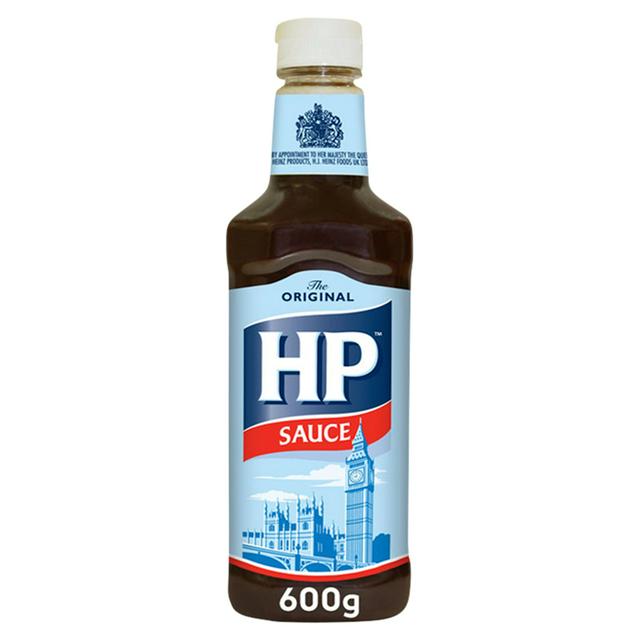
The “HP” in HP Sauce stands for the Houses of Parliament. This was not a random choice; it was a calculated piece of narrative branding by the sauce’s inventor, Frederick Gibson Garton. By featuring an illustration of the iconic clock tower (Big Ben) and the Westminster palace on the label, the brand instantly associated itself with the pinnacle of British authority and tradition.
From a brand strategy perspective, this is a “borrowed authority” tactic. It suggests that if the sauce is good enough for the politicians in the heart of London, it is good enough for every dining table in the country. This visual association creates a sense of permanence and institutional trust that a modern, minimalist brand could never replicate overnight.
Color Psychology in Food Marketing
The “brown” in brown sauce is a challenge from a marketing perspective. In color psychology, brown is often associated with earthiness, reliability, and wholesomeness, but it can also be perceived as unappetizing if not managed correctly. The branding strategy for brown sauce overcomes this by utilizing high-contrast labels—often featuring blues, reds, and creams—to make the product pop on a retail shelf. The deep, rich color of the sauce itself is framed as a sign of complexity and depth of flavor, contrasting with the “one-note” simplicity of red ketchup or yellow mustard.

3. Market Penetration and the “Secret Sauce” Strategy
Successful brand strategy requires moving beyond the shelf and into the culture. Brown sauce brands have excelled at this by embedding themselves into specific consumption rituals, making the product indispensable to the experience.
Cultural Integration as a Marketing Tool
The “Full English Breakfast” is more than a meal; it is a cultural institution. By positioning brown sauce as the essential partner to this ritual, brands have ensured a consistent, high-frequency usage pattern. This is known as “associative branding.” When a consumer thinks of a specific meal, the brand automatically enters the mental frame. This strategy reduces the need for constant, expensive advertising because the cultural ritual does the marketing on the brand’s behalf.
Differentiation in a Crowded Condiment Market
In the global condiment market, brown sauce occupies a unique strategic gap. It sits between the sweetness of BBQ sauce and the acidity of steak sauce. Brands have maintained this territory by emphasizing their “secret” recipes. Much like Coca-Cola, the mystery surrounding the exact blend of spices and fruits creates an “intellectual property” aura. Even if a competitor creates a chemically identical product, they lack the “brand story” of the original recipe, which is a key driver of consumer preference.
4. Modern Challenges: Rebranding for the Digital and Health-Conscious Age
Even the most storied brands must evolve to survive. The brown sauce category currently faces two major strategic hurdles: an increasingly health-conscious consumer base and the need to appeal to a younger, more global demographic.
Managing Brand Erosion
One of the risks of a heritage brand is “becoming a museum piece”—being respected but no longer purchased. To combat this, legacy brown sauce brands have had to modernize their messaging without alienating their core base. This often involves “sub-branding,” such as introducing reduced-sugar or organic versions. From a strategy standpoint, this allows the brand to capture new market segments (the health-conscious Gen Z or Millennial parent) while keeping the original “classic” brand identity intact for the traditionalists.
The Premiumization of a Household Staple
As “craft” and “artisanal” food trends continue to rise, there is a significant opportunity for the premiumization of brown sauce. We are seeing a shift where new entrants into the market are positioning brown sauce not as a cheap commodity, but as a gourmet ingredient. This involves a shift in brand language: using terms like “small-batch,” “barrel-aged,” or “locally sourced.”
For the established giants, the strategy is defensive. They must reinforce their “authentic” heritage to prevent these premium upstarts from stealing market share. They do this by leaning into their history, reminding consumers that they are the “original” and that everything else is a derivation.
5. Conclusion: The Brand as a Cultural Constant
What is a brown sauce? In the context of brand strategy, it is a lesson in longevity. It is a testament to the fact that a product does not need to be high-tech or revolutionary to dominate a market for over a century. Instead, it needs a clear identity, a story that resonates with national or cultural values, and a visual language that signifies trust and consistency.
The success of the brown sauce category lies in its ability to be a “cultural constant.” In a world of rapidly changing trends and digital disruption, there is immense value in a brand that remains exactly what it has always been. By mastering the balance between heritage and evolution, brown sauce brands have turned a simple vinegar-based condiment into a masterclass of corporate identity and marketing endurance. For any brand strategist, the “secret sauce” isn’t in the bottle—it’s in the decades of psychological and cultural positioning that make that bottle a permanent fixture of the global pantry.
aViewFromTheCave is a participant in the Amazon Services LLC Associates Program, an affiliate advertising program designed to provide a means for sites to earn advertising fees by advertising and linking to Amazon.com. Amazon, the Amazon logo, AmazonSupply, and the AmazonSupply logo are trademarks of Amazon.com, Inc. or its affiliates. As an Amazon Associate we earn affiliate commissions from qualifying purchases.