
At its core, a blockchain is an innovative and highly secure digital ledger technology that serves as the backbone for virtually all cryptocurrencies. Far more than just a simple database, it represents a paradigm shift in how digital information can be recorded, shared, and verified across a decentralized network. Understanding the blockchain is paramount to grasping the operational mechanics and inherent value proposition of digital assets like Bitcoin and Ethereum, but its implications stretch far beyond the realm of digital currency into various sectors demanding transparency, security, and immutability.
The Foundational Concept: Distributed Ledger Technology
A blockchain is fundamentally a type of Distributed Ledger Technology (DLT). Unlike traditional centralized databases managed by a single entity, DLTs distribute copies of the ledger across numerous participants (nodes) in a network. This distribution is key to its resilience and security.
Beyond a Single Database: Decentralization’s Core
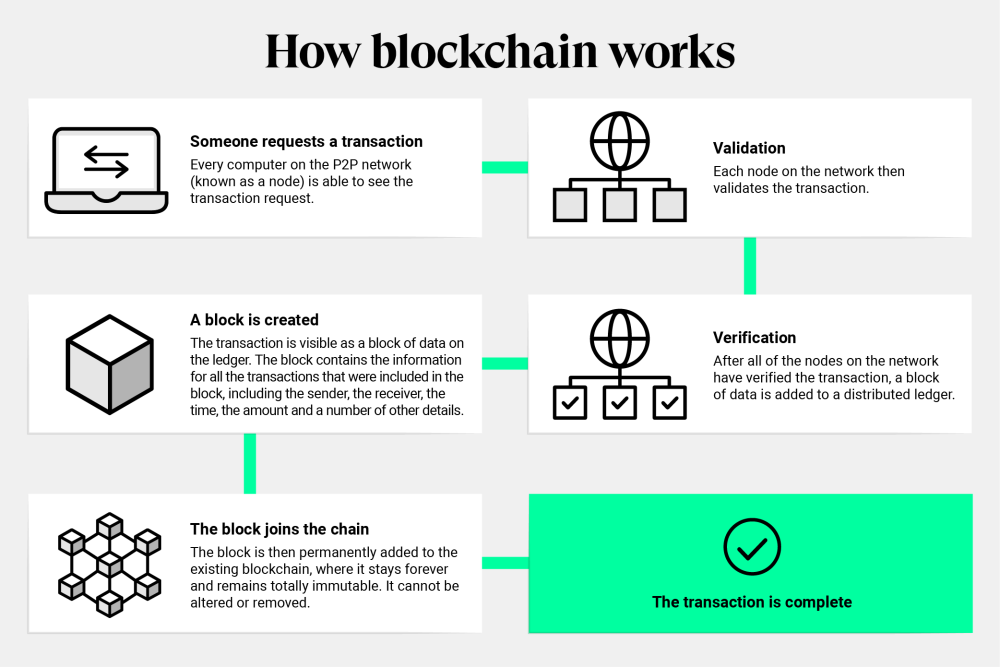
The defining characteristic of blockchain is its decentralized nature. Instead of a central server or authority controlling all data, every participant on the network holds a copy of the entire ledger. When a new transaction or data entry occurs, it’s not simply added to one master server. Instead, it’s broadcast to all participating nodes, which then work together to validate and add it to their respective copies of the ledger. This absence of a central point of control makes the system resistant to censorship, single points of failure, and malicious attacks, as compromising one node doesn’t compromise the entire network. For cryptocurrencies, this means no single bank or government entity controls the money supply or transaction history.
Immutable Records: The Chain of Trust
The “chain” in blockchain refers to the sequential linking of “blocks” of data. Each block contains a batch of validated transactions or data entries. Once a block is added to the chain, it becomes incredibly difficult, if not practically impossible, to alter or remove. This immutability is achieved through sophisticated cryptographic techniques, ensuring that the historical record remains accurate and untampered. This creates a powerful audit trail, building a high degree of trust among network participants even without a central arbiter.
Deconstructing the Blockchain: Blocks, Chains, and Cryptography
To fully appreciate the robustness of blockchain, it’s essential to understand its constituent parts and the mechanisms that bind them together.
What’s Inside a Block?
Each “block” on the blockchain is a data container. While the exact contents can vary depending on the specific blockchain implementation, common elements include:
- Transactions: The core data payload, such as cryptocurrency transfers (sender, receiver, amount) or other digital information.
- Timestamp: The time and date the block was created.
- Block Number/Height: A unique identifier indicating its position in the chain.
- Merkle Root: A cryptographic hash of all the transactions within that block, allowing for efficient verification of transaction integrity.
- Previous Block’s Hash: This crucial element links the current block to its predecessor, forming the “chain.”
- Nonce: A number used once, typically during the mining or block creation process, to solve the cryptographic puzzle.
The Cryptographic Link: Hashing and Security
Cryptography is the bedrock of blockchain security. The most critical cryptographic tool used is hashing. A cryptographic hash function takes an input (any size data, like the contents of a block) and produces a fixed-size string of characters (the hash output or digest). Key properties of cryptographic hash functions are:
- Determinism: The same input always produces the same output.
- One-way: It’s practically impossible to reverse-engineer the input from the hash output.
- Collision Resistance: It’s extremely difficult to find two different inputs that produce the same hash output.
- Avalanche Effect: Even a tiny change in the input produces a drastically different hash output.
Each block in a blockchain contains the cryptographic hash of its previous block. This creates an unbroken, tamper-evident chain. If anyone attempts to alter a transaction within an old block, that block’s hash would change. Consequently, the subsequent block’s stored “previous hash” would no longer match, breaking the chain and immediately signaling tampering to the entire network. This interlocking hash structure makes blockchain records highly secure and verifiable.
The Role of the Network: Nodes and Consensus Mechanisms
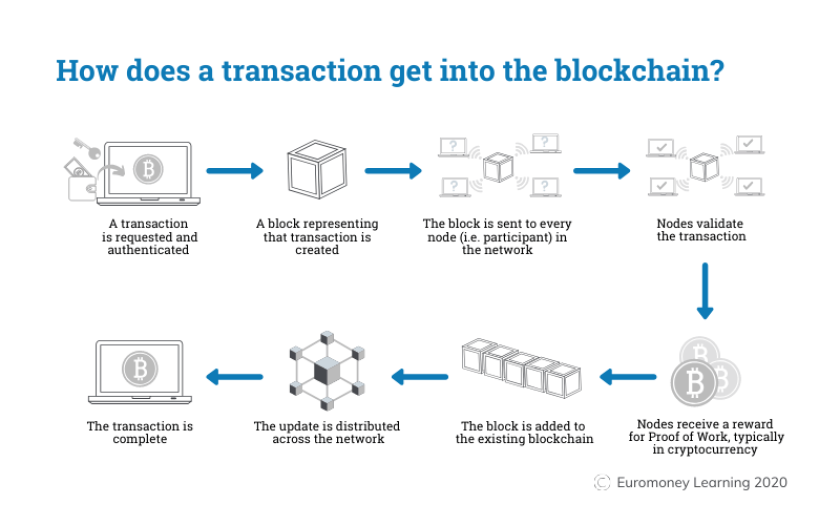
The blockchain network is composed of numerous computers, known as “nodes,” which maintain, validate, and propagate the ledger. For a new block to be added to the chain, the network must agree on its validity. This agreement is achieved through “consensus mechanisms.”
The most well-known consensus mechanism, particularly in early cryptocurrencies like Bitcoin, is Proof of Work (PoW). In PoW, nodes (often called “miners”) compete to solve a complex computational puzzle. The first node to solve it “wins” the right to add the next block to the chain and is typically rewarded with cryptocurrency. The computational effort required makes it expensive and resource-intensive to create fraudulent blocks, thereby securing the network.
Other consensus mechanisms, such as Proof of Stake (PoS), are gaining prominence. In PoS, instead of expending computational power, validators are chosen based on the amount of cryptocurrency they “stake” (lock up) as collateral. This makes it more energy-efficient and scalable for many applications. Regardless of the specific mechanism, the goal remains the same: to ensure that all distributed copies of the ledger remain synchronized and trustworthy.
How Blockchain Ensures Security and Integrity
The design principles of blockchain technology inherently build multiple layers of security and data integrity.

Immutability and Tamper-Proofing
As established, the cryptographic linking of blocks means that once a transaction is recorded and confirmed within a block, it becomes virtually impossible to alter or delete it. Any attempt to change an old block would invalidate all subsequent blocks in the chain, requiring an attacker to re-mine (or re-validate) every single subsequent block faster than the rest of the network combined—a computationally prohibitive task for large, established blockchains. This inherent immutability is a cornerstone of its security for cryptocurrency transactions, ensuring that a record of funds transferred cannot be retrospectively undone or double-spent.
Transparency Without Compromising Privacy
While the transaction data on a public blockchain is transparent and viewable by anyone, it also maintains a degree of pseudonymity. Users are identified by cryptographic addresses (strings of letters and numbers) rather than personal names. This means that while anyone can see that address X sent Y amount to address Z, they typically cannot link those addresses directly to real-world identities without additional off-chain information. This balance of transparency (for verification) and pseudonymity (for privacy) is crucial for the operation of many cryptocurrencies.
Resilience Through Distribution
The decentralized nature of blockchain makes it incredibly resilient to attacks and failures. If one or even many nodes in the network go offline or are compromised, the rest of the network continues to operate seamlessly, as each node holds a complete copy of the ledger. There is no central server to attack or single point of failure that could bring down the entire system. This distributed resilience is a significant advantage over traditional centralized systems, which are often vulnerable to targeted attacks.
The Transformative Impact of Blockchain Beyond Cryptocurrency
While blockchain gained prominence through cryptocurrencies, its underlying technological principles offer profound benefits that extend far beyond digital money. Many industries are exploring and implementing blockchain for various applications.
Smart Contracts: Automated Digital Agreements
One of the most powerful extensions of blockchain technology is the “smart contract.” These are self-executing contracts with the terms of the agreement directly written into lines of code. They run on a blockchain, meaning they are immutable, transparent, and cannot be censored or altered once deployed. When predefined conditions are met, the smart contract automatically executes the agreed-upon actions, such as releasing funds, transferring ownership of digital assets, or sending notifications. This eliminates the need for intermediaries, reduces costs, and speeds up various processes in fields like legal agreements, real estate, and supply chain finance. Ethereum was a pioneer in popularizing smart contract platforms.
Supply Chain Management and Provenance
Blockchain offers unprecedented transparency and traceability in supply chains. By recording every step of a product’s journey—from raw materials to manufacturing, shipping, and retail—on an immutable ledger, companies can verify the authenticity, origin, and ethical sourcing of goods. This can combat counterfeiting, improve food safety by quickly identifying contaminated batches, and help consumers make informed purchasing decisions based on a product’s full history.
Digital Identity and Data Security
Current digital identity systems often rely on centralized authorities, making them vulnerable to breaches and giving users little control over their personal data. Blockchain offers a path toward self-sovereign identity, where individuals control their own digital identities and data. Users could cryptographically prove aspects of their identity (e.g., age, qualifications) without revealing all underlying personal information, and only grant access to data on a need-to-know basis. This could enhance privacy, improve data security, and streamline identity verification processes.
Challenges and Future Evolution of Blockchain Technology
Despite its revolutionary potential, blockchain technology is still evolving and faces several significant hurdles that developers and researchers are actively working to address.
Scalability Concerns
Early blockchains, particularly those using Proof of Work, are known for their scalability limitations. Processing transactions one block at a time, with built-in delays for validation, can lead to slow transaction speeds and high fees during periods of heavy network congestion. This contrasts sharply with centralized payment networks that can handle thousands of transactions per second. Solutions like sharding, layer-2 protocols (e.g., Lightning Network), and alternative consensus mechanisms are being developed to enhance throughput and reduce latency, moving towards a more scalable future for blockchain applications.
Energy Consumption and Sustainability
The energy consumption associated with Proof of Work blockchains, particularly Bitcoin, has been a major point of criticism. The vast computational power required for mining translates into significant electricity usage, raising environmental concerns. The shift towards more energy-efficient consensus mechanisms like Proof of Stake is a direct response to this challenge, with platforms like Ethereum transitioning to PoS to drastically reduce their energy footprint.
Interoperability and Regulatory Landscapes
The current blockchain ecosystem consists of many distinct blockchains, often operating in isolation without easy ways to communicate or transfer assets between them. Achieving interoperability—the ability for different blockchains to seamlessly interact—is crucial for a more integrated and functional decentralized web. Furthermore, as blockchain technology matures and expands into regulated industries, clear and consistent regulatory frameworks are needed globally. Navigating legal ambiguities, ensuring consumer protection, and balancing innovation with oversight remain complex challenges for governments and blockchain developers alike. The future of blockchain will undoubtedly involve continued innovation to overcome these technical and societal challenges, driving its integration into an ever-broader array of technological solutions.
aViewFromTheCave is a participant in the Amazon Services LLC Associates Program, an affiliate advertising program designed to provide a means for sites to earn advertising fees by advertising and linking to Amazon.com. Amazon, the Amazon logo, AmazonSupply, and the AmazonSupply logo are trademarks of Amazon.com, Inc. or its affiliates. As an Amazon Associate we earn affiliate commissions from qualifying purchases.