
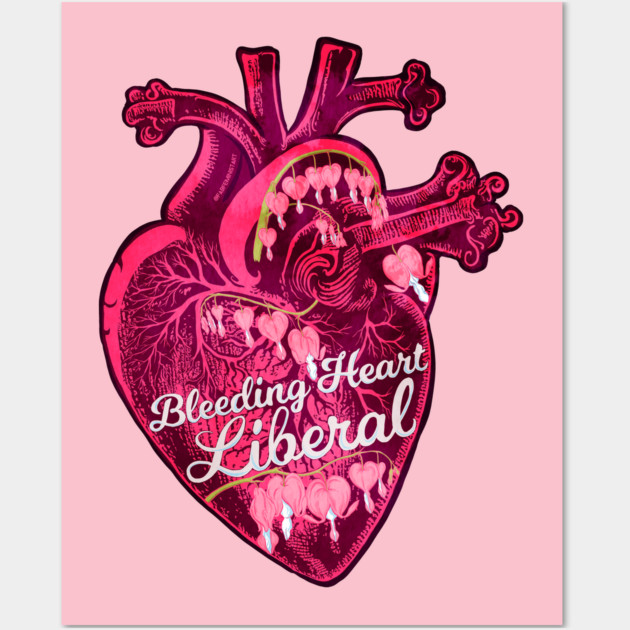
In the landscape of modern political discourse and social branding, labels are rarely neutral. They function as markers of identity, shorthand for values, and tools for both tribal alignment and external criticism. Among these, the term “bleeding heart liberal” stands out as a particularly potent linguistic construct. While it originated as a derogatory barb intended to dismiss proponents of social welfare as overly emotional or naive, it has—in certain circles—been reclaimed as a badge of honor. Understanding what this term signifies requires us to move beyond political vitriol and examine it through the lens of brand identity, strategic positioning, and the psychology of altruistic advocacy.

The Evolution of a Brand Label
To understand the “bleeding heart” moniker, one must look at how it functions as a brand archetype in the public square. From a strategic branding perspective, labels are rarely about accuracy; they are about perception. The term gained significant traction in the mid-20th century, specifically during the rise of the American welfare state and the Civil Rights Movement. It was designed to marginalize progressive policy by framing compassion as a cognitive deficit.
The Psychology of the Pejorative
The “bleeding” aspect of the phrase implies a literal or metaphorical hemorrhage of resources—time, money, or national sovereignty—for the benefit of others who may be perceived as “undeserving.” By labeling a political brand with this descriptor, critics are engaging in a sophisticated framing technique: they are attempting to turn the competitor’s greatest strength (empathy) into a liability (weakness or poor judgment).
From Liability to Asset
In modern branding, we often see a phenomenon known as “reclamation.” Just as certain marginalized groups have repurposed slurs to strip them of their power, modern progressives have begun to own the “bleeding heart” identity. In a world characterized by digital cynicism and political apathy, having a “heart” is increasingly viewed as a differentiator. If the brand of conservative politics is often built on the pillars of pragmatism, order, and traditionalism, the brand of the “bleeding heart” is built on radical empathy and collective responsibility.
Strategic Positioning: The Economics of Empathy
If we view “bleeding heart liberalism” as a strategic position within the marketplace of ideas, we must analyze the “business model” of this ideology. The core premise is that the long-term health of a society is a direct result of its investment in its most vulnerable members. This is not necessarily a rejection of economic logic, but rather a different calculation of Return on Investment (ROI).
Human Capital and Social Infrastructure
A “bleeding heart” approach prioritizes investment in social infrastructure—education, healthcare, and equitable housing—not merely out of altruism, but as a long-term strategy for societal stability. In business terms, this is analogous to the shift from short-term quarterly profits to long-term sustainable growth models. Critics argue that this leads to government bloat, while proponents argue that it prevents the systemic “debt” created by poverty, crime, and social stagnation.
The “Bleeding Heart” in Corporate Social Responsibility
This political archetype has deeply influenced the modern Corporate Social Responsibility (CSR) movement. Today, consumers—particularly Gen Z and Millennials—demand that brands demonstrate a “bleeding heart” level of concern for social issues. A company that is perceived as indifferent to its environmental impact or the well-being of its workforce suffers significant brand erosion. Therefore, the “bleeding heart” sensibility has effectively migrated from the halls of government into the corporate boardroom, where social empathy is now a prerequisite for market share and talent acquisition.

The Pitfalls of Performative Compassion
Every brand archetype faces the risk of dilution, and the “bleeding heart” identity is no exception. When a set of values becomes a performative brand, the authenticity of the message is often sacrificed at the altar of optics. This is where the term’s original derogatory intent finds its strongest validation.
The Problem of Virtue Signaling
In the digital age, it is easier than ever to project an image of empathy without engaging in the difficult, unglamorous work of implementation. This is the “brand” of a bleeding heart without the “utility” of one. When political or corporate entities use slogans and performative activism to mask a lack of substantive policy change, they invite the criticism that the term was originally meant to convey: that they are more concerned with their own moral branding than with tangible results.
Scaling Empathy
The fundamental challenge for the “bleeding heart” brand is the problem of scale. Can an emotion as localized and visceral as empathy be effectively scaled into a national or global policy framework? Critics argue that the institutionalization of empathy leads to bureaucracy, inefficiency, and the unintended creation of dependency. This is the central friction point between the “bleeding heart” liberal and the fiscal conservative. The former sees a system failing its people; the latter sees a system failing its economy.
The Future of Advocacy Branding
As we look toward the future of political and cultural discourse, the labels we use will continue to shift. The term “bleeding heart liberal” is currently being tested by a new era of populist discourse that rejects traditional political axes entirely.
Authenticity as the New Currency
Moving forward, the effectiveness of any ideological brand will depend on its ability to prove its authenticity. The public is increasingly adept at distinguishing between “bleeding heart” rhetoric that serves the ego of the advocate and “bleeding heart” action that materially changes lives. Advocacy that is rooted in measurable outcomes, clear communication, and consistent action is far more resilient than advocacy based on trending topics or social media posturing.
The Symbiosis of Heart and Head
The most successful iterations of the “bleeding heart” philosophy are those that balance the emotional impulse of empathy with the rigor of data-driven policy. Just as a brand cannot succeed on good intentions alone, a political movement cannot sustain itself on sentiment. The future of this ideology lies in the synthesis of radical compassion with hard-headed pragmatism.
When the “bleeding heart” becomes “informed advocacy,” the pejorative nature of the label loses its sting. It ceases to be an insult and becomes a description of a high-functioning, empathetic, and effective civic brand. Whether one identifies with the term or views it with skepticism, it is undeniable that the impulse toward compassion—and the debates surrounding how to best administer it—will remain a permanent feature of our societal structure.
Ultimately, the term “bleeding heart” serves as a mirror for our own values. Those who use it as a weapon are often signaling their belief that empathy is a scarcity to be rationed. Those who wear it as a mantle are signaling their belief that empathy is a resource that, when invested wisely, builds a stronger, more resilient society for everyone. In the end, it is not the label itself that matters, but the efficacy of the actions that follow the emotion. The challenge for any modern movement is to prove that a heart that bleeds for others can also provide the steady hand required to lead.
aViewFromTheCave is a participant in the Amazon Services LLC Associates Program, an affiliate advertising program designed to provide a means for sites to earn advertising fees by advertising and linking to Amazon.com. Amazon, the Amazon logo, AmazonSupply, and the AmazonSupply logo are trademarks of Amazon.com, Inc. or its affiliates. As an Amazon Associate we earn affiliate commissions from qualifying purchases.