
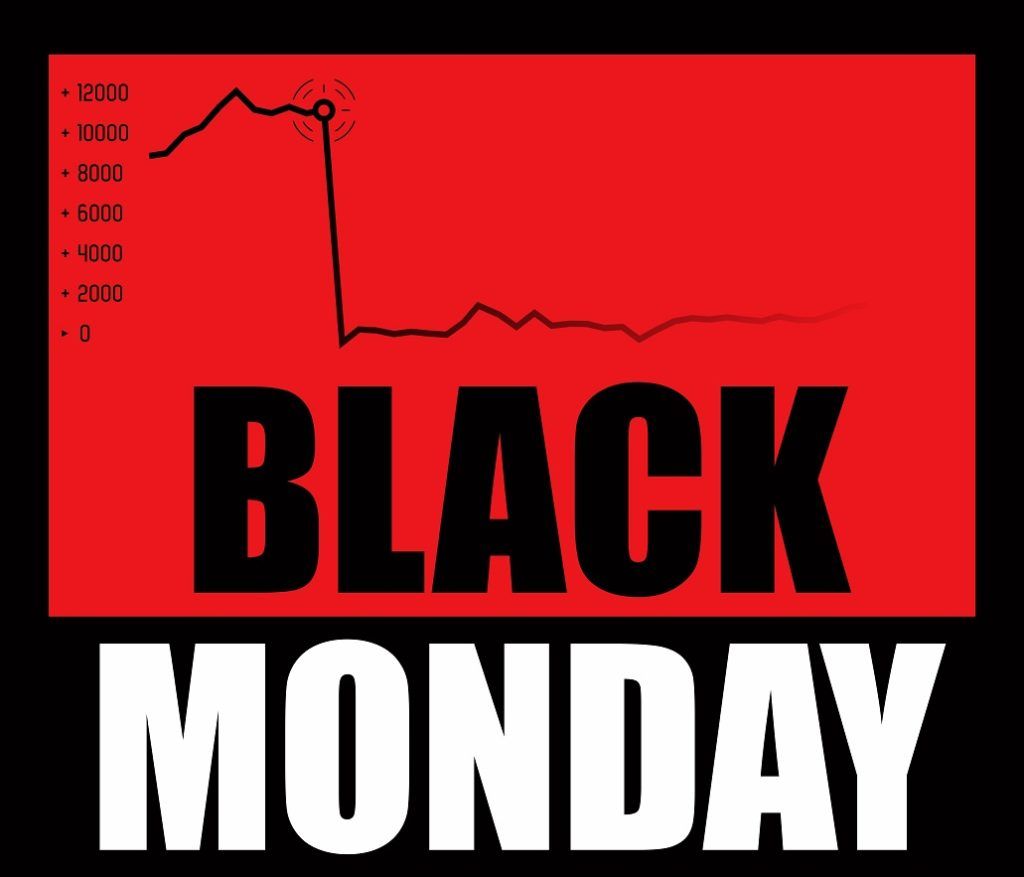
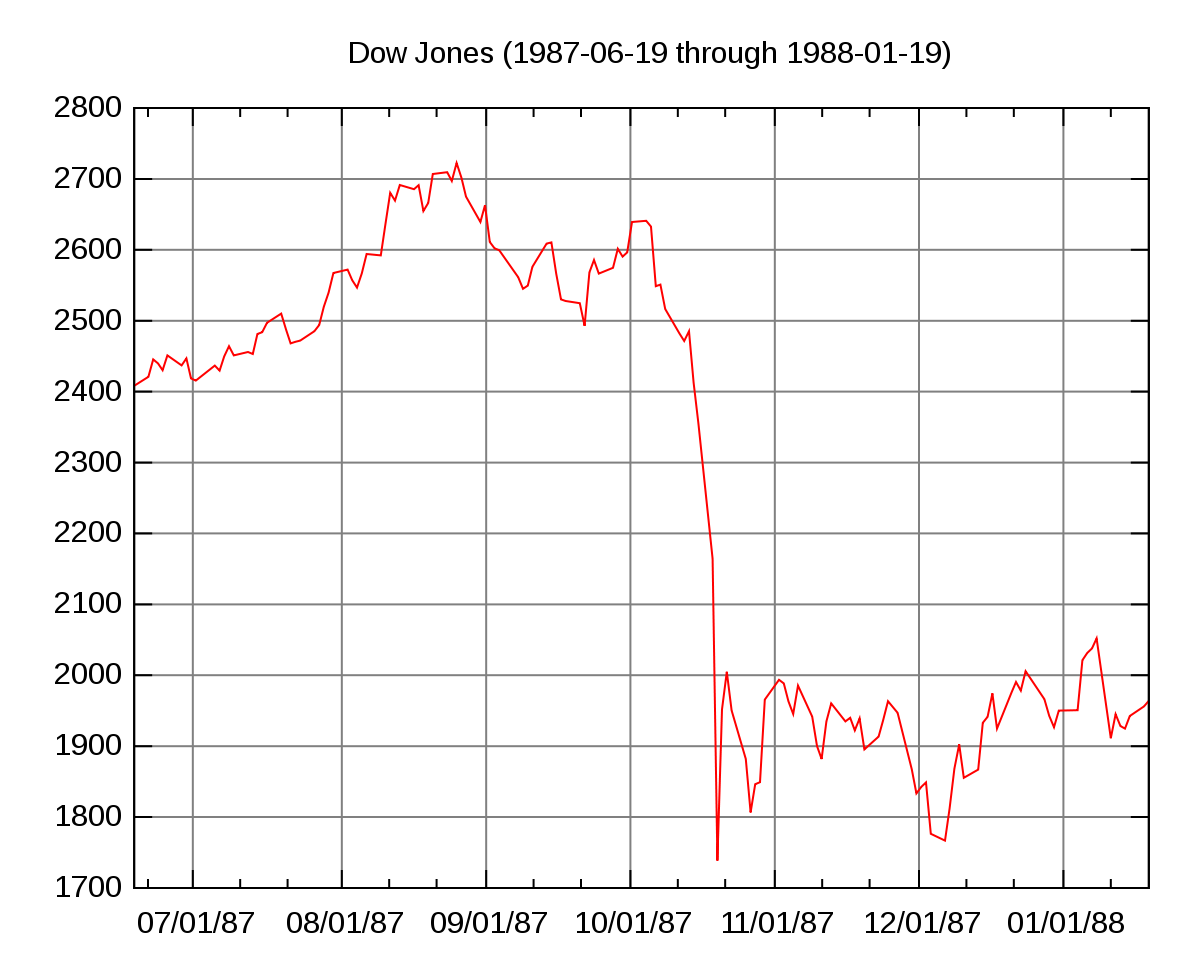
In the world of high-stakes finance, few phrases carry as much weight or evoke as much trepidation as “Black Monday.” While the term has been used to describe various catastrophic events throughout history, in the context of global markets, it most famously refers to October 19, 1987. On this singular day, the Dow Jones Industrial Average (DJIA) plummeted by 22.6%, marking the largest single-day percentage decline in stock market history.
Understanding what a Black Monday is involves more than just looking at a historical chart; it requires an exploration of market mechanics, investor psychology, and the evolution of the global financial system. To a modern investor, Black Monday serves as both a cautionary tale and a blueprint for how markets react under extreme duress. This article explores the origins of the term, the causes of the 1987 crash, and the lasting impact these events have on personal finance and institutional investing today.
The Anatomy of the 1987 Crash: The Historical Context
To understand the magnitude of Black Monday, one must first look at the environment that preceded it. The mid-1980s was a period of exuberant growth and significant optimism in the United States. Following the recession of the early 80s, the stock market entered a powerful bull run. Between 1982 and the summer of 1987, the Dow Jones Industrial Average more than tripled in value. This growth was fueled by a combination of hostile takeovers, leveraged buyouts, and an influx of retail and institutional capital.
The Lead-Up: Economic Conditions in the Mid-80s
By late 1987, however, cracks began to show in the foundation of the global economy. The United States was struggling with a widening trade deficit and a weakening dollar. Inflationary pressures were mounting, leading the Federal Reserve to raise interest rates to cool the economy. For investors, the rising cost of borrowing began to make the high valuations of stocks look increasingly precarious. Despite these warning signs, many participants remained bullish, buoyed by the momentum of the preceding five years.
The Day the World Stopped: October 19, 1987
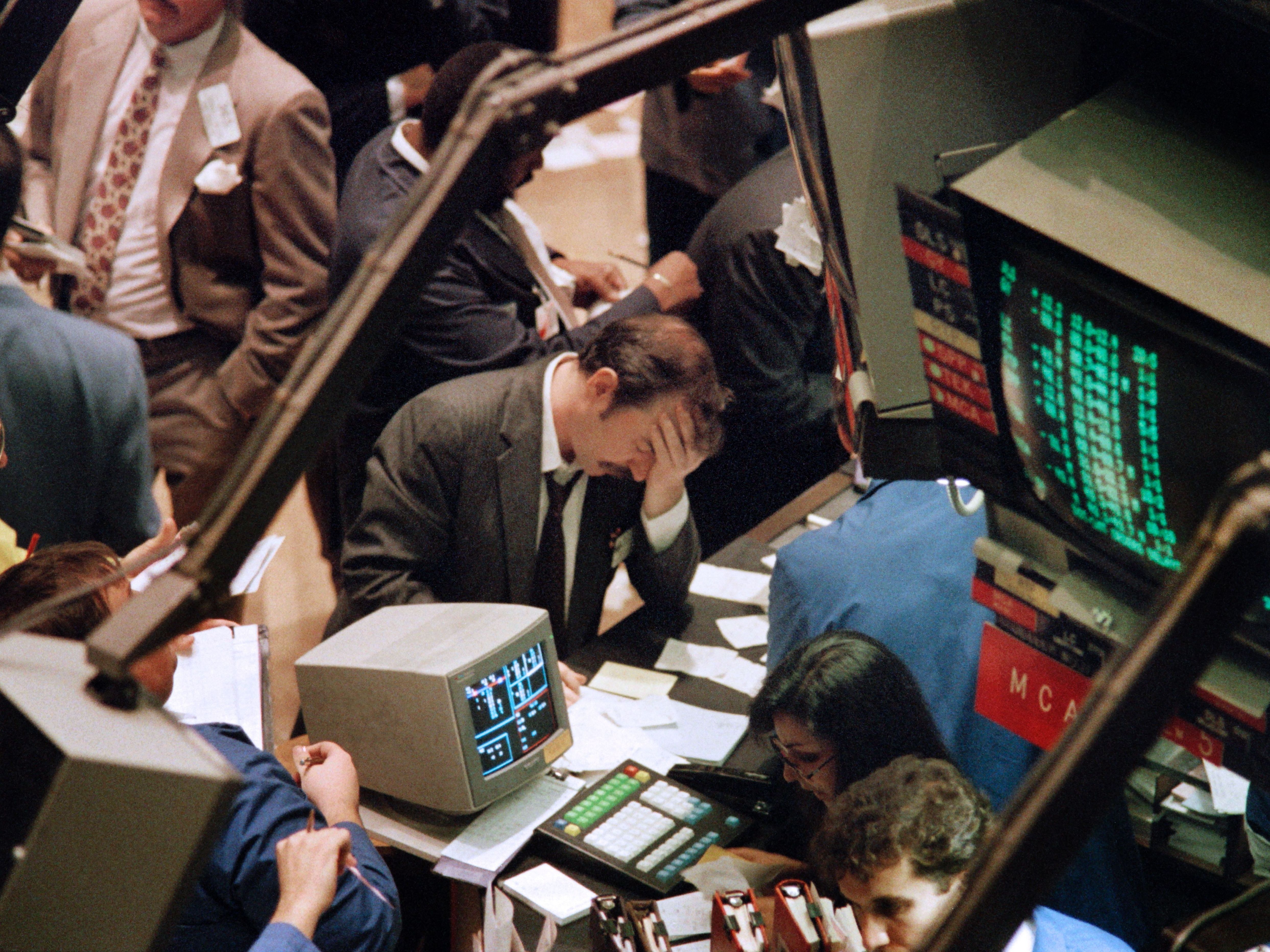
The crash did not start in New York. Because of the globalized nature of modern finance, the selling pressure began in the Asian markets during their Monday morning session, followed by the European markets. By the time the New York Stock Exchange (NYSE) opened, there was a massive backlog of sell orders.
Panic spread quickly. As prices dropped, more investors rushed to exit their positions, creating a feedback loop of selling. By the closing bell, the DJIA had lost 508 points. To put this in perspective, if a similar 22.6% drop occurred today, the Dow would lose over 8,000 points in a single session. The sheer speed of the decline overwhelmed the trading systems of the era, leaving investors in the dark about the actual price of their holdings for hours at a time.
Immediate Aftermath and the Global Domino Effect
The shockwaves of Black Monday were felt globally. Markets in London, Hong Kong, Berlin, and Tokyo all experienced double-digit losses. Unlike the 1929 crash, which led directly into the Great Depression, the 1987 crash did not result in a long-term economic collapse. Prompt intervention by the Federal Reserve, which injected liquidity into the banking system to ensure that brokerage firms could meet their obligations, helped stabilize the situation within weeks. However, the psychological damage was done, and the event forever changed how risk was perceived in the financial world.
Why Did It Happen? Deciphering the Triggers
Financial historians and economists have spent decades debating the primary causes of Black Monday. Unlike many market corrections that are tied to a specific geopolitical event or a sudden economic data point, Black Monday was a “systemic” failure—a combination of technological shortcomings and human panic.
The Rise of Program Trading and Early Algorithms
One of the most criticized elements of the 1987 crash was “program trading.” In the mid-80s, institutional investors began using computers to automate trades based on specific price triggers. A popular strategy at the time was “portfolio insurance,” which used computer models to automatically sell index futures when stock prices fell.
The theory was that this would hedge against losses. However, on Black Monday, these automated systems worked too well. As prices fell, the programs triggered massive sell orders simultaneously, which drove prices down further, triggering even more sell orders. This was the first time the world saw the destructive potential of algorithmic trading when it lacked human oversight or “circuit breakers.”
Market Psychology: From Bullishness to Panic
While technology exacerbated the decline, the root cause was human psychology. Markets are driven by two primary emotions: greed and fear. For years, greed had pushed valuations to unsustainable levels. When the tide turned, fear took over with equal intensity. The “herd mentality” became the dominant force. When investors saw their peers selling and heard news of international market collapses, the rational evaluation of company earnings or dividends went out the window. The goal shifted from “making money” to “preserving whatever is left.”
Regulatory Gaps and the Lack of Circuit Breakers
In 1987, there were virtually no mechanisms in place to stop a freefall. Trading continued even as prices plummeted, and there were no mandatory “cool-down” periods. Furthermore, there was a disconnect between the stock market (equities) and the futures market. The lack of coordination between these two segments meant that a crash in one could not be easily mitigated by the other, leading to a total breakdown in liquidity.
Comparing Other “Black” Days in Financial History
While 1987 is the most famous Black Monday, the term has become a generic label for any day involving a massive market rout. Comparing these events helps investors understand that while the causes change, the patterns of market volatility often remain the same.
Black Tuesday (1929) vs. Black Monday (1987)
The 1929 crash, often associated with “Black Tuesday,” is the most famous historical predecessor. On October 29, 1929, the market fell about 12%. While the percentage drop was smaller than in 1987, the consequences were far more dire. The 1929 crash signaled the start of a decade-long economic depression because the banking system was fragile and the government’s response was inadequate. In contrast, 1987 was a “flash” event where the economy remained relatively resilient.
The 2020 Pandemic Crash: A Modern Black Monday?
In March 2020, as the COVID-19 pandemic paralyzed the global economy, the markets experienced several “Black Monday” style events. On March 16, 2020, the DJIA fell nearly 13%. This modern iteration was driven by a fundamental external shock—a global health crisis—rather than just internal market mechanics. However, much like 1987, it featured rapid algorithmic selling and a desperate scramble for liquidity, proving that even with modern technology, markets are still susceptible to sudden shocks.
The Flash Crash of 2010
While not a “Monday,” the Flash Crash of May 6, 2010, is often discussed in the same breath. In a matter of minutes, the Dow dropped nearly 1,000 points (about 9%) before recovering most of it just as quickly. This event was almost entirely driven by high-frequency trading (HFT) and algorithmic glitches, serving as a modern reminder of the technological risks first highlighted in 1987.
Lessons for the Modern Investor
For the individual investor, the history of Black Monday is not just a trivia point; it provides essential lessons on how to manage personal finance and investment portfolios in an inherently volatile world.
Portfolio Diversification as a Shield
One of the loudest lessons of any market crash is the danger of over-concentration. Investors who were heavily weighted in high-growth U.S. equities in 1987 saw nearly a quarter of their wealth vanish in hours. Diversification across asset classes—including bonds, real estate, international stocks, and cash—helps cushion the blow. While no asset is entirely immune to a global systemic shock, different assets react differently to economic shifts, providing a layer of protection for the long-term investor.
Understanding Risk Management and Hedging
Black Monday taught the financial world that “portfolio insurance” isn’t as simple as an automated sell order. For modern investors, risk management involves setting “stop-loss” orders, maintaining a healthy emergency fund, and potentially using options to hedge positions. Most importantly, it involves knowing your own “risk tolerance.” If a 20% drop in your portfolio would cause you to panic-sell at the bottom, your current asset allocation is likely too aggressive for your psychological profile.
The Importance of Keeping a Long-Term Perspective
Perhaps the most encouraging lesson from 1987 is that the market eventually recovers. Investors who did not panic-sell on Black Monday saw the market return to its pre-crash highs within two years. Over a long enough time horizon, the “dips” and “crashes” that feel like the end of the world in the moment often become mere blips on a long-term upward trend. For those building wealth for retirement, the ability to stay the course during a “Black Monday” is often the difference between financial success and failure.
The Evolution of Market Safeguards
Following the 1987 crash, regulators and exchanges realized that the “wild west” era of unregulated electronic trading had to end. Significant changes were implemented to ensure that a 22% drop would be much harder to achieve in a single day without any intervention.
The Implementation of Modern Circuit Breakers
The most direct result of Black Monday was the creation of “circuit breakers.” These are mandatory trading halts that trigger when the market drops by a certain percentage. Currently, in the U.S. markets, a Level 1 drop (7%) or Level 2 drop (13%) triggers a 15-minute pause in trading. A Level 3 drop (20%) shuts down the market for the remainder of the day. These pauses are designed to give investors time to digest information and prevent the kind of mindless algorithmic feedback loops that occurred in 1987.
The Role of Central Banks and Liquidity
The 1987 crash also redefined the role of the Federal Reserve as the “Lender of Last Resort.” The Fed’s quick action to provide liquidity to banks prevented the stock market crash from turning into a banking crisis. This “Fed Put”—the expectation that the central bank will intervene to support the financial system during extreme volatility—has become a cornerstone of modern market expectations, for better or worse.
Staying Informed in an Era of High-Frequency Trading
Today, the speed of trading is measured in microseconds. While circuit breakers provide a safety net, the reality is that markets move faster than ever. For the personal investor, this means that staying informed is crucial, but so is avoiding the “noise” of 24-hour financial news. Understanding that “Black Mondays” are a natural, if painful, part of the market cycle allows investors to prepare their finances and their mindsets for the volatility that is inevitable in the world of high-finance.
aViewFromTheCave is a participant in the Amazon Services LLC Associates Program, an affiliate advertising program designed to provide a means for sites to earn advertising fees by advertising and linking to Amazon.com. Amazon, the Amazon logo, AmazonSupply, and the AmazonSupply logo are trademarks of Amazon.com, Inc. or its affiliates. As an Amazon Associate we earn affiliate commissions from qualifying purchases.