
In the complex landscape of market economics, few concepts are as misunderstood or as impactful as the price ceiling. At its core, a price ceiling is a government-imposed limit on the price charged for a product or service. However, the designation “binding” is what transforms a simple policy into a significant market force. Understanding the mechanics of a binding price ceiling is essential for business owners, investors, and finance professionals, as it represents a fundamental intervention that disrupts the natural equilibrium of supply and demand.
The Mechanics of a Binding Price Ceiling
A price ceiling is considered “binding” only when it is set below the natural market equilibrium price. If the government sets a ceiling at $10 for a product that currently trades at $5, the ceiling is “non-binding” because it does not restrict the market’s ability to function at its natural price point. The market forces will continue to operate as if the regulation did not exist.
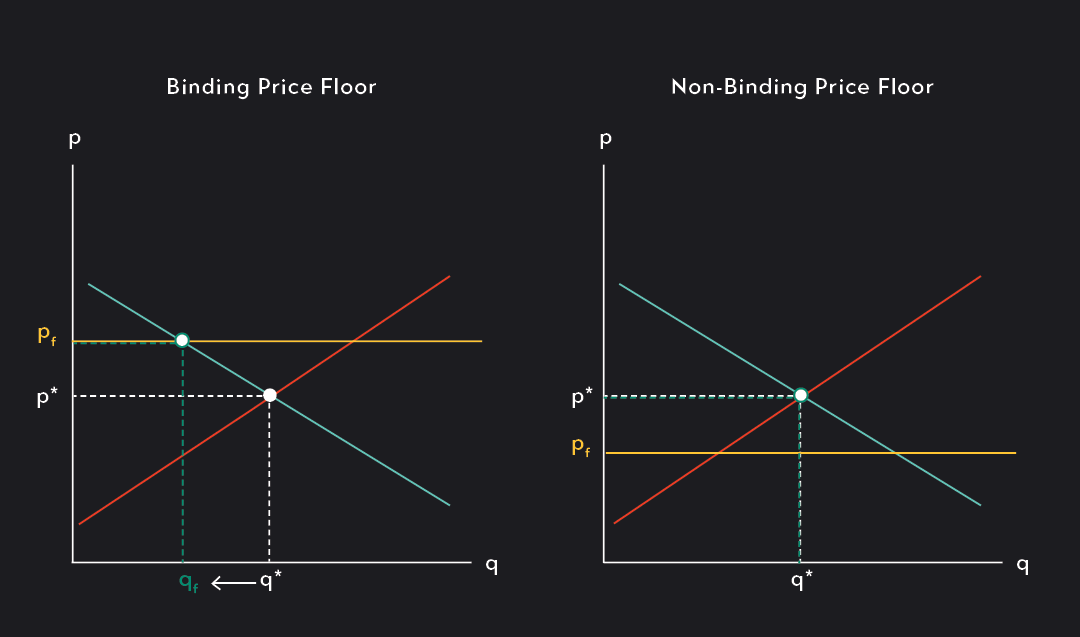
Conversely, a binding price ceiling forces the price of a good or service to stay lower than what the market would naturally dictate. When the legal maximum is set below the equilibrium price, the natural interaction between buyers and sellers is interrupted. This leads to a divergence in quantity: because the price is artificially low, the quantity demanded by consumers increases, while the quantity supplied by producers decreases. This gap creates the classic economic phenomenon of a shortage.
Market Equilibrium vs. Regulatory Intervention
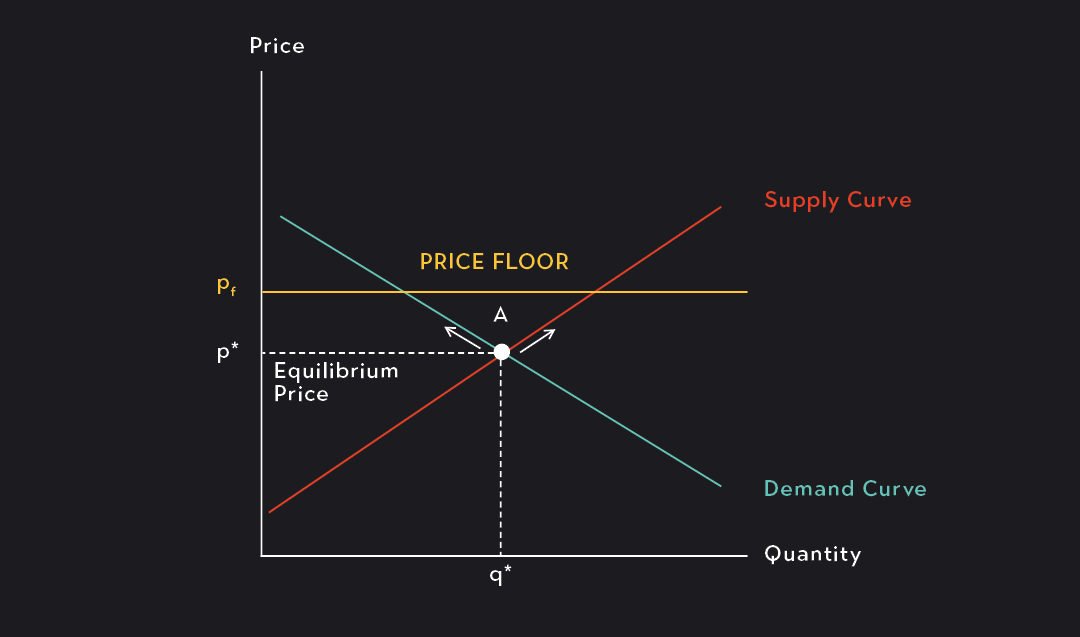
To grasp the impact, one must visualize the supply and demand curves. The equilibrium point—where the two lines intersect—represents the price where the amount of goods produced perfectly matches the amount consumers wish to purchase. A binding price ceiling acts as a horizontal line drawn beneath this intersection. Because producers cannot charge the equilibrium price, they lose the incentive to supply the same volume of goods, while consumers, emboldened by the lower price, increase their demand. The resulting shortfall is the mathematical definition of a market inefficiency.
Long-Term Consequences of Price Controls
While the stated goal of a binding price ceiling is almost always to protect consumers—particularly low-income individuals—from high costs, the long-term reality is often detrimental to the very group the policy intends to support. When prices are artificially suppressed, the supply of the good inevitably shrinks. This leads to empty shelves, rationing, or the emergence of black markets. In the financial sector, these distortions are viewed as significant risks that can devalue assets and destabilize industries reliant on consistent pricing models.
Impact on Business Finance and Asset Valuation
For business leaders and investors, a binding price ceiling is more than just a regulatory hurdle; it is a fundamental shift in the risk-reward profile of a business. When a government enforces a price cap, the revenue potential of a business is immediately truncated. This complicates financial planning, capital allocation, and long-term valuation models.
Erosion of Profit Margins and Investment
When a business cannot raise prices to match rising input costs, its profit margins are squeezed. In an inflationary environment, where the costs of raw materials, labor, and logistics increase, a fixed price ceiling becomes increasingly devastating. This makes it difficult for companies to reinvest in their infrastructure, research, or development. Over time, this leads to a decline in quality, as companies seek to cut costs in other ways to compensate for their inability to charge market-clearing prices. For an investor, a sector subject to binding price ceilings is often a “red flag,” signaling lower growth potential and higher political risk.
Capital Misallocation and Supply Chain Distortion
Binding price ceilings frequently lead to the misallocation of capital. When prices cannot signal scarcity, resources are not directed toward the areas of greatest need. For example, if a government places a binding price ceiling on residential rents, developers may stop building new apartment complexes because the return on investment no longer justifies the construction costs. This leads to a persistent housing shortage, which ultimately hurts the consumer far more than the high rent prices would have in a free-market scenario. From a business finance perspective, this represents a structural failure that discourages entry into the market and stifles innovation.
The Behavioral Economics of Shortages and Black Markets
One of the most fascinating and destructive aspects of a binding price ceiling is the inevitable shift in consumer and supplier behavior. When the price mechanism is broken, alternative methods of allocating resources must emerge. These methods are rarely as efficient or fair as the price mechanism itself.
Non-Price Rationing
When a price is capped below market value, the first thing to disappear is the ability to use money as the primary allocator. Instead, goods are often allocated through non-price rationing. This might manifest as “first-come, first-served” lines, waiting lists, or bureaucratic lotteries. These methods carry their own costs; for instance, the time a consumer spends waiting in line is a “hidden cost” that effectively increases the real price of the item. Businesses also suffer under these systems, as they lose the ability to differentiate their products or capture the value their brand provides.
The Rise of the Underground Economy
When a binding price ceiling creates a significant gap between the regulated price and the black-market price, the incentive to bypass the law becomes overwhelming. This gives rise to shadow markets where the product is sold illegally at a much higher price. While these markets provide the goods that the legal market cannot, they do so without legal protections, quality guarantees, or tax revenue generation. For companies operating in such environments, the risk of reputational damage, legal prosecution, and the erosion of their customer base to the black market becomes a primary concern for risk management.
Strategic Perspectives for Finance Professionals
For those navigating the world of finance, the existence of a binding price ceiling requires a shift in strategic focus. It is not enough to look at top-line revenue; one must analyze the regulatory environment with the same rigor applied to balance sheets and income statements.
Mitigating Regulatory Risk
Businesses operating under the threat of price controls must prioritize operational efficiency to survive margin compression. Furthermore, diversifying product offerings to include goods that are not subject to price controls can provide a financial buffer. From an investor’s standpoint, analyzing the political landscape is just as crucial as analyzing the industry itself. If a company is in an industry prone to populist price caps—such as utilities, healthcare, or essential consumer staples—the investor must demand a higher risk premium to account for potential government interference.

Understanding Price Elasticity
A key metric in this analysis is price elasticity of demand. If a product has a very inelastic demand (meaning consumers will buy it regardless of the price), the government is more likely to view it as a candidate for a price ceiling. However, this is precisely when price ceilings are most dangerous. Because consumers are desperate for the product, any artificial reduction in supply leads to severe social and economic pain. Businesses that can demonstrate the value of their price points and the necessity of reinvestment often find more success in lobbying against these controls than those that remain silent.
Ultimately, a binding price ceiling acts as a distorting mirror in the marketplace. While it reflects a desire for affordability and stability, it distorts the underlying signals that make an economy function efficiently. By understanding the causes, the mechanical outcomes, and the long-term financial consequences of these controls, professionals can better navigate the landscape of modern finance and business strategy. In a world where market interventions are becoming more frequent, the ability to anticipate and react to these regulatory shifts is an essential competency for any successful enterprise.
aViewFromTheCave is a participant in the Amazon Services LLC Associates Program, an affiliate advertising program designed to provide a means for sites to earn advertising fees by advertising and linking to Amazon.com. Amazon, the Amazon logo, AmazonSupply, and the AmazonSupply logo are trademarks of Amazon.com, Inc. or its affiliates. As an Amazon Associate we earn affiliate commissions from qualifying purchases.