
The American Psychological Association (APA) style serves as the gold standard for formatting academic papers, particularly within the social sciences, business, and behavioral fields. When crafting a formal document, the cover page—officially known as the title page—acts as the professional interface between your research and the reader. It is not merely a decorative formality; it is a critical component of academic and professional branding that establishes the credibility, authorship, and institutional affiliation of your work. Understanding the structural nuances of an APA title page is essential for anyone aiming to present their findings with the polish and precision required in high-level scholarly communication.
The Architecture of Professional Presentation
In the realm of professional branding and academic publishing, the title page functions as a “first impression” document. Just as a well-designed corporate deck speaks to the competence of a firm, a properly formatted APA cover page signals that the author respects the established conventions of their field and maintains high standards of attention to detail.
Essential Components of a Student Title Page
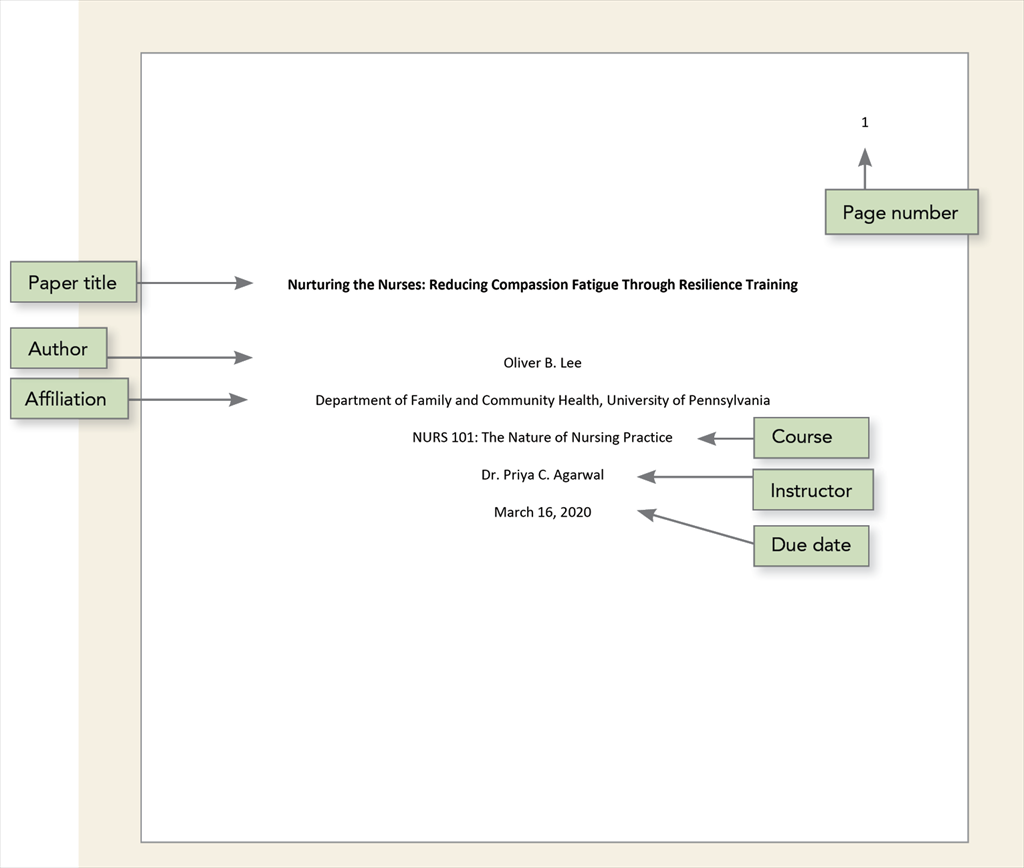
For students, the APA title page is intentionally streamlined to ensure clarity. The page must include the following elements, typically centered in the top half of the page:
- The Paper Title: This should be bolded, positioned three to four lines down from the top margin. It must be concise, descriptive, and free of unnecessary jargon.
- The Author’s Name: Placed one double-spaced line below the title, this identifies the primary investigator or researcher.
- Institutional Affiliation: Below the author’s name, list the department and the university or institution.
- Course Information: Include the course number and name, ensuring the format matches the instructor’s requirements.
- Instructor’s Name: This provides a clear designation of the intended audience for the submission.
- The Due Date: Providing the date of submission completes the administrative record.
Professional vs. Student Distinctions
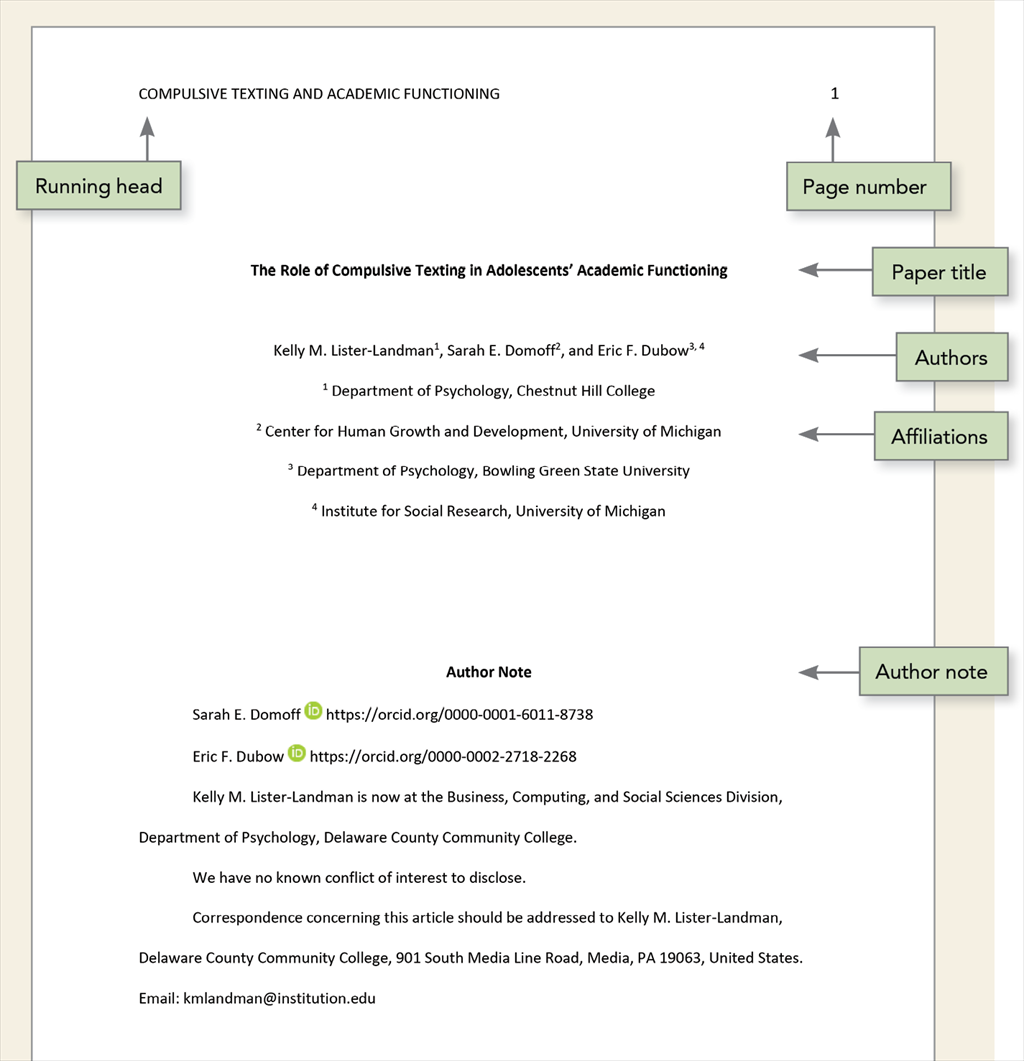
It is vital to distinguish between student-level papers and professional manuscripts submitted for publication. While a student title page focuses on course-related logistics, a professional title page is designed for peer-reviewed journals. In the professional context, the title page incorporates an “author note,” which provides information on potential conflicts of interest, acknowledgments, and contact details. Mastering these distinctions is a key part of your personal brand as a researcher; presenting a student-style page for a professional submission can diminish your perceived authority in the field.
Design Principles and Formatting Standards
APA style is rigid, yet it offers a clean, minimalist aesthetic that prioritizes readability. The formatting of your cover page is the first test of your adherence to these guidelines. If the foundation of your document—the title page—is misaligned or incorrectly spaced, the reader is subconsciously primed to doubt the rigor of the subsequent research.
Font and Margin Requirements
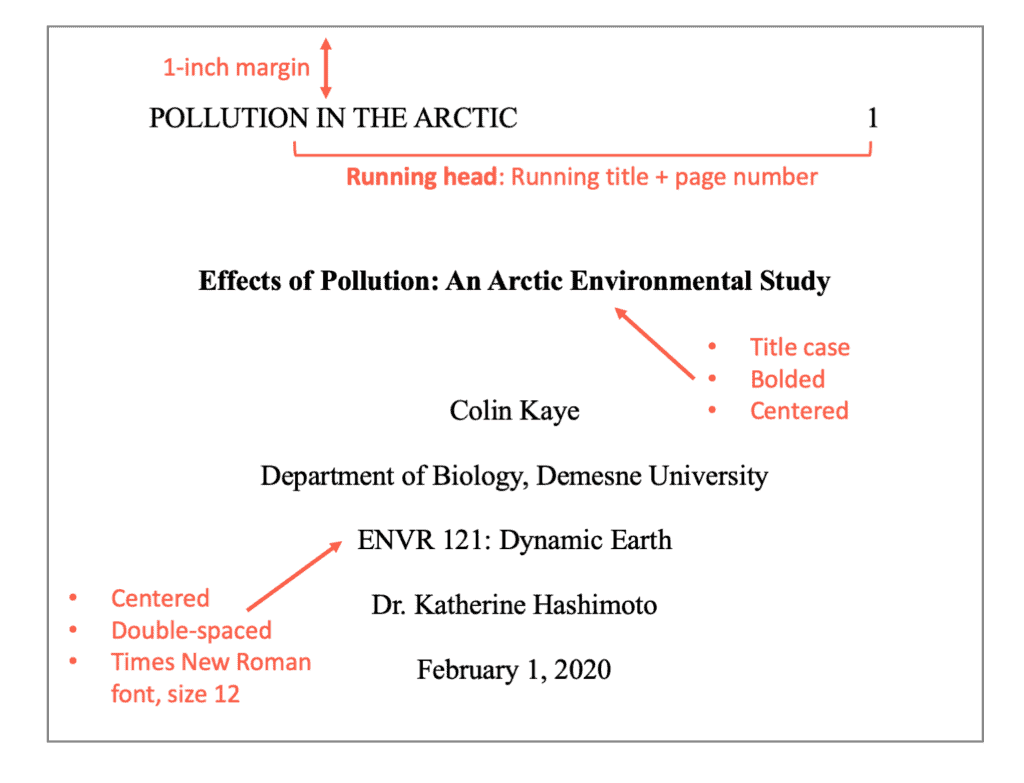
APA style specifies a preference for highly legible fonts. Standard choices include 12-point Times New Roman, 11-point Calibri, 11-point Arial, or 10-point Lucida Sans Unicode. Consistency is paramount. The margins must be set to one inch on all sides. These constraints are not arbitrary; they are designed to ensure that the document remains professional and accessible across various digital and print platforms.
The Role of Spacing and Alignment
The “centering” rule is the defining visual characteristic of the APA cover page. All elements on the title page should be centered horizontally. Furthermore, double-spacing is required throughout the document, including the title page. Adding extra blank lines between sections, beyond what the style guide explicitly permits, is a common error that ruins the professional look of the page. By adhering to these strict design parameters, you cultivate an image of discipline and professional competence, traits that are highly valued in both academic and corporate settings.
Elevating Your Personal Branding Through Academic Rigor
Whether you are writing a research paper for a university course or preparing a white paper for your organization, your written work is an extension of your personal brand. In the digital age, where information is abundant, the presentation of your work acts as a signal of quality. An APA-formatted cover page is a hallmark of intellectual legitimacy.
Consistency as a Branding Tool
Personal branding is built on the foundation of consistency. If you consistently produce work that adheres to professional standards—such as proper citations, structured headings, and correctly formatted title pages—you develop a reputation for excellence. Those who engage with your work will eventually associate your name with reliability. Neglecting the basics of a cover page, such as failing to bold the title or using improper capitalization, can make your work appear amateurish, regardless of the quality of the insights contained within.
Establishing Institutional Authority
By including your institutional or organizational affiliation, you are aligning your work with a broader community of scholars or professionals. This adds a layer of validation to your writing. For instance, if you are writing a case study for a business, utilizing standard academic formatting creates a sense of objective, data-driven authority. It signals to the reader that your conclusions were reached through a structured, transparent, and verifiable process.
Common Pitfalls and How to Avoid Them
Even seasoned researchers occasionally stumble when formatting their title pages. Understanding the most frequent errors will allow you to audit your work more effectively before submission.
The Problem of “Over-Formatting”
One of the most common mistakes is the urge to add unnecessary flourishes. Avoid including logos, images, or stylized borders on your APA title page. APA style prioritizes text-based clarity. When you deviate from the standard, you distract the reader from the content, which is the exact opposite of what a professional cover page should achieve. If your brand guidelines require a logo, consider incorporating it in a separate supplemental document rather than on the core academic cover page, unless explicitly instructed otherwise.
The “Running Head” Confusion
The running head is a short version of your paper’s title that appears at the top of every page of a professional manuscript. Historically, the running head was a requirement for all APA papers; however, in the latest (seventh) edition of the APA manual, the running head is no longer required for student papers. Only professional manuscripts require a running head. Knowing the current requirements for your specific type of submission saves time and prevents you from including outdated, irrelevant information that could suggest you are not up-to-date with current standards.
Capitalization and Punctuation
Proper title capitalization (Title Case) is a must. All major words—nouns, verbs, adjectives, and adverbs—must be capitalized, while articles and short prepositions are generally lowercase unless they are the first word of the title. Small errors in capitalization can signal a lack of attention to detail, which is something you want to avoid when trying to position yourself as an expert or a serious student.
Final Review: The Checklist for Success
Before you consider your document ready for submission or publication, perform a final audit of your title page against the core requirements of APA style. Treat this process like a final quality control check in a professional workflow.
- Check the Alignment: Is everything centered?
- Verify the Spacing: Is the document double-spaced without additional, unrequested gaps?
- Font Consistency: Does the font match the remainder of the paper exactly?
- Title Accuracy: Is the title bolded and free of unnecessary formatting like underlines or italics?
- Institutional Data: Is the information regarding your affiliation and course accurate and up-to-date?
The APA cover page is more than just a placeholder; it is the gateway to your research. By investing time in perfecting this element, you demonstrate that you value the reader’s time and that you possess the technical proficiency required to produce high-level work. In a professional world that rewards precision, your ability to execute a standard cover page perfectly serves as a subtle yet powerful testament to your commitment to excellence. As you continue to develop your writing and research skills, remember that every detail, from the title page to the final reference, plays a role in how your brand is perceived by your peers, mentors, and the wider professional community. By mastering the APA cover page, you are not just checking a box—you are setting a tone of professionalism that will resonate throughout the entirety of your document.
aViewFromTheCave is a participant in the Amazon Services LLC Associates Program, an affiliate advertising program designed to provide a means for sites to earn advertising fees by advertising and linking to Amazon.com. Amazon, the Amazon logo, AmazonSupply, and the AmazonSupply logo are trademarks of Amazon.com, Inc. or its affiliates. As an Amazon Associate we earn affiliate commissions from qualifying purchases.