
In the contemporary era, technology is the invisible fabric of our daily lives. From the smartphone in your pocket to the massive data centers powering artificial intelligence, every digital interaction depends on a fundamental movement of energy. To truly understand how our gadgets function, how our infrastructure scales, and how future innovations will unfold, one must grasp the core units of electricity. Chief among these is the Ampere, or “Amp.”
While terms like “Voltage” and “Wattage” are frequently tossed around in tech reviews and spec sheets, the Ampere is the measurement of the actual flow. In the niche of technology and hardware engineering, the Amp is the “current” that breathes life into silicon. This article explores the technical nuances of the Ampere, its critical role in device hardware, and why it remains the most vital metric for the future of tech infrastructure.
1. The Physics of Power: Defining the Ampere in Tech Hardware
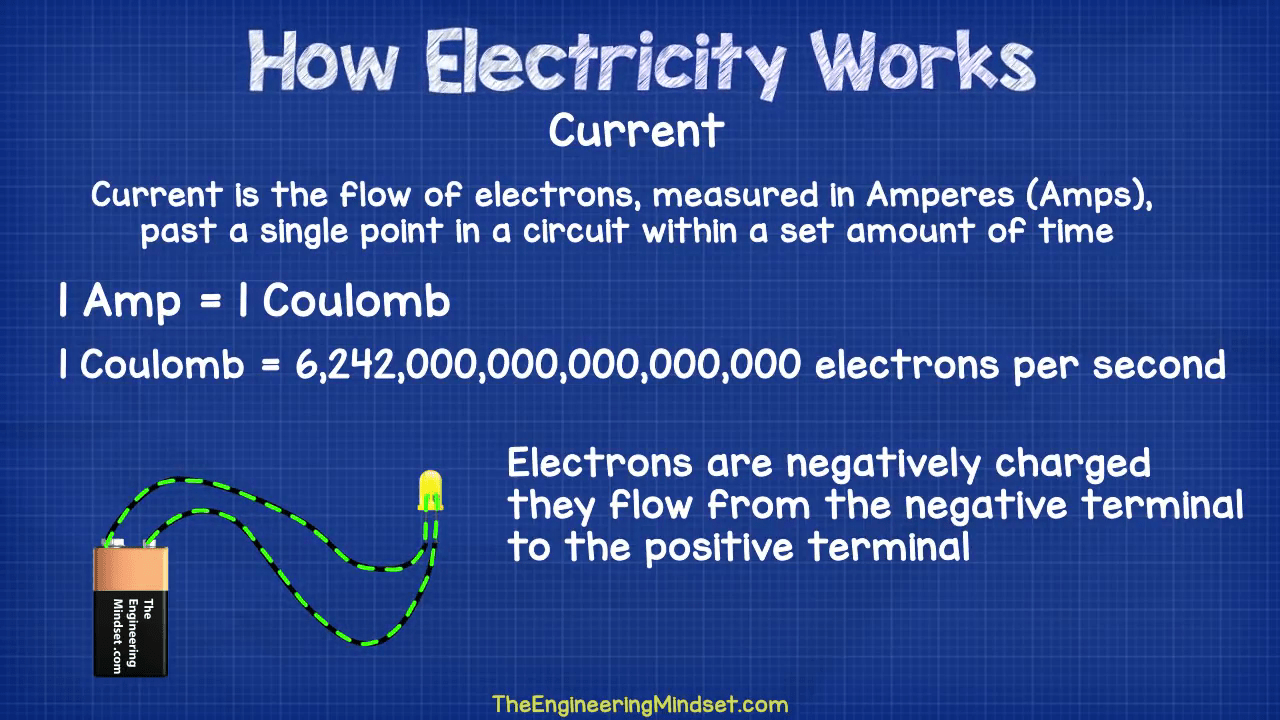
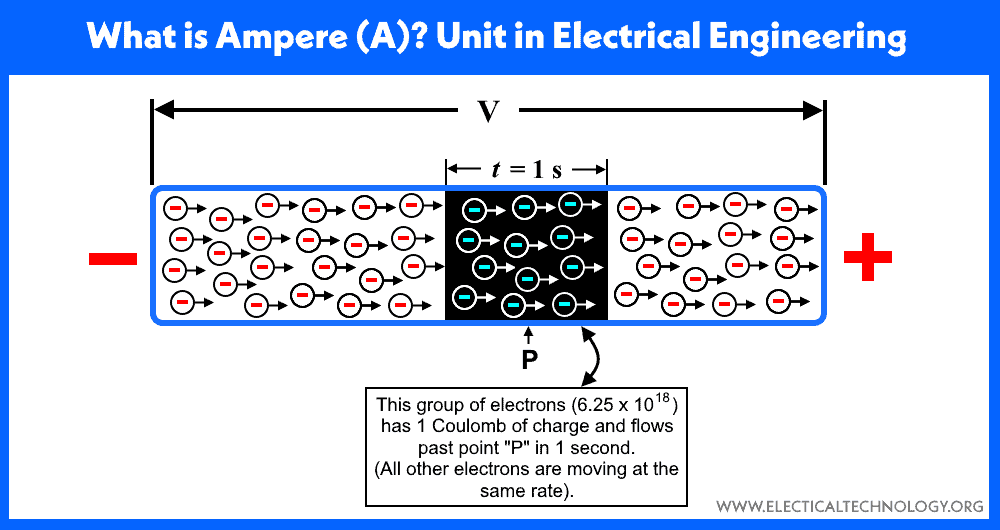
At its most basic level, an Ampere is a unit of electric current. In the International System of Units (SI), it measures the rate of electron flow through a conductor. If you imagine electricity as a river, the Ampere isn’t the pressure of the water or the total volume of the lake; it is the speed and volume of the water passing a specific point every second.
The Flow of Electrons and Coulomb’s Law
Technically, one Ampere represents one Coulomb of electrical charge—roughly $6.242 times 10^{18}$ elementary charges—moving past a specific point in one second. In the context of technology, this flow occurs through copper traces on a PCB (Printed Circuit Board) or through the microscopic transistors within a CPU. Understanding this flow is essential for engineers because current generates heat. In high-performance computing, managing the “Amps” is synonymous with managing the thermal limits of the machine.
The Interplay: Amps, Volts, and Watts
To understand the Amp, we must look at its relationship with its counterparts: Volts (Potential) and Watts (Total Power). The standard formula used in tech hardware is $Watts = Volts times Amps$.
- Voltage (V): Think of this as the electrical pressure.
- Amperage (A): This is the volume of the flow.
- Wattage (W): This is the total work being done.
In the tech world, this relationship dictates everything from how a laptop power brick is designed to how a Tesla Megapack stores energy. If you want more power (Watts) for a high-end GPU, you either need to increase the pressure (Volts) or increase the flow (Amps). Because high voltage can be dangerous and requires heavy insulation, many tech gadgets rely on increasing amperage to deliver the “juice” needed for intensive tasks.
2. Mobile Technology and the Race for Rapid Charging
Perhaps the most common place a consumer encounters “Amps” is on the back of a wall charger or in the specifications of a smartphone battery. In the evolution of mobile tech, the Ampere has become the primary lever for innovation in battery life and charging speeds.
The Role of Amperage in Fast Charging
Early USB standards provided a meager 0.5 Amps, which resulted in agonizingly slow charging times for early smartphones. As mobile processors became more powerful and screens grew larger, the industry had to innovate. Modern “Fast Charging” technologies, such as USB Power Delivery (USB-PD) or Qualcomm Quick Charge, work by intelligently modulating the Amperage and Voltage.
By pushing more Amps through a USB-C cable, manufacturers can fill a battery to 80% in a fraction of the time. However, this comes with a technical challenge: resistance. When high amperage meets resistance in a thin cable, it produces heat. This is why high-quality, high-amperage cables are thicker and contain specialized chips (e-markers) to communicate with the device, ensuring the current flow doesn’t melt the hardware.
Understanding mAh: Battery Capacity and Current
Battery capacity in gadgets is almost always rated in “mAh” or milliamp-hours. This is a direct measurement of how many milliamps (one-thousandth of an Amp) a battery can discharge over the course of one hour.
- A 5,000 mAh battery can theoretically provide 5,000 milliamps of current for one hour.
- Alternatively, it can provide 500 milliamps for 10 hours.
For tech enthusiasts, the mAh rating is a crucial benchmark for mobile endurance. However, as software becomes more resource-heavy, especially with background AI processing, the efficiency of how many “Amps” the hardware draws becomes just as important as the size of the tank.
3. Infrastructure and Enterprise Tech: The High-Current Demands of AI
Moving from personal gadgets to the macro-scale, the Ampere is the defining constraint of the modern data center. We are currently in an “AI Arms Race,” where companies like NVIDIA, Google, and Microsoft are deploying massive clusters of H100 and B200 GPUs. These chips are incredibly “hungry” for current.
High-Density Computing and Power Delivery
Modern AI chips operate at very low voltages (often around 1V) but require incredibly high amperage to function. A single high-end enterprise GPU can draw hundreds of Amps. This creates a massive engineering hurdle: how do you deliver 500+ Amps to a piece of silicon the size of a postage stamp without the traces vaporizing?
This has led to the development of sophisticated “Power Delivery Networks” (PDN) within servers. Using technologies like vertical power delivery and specialized voltage regulator modules (VRMs), tech architects strive to minimize the distance high-amperage current must travel. The shorter the distance, the less energy is lost as waste heat—a critical factor when you are running tens of thousands of servers simultaneously.
The “Circuit Breaker” Limit: Data Center Scalability
In enterprise tech, the total “Amperage” available to a server rack often dictates its density. Data centers are rated by their power capacity, and engineers must meticulously balance the “Amp draw” of each rack to avoid tripping industrial-grade circuit breakers. As AI models grow, the demand for more Amps per square foot is forcing a revolution in data center cooling, shifting from traditional air cooling to liquid cooling to handle the thermal byproduct of high-current electricity.
4. The Future of Tech: Efficiency and Low-Ampere Innovation
While one side of the tech world is pushing for higher Amps to power AI, another side is focused on the “Ultra-Low Power” (ULP) movement. This is the realm of the Internet of Things (IoT), wearables, and edge computing.
The Rise of Nano-Ampere Sensors
The future of tech lies in “invisible” devices—sensors embedded in bridges, medical implants, and smart clothing. These devices cannot be plugged into a wall; they must last for years on a single coin-cell battery. To achieve this, engineers are designing processors that operate on nano-amperes.
These “low-Amp” innovations involve designing circuits that “sleep” most of the time, consuming almost zero current, and only “wake up” for microseconds to transmit data. This efficiency is what will enable the “Smart City” of the future, where billions of devices communicate without requiring a massive overhaul of the electrical grid.
Solid-State Batteries and Current Efficiency
We are also on the verge of a revolution in battery chemistry. Solid-state batteries promise to handle higher amperage flows more safely than current lithium-ion technology. For the tech industry, this means faster charging without the risk of thermal runaway (fires) and the ability to power more demanding mobile applications, such as high-fidelity Augmented Reality (AR) glasses, which require a high current to drive bright displays and complex spatial sensors.

Conclusion: The Ampere as the Pulse of Innovation
In the world of technology, understanding what an Amp is goes far beyond a simple physics definition. The Ampere is the pulse of our digital ecosystem. It is the metric that determines how fast our phones charge, how powerful our gaming rigs can be, and how far we can push the boundaries of artificial intelligence.
As we look toward the next decade of tech trends, the management of electrical current will remain at the forefront. Whether it is through the development of high-amperage AI chips or ultra-low-ampere IoT sensors, the “Amp” is the fundamental unit of progress. For anyone looking to master the technical landscape, respecting and understanding the flow of the Ampere is the first step toward understanding the future of the digital world.
aViewFromTheCave is a participant in the Amazon Services LLC Associates Program, an affiliate advertising program designed to provide a means for sites to earn advertising fees by advertising and linking to Amazon.com. Amazon, the Amazon logo, AmazonSupply, and the AmazonSupply logo are trademarks of Amazon.com, Inc. or its affiliates. As an Amazon Associate we earn affiliate commissions from qualifying purchases.