
In the bustling world of digital communication, where ideas connect and information flows at an unprecedented pace, understanding the nuances of language becomes crucial. Whether you’re crafting a compelling brand message, optimizing content for search engines, explaining complex AI tools, or managing your personal finances, clarity and precision in your writing can make all the difference. This is where grammatical tools like adverbial conjunctions come into play, acting as vital bridges that link thoughts and guide your reader through a coherent narrative.
While the term “adverbial conjunction” might sound technical, its function is remarkably practical, especially within the diverse landscape of technology, branding, and finance. Think of them as the sophisticated connectors that elevate your writing from a series of disconnected statements to a well-structured and persuasive argument. They are the subtle yet powerful words that allow you to express relationships between clauses or sentences, such as cause and effect, contrast, addition, or time. Mastering their use can significantly enhance your ability to communicate effectively across all these domains.
The Art of Connection: Defining Adverbial Conjunctions
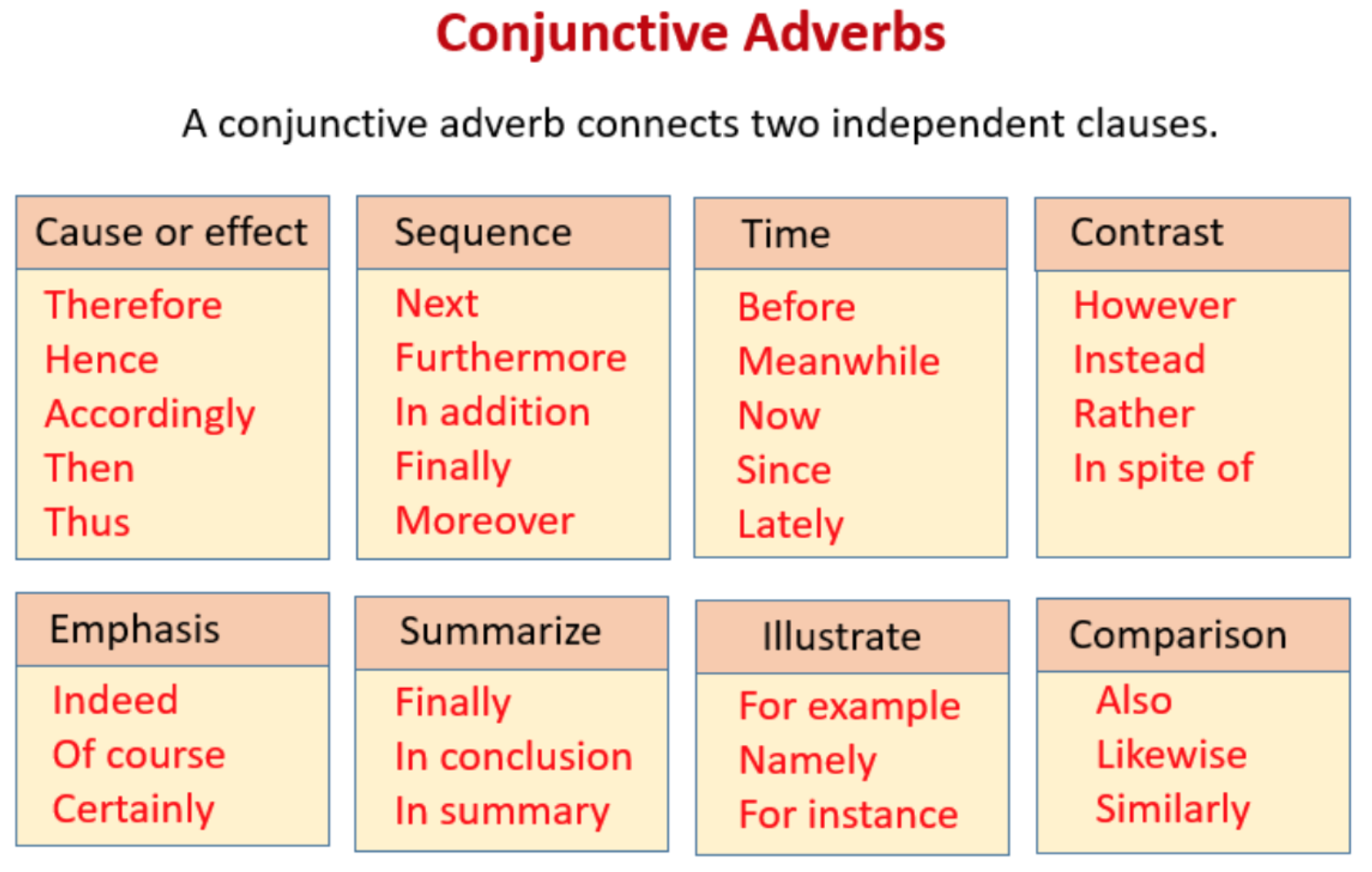
At its core, an adverbial conjunction is a word or phrase that connects two independent clauses or sentences, while also performing the function of an adverb. Unlike coordinating conjunctions (like “and,” “but,” “or”), which simply join grammatically equal elements, adverbial conjunctions introduce a logical relationship between the ideas presented. They tell the reader how the second clause relates to the first.
Consider the difference:
- Coordinating Conjunction: “The new AI chatbot is impressive, and it offers a wide range of features.” (Simple addition)
- Adverbial Conjunction: “The new AI chatbot is impressive; however, its initial setup can be complex.” (Contrast)
In the second example, “however” not only connects the two ideas but also signals a contrast between the chatbot’s impressiveness and its setup complexity. This explicit signaling is what makes adverbial conjunctions so valuable for guiding the reader’s understanding.
Adverbial conjunctions, also known as conjunctive adverbs, can be tricky because they can function both as adverbs within their own clause and as connectors between clauses. This dual nature allows them to add depth and sophistication to your writing. They are indispensable for:
- Explaining causality: “The software update was extensive; therefore, system performance may be temporarily affected.”
- Showing contrast: “The company invested heavily in brand awareness; nevertheless, their market share remained stagnant.”
- Adding information: “The new gadget boasts incredible battery life; furthermore, it is also remarkably lightweight.”
- Indicating sequence: “The marketing campaign launched smoothly; subsequently, sales began to climb.”
Their placement within a sentence can vary, often appearing at the beginning of the second clause, followed by a comma, or sometimes in the middle of the clause, set off by commas. Understanding these placements contributes to the fluency and readability of your text.
Types of Relationships Signaled by Adverbial Conjunctions
The beauty of adverbial conjunctions lies in their ability to express a diverse array of logical relationships. Recognizing these categories can help you choose the most precise word to convey your intended meaning.
Showing Cause and Effect
These adverbial conjunctions are crucial for explaining why something happened or what resulted from an action. In the realms of tech tutorials or financial analysis, clearly delineating cause and effect is paramount for clarity.
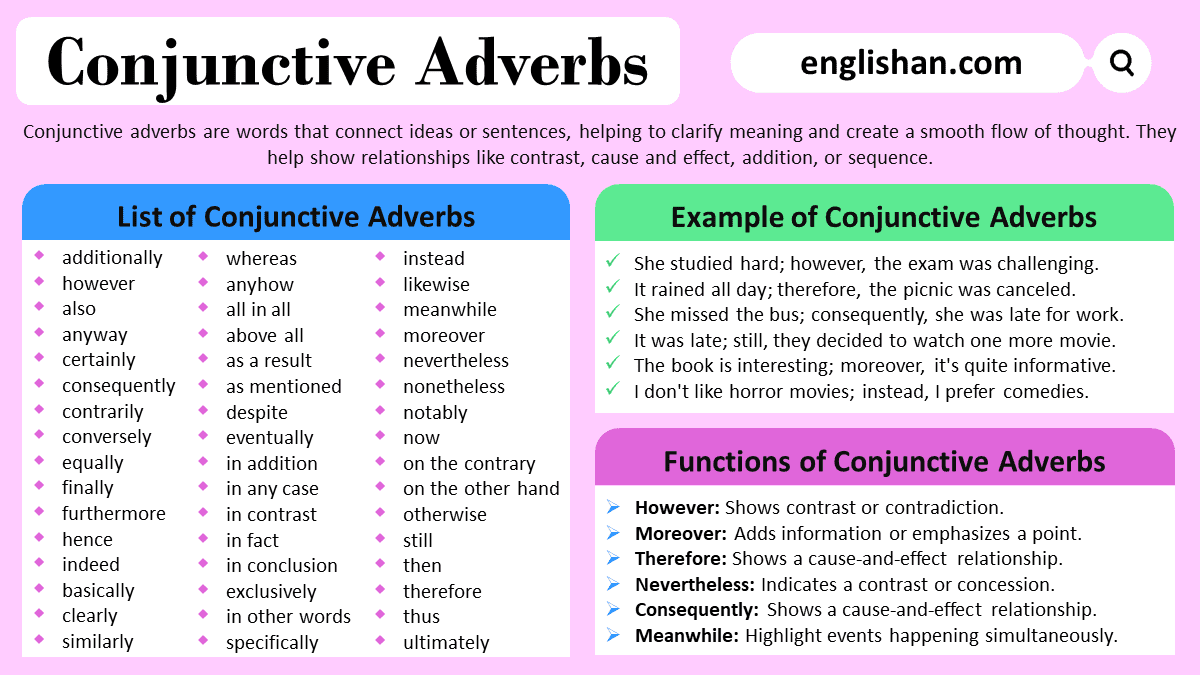
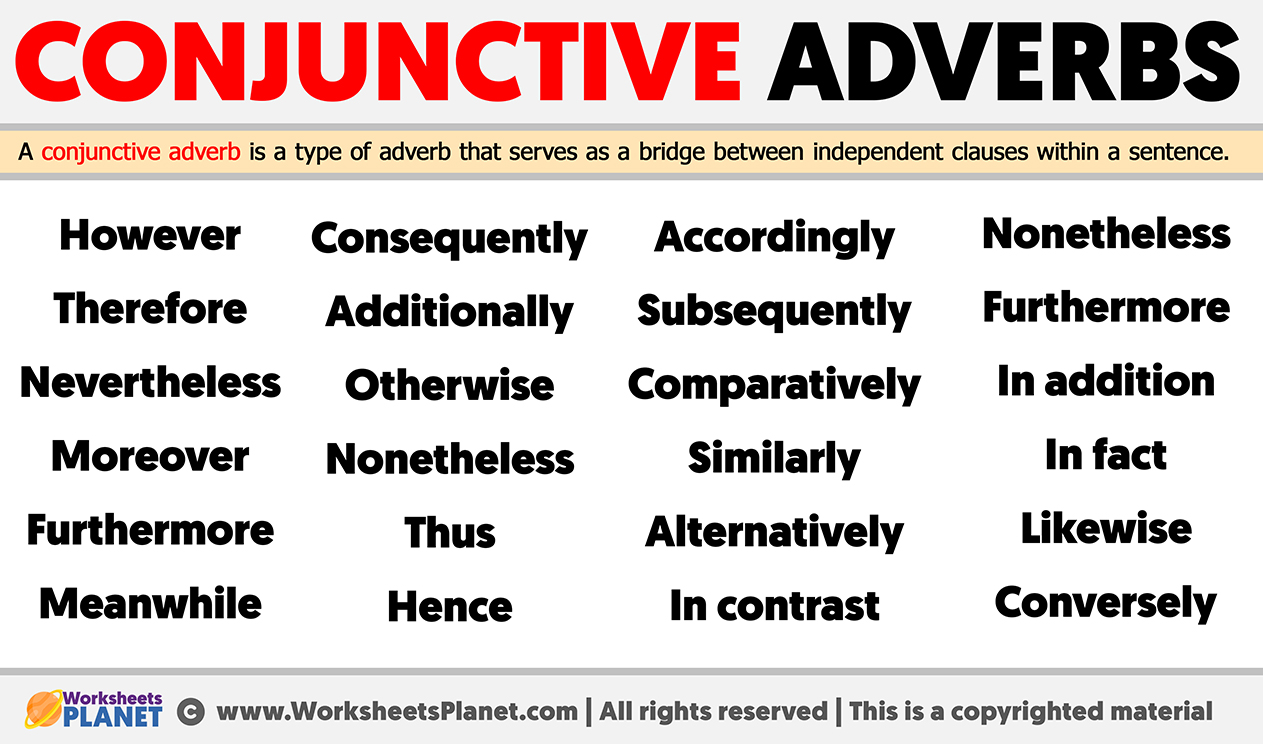
- Examples: therefore, consequently, thus, hence, accordingly, so
- Application in Tech: “The security vulnerability was severe; therefore, all users were instructed to update their systems immediately.” This clearly indicates that the severity of the vulnerability caused the instruction to update.
- Application in Finance: “The interest rates rose sharply; consequently, many homeowners found their mortgage payments increasing.” Here, the interest rate hike is the direct cause of the increased payments.
Expressing Contrast or Concession
These connect ideas that are in opposition or where one idea presents a counterpoint to another. This is particularly useful in brand strategy discussions, where you might contrast past approaches with current ones, or in reviews where you highlight both strengths and weaknesses.
- Examples: however, nevertheless, nonetheless, still, yet, on the other hand, in contrast
- Application in Branding: “The new brand identity was bold and innovative; however, some long-time customers found it jarring.” This highlights a contrast between the reception by different customer segments.
- Application in Tech Reviews: “The smartphone’s camera is exceptional; still, its battery life leaves much to be desired.” This presents a concession, acknowledging a positive aspect while pointing out a drawback.
Adding Information or Emphasis
These are used to introduce additional points or to provide further elaboration on a previous statement. This is invaluable when building a case for a particular investment, explaining multiple features of an app, or detailing various aspects of personal branding.
- Examples: furthermore, moreover, in addition, also, likewise, equally, besides
- Application in Tech Tutorials: “The app offers advanced data encryption; furthermore, it includes an offline mode for enhanced privacy.” This adds another significant feature to the discussion.
- Application in Personal Finance: “Budgeting is essential for financial health; moreover, understanding compound interest can significantly boost your savings.” This introduces a related but distinct financial concept.
Indicating Time or Sequence
These help to establish the order of events or to show a progression of time. This is critical in explaining step-by-step processes in software tutorials, outlining the historical development of a brand, or detailing the timeline of a financial plan.
- Examples: then, next, afterward, subsequently, meanwhile, before, after
- Application in Tech Tutorials: “First, install the software; then, follow the on-screen prompts for configuration.” This clearly sequences the actions.
- Application in Brand Case Studies: “The company rebranded in 2018; subsequently, their social media engagement saw a marked increase.” This shows the chronological order of events and their impact.
Summarizing or Concluding
These are used to bring together previous points or to offer a concluding thought. This is useful in financial summaries, concluding remarks on a tech product, or wrapping up a brand strategy presentation.
- Examples: in conclusion, to summarize, in short, therefore, thus
- Application in Financial Analysis: “Rising inflation and increased operational costs have impacted profitability; in conclusion, a strategic adjustment in pricing is necessary.” This draws a final conclusion based on the preceding points.
Adverbial Conjunctions in Action: Enhancing Communication Across Domains
The application of adverbial conjunctions is not merely an academic exercise; it’s a practical skill that can significantly elevate your communication in the real-world contexts of technology, branding, and finance. By understanding and employing these connectors strategically, you can ensure your messages are clear, persuasive, and impactful.
In the Realm of Tech: Clarity in Complexity
Technology, with its rapidly evolving landscape, demands precise and unambiguous communication. Whether you’re writing a tutorial for a new AI tool, a review of a cutting-edge gadget, or an explanation of complex digital security measures, adverbial conjunctions are your allies.
- Tutorials: When guiding users through intricate software or apps, a logical flow is essential. Adverbial conjunctions help to structure these steps. For instance, “First, navigate to the settings menu; then, select the ‘Privacy’ tab. Afterward, toggle the ‘Location Services’ option to ‘Off’.” This creates a clear, sequential pathway for the user. Similarly, explaining advanced features becomes easier: “The AI tool can analyze data patterns; furthermore, it can generate predictive models based on those patterns.”
- Reviews: Evaluating a gadget or software often involves highlighting both its strengths and weaknesses. Adverbial conjunctions allow for balanced and nuanced reviews. “The battery life of this laptop is exceptional; however, its processing speed is a bit sluggish for demanding tasks.” This contrast provides a comprehensive picture for potential buyers. “The user interface is intuitive and user-friendly; moreover, the integration with other devices is seamless.”
- Digital Security: Explaining security threats and protective measures requires absolute clarity. Adverbial conjunctions can articulate the chain of events or the logical consequences. “Phishing attempts often mimic legitimate emails; therefore, users must exercise extreme caution when clicking on links.” Or, “The firewall blocks unauthorized access; consequently, your network remains protected.”
In the World of Branding: Crafting Persuasive Narratives
Brand strategy, personal branding, and corporate identity are all about storytelling and influence. Adverbial conjunctions empower you to build compelling narratives that resonate with your audience.
- Brand Strategy: When outlining strategic shifts or justifying marketing decisions, these connectors are invaluable. “Our previous campaigns focused on broad appeal; in contrast, our new strategy targets a niche demographic.” This highlights a significant shift. Explaining the rationale behind branding choices is also easier: “We chose a minimalist design to convey sophistication; hence, the absence of excessive ornamentation.”
- Personal Branding: For individuals building their online presence, articulating their skills and aspirations coherently is key. “I have a strong background in project management; furthermore, I am proficient in several agile methodologies.” This adds depth to one’s professional profile. When discussing career progression, “My initial role was in customer support; subsequently, I was promoted to team lead.”
- Marketing and Case Studies: Demonstrating the success of marketing efforts or analyzing competitor strategies often involves connecting actions to outcomes. “The influencer marketing campaign generated significant buzz; therefore, we observed a 30% increase in website traffic.” Or, in a comparative analysis, “Competitor A’s pricing is lower; nevertheless, our superior customer service provides greater long-term value.”
In the Financial Sphere: Precision in Planning and Investment
Personal finance, investing, and business finance all demand accuracy and the ability to clearly explain complex concepts and their consequences. Adverbial conjunctions are instrumental in making financial advice and analysis understandable.
- Personal Finance: When offering advice on budgeting or saving, clear cause-and-effect relationships are crucial. “Consistent saving, even small amounts, can lead to significant wealth over time; thus, starting early is paramount.” Explaining financial tools: “This budgeting app tracks your spending automatically; moreover, it offers personalized savings recommendations.”
- Investing: Articulating investment strategies or market analyses requires careful wording. “The stock market is currently volatile; consequently, a diversified portfolio is recommended.” Or, when comparing investment options: “Real estate offers tangible assets; on the other hand, stocks provide potential for higher liquidity.”
- Business Finance: For businesses, explaining financial decisions or forecasting outcomes is critical. “Increased operational costs have put pressure on our profit margins; therefore, we are exploring options for cost reduction.” Or, analyzing past performance: “Sales in the first quarter were strong; however, the second quarter experienced a seasonal slowdown.”
Mastering the Nuances: Common Pitfalls and Best Practices
While adverbial conjunctions offer immense power, their misuse can lead to confusion or awkward phrasing. Being aware of common pitfalls and adopting best practices will ensure you harness their full potential.
Common Mistakes to Avoid
- Overuse: Bombarding your text with adverbial conjunctions can make it sound repetitive and stilted. Use them judiciously where they genuinely enhance clarity and flow.
- Incorrect Punctuation: The placement of adverbial conjunctions often dictates specific punctuation. A common error is omitting the semicolon before the conjunctive adverb when connecting two independent clauses, or failing to use a comma after it when it begins a clause.
- Incorrect: “The app is fast but it crashes sometimes.”
- Correct: “The app is fast; however, it crashes sometimes.”
- Correct: “The app is fast. However, it crashes sometimes.”
- Confusing with Coordinating Conjunctions: Remember that adverbial conjunctions introduce a logical relationship, whereas coordinating conjunctions simply join equal elements. “The product is innovative, and it’s expensive” (coordinating) is different from “The product is innovative; however, it is expensive” (adverbial).
- Misinterpreting the Relationship: Ensure the adverbial conjunction you choose accurately reflects the relationship between the clauses. Using “therefore” when you mean “however” will completely alter the meaning.
Best Practices for Effective Use
- Understand the Logical Connection: Before inserting an adverbial conjunction, ask yourself: what is the precise relationship between these two ideas? Is it cause and effect, contrast, addition, time, or something else?
- Vary Your Connectors: Don’t rely on just one or two common adverbial conjunctions. A diverse vocabulary of these words will make your writing more engaging and precise.
- Consider Sentence Structure: Experiment with placing the adverbial conjunction at the beginning, middle, or end of the second clause to see what flows best and maintains clarity.
- Beginning: “The market responded positively. Consequently, our stock prices rose.”
- Middle: “The market responded positively; our stock prices, consequently, rose.”
- End: “The market responded positively; our stock prices rose, consequently.” (This last placement is less common and can sometimes sound slightly informal).
- Read Aloud: Reading your writing aloud is an excellent way to catch awkward phrasing or unclear connections. If a sentence with an adverbial conjunction sounds clunky, it might need restructuring.
- Use a Thesaurus (Wisely): When in doubt, consult a thesaurus for synonyms of adverbial conjunctions. However, always ensure the synonym maintains the intended meaning and tone.
In conclusion, adverbial conjunctions are more than just grammatical tools; they are the architects of coherent thought and persuasive communication. In the dynamic worlds of technology, branding, and finance, where clarity and impact are paramount, mastering these connectors will empower you to navigate complex ideas, connect with your audience, and achieve your communication goals with greater fluency and precision. They are the subtle yet indispensable bridges that allow your ideas to travel effectively from your mind to the minds of others, fostering understanding and driving action.
aViewFromTheCave is a participant in the Amazon Services LLC Associates Program, an affiliate advertising program designed to provide a means for sites to earn advertising fees by advertising and linking to Amazon.com. Amazon, the Amazon logo, AmazonSupply, and the AmazonSupply logo are trademarks of Amazon.com, Inc. or its affiliates. As an Amazon Associate we earn affiliate commissions from qualifying purchases.