
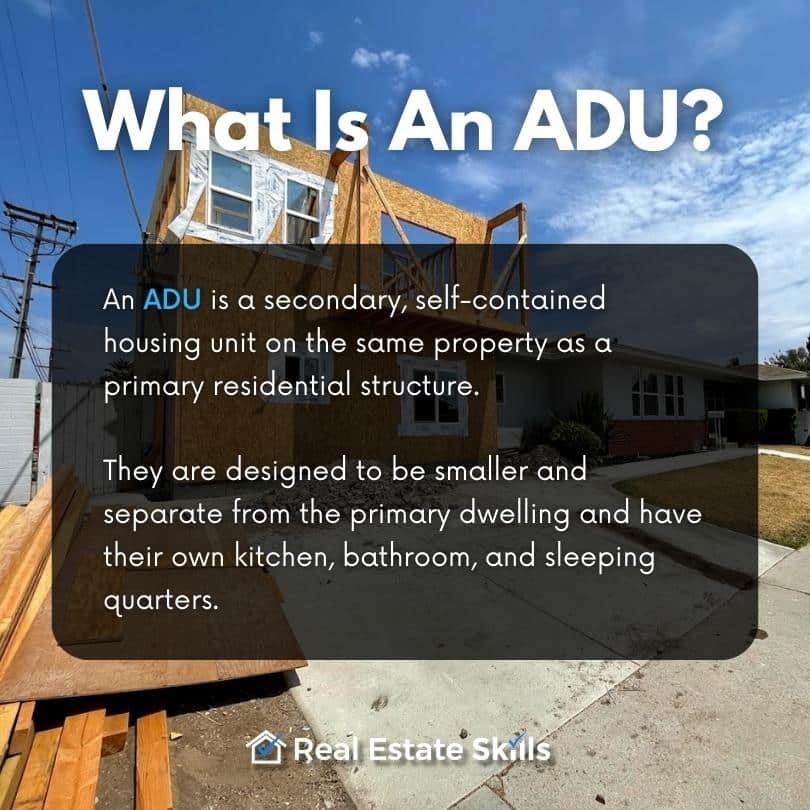
Accessory Dwelling Units (ADUs), often referred to as granny flats, in-law suites, or backyard cottages, are secondary housing units on the same property as an existing single-family home. These compact, self-contained living spaces offer a unique and increasingly popular solution for homeowners looking to maximize their property’s utility and potential. In the realm of real estate, understanding ADUs is crucial for investors, homeowners, and even potential renters, as they represent a growing segment of the housing market with significant financial implications. This exploration delves into the multifaceted world of ADUs, focusing on their financial benefits, investment potential, and the economic considerations that make them a compelling real estate asset.

The Financial Advantages of Owning and Developing an ADU
ADUs are not merely an aesthetic addition to a property; they are powerful financial tools that can significantly enhance a homeowner’s or investor’s bottom line. The ability to generate rental income, increase property value, and provide flexible living arrangements are primary drivers behind the growing popularity of ADUs.
Generating Rental Income: A Consistent Cash Flow Stream
One of the most immediate and tangible financial benefits of an ADU is its potential to generate consistent rental income. By creating a separate living space, homeowners can tap into the robust rental market, offering an attractive and often more affordable housing option for individuals, couples, or small families. This additional income can be used for various purposes, such as supplementing mortgage payments, funding retirement, covering property taxes, or reinvesting in other ventures.
The income potential of an ADU is directly influenced by several factors, including its size, amenities, location, and local rental market demand. In high-cost-of-living areas or cities with a shortage of rental housing, ADUs can command significant rental rates, leading to a substantial return on investment. For instance, a well-designed and efficiently built ADU in a desirable neighborhood could generate several hundred to over a thousand dollars per month in passive income. Furthermore, the flexibility of renting an ADU on a short-term basis, through platforms like Airbnb, can offer even higher income potential, albeit with more active management and variable occupancy rates. This dual potential for long-term stability and short-term windfalls makes ADUs an attractive proposition for those seeking to diversify their income streams.
Increasing Property Value and Equity
Beyond immediate rental income, an ADU acts as a significant value-add to the primary property. The addition of a habitable dwelling unit on a lot inherently increases the overall asset value of the real estate. This appreciation is often more than just the sum of the construction costs. Appraisers consider the potential for rental income, the increased utility of the land, and the desirability of having a secondary dwelling when determining the property’s market value.
For homeowners looking to sell their property in the future, an ADU can be a powerful selling point, attracting a broader range of buyers. Families looking for multi-generational living solutions, investors seeking properties with built-in income potential, or even those who simply value the flexibility of an extra dwelling will find a property with an ADU highly appealing. This enhanced marketability can lead to a quicker sale and potentially a higher sale price compared to comparable properties without an ADU. Moreover, the equity built through the ADU’s contribution to the property’s value provides homeowners with greater financial flexibility, potentially enabling them to leverage their home equity for other investments or financial goals.
Flexible Living Arrangements and Multi-Generational Housing
While the financial aspects are paramount, the flexibility ADUs offer in living arrangements also contributes to their financial desirability. For families facing the challenge of caring for aging parents or adult children who are still living at home, an ADU provides a comfortable and independent living space within close proximity. This arrangement can reduce the financial burden of assisted living facilities or separate rental costs for family members, while still allowing for family connection and support.
Similarly, for homeowners seeking to offset their mortgage or living expenses, renting out the ADU can make homeownership more affordable. This can be particularly beneficial for first-time homebuyers who may struggle with the initial cost of a larger property. The ability to generate income from a portion of their own property can ease financial pressure, allowing them to build equity and financial stability more effectively. This financial cushioning provided by an ADU can be a game-changer for individuals and families looking to achieve their homeownership dreams or maintain financial independence.
The Investment Case for Accessory Dwelling Units
From a pure investment perspective, ADUs present a compelling opportunity for real estate investors seeking to generate passive income and capitalize on a growing housing trend. The relatively lower barrier to entry compared to purchasing entire new properties, coupled with increasing regulatory support, makes ADUs an attractive niche within the broader real estate market.
Diversifying Real Estate Portfolios
For seasoned real estate investors, ADUs offer a way to diversify their existing portfolios. Instead of solely focusing on purchasing entire homes or apartment buildings, investors can strategically add ADUs to their existing single-family rental properties. This approach allows for a more granular investment strategy, spreading risk across multiple smaller income-generating units rather than relying on a few larger assets. This diversification can lead to a more resilient and balanced investment portfolio, less susceptible to fluctuations in any single market segment.
The ability to add an ADU to an existing property also presents a unique opportunity for “sweat equity” investment. Investors can purchase properties where the cost of construction for an ADU is relatively low, or where zoning regulations are favorable. By managing the development process themselves or overseeing contractors, investors can significantly increase the value and income-generating capacity of their investment at a potentially lower cost than acquiring a property that already has an ADU.
The Growing Demand and Market Trends
The demand for ADUs is on a steady rise, driven by several interconnected factors. Urbanization, the increasing cost of traditional housing, and a growing desire for more affordable and flexible living options are all contributing to this trend. Many municipalities are recognizing the potential of ADUs to address housing shortages and provide more diverse housing stock, leading to more relaxed zoning regulations and streamlined permitting processes. This regulatory evolution is making it easier and more cost-effective for homeowners and investors to build ADUs.
The demographic shifts, such as the aging population seeking to downsize while remaining on their properties, and younger generations looking for more affordable entry points into homeownership or rental markets, further fuel the demand. As more people become aware of the benefits and feasibility of ADUs, the market for both new construction and existing properties with ADUs is expected to continue to grow. This sustained demand bodes well for investors looking for long-term appreciation and reliable rental income.
Understanding the Return on Investment (ROI) and Profitability
Calculating the return on investment for an ADU involves a careful analysis of both the upfront costs and the potential income generation. The initial investment includes design fees, permitting costs, construction expenses, and any necessary utility upgrades. These costs can vary significantly depending on the size, complexity, and materials used in the ADU’s construction.
However, once the ADU is completed and rented out, the net rental income (gross rent minus operating expenses like property management, maintenance, insurance, and taxes) becomes the primary driver of profitability. Investors can calculate their annual ROI by dividing the net annual rental income by the total investment cost. For example, if an ADU cost $150,000 to build and generates $15,000 in net annual rental income, the ROI would be 10%. Many investors aim for ROIs that are competitive with other real estate investments, often seeking returns in the 8-12% range or higher, depending on risk tolerance and market conditions.
Furthermore, the long-term appreciation of the property due to the added ADU needs to be factored into the overall profitability. Over time, the combined value of the primary home and the ADU can significantly outperform investments in properties without this secondary dwelling. Therefore, a comprehensive financial model that considers both immediate cash flow and long-term equity growth is essential for assessing the true profitability of an ADU investment.
Navigating the Financial Landscape: Costs, Financing, and Taxes
Developing and owning an ADU involves a clear understanding of the associated financial considerations, from the initial capital outlay to ongoing expenses and tax implications. A proactive approach to financial planning is critical for maximizing the profitability and minimizing potential risks.
The Costs Associated with ADU Development
The cost of building an ADU can be a significant factor in its financial feasibility. These costs can be broadly categorized into several areas:
- Design and Permitting: This includes architectural drawings, engineering reports, and the fees required by local government for permits and inspections. These costs can range from a few thousand dollars for a simple design to upwards of $10,000-$20,000 for more complex projects requiring extensive planning.
- Construction Costs: This is the largest component and encompasses materials, labor, foundation, framing, roofing, interior finishes, plumbing, electrical, and HVAC systems. The cost per square foot for an ADU can vary widely, typically ranging from $150 to $350 per square foot, depending on the quality of finishes, the complexity of the build, and local labor rates. A small 400-square-foot ADU could cost anywhere from $60,000 to $140,000 or more.
- Site Preparation and Utilities: This includes costs for excavation, grading, utility hookups (water, sewer, gas, electricity), and potentially new driveways or walkways. These can add another layer of expense, especially if significant infrastructure work is required.
- Landscaping and Exterior Finishes: While often overlooked, landscaping and appropriate exterior finishes to match the primary home can contribute to the overall appeal and value of the ADU.
It is crucial to obtain detailed quotes from multiple contractors and designers to get an accurate estimate of these costs. Additionally, contingency funds (typically 10-15% of the total budget) should be included to account for unforeseen issues that may arise during construction.
Financing Options for ADU Projects
Securing financing for an ADU project is a critical step for many homeowners and investors. Fortunately, several financing avenues are available:
- Home Equity Loans/Lines of Credit (HELOCs): For homeowners with existing equity in their primary residence, a home equity loan or HELOC can be an attractive option. These loans allow you to borrow against the value of your home, offering competitive interest rates and flexible repayment terms.
- Cash-Out Refinance: If you have a mortgage on your primary home, a cash-out refinance allows you to borrow more than you owe on your current mortgage and receive the difference in cash. This cash can then be used to fund the ADU construction.
- Personal Loans: For smaller ADU projects or for individuals with strong credit, personal loans can be an option, although interest rates may be higher than those for secured loans.
- Construction Loans: These are specifically designed for building or renovating properties. They are typically disbursed in stages as the construction progresses and may require a significant down payment.
- ADU-Specific Financing Programs: Some lenders and government programs are beginning to offer specialized financing for ADUs, recognizing their growing importance in the housing market. Researching these niche programs can sometimes yield more favorable terms.
Carefully comparing interest rates, fees, and repayment terms across different lenders is essential to secure the most advantageous financing for your ADU project.
Tax Implications of ADU Ownership and Rental Income
The tax implications of owning and renting out an ADU are a vital consideration for any financial strategy.
- Depreciation: The cost of building the ADU (excluding the land) can be depreciated over its useful life (typically 27.5 years for residential rental property). This depreciation deduction can significantly reduce your taxable income from the rental property.
- Rental Income Taxation: The net rental income generated by the ADU is considered taxable income. You will need to report this income on your tax return. However, you can deduct various operating expenses related to the ADU, such as property taxes, insurance, maintenance, repairs, property management fees, and a portion of utilities.
- Capital Gains Tax: When you eventually sell the property, you will be subject to capital gains tax on the profit. The ADU’s contribution to the property’s value will be factored into the overall capital gain. However, the depreciation you have taken over the years may be “recaptured” at a specific tax rate upon sale.
- Property Tax Increases: Adding an ADU will likely increase your property taxes. Assessors will re-evaluate your property’s value to reflect the addition of a second dwelling.
It is highly recommended to consult with a qualified tax professional or accountant who specializes in real estate investments. They can provide personalized advice on maximizing deductions, understanding capital gains, and ensuring compliance with all tax regulations, ultimately helping you optimize the financial performance of your ADU investment.
Maximizing Profitability: Strategic Considerations for ADU Owners
Beyond the initial development and financing, smart financial management and strategic planning are key to ensuring the long-term profitability of an ADU. This involves optimizing rental income, managing expenses efficiently, and staying informed about market dynamics.
Optimizing Rental Rates and Tenant Selection
To maximize the financial returns from an ADU, strategic pricing and careful tenant selection are paramount.
- Market Research: Thoroughly research the rental rates for comparable ADUs, as well as other rental properties in the immediate vicinity. Consider factors such as size, amenities, condition, and proximity to transportation, employment centers, and local attractions. Websites and local real estate agents can provide valuable data.
- Value-Added Amenities: Offering desirable amenities can justify higher rental rates. This could include in-unit laundry, modern appliances, high-speed internet, private outdoor space, or dedicated parking.
- Lease Agreements: Implement clear and comprehensive lease agreements that outline rent payment schedules, responsibilities for utilities, maintenance expectations, and rules for pets or guests.
- Tenant Screening: A rigorous tenant screening process is crucial to minimize risks associated with vacancies, late payments, and property damage. This typically involves credit checks, background checks, verification of employment and income, and reference checks from previous landlords. Selecting reliable and responsible tenants will contribute significantly to a stable income stream and reduce potential financial headaches.
Efficient Expense Management and Maintenance
Controlling operating expenses is as vital as maximizing rental income for ADU profitability.
- Preventative Maintenance: Implementing a regular preventative maintenance schedule can help avoid costly emergency repairs. This includes routine checks of plumbing, electrical systems, HVAC, and the building’s exterior.
- Energy Efficiency: Investing in energy-efficient appliances, insulation, and windows can significantly reduce utility costs, which can be passed on to tenants or contribute to higher net income for the owner.
- DIY vs. Professional Services: For minor repairs and maintenance, homeowners may opt for DIY solutions to save money. However, for more complex issues, hiring qualified professionals is often more cost-effective in the long run, preventing further damage and ensuring safety.
- Insurance: Ensure adequate insurance coverage for the ADU, which may require a separate policy or an endorsement to your existing homeowner’s policy. This protects against potential losses due to fire, theft, natural disasters, or liability claims.
Staying Ahead of Market Trends and Regulations
The real estate market, and particularly the ADU segment, is dynamic. Staying informed is key to sustained financial success.
- Local Zoning and Regulations: ADU regulations can change at the local level. Staying updated on any amendments to zoning laws, building codes, or permitting processes can help you remain compliant and take advantage of new opportunities.
- Market Demand Shifts: Monitor changes in rental demand, local economic development, and demographic trends that might impact the desirability and rental rates of your ADU.
- Technology and Innovation: Explore new technologies that can improve property management, tenant communication, or energy efficiency. Smart home devices, property management software, and online payment systems can streamline operations and enhance tenant satisfaction.
By proactively managing these aspects, ADU owners can transform these secondary dwellings into powerful financial assets, generating consistent income, building wealth, and contributing to a more diverse and affordable housing landscape.
aViewFromTheCave is a participant in the Amazon Services LLC Associates Program, an affiliate advertising program designed to provide a means for sites to earn advertising fees by advertising and linking to Amazon.com. Amazon, the Amazon logo, AmazonSupply, and the AmazonSupply logo are trademarks of Amazon.com, Inc. or its affiliates. As an Amazon Associate we earn affiliate commissions from qualifying purchases.