
In the rapidly evolving landscape of Natural Language Processing (NLP) and Large Language Models (LLMs), the gap between human linguistic nuance and machine comprehension is closing faster than ever. At the heart of this intersection lies the “adjective clause”—a fundamental grammatical structure that, while simple to a native speaker, represents a sophisticated challenge for computational linguistics. To understand what an adjective clause is in the context of modern technology is to understand how software parses intent, how search engines categorize information, and how AI agents generate human-like responses.
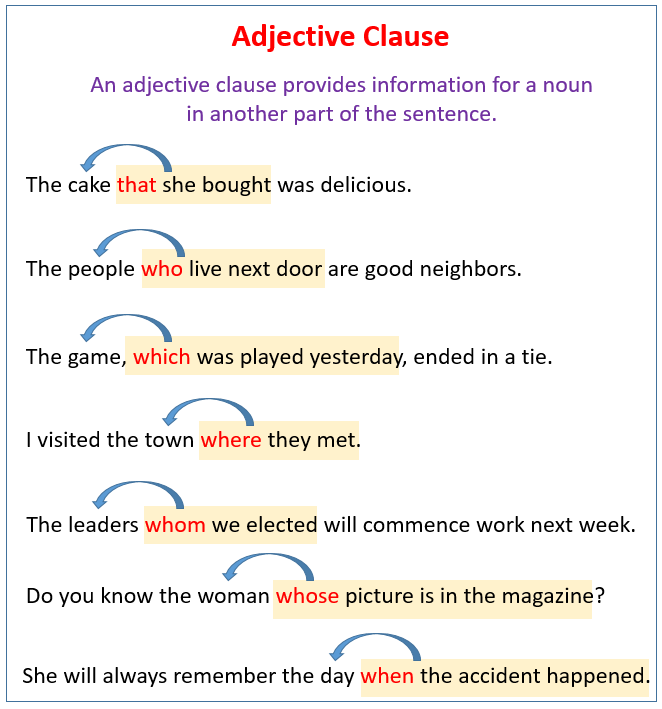
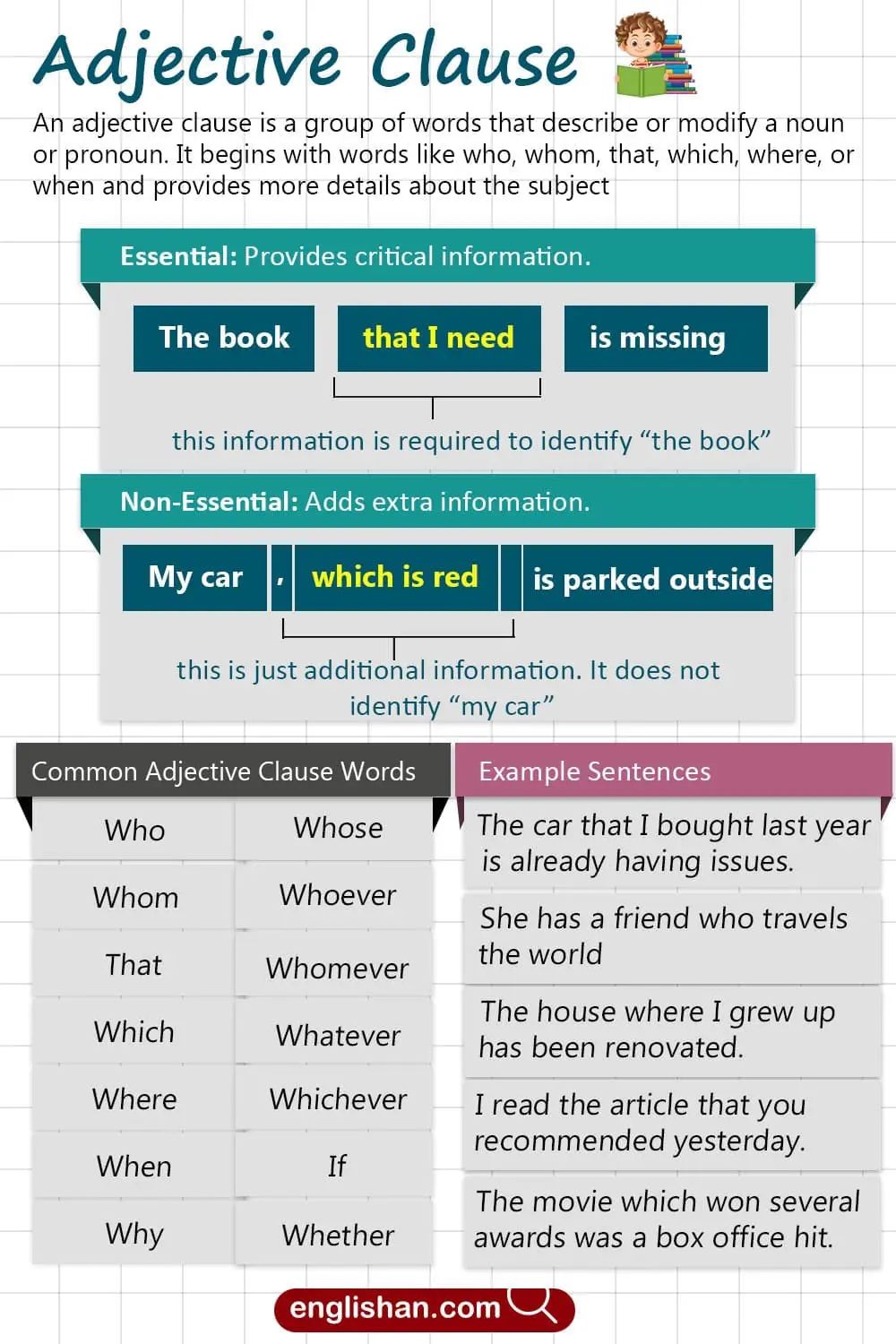
An adjective clause, also known as a relative clause, is a dependent clause that modifies a noun or pronoun. It typically begins with a relative pronoun (who, whom, whose, that, which) or a relative adverb (where, when, why). In the world of tech, these clauses are the “metadata” of a sentence, providing the essential context that allows an algorithm to distinguish between “the server that crashed” and “the server that is optimized.”
1. The Mechanics of Adjective Clauses: From Grammar to Graph Databases
To a software engineer or a data scientist, a sentence is not just a string of text; it is a structured data set. When we analyze an adjective clause through the lens of technology, we move beyond the classroom definition and into the realm of syntactic dependency and structural parsing.
Defining the Relative Clause in Computational Linguistics
In computational linguistics, an adjective clause functions as a multi-token modifier. Unlike a simple adjective (e.g., “the fast computer”), an adjective clause (e.g., “the computer that was built for high-performance computing“) adds a layer of complexity to the parse tree. For an AI to “understand” this, it must identify the head noun (computer) and attach the entire subordinate clause to it as a single functional unit.
This process is critical for named entity recognition (NER). If a system is tasked with extracting data from a technical manual, it must recognize that the information within the adjective clause is a property of the object it modifies. Without this understanding, the AI might treat the clause as a separate, unrelated statement, leading to data fragmentation.
How Dependency Parsing Maps Adjective Clauses
Modern NLP libraries like spaCy and NLTK use dependency parsing to visualize how words in a sentence relate to one another. When an adjective clause is introduced, the parser creates a “relcl” (relative clause modifier) edge in the dependency graph.
For developers building search algorithms or chatbots, mapping these edges is vital. For example, in the query “Show me the logs that were generated after midnight,” the adjective clause “that were generated after midnight” identifies which specific logs the user wants. If the software fails to link that clause to the noun “logs,” the search intent fails. Tech professionals must ensure that their underlying models are trained on diverse syntactical structures to handle these complex relationships accurately.
2. Why AI Struggles (and Succeeds) with Complex Sentence Structures
The rise of Transformer-based models, such as GPT-4 and Claude, has revolutionized how machines handle adjective clauses. However, the technical hurdle of “long-distance dependencies” remains a significant area of research in machine learning.
The Challenge of Long-Distance Dependencies
In technical writing or legal documentation, adjective clauses can be exceptionally long, often separated from the noun they modify by several other words or phrases. This is known as a long-distance dependency. Traditional Recurrent Neural Networks (RNNs) often struggled with these because they processed text sequentially; by the time the model reached the end of a long clause, it had “forgotten” the noun it was supposed to modify.
This is a critical issue for digital security and automated compliance tools. If a security protocol states, “The firewall rules, which were updated during the last maintenance cycle to prevent SQL injection, must be audited,” the system must hold the subject “firewall rules” in its working memory across the entire adjective clause to understand what must be audited.
Attention Mechanisms and the Transformer Architecture
The breakthrough that allowed AI to master adjective clauses was the “Attention Mechanism.” Instead of reading left-to-right, Transformers look at every word in a sentence simultaneously. When the model encounters a relative pronoun like “which” or “that,” it assigns a high “attention weight” to the preceding noun.
This allows the AI to maintain context regardless of how many words sit between the noun and its description. For tech reviewers and content creators using AI tools, this means the software can now generate complex, nuanced descriptions that maintain grammatical integrity—a feat that was impossible just a decade ago.

3. Technical Applications: From SEO to Semantic Search Engines
Understanding adjective clauses isn’t just an academic exercise for AI researchers; it has massive implications for how the internet is indexed and how users find information.
Improving Search Intent Recognition
In the early days of the web, search engines were largely keyword-based. If you searched for “laptop that has a long battery life,” the engine might just look for the words “laptop,” “long,” and “battery.” Today, Google’s BERT and MUM updates use sophisticated syntactic analysis to understand the adjective clause “that has a long battery life” as a specific constraint.
This shift toward “semantic search” means that technical SEO now relies on the clarity of these clauses. Developers and content strategists must ensure that their product descriptions use clear relative clauses to help search engines map specific features to specific products. If your site’s code or content structure obscures these relationships, your “discoverability” in the tech market drops.
Entity Extraction and the Role of Modifiers
For businesses utilizing Big Data, extracting specific entities from unstructured text is a primary goal. Adjective clauses are the primary carriers of “attributes” in natural language. For instance, in a database of customer reviews, an adjective clause like “which frequently overheats during gaming” provides a critical attribute for the entity “graphics card.”
By using NLP pipelines to target adjective clauses, companies can automate the process of sentiment analysis and feature extraction. Instead of just knowing a product is “bad,” the technology can identify exactly which part is bad by isolating the modified noun within the clause. This leads to more precise data analytics and better-informed product development cycles.
4. The Future of Syntactic Analysis in Generative AI
As we look toward the future of software development and human-computer interaction, the role of grammatical precision in AI will only increase. We are moving toward a world where “Natural Language as Code” is becoming a reality.
Fine-Tuning LLMs for Grammatical Precision
While general-purpose LLMs are excellent at conversation, specialized tech industries require fine-tuned models that can handle the dense, clause-heavy language of scientific papers and technical specifications. Fine-tuning involves training a model on datasets where adjective clauses are used to define complex variables or logic.
For example, in automated software testing, an AI might need to parse a requirement like: “Any user who has not verified their email should be redirected to the landing page.” The adjective clause “who has not verified their email” acts as a logic gate (an if statement). If the AI cannot perfectly decode the syntax of that clause, it cannot generate the correct test script.
Beyond Templates: Dynamic Contextual Understanding
The goal of the next generation of AI tools is to move beyond template-based responses. Current chatbots often use static patterns to answer questions. However, the future lies in dynamic understanding—the ability for a digital assistant to take a complex sentence with nested adjective clauses and distill it into an actionable command.
Imagine a digital security system where a human operator can say: “Revoke access for all accounts that were created in the last 24 hours and have not completed MFA.” This command relies entirely on the system’s ability to parse two distinct adjective clauses. As these systems become more integrated into our digital infrastructure, the “what” and “which” of the adjective clause become the primary interface through which we control our technology.
Conclusion: Why the Adjective Clause is a Tech Essential
In summary, an adjective clause is far more than a grammatical ornament. In the tech world, it is a tool for precision, a challenge for machine learning, and a bridge between human thought and digital action. Whether you are an SEO specialist trying to capture search intent, a developer building an NLP pipeline, or a user interacting with a high-level AI, the adjective clause is the structure that allows for specificity in a world of infinite data.
As we continue to refine our AI models and search algorithms, our focus on these linguistic building blocks will only intensify. Understanding the adjective clause is, quite literally, understanding the language of the future.
aViewFromTheCave is a participant in the Amazon Services LLC Associates Program, an affiliate advertising program designed to provide a means for sites to earn advertising fees by advertising and linking to Amazon.com. Amazon, the Amazon logo, AmazonSupply, and the AmazonSupply logo are trademarks of Amazon.com, Inc. or its affiliates. As an Amazon Associate we earn affiliate commissions from qualifying purchases.