
The .38 Special cartridge, a staple in the world of firearms for over a century, is more than just a caliber designation. It represents a legacy of reliability, versatility, and a foundational understanding of ballistics that continues to influence modern ammunition development. For those venturing into firearms for self-defense, sport shooting, or collecting, grasping the nuances of the .38 Special is an essential step in understanding its enduring appeal and practical applications. This article delves into the technical specifications, historical significance, and the practical considerations that make the .38 Special a consistently relevant choice in the firearms landscape.
The Technical Heart of the .38 Special: Ballistics and Design
The .38 Special, often written as .38 SPL or .38 S&W Special, is a rimmed, centerfire ammunition cartridge. Its name itself provides a clue to its origins and a point of initial distinction: the “.38” refers to its nominal bullet diameter, which is approximately 0.38 inches (or 9.07 mm). However, this can be slightly misleading as the actual bullet diameter is often closer to 0.357 inches (9.07 mm), with variations depending on the specific bullet design and manufacturer. This slight discrepancy is a historical artifact of early cartridge naming conventions.
Cartridge Dimensions and Case Volume
At the core of any cartridge is its case, which houses the propellant and primer. The .38 Special case is characterized by its relatively generous case volume for its caliber, measuring approximately 1.55 inches (39.37 mm) in length. This volume allows for a substantial powder charge, contributing to its moderate but effective performance. The rimmed case design is a crucial functional element, aiding in extraction from revolvers, which are the primary platform for this cartridge. The rim physically stops the cartridge’s forward movement in the cylinder, allowing for proper chambering and ignition.
Projectile Diversity and Performance
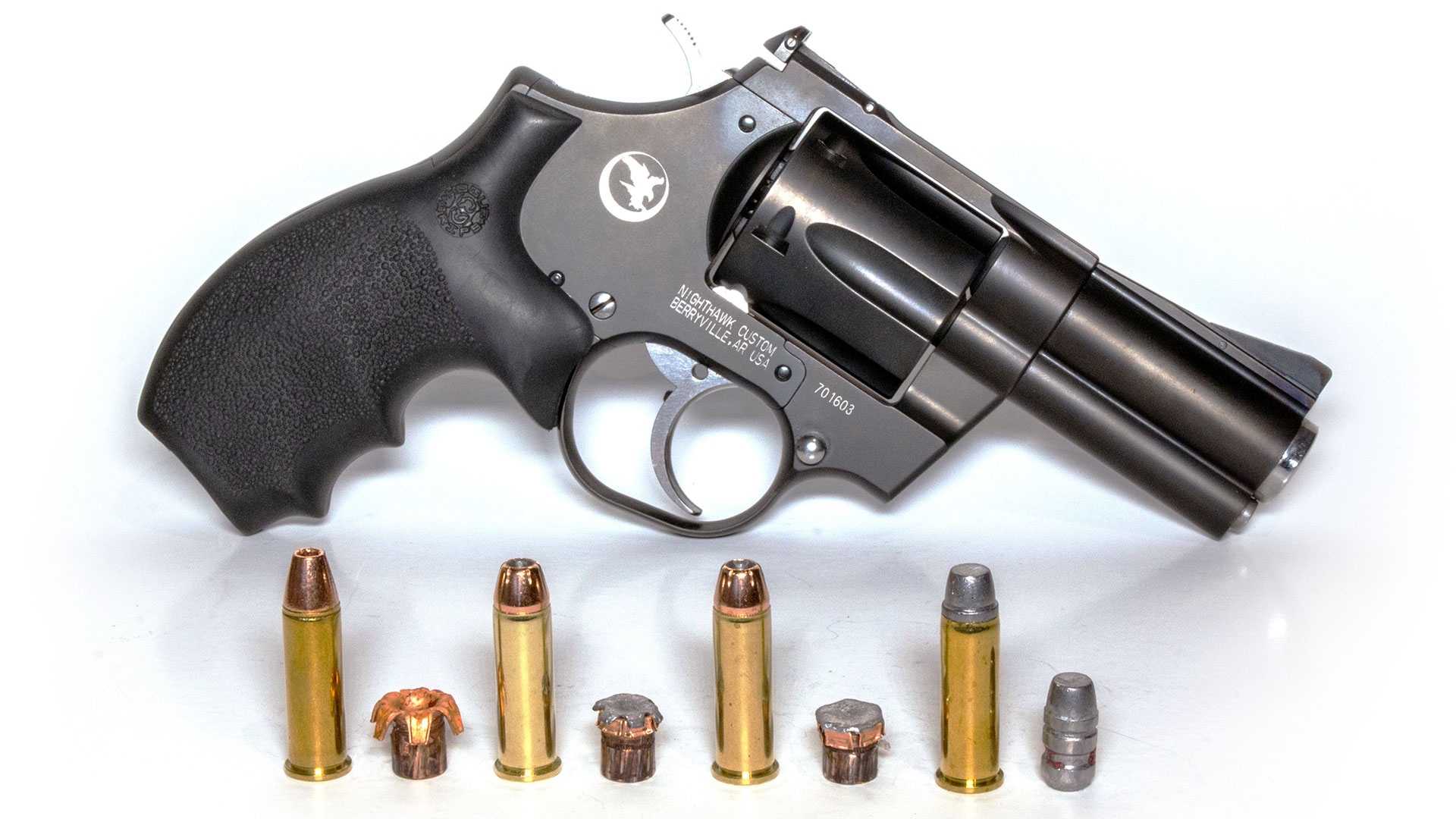
The versatility of the .38 Special is largely attributable to the wide array of projectile types that can be loaded into its case. These projectiles, commonly referred to as bullets, vary significantly in their construction and intended purpose.
-
Full Metal Jacket (FMJ): These bullets feature a lead core fully encased in a harder metal jacket, typically copper or a copper alloy. FMJ projectiles are known for their durability, affordability, and tendency to penetrate rather than expand upon impact. They are often used for target practice and training due to their predictable performance and reduced risk of barrel fouling.
-
Jacketed Hollow Point (JHP): A hallmark of self-defense ammunition, JHP bullets are designed to expand upon impact with a target. The hollow point at the tip of the bullet creates a cavity that allows the projectile to mushroom outwards, increasing its diameter and significantly enhancing its stopping power. This expansion also helps to reduce the risk of over-penetration, a critical consideration in self-defense scenarios.
-
Lead Round Nose (LRN): These are simple, unjacketed lead bullets, often with a round or flat nose. LRN bullets are the most economical option and are widely used for plinking and target shooting. They can be prone to “lead fouling” in the barrel if fired in large quantities without proper cleaning.
-
Semi-Wadcutter (SWC) and Wadcutter (WC): These bullet profiles are designed with flat noses. Wadcutters are designed to “cut” clean holes in paper targets, making scoring easier. Semi-wadcutters offer a balance between target cutting and a slightly more aerodynamic profile for longer distances. They are less common for self-defense but popular among competitive target shooters.
The performance of a .38 Special round is a direct function of the bullet weight, powder charge, and bullet type. Standard pressure loadings typically produce muzzle velocities ranging from 750 to 900 feet per second (approximately 228 to 274 meters per second) with bullet weights commonly ranging from 110 to 158 grains. These figures translate to moderate recoil, making the .38 Special a comfortable choice for a wide range of shooters.
The “Plus P” Phenomenon
A significant evolution in .38 Special ammunition is the advent of “+P” loadings. “+P” stands for “plus pressure,” indicating that these rounds are loaded to a higher pressure than standard specifications. This increased pressure results in higher muzzle velocities and, consequently, more energy delivered to the target. “+P” ammunition can provide enhanced terminal ballistics, particularly with expanding projectiles, making it a favored choice for self-defense. However, it is crucial to ensure that firearms chambered in .38 Special are rated to handle “+P” pressures. While most modern revolvers built for the .38 Special are designed to withstand these hotter loads, older firearms or those not explicitly marked as “+P” rated may be subjected to undue stress, potentially leading to premature wear or failure.
A Legacy of Reliability: The .38 Special in History and Application
The .38 Special cartridge has a storied history, dating back to its introduction by Smith & Wesson in 1902. It was developed as an improvement over the then-standard .38 Long Colt, offering greater power and accuracy. Its introduction coincided with a period of significant technological advancement in firearms design, and the .38 Special quickly found favor with law enforcement agencies, military personnel, and civilian shooters alike.
Law Enforcement’s Enduring Companion
For much of the 20th century, the .38 Special was the ubiquitous sidearm for American law enforcement. Its manageable recoil, reliability in revolvers, and sufficient stopping power for the threats of the era made it an ideal choice. Police officers carried revolvers chambered in .38 Special, and the cartridge became synonymous with public safety. While semi-automatic pistols have largely replaced revolvers as standard issue for many police departments, the .38 Special remains a popular choice for off-duty carry, backup firearms, and by some departments for specific roles. Its simplicity of operation and the forgiving nature of its recoil make it an excellent option for officers who may not have the opportunity for frequent training.
Civilian Defense and Sport Shooting
Beyond law enforcement, the .38 Special has cemented its place in civilian lives. For home defense, its manageable recoil makes it suitable for individuals who might be intimidated by the sharper recoil of larger caliber firearms. Its ability to be fired from a variety of firearms, most notably revolvers, makes it accessible to a broad spectrum of shooters.
In the realm of sport shooting, the .38 Special is a popular choice for various disciplines. Its accuracy, coupled with the availability of specialized target ammunition, makes it well-suited for competitive shooting events. Furthermore, its relatively low cost of ammunition makes it an economical option for recreational shooters who want to practice their marksmanship regularly. The vast aftermarket support for firearms chambered in .38 Special, including a wide selection of revolvers from various manufacturers, further contributes to its enduring popularity in the shooting sports.
The .38 Special and its Big Brother: The .357 Magnum
It is impossible to discuss the .38 Special without mentioning its more powerful sibling, the .357 Magnum. The .357 Magnum cartridge was developed by the aforementioned Smith & Wesson in the 1930s by lengthening the .38 Special case and loading it with a significantly larger powder charge. A key advantage of this development was that revolvers chambered in .357 Magnum are also fully capable of firing .38 Special ammunition. This interchangeability provides immense versatility. Shooters can practice with the less expensive and lower-recoiling .38 Special and then switch to the potent .357 Magnum for self-defense or hunting. This symbiotic relationship has further solidified the .38 Special’s presence in the firearms market, as revolvers designed for the .357 Magnum often serve a dual purpose.
Practical Considerations for the .38 Special User
Choosing a firearm and ammunition is a deeply personal decision, and understanding the practical implications of the .38 Special is vital for making an informed choice. From firearm selection to ammunition choices for specific needs, several factors come into play.
Firearm Platforms: Revolvers Remain King
While there have been attempts at semi-automatic firearms chambered in .38 Special, the vast majority of firearms chambered for this cartridge are revolvers. Revolvers are celebrated for their simplicity, reliability, and inherent safety features.
-
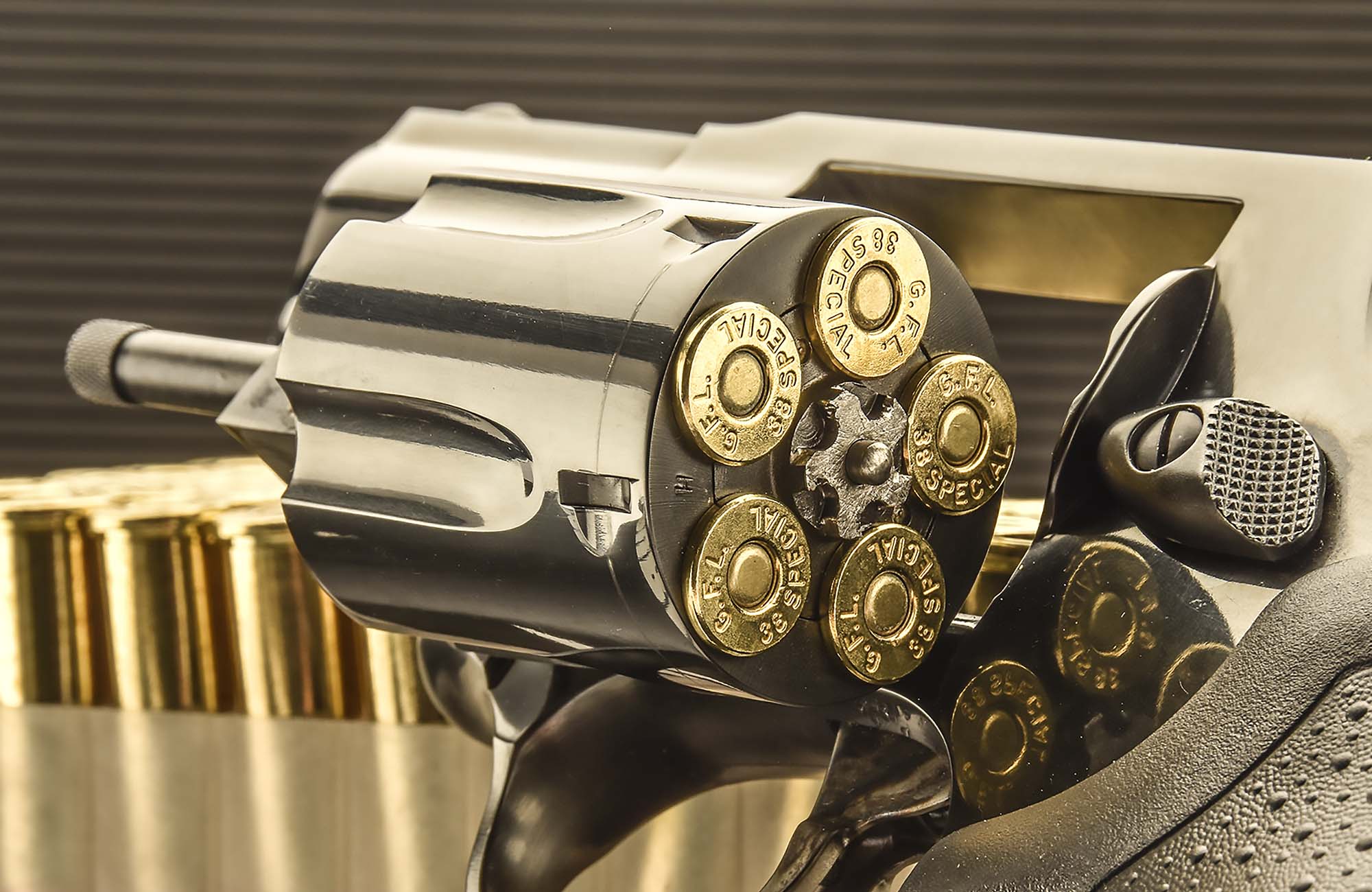
Revolver Mechanics: Revolvers operate by rotating a cylinder containing multiple chambers, each holding a cartridge. When the trigger is pulled, the hammer falls, striking the primer, igniting the propellant, and firing the bullet. After firing, the cylinder is rotated to present a fresh cartridge for the next shot. This mechanical simplicity means fewer moving parts prone to failure compared to semi-automatic actions, especially in adverse conditions.
-
Capacity: Traditional .38 Special revolvers typically have a cylinder capacity of five or six rounds. While this is lower than many semi-automatic pistols, the simplicity of reloading with speed loaders or moon clips often mitigates this perceived disadvantage for many users.
-
Ergonomics and Handling: Revolvers chambered in .38 Special are often designed with comfort and ease of use in mind. The grip shapes and frame sizes can vary, allowing shooters to find a model that fits their hand well, contributing to better control and accuracy.
Ammunition Selection: Matching the Goal
The “best” .38 Special ammunition depends entirely on its intended use.
-
For Target Practice and Training: Economical FMJ or LRN ammunition is ideal. This allows for extensive practice without breaking the bank and provides a consistent shooting experience.
-
For Self-Defense: JHP ammunition is generally recommended. Look for reputable manufacturers that have a track record of producing reliable expanding bullets. Consider projectile weights and velocity ratings to ensure adequate penetration and expansion for the types of threats you might encounter. Reading independent gel test results can be highly informative when choosing self-defense rounds.
-
For Hunting (where legal and appropriate): Heavier, non-expanding projectiles like semi-wadcutters or certain specialized hunting bullets might be considered, depending on the game animal and local regulations. However, for most ethical hunting scenarios, larger caliber firearms are typically more suitable.
Maintenance and Care
Like any firearm, revolvers chambered in .38 Special require regular maintenance to ensure their continued reliability. Cleaning the barrel and cylinder after firing, especially after using lead projectiles or “+P” ammunition, is essential to prevent fouling buildup. Lubricating the moving parts, such as the cylinder crane and pawl, will ensure smooth operation. Understanding the basic maintenance requirements will prolong the life of your firearm and ensure it functions optimally when you need it most.

The Enduring Relevance of the .38 Special
In an era of increasingly sophisticated and higher-capacity firearms, the .38 Special cartridge has defied obsolescence. Its enduring appeal lies in a combination of factors: its historical significance, its inherent reliability, its manageable recoil, and its remarkable versatility. For new shooters, it offers a forgiving entry point into the world of firearms. For seasoned professionals, it remains a trusted tool for self-defense and a nostalgic connection to a rich history.
The .38 Special is not merely a round of ammunition; it is a testament to sound engineering and a reminder that effective performance doesn’t always require extreme power. Its ability to perform admirably with a wide range of bullet types and its compatibility with the more potent .357 Magnum ensure its continued relevance for generations to come. Whether for personal protection, competitive shooting, or simply the joy of marksmanship, the .38 Special stands as a foundational cartridge in the firearms lexicon, a benchmark of reliability and a continuously evolving performer.
aViewFromTheCave is a participant in the Amazon Services LLC Associates Program, an affiliate advertising program designed to provide a means for sites to earn advertising fees by advertising and linking to Amazon.com. Amazon, the Amazon logo, AmazonSupply, and the AmazonSupply logo are trademarks of Amazon.com, Inc. or its affiliates. As an Amazon Associate we earn affiliate commissions from qualifying purchases.