
The humble quarter, a ubiquitous symbol of American commerce, often passes through our hands without a second thought. Yet, for collectors and those curious about the hidden value of everyday items, certain dates can spark considerable interest. The 1966 Washington quarter is one such coin, positioned at a pivotal moment in U.S. coinage history. While most quarters from this year are worth only their face value, understanding the nuances of numismatics reveals a fascinating world where condition, rarity, and historical context can transform a 25-cent piece into a valuable asset. For anyone holding a 1966 quarter, delving into its potential worth requires an exploration of its composition, the economic landscape of its production, and the specific characteristics that can elevate its value beyond mere pocket change.
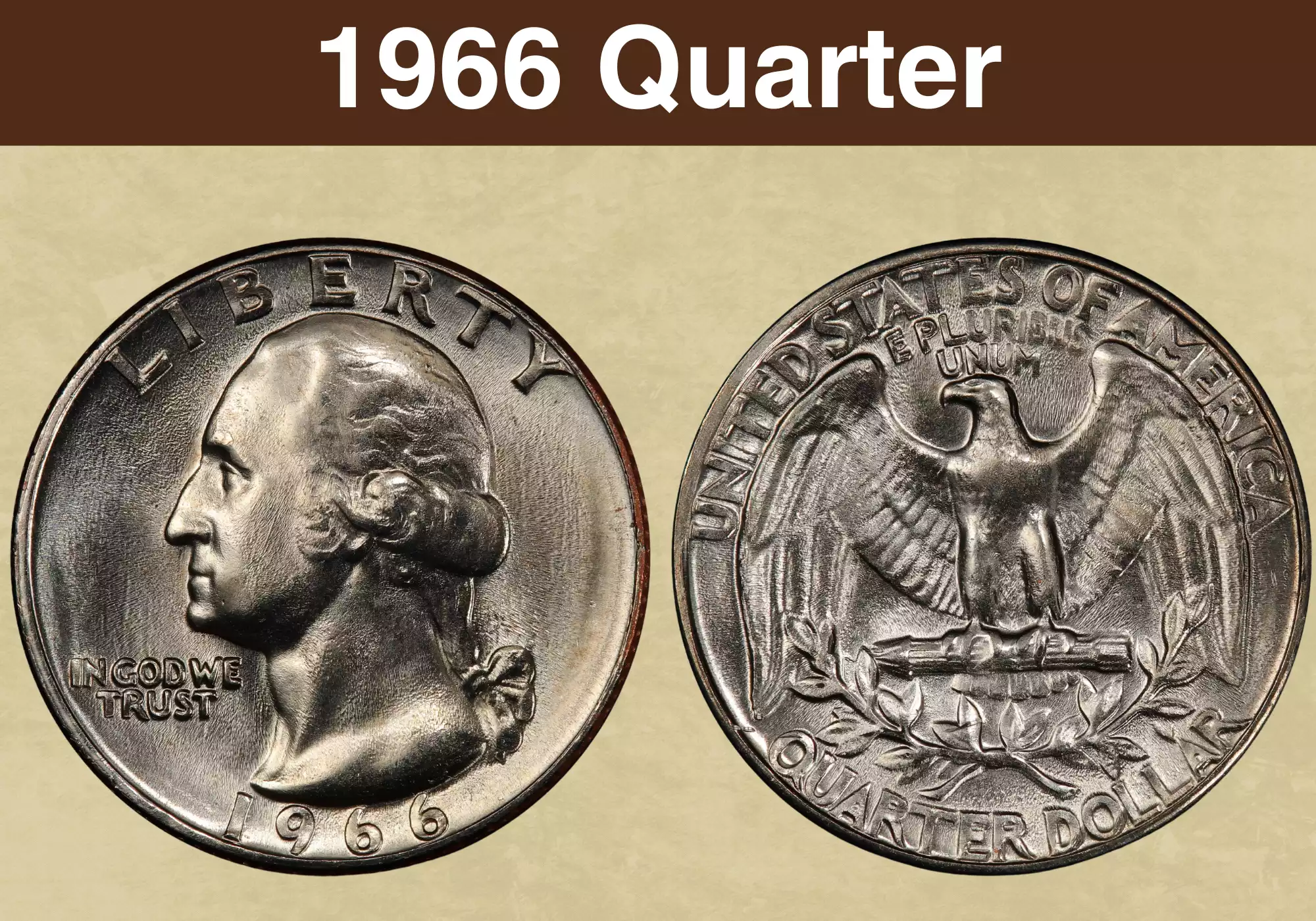
Understanding the Base Value of a 1966 Quarter
To truly appreciate the potential value of a 1966 quarter, one must first understand its fundamental characteristics and how it differs from its predecessors. This year marks a significant transition in U.S. coin production, directly impacting the intrinsic value of the currency.
The Post-Silver Era and Clad Composition
Prior to 1965, U.S. quarters were composed of 90% silver and 10% copper. This gave them an intrinsic metal value often exceeding their face value, especially as silver prices fluctuated. However, due to rising silver prices and a national coin shortage, the U.S. Congress passed the Coinage Act of 1965. This landmark legislation eliminated silver from dimes and quarters, replacing it with a “clad” composition: an outer layer of 75% copper and 25% nickel bonded to a pure copper core.
Therefore, virtually all 1966 quarters were struck in this new copper-nickel clad composition. This means they contain no precious metals, and their melt value is negligible, far less than their face value. Unlike earlier silver quarters that are inherently worth more than 25 cents due to their metal content, a standard 1966 quarter does not hold any significant intrinsic material value.
Face Value vs. Intrinsic Value
For the vast majority of 1966 quarters circulating today, their value is exactly 25 cents. They function purely as transactional currency. This is their “face value.” The concept of “intrinsic value” refers to the worth of the raw materials used to make the coin. As established, the intrinsic value of a 1966 clad quarter is minimal.
However, the world of coin collecting, or numismatics, introduces a third layer of value: “numismatic value.” This is the value a coin holds to collectors, driven by factors like rarity, historical significance, condition, and demand. While most 1966 quarters lack intrinsic metal value, some possess numismatic value that can elevate them far beyond 25 cents. Understanding these distinctions is crucial for anyone assessing their coin.
Key Factors Influencing a 1966 Quarter’s Value
While the base value of a 1966 quarter is face value, certain attributes can dramatically increase its worth. These factors are critical to examine for any coin collector or individual hoping to uncover a hidden treasure.
Condition and Grading: The Cornerstone of Coin Value
The single most important factor determining a coin’s numismatic value is its condition, or “grade.” A coin’s grade refers to its state of preservation and reflects how much wear and tear it has sustained since leaving the mint. Even for common coins, a pristine example will command a significantly higher price than a heavily circulated one.
Coins are graded on a scale, often using the Sheldon scale from 1 (Poor) to 70 (Perfect Uncirculated or Mint State). For a 1966 quarter, look for coins that exhibit:
- No wear: An uncirculated (Mint State or MS) coin should show no signs of having been used in commerce. All details should be sharp and crisp, with original luster intact.
- Strong strike: The clarity of the design elements (Washington’s bust, the eagle) is important. A weak strike can reduce value.
- Absence of damage: Scratches, nicks, dents, environmental damage (corrosion), or cleaning attempts will severely devalue a coin. Cleaning a coin, even gently, can remove its original patina and luster, making it undesirable to serious collectors.
For a 1966 clad quarter, only examples in very high uncirculated grades (e.g., MS-65 or higher) begin to command premium prices, often ranging from a few dollars to upwards of $50 or more for exceptionally well-preserved specimens. The vast majority of circulated 1966 quarters will remain worth only 25 cents.
The Elusive “Mint Mark” on 1966 Quarters
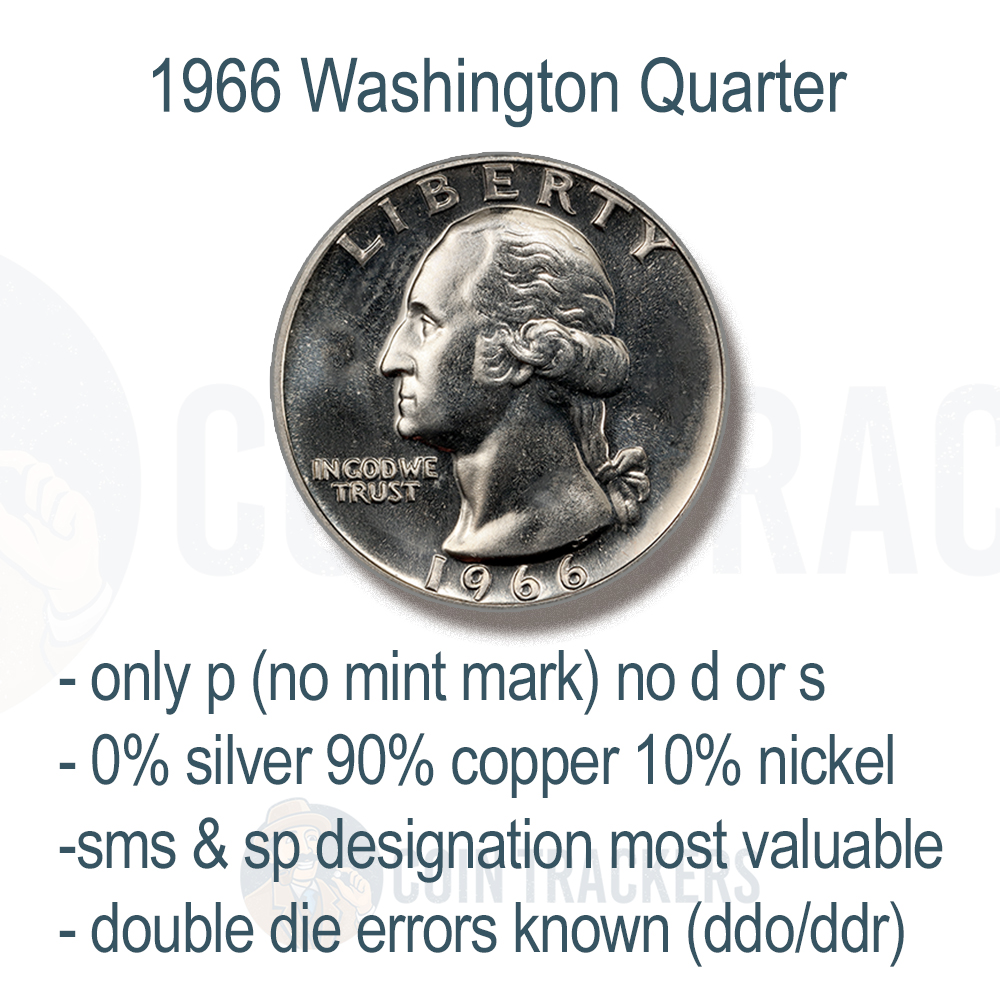
Typically, U.S. coins carry a small letter, known as a mint mark, indicating where they were produced (e.g., “D” for Denver, “S” for San Francisco, or no mark for Philadelphia). However, as part of the Coinage Act of 1965, and largely in response to the coin shortage and efforts to discourage hoarding, mint marks were temporarily removed from U.S. coins between 1965 and 1967.
This means that all 1966 quarters, regardless of whether they were struck in Philadelphia or Denver, bear no mint mark. Therefore, the presence or absence of a mint mark cannot be used as a distinguishing factor for value in 1966 quarters, as it can for many other coin years. Any 1966 quarter with a perceived mint mark is likely an error or alteration, which would need expert verification.
Identifying Rare Errors and Varieties
While the vast majority of 1966 quarters are standard clad coins, some rare errors or varieties can significantly increase their numismatic value. These anomalies occur during the minting process and can range from subtle to dramatic. Collectors specifically seek out these errors.
Common types of errors to look for include:
- Doubled Die (DD): This occurs when the die used to strike the coin has a doubled image, resulting in a noticeable doubling of letters, numbers, or design elements. For example, a “Doubled Die Obverse” (DDO) would show doubling on Washington’s portrait or the date.
- Off-Center Strikes: When the coin blank (planchet) is not perfectly centered in the coining press, the design is struck off-center, leaving a blank crescent on one side.
- Broadstrikes: Similar to off-center, but the coin is struck outside of the retaining collar, causing it to be wider and flatter than normal, with a missing or distorted rim.
- Planchet Errors: These include coins struck on incorrect planchets (e.g., a dime planchet instead of a quarter planchet, though highly unlikely for 1966 quarters) or planchets with laminations or other flaws.
- Minting Process Errors: Other errors like die breaks, cuds (a piece of the die breaks off, leaving a raised lump on the coin), or filled dies can also be found.
Errors are often quite rare, and their value depends on the type, prominence, and demand. A significant 1966 error quarter could be worth hundreds, or even thousands, of dollars. However, distinguishing a genuine error from post-mint damage or minor striking variations requires careful examination and often expert opinion.
Historical Context and Numismatic Significance
The production of the 1966 quarter is not just a tale of metal composition; it’s intricately woven into the economic and social fabric of the mid-1960s. Understanding this broader context adds depth to its numismatic appreciation.
The Great Coin Shortage of the Mid-1960s
The early to mid-1960s saw the United States grappling with a severe shortage of circulating coinage. Several factors contributed to this crisis: a booming economy increasing demand for cash transactions, the novelty of vending machines, and critically, the rising price of silver. As the market value of silver in dimes and quarters began to approach and then exceed their face value, people started hoarding these coins for their precious metal content. This removed vast quantities of coins from circulation, exacerbating the shortage.
The U.S. Mint responded by significantly increasing production, minting billions of coins. They also took the unprecedented step of removing mint marks from 1965-1967 coinage to deter collectors and speculators from hoarding new issues based on their origin. The 1966 quarter was thus part of this emergency production effort designed to flood the market with sufficient currency. This history explains why 1966 quarters are relatively common despite their age – they were produced in massive quantities.
The Impact of the Coinage Act of 1965
The ultimate solution to the coin shortage and the silver problem was the Coinage Act of 1965. This legislation fundamentally altered the composition of U.S. coinage. It completely removed silver from dimes and quarters (making them clad copper-nickel) and reduced the silver content of half dollars from 90% to 40%. The Act was a pivotal moment, marking the end of silver coinage for general circulation in the U.S. and ushering in the era of clad coinage that continues to this day.
The 1966 quarter, therefore, represents a tangible piece of this monetary revolution. While not rare in its standard form, it symbolizes a significant shift in American currency policy. For numismatists, it’s a key date for understanding the transition away from precious metal coinage, making it historically interesting even if its monetary value is often modest.
How to Determine the Value of Your 1966 Quarter
If you believe your 1966 quarter might be worth more than 25 cents, a systematic approach is necessary to assess its potential value.
Preliminary Inspection and Research
Start by thoroughly examining your coin under good lighting, preferably with a magnifying glass (10x power is ideal). Look for:
- Condition: Does it show any wear? Are all details sharp? Is the luster present? Compare it to images of graded coins online to get a rough idea of its condition.
- Damage: Are there any scratches, dents, or signs of cleaning?
- Errors: Carefully scrutinize the date, lettering, and design elements for any doubling, off-center strikes, or other anomalies. Use online resources and error coin guides to familiarize yourself with known errors for 1966 quarters.
After your inspection, consult reputable coin price guides (e.g., PCGS, NGC, Greysheet/CDN) and online auction results for 1966 quarters in various grades and with known errors. This will give you a general range of what similar coins have sold for. Remember, circulated 1966 quarters are typically worth face value, so you’re specifically looking for uncirculated examples or those with verifiable errors.
Professional Grading Services: When to Invest
If you suspect your 1966 quarter is in high uncirculated condition (e.g., MS-65 or higher) or exhibits a significant error, consider sending it to a professional coin grading service. The two most respected services are the Professional Coin Grading Service (PCGS) and the Numismatic Guaranty Corporation (NGC).
These services will:
- Authenticate your coin.
- Grade its condition meticulously.
- Attribute any significant errors or varieties.
- Encapsulate it in a tamper-evident holder, protecting its condition.
The cost of professional grading can range from $20 to $50 or more per coin, so it’s only worthwhile if the potential value of your coin, once graded, significantly exceeds this cost. For a standard 1966 clad quarter, even in uncirculated condition, grading is usually not cost-effective unless it’s an exceptionally high-grade specimen or a known, valuable error.
Market Trends and Selling Your Coin
The value of any collectible, including coins, is subject to market demand and trends. What’s popular today might not be tomorrow. If you have a valuable 1966 quarter (high-grade uncirculated or a significant error), you have several options for selling:
- Local Coin Dealers: They can offer immediate cash, but they need to buy at a discount to make a profit.
- Online Marketplaces (eBay, Etsy): These offer a wide audience but require good photography, description, and knowledge of shipping/payment processing. High-value coins are often sold through professional auction houses or reputable online coin platforms.
- Coin Shows: Attending a coin show allows you to get multiple opinions and offers from various dealers.
- Auction Houses: For truly rare or high-value coins, a specialized numismatic auction house can maximize your return, although they charge commissions.
Always compare offers and be informed about your coin’s true value before selling.
Beyond the Quarter: Collecting as a Financial Endeavor
While a single 1966 quarter might not make you rich, understanding its specific context within the broader financial world of numismatics can offer insights into collecting as an alternative investment.
Numismatics as an Alternative Investment
Coin collecting, when approached strategically, can be more than just a hobby; it can be a form of alternative investment. Like art, rare stamps, or classic cars, certain coins appreciate in value over time due to their rarity, historical significance, and aesthetic appeal. Investors in numismatics often focus on:
- Rarity: Coins with low mintages or few surviving examples.
- Condition: High-grade coins are always more desirable and hold value better.
- Historical Significance: Coins linked to major historical events or transitions.
- Demand: Popular series or types of coins that have a strong collector base.
For the 1966 quarter, the investment potential lies almost exclusively in the extreme high-grade examples (MS-67 and above, which are rare) or verified, significant errors. Standard examples, even uncirculated, generally lack the rarity or demand to be considered a strong investment. However, for those interested in the post-silver transition, a high-quality 1966 quarter can be a key specimen in a broader collection focused on modern U.S. coinage.

Building a Collection with Financial Prudence
For aspiring collectors or those looking to expand their understanding of monetary value, the 1966 quarter serves as a good case study. It teaches us that:
- Not all old coins are valuable: Age alone does not confer worth; rarity, condition, and demand are paramount.
- Research is essential: Understanding a coin’s historical context, mintage figures, and known varieties is crucial.
- Condition is king: Prioritizing quality over quantity often leads to a more valuable collection.
- Errors exist: Keeping an eye out for anomalies can sometimes yield unexpected treasures.
Building a coin collection with financial prudence involves learning, patience, and a keen eye for detail. While a pocket full of 1966 quarters is unlikely to be a windfall, the journey of evaluating them provides a valuable lesson in discerning financial worth beyond face value, a skill transferable to many aspects of personal finance and investing.
aViewFromTheCave is a participant in the Amazon Services LLC Associates Program, an affiliate advertising program designed to provide a means for sites to earn advertising fees by advertising and linking to Amazon.com. Amazon, the Amazon logo, AmazonSupply, and the AmazonSupply logo are trademarks of Amazon.com, Inc. or its affiliates. As an Amazon Associate we earn affiliate commissions from qualifying purchases.