
The world of numismatics—the study and collection of currency—is filled with hidden gems tucked away in dusty piggy banks and old coin jars. Among these, the Lincoln Wheat Penny holds a special place in the hearts of collectors. Specifically, the 1957-D Lincoln Wheat Penny remains a topic of frequent inquiry for those sorting through their family inheritances or spare change. While it is rarely the “get rich quick” lottery ticket many hope for, understanding its true value requires a deep dive into the nuances of condition, minting errors, and the broader market for mid-century American coinage.
The History and Composition of the 1957-D Penny
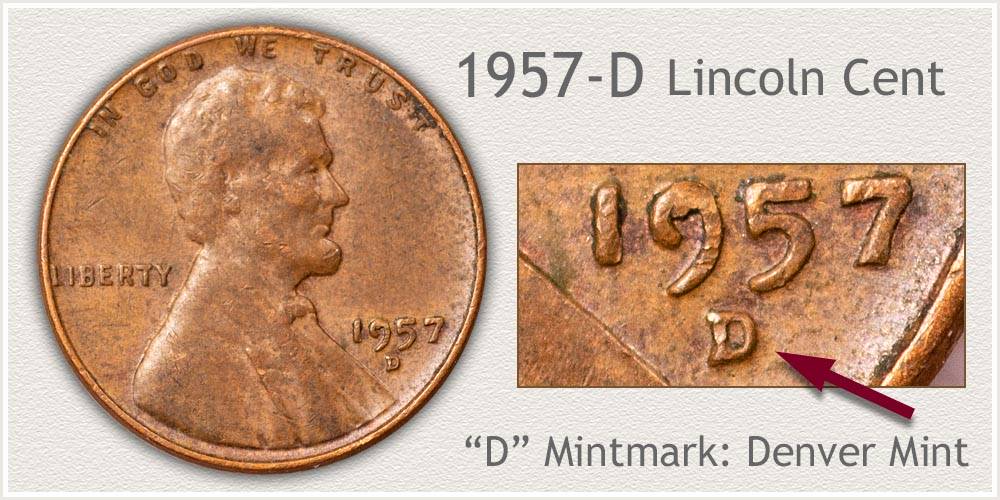
To understand the value of the 1957-D penny, one must first understand its place in history. Struck at the Denver Mint—indicated by the “D” mint mark located under the date—this coin represents the twilight years of the iconic Wheat Penny series. By 1957, the Lincoln Wheat Penny had been in circulation for nearly half a century.
Specifications and Minting Details
The 1957-D penny is composed of 95% copper and 5% zinc and tin. This copper-heavy composition gives the coins a distinct reddish-brown hue that changes over time as the metal reacts to the environment. In 1957, the Denver Mint was incredibly productive, outputting 1,051,262,500 pennies. Because the mintage figures were so high, these coins are far from rare in terms of sheer volume.
The “D” mint mark is a crucial detail for collectors. During the mid-20th century, the Denver Mint’s output was highly reliable, but the sheer quantity produced means that even today, finding a 1957-D in general circulation is a common occurrence. However, rarity is not defined solely by supply; it is defined by the intersection of supply and high-grade condition.
Factors Influencing Market Value
If you hold a 1957-D penny, your first instinct might be to check its date and mark. However, in the professional coin market, the date is merely the starting point. When a professional numismatist evaluates a coin, they look at several distinct criteria that can shift a coin’s value from a few cents to several hundred dollars.
The Grading Scale and Condition
Condition is the primary driver of value for the 1957-D. The Sheldon Coin Grading Scale, which ranges from 1 (Poor) to 70 (Perfect Mint State), is the industry standard. A coin found in a jar or circulation is typically “circulated,” meaning it has been handled, spent, and rubbed against other coins. These pennies are generally worth their “melt value” or a small premium to collectors just starting out—usually between $0.05 and $0.25.
However, the value spikes dramatically when you reach the “Mint State” (MS) grades. An MS-65 coin, which shows no signs of wear and retains its original luster, can fetch anywhere from $10 to $30. At the extreme end of the scale—an MS-67 or higher—the value can climb into the hundreds of dollars. The reason for this gap is that, despite the massive mintage, finding a 1957-D that has survived 65+ years without being marred by scratches, dings, or oxidation is remarkably difficult.
The Importance of “Red” vs. “Brown”
In the coin collecting world, the color of a copper coin significantly impacts its grade and price. The grading services (such as PCGS or NGC) designate copper coins with color grades:
- RD (Red): The coin retains its original, mint-fresh copper brilliance.
- RB (Red-Brown): A transition state where the coin has begun to oxidize.
- BN (Brown): The coin has fully toned to a chocolate brown color.
A 1957-D graded MS-66 RD will always be worth significantly more than an MS-66 BN. Collectors pay a premium for “Red” specimens because they represent the coin exactly as it looked the day it left the Denver Mint facility.

Identifying Varieties and Minting Errors
While a standard 1957-D penny has a relatively capped value, the potential for discovering a “variety” or “error” can turn a mundane coin into a valuable asset. Collectors are always on the lookout for anomalies that occurred during the stamping process.
The Repunched Mint Mark (RPM)
One of the most famous varieties of this era is the Repunched Mint Mark. In 1957, mint marks were punched into the die by hand. Occasionally, the worker would hit the die twice, or the punch would shift slightly, resulting in a ghost image or an overlapping “D.”
If you have a 1957-D penny, it is worth examining the mint mark under a high-powered magnifying glass or a digital microscope. An RPM variety is not just a curiosity; it is a cataloged error that can increase the value of the coin to $50 or more, depending on the severity of the shift and the overall grade of the coin.
Die Cracks and Cuds
Sometimes, the heavy machinery used to strike millions of coins would lead to “die fatigue.” As the dies wore out, they would develop cracks. A “Cud” occurs when a piece of the die breaks off entirely, leaving a raised, blob-like metal feature on the coin. While these are common in older coinage, a significant, eye-catching cud on a 1957-D can command a premium from collectors who specialize in “error coins.”
How to Properly Appraise and Preserve Your Coins
If you believe you have found a high-quality 1957-D penny, the worst thing you can do is attempt to “clean” it. Many amateur collectors make the mistake of using household polishes, acidic dips, or abrasive cloths to make their coins look shiny. In the professional numismatic world, cleaning a coin effectively destroys its collector value. A cleaned coin is considered “damaged” by grading services, which can strip away 80% to 90% of its potential market value.
Assessing the Value for Yourself
If you are sorting through a collection, the following steps are recommended:
- Magnification: Use a 5x or 10x jeweler’s loupe to inspect the surface for wear. Look at Lincoln’s hair and the wheat stalks on the reverse. If the lines are sharp and clear, you may have a high-grade coin.
- Environment: Store coins in non-PVC, acid-free holders. PVC-based plastic emits chemicals that turn coins green and damage the surface over time.
- Research: Use online resources like the PCGS CoinFacts database or the NGC Coin Explorer to compare your coin against high-resolution photos of graded coins. This will help you estimate the grade of your own specimen.
Is It Worth Getting Graded?
Professional grading comes with a cost—usually $25 to $50 per coin, plus shipping and insurance. Therefore, it is only financially logical to send a 1957-D penny to a service like PCGS or NGC if you are certain it is in “Gem” condition (MS-65 or higher) or if you believe you have discovered a rare, significant error. If the coin is clearly circulated or heavily scratched, the cost of grading will far exceed the value of the coin itself.
Conclusion: The Reality of Mid-Century Currency
The 1957-D penny is a fascinating piece of American economic history. While it is not the most valuable coin in a numismatist’s catalog, it serves as a perfect entry point for those interested in the hobby. Its value is a reflection of the transition between the circulation of common change and the preservation of historical artifacts.
For the vast majority of people, the 1957-D in their pocket is worth its face value or perhaps a small amount as a sentimental item. However, for the diligent hunter who takes the time to look for specific errors, pristine “Red” surfaces, and rare die varieties, the 1957-D holds a potential for profit that far exceeds its copper content. Whether you keep it as a memento of the past or invest the time to research its specific characteristics, the 1957-D penny remains a tangible connection to an era of American manufacturing and history. Treat it with care, keep it dry, and perhaps one day, that humble penny will tell a story worth far more than a single cent.
aViewFromTheCave is a participant in the Amazon Services LLC Associates Program, an affiliate advertising program designed to provide a means for sites to earn advertising fees by advertising and linking to Amazon.com. Amazon, the Amazon logo, AmazonSupply, and the AmazonSupply logo are trademarks of Amazon.com, Inc. or its affiliates. As an Amazon Associate we earn affiliate commissions from qualifying purchases.