
The question “what is a 1935 Indian Head Nickel worth” often arises from a common misidentification among the public and even new coin enthusiasts. While the United States did produce “Indian Head” coinage, this specific design was primarily used for the U.S. cent (penny) from 1859 to 1909. For a nickel minted in 1935, the coin in question is officially known as the “Buffalo Nickel,” though its designer, James Earle Fraser, originally referred to it as the “Indian Head Nickel.” Understanding this crucial distinction is the first step in accurately assessing its numismatic and monetary value.
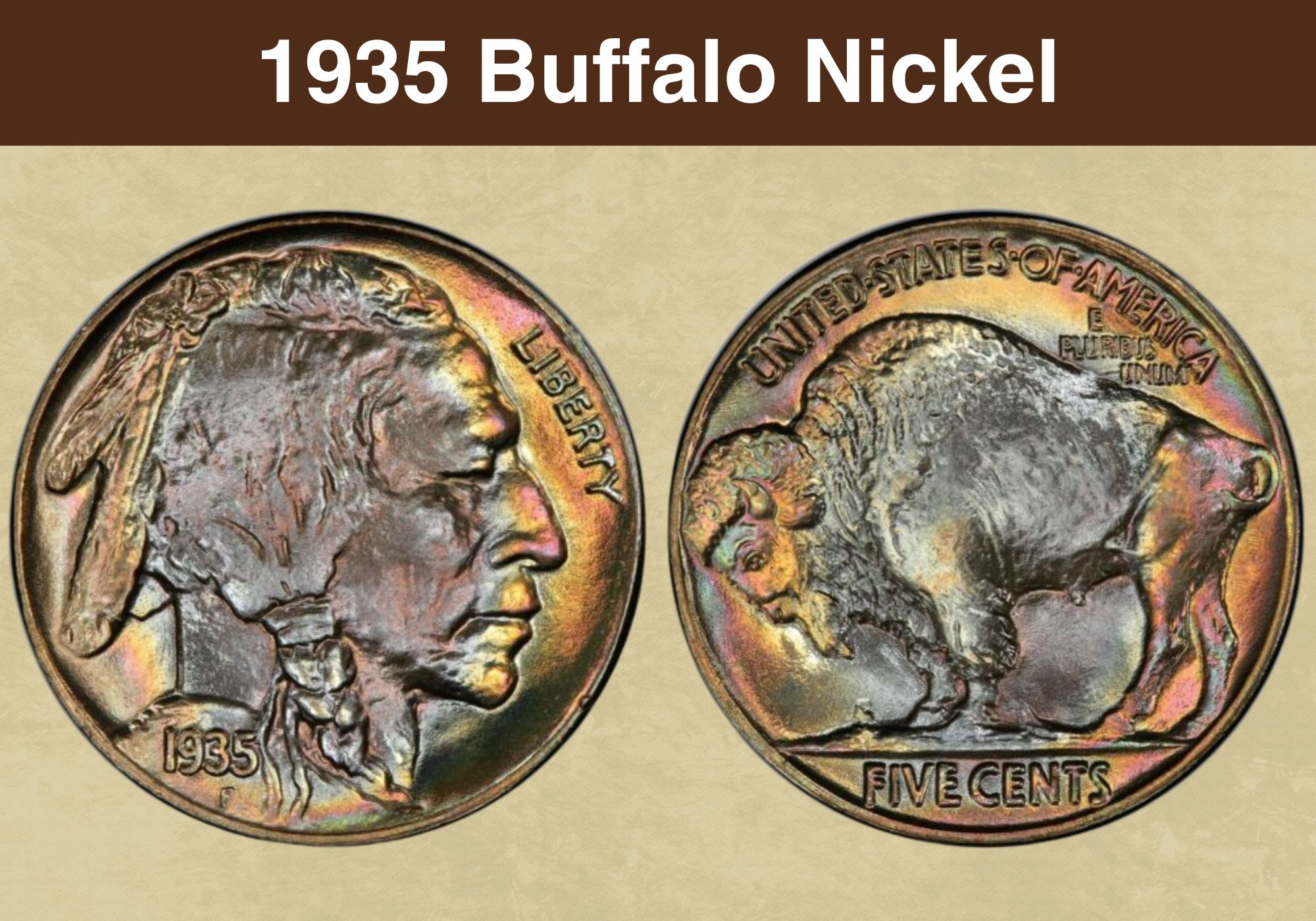
The True Identity: The 1935 Buffalo Nickel
The “Indian Head” designation on the title refers to a distinct series from the one-cent piece. The nickel produced in 1935 belongs to the iconic Buffalo Nickel series, which was minted from 1913 to 1938. Designed by sculptor James Earle Fraser, this coin was a deliberate departure from European-inspired coinage, aiming to showcase uniquely American themes. The obverse features a composite portrait of three Native American chiefs: Iron Tail (Lakota Sioux), Two Moons (Cheyenne), and John Big Tree (Kiowa), embodying the dignity and resilience of indigenous peoples. The reverse displays a majestic American bison, purportedly modeled after Black Diamond, a famous bison from the Bronx Zoo. This striking design captivated the American public and remains a highly sought-after collectible today.
Design Features and Mint Marks
The obverse of the 1935 Buffalo Nickel prominently displays the Native American profile, accompanied by the inscription “LIBERTY” and the year “1935.” The reverse features the powerful American bison, encircled by “UNITED STATES OF AMERICA” and “E PLURIBUS UNUM” above, with the denomination “FIVE CENTS” below. Critically for valuation, the mint mark, if present, is located on the reverse, beneath the “FIVE CENTS” inscription.
For the year 1935, Buffalo Nickels were produced at three U.S. Mint facilities:
- Philadelphia (P): Coins struck in Philadelphia bear no mint mark.
- Denver (D): Coins struck in Denver carry a small “D” mint mark.
- San Francisco (S): Coins struck in San Francisco display a small “S” mint mark.
The presence or absence of a mint mark, coupled with the coin’s physical condition, significantly influences its market value. Specific design elements, such as the sharpness of the buffalo’s horn, the details in the Native American’s braids, and the clarity of the date, are meticulously examined during the grading process and directly impact a coin’s premium.
Key Factors Determining Value
The monetary worth of any collectible coin, including the 1935 Buffalo Nickel, is a complex interplay of several key factors. These elements collectively dictate a coin’s rarity, desirability, and ultimately, its market price. Understanding these drivers is essential for both casual holders and serious numismatic investors.
Condition and Professional Grading
The physical condition, or “grade,” of a coin is, by far, the most critical factor influencing its value. A coin’s grade describes its state of preservation, ranging from heavily worn to perfectly preserved. The universally accepted standard for grading is the Sheldon scale, which ranges from 1 (Poor) to 70 (Perfect Uncirculated, or Mint State).
For collectible coins, particularly those of significant value, grades are typically assigned by professional third-party grading services like the Professional Coin Grading Service (PCGS) or the Numismatic Guaranty Corporation (NGC). These services authenticate the coin and encapsulate it in a sealed holder (“slab”) with an assigned grade, providing an objective assessment and bolstering market confidence.
For a 1935 Buffalo Nickel, key areas of wear to inspect include the high points of the Native American’s cheekbone, braids, and feathers, as well as the buffalo’s head, horn, and hind leg. A coin with sharp, well-defined details, especially one retaining a “Full Horn” (FH) or “Full Leg” (FL) designation on the buffalo, will command a significantly higher price than one with worn or obliterated features. Even a slight difference in grade can translate to hundreds or thousands of dollars in value, particularly for uncirculated specimens.
Rarity and Mint Mark Significance
Rarity is largely dictated by the original mintage figures (how many coins were produced) and the subsequent survival rate of those coins over time. The production figures for the 1935 Buffalo Nickels were:
- 1935-P (Philadelphia): 58,265,000
- 1935-D (Denver): 12,092,000
- 1935-S (San Francisco): 4,089,000
These figures clearly indicate that the 1935-S is considerably rarer than its Philadelphia and Denver counterparts. Generally, a lower mintage figure translates directly to higher rarity and, consequently, a higher market value, assuming comparable condition. While 1935 is not considered a “key date” in the Buffalo Nickel series (like the 1937-D 3-Legged), the “S” mint mark is certainly a “semi-key” date for the year, making it significantly more valuable across most grades.
Market Demand and Economic Influences

Beyond the intrinsic characteristics of condition and rarity, the broader market demand for a particular coin plays a significant role in its valuation. Collector trends, numismatic research, and prevailing economic conditions can all influence prices. A surge in collector interest for a specific series, perhaps fueled by educational initiatives or significant auction results, can drive up demand and prices. Conversely, a general economic downturn might reduce disposable income directed towards collectibles, leading to softer prices.
Auction results and transactions by reputable coin dealers provide the most up-to-date indicators of market demand. It’s also vital to distinguish between a coin’s intrinsic metallic value (the value of the nickel and copper it contains) and its numismatic value, which is almost always significantly higher for collectible coins like the 1935 Buffalo Nickel, especially in higher grades. The coin’s aesthetic appeal, historical narrative, and popularity within the collecting community contribute substantially to its sustained demand.
Estimated Values of 1935 Buffalo Nickels by Grade
To provide a clearer understanding of what a 1935 Buffalo Nickel might be worth, it’s essential to examine estimated values across various grades and mint marks. These figures are illustrative and represent general market trends; actual values can fluctuate based on specific characteristics, dealer premiums, and auction dynamics. For a precise valuation, professional assessment is always recommended.
Understanding Grade Designations for Valuation
- Good (G-4): Heavily worn, but the date is visible, and the major design elements are outlined.
- Fine (F-12): Moderate wear, some detail visible in the Native American’s braids and the buffalo’s horn.
- Very Fine (VF-20): Significant detail remains, with a distinct buffalo horn and some detail on the buffalo’s front leg.
- Extremely Fine (EF-40): Light wear on the highest points of the design; nearly all major details are sharp.
- About Uncirculated (AU-50): Traces of original mint luster may be present, with only slight wear on the highest points (e.g., Native American’s cheekbone, buffalo’s hip).
- Uncirculated (MS-60 to MS-70): No signs of wear. Full original mint luster. Higher numbers within this range indicate superb strike quality and minimal contact marks. Uncirculated coins with “Full Horn” (FH) or “Full Leg” (FL) designations are particularly coveted and command significant premiums.
1935 Buffalo Nickel Price Guide (Estimates)
The following are approximate market values for a 1935 Buffalo Nickel, based on recent numismatic market data. These figures are for raw (ungraded) coins or coins in standard slabs without special designations, unless otherwise noted.
1935-P (Philadelphia Mint – No Mint Mark):
- G-4: $0.50 – $1.50
- F-12: $2 – $5
- VF-20: $5 – $10
- EF-40: $15 – $25
- AU-50: $30 – $50
- MS-60: $60 – $100
- MS-65: $300 – $600+ (with Full Horn/Leg details, values can potentially exceed $1,000)
1935-D (Denver Mint – “D” Mint Mark):
- G-4: $1 – $3
- F-12: $5 – $10
- VF-20: $10 – $20
- EF-40: $25 – $45
- AU-50: $50 – $80
- MS-60: $100 – $200
- MS-65: $500 – $1,000+ (with Full Horn/Leg, values can potentially exceed $2,000)
1935-S (San Francisco Mint – “S” Mint Mark):
- G-4: $2 – $5
- F-12: $8 – $15
- VF-20: $15 – $30
- EF-40: $35 – $60
- AU-50: $70 – $120
- MS-60: $150 – $300
- MS-65: $800 – $1,500+ (with Full Horn/Leg, values can potentially exceed $3,000, with exceptional examples reaching much higher figures)
These ranges vividly illustrate the profound impact that both a coin’s condition and its mint mark have on its market value. A common 1935-P in heavily circulated condition might be worth only a few dollars, whereas a rare 1935-S in high-grade uncirculated condition, especially with desirable “Full Horn” details, could be worth thousands. It is always recommended to consult with a reputable coin dealer or submit your coin to a professional grading service for an accurate valuation.
Investing in Numismatics: Considerations for Collectors
For many, discovering a 1935 Buffalo Nickel is merely a casual find. However, for those with a deeper interest in history and finance, such coins represent an entry point into the fascinating world of numismatics—the study and collection of currency. Considering coins as an investment involves unique insights and strategic approaches.
The Appeal of Coin Collecting as an Investment
Collectible coins, particularly those with historical significance and aesthetic appeal like the Buffalo Nickel, can represent a unique tangible asset class. They possess intrinsic historical and artistic value, often appreciating independently of traditional financial markets. Many investors view rare coins as a potential hedge against inflation, as their value is not directly tied to abstract financial instruments. They can offer portfolio diversification and, for certain rare issues in high grades, provide substantial long-term capital appreciation. Beyond the purely financial aspects, coin collecting offers intellectual engagement, the thrill of discovery, and the profound satisfaction of preserving a piece of history.

Risks and Prudent Practices
However, investing in collectible coins is not without its specific challenges and risks. The coin market can be illiquid, making rapid sales at full market value difficult compared to more traditional financial assets. Additionally, investors must account for storage costs, insurance, and the crucial need for specialized knowledge to accurately assess authenticity, avoid counterfeits, and ensure fair pricing. Market trends can shift, and values can fluctuate.
To mitigate these risks and maximize potential returns, several prudent practices are recommended:
- Educate Yourself: Continuously learn about grading standards, specific series characteristics, historical context, and current market trends.
- Buy Graded Coins: For higher-value pieces, always prioritize coins that have been professionally authenticated and graded by PCGS or NGC. This provides a universally recognized standard of quality and authenticity.
- Work with Reputable Dealers: Establish relationships with experienced and ethical coin dealers who can offer expert advice, fair pricing, and access to quality inventory.
- Focus on Quality and Rarity: While rarity is important, condition often holds more sway in value. Prioritize coins in the best possible condition for their rarity, as higher-grade examples consistently outperform lower-grade ones in terms of appreciation.
- Adopt a Long-Term View: Numismatic investments typically perform best over extended periods, making them suitable for long-term wealth preservation and growth rather than short-term speculation.
The 1935 Buffalo Nickel, with its varied mintages, diverse conditions, and historical resonance, serves as an excellent case study for understanding these principles, whether you are a seasoned numismatic investor or simply a curious individual with a newfound piece of American monetary history.
aViewFromTheCave is a participant in the Amazon Services LLC Associates Program, an affiliate advertising program designed to provide a means for sites to earn advertising fees by advertising and linking to Amazon.com. Amazon, the Amazon logo, AmazonSupply, and the AmazonSupply logo are trademarks of Amazon.com, Inc. or its affiliates. As an Amazon Associate we earn affiliate commissions from qualifying purchases.