
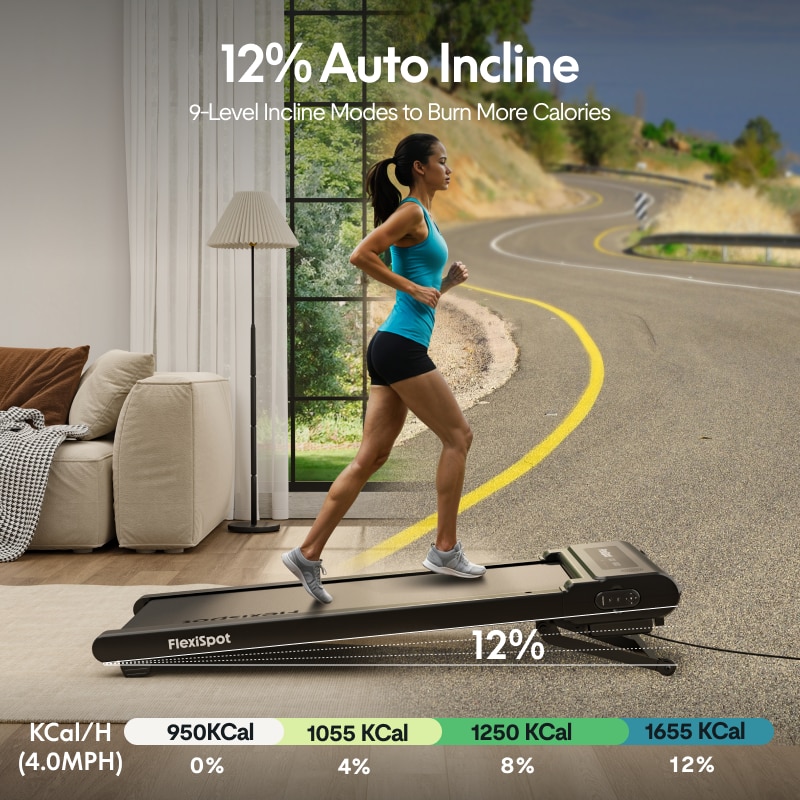
The modern treadmill, a cornerstone of home and commercial fitness, is a sophisticated piece of technology designed to replicate and enhance the experience of walking or running. Among its most impactful features is the adjustable incline, a mechanism that elevates the walking deck to simulate climbing a hill. A “12 incline” specifically refers to a 12% grade, a significant elevation that fundamentally alters the physiological demands and biomechanics of a workout. Understanding this setting involves delving into the technical specifications, the engineering behind its operation, and the resulting impact on user performance and muscle engagement.
Understanding Treadmill Incline Technology
At its core, a treadmill’s incline system is an electro-mechanical marvel, translating user input into precise physical adjustments of the running surface. This technological capability transforms a flat walking or running experience into a dynamic, gradient-varied terrain.
The Mechanics of Incline Adjustment
The physical elevation of a treadmill’s deck is typically achieved through a powerful motor and a robust lifting mechanism, often a screw-drive or hydraulic piston system. When a user selects an incline setting, a signal is sent from the control console to this dedicated incline motor. This motor then drives the lifting mechanism, which in turn raises the front portion of the treadmill frame, pivoting it upwards from a fixed rear point. The speed and smoothness of this adjustment can vary significantly between models, with higher-end treadmills often featuring quicker, quieter, and more precise transitions. Advanced models might also incorporate shock absorption systems that adapt to the changing angles, maintaining consistent deck stability.
How Incline Percentages are Calculated
The 12% incline is a specific measurement, universally defined by engineering principles. It represents a rise-over-run ratio: for every 100 units of horizontal distance covered, the vertical elevation increases by 12 units. This isn’t an angle in degrees, though the two are related. A 12% grade corresponds to an angle of approximately 6.84 degrees from the horizontal. This standardization allows users to compare the intensity of incline training across different treadmill brands and even with real-world terrain, where road signs often indicate grades in percentages. The treadmill’s internal sensors and software are meticulously calibrated to ensure that the displayed 12% accurately reflects this physical elevation, providing a consistent and reliable training metric.
The Digital Interface: Controlling Incline
User interaction with the incline function is primarily through the treadmill’s control console. This digital interface ranges from simple button presses (e.g., dedicated “incline up/down” buttons or quick-select keys for specific percentages like 6, 9, 12%) to sophisticated touchscreen displays found on smart treadmills. These advanced interfaces often allow for granular control, increasing or decreasing the incline in 0.5% or 1% increments. Many modern treadmills integrate incline control into pre-programmed workouts, where the machine automatically adjusts the gradient according to the workout’s profile, simulating rolling hills or steady climbs without user intervention. This automation enhances the immersive quality of the workout and allows users to focus solely on their exertion.
Incline vs. Grade: Clarifying Terminology
While often used interchangeably in casual conversation, “incline” and “grade” technically refer to the same concept in the context of treadmills. Both describe the steepness of the surface. “Incline” is more commonly used within treadmill parlance, referring to the adjustable feature, whereas “grade” is a more general term for slope, often encountered in civil engineering or outdoor topography. For a treadmill user, a “12 incline” is synonymous with a “12% grade,” indicating the same level of elevation and corresponding workout intensity.
The Technological Benefits of a 12% Incline
Utilizing a 12% incline on a treadmill goes beyond simply making a workout harder; it leverages the machine’s technological capability to elicit specific physiological responses and enhance various aspects of fitness training.
Enhanced Cardiovascular Demand
Walking or running on a 12% incline significantly elevates heart rate and breathing without necessarily requiring a higher speed. This is a direct result of the increased effort needed to overcome gravity. The cardiovascular system must work harder to pump oxygenated blood to the working muscles, leading to improved aerobic capacity and endurance. For individuals seeking a high-intensity interval training (HIIT) protocol, bursts of 12% incline can provide an excellent cardiovascular challenge, maximizing calorie expenditure and improving VO2 max more effectively than flat-surface training at the same speed.
Targeted Muscle Engagement
The biomechanics of incline walking or running shift muscle activation patterns dramatically. A 12% incline specifically targets the posterior chain more intensely. The glutes and hamstrings are heavily recruited to propel the body upwards, while the calves work harder to push off the ground. Quadriceps are also engaged, particularly in stabilizing the knees during each step. This targeted activation makes incline training a powerful tool for strengthening these major muscle groups, contributing to better posture, improved running efficiency, and reduced risk of injury in real-world activities. The technological precision of the incline ensures consistent and repeatable muscle loading.
Lower Impact on Joints Compared to Running
One of the significant advantages of high-incline walking over flat-surface running, especially for those with joint concerns, is the reduction in impact forces. While the exertion level can be comparable to running, the walking gait on an incline minimizes the pounding on knees, hips, and ankles. The forward lean naturally adopted during incline walking also helps distribute forces more evenly. This makes 12% incline walking an excellent cardio option for injury recovery, cross-training, or for individuals with joint degeneration, leveraging the treadmill’s cushioning system to further mitigate stress.
Simulating Outdoor Terrain Realism
Modern treadmill technology aims to replicate outdoor experiences, and the incline feature is crucial for this. A 12% incline can realistically simulate steep hiking trails or challenging road grades, preparing athletes for marathons, trail running, or mountaineering. Some advanced treadmills even integrate virtual course simulations, where the incline automatically adjusts to match the topography of a displayed route, providing an immersive and practical training experience for specific events or terrains.
Calorie Expenditure Optimization
Due to the increased muscular effort and cardiovascular demand, workouts performed at a 12% incline burn significantly more calories than flat-surface workouts at the same speed and duration. This makes incline training an extremely efficient method for weight management and body composition improvement. Smart treadmills often provide real-time calorie burn estimates, which become more accurate when accounting for the added metabolic cost of incline, helping users optimize their energy expenditure goals.
Integrating the 12% Incline into Your Fitness Tech Routine
Effectively incorporating a 12% incline into your treadmill regimen requires a strategic approach, leveraging the machine’s features for optimal results and safety.
Gradual Adaptation and Smart Progression
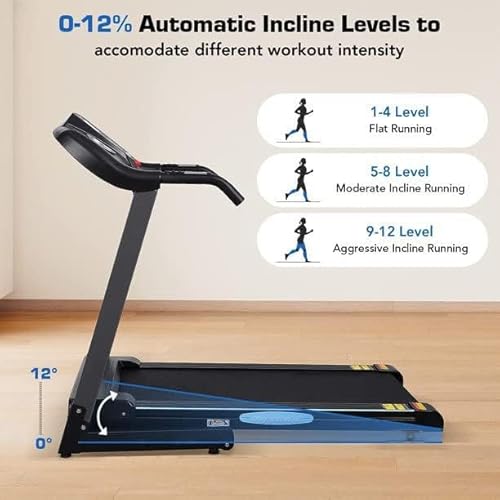
Jumping straight to a 12% incline at a brisk pace can be challenging and potentially lead to injury. Modern fitness apps and smart treadmills often suggest gradual progression plans. Start with lower inclines and shorter durations, gradually increasing the incline percentage and workout time. Listen to your body and prioritize proper form to avoid strain. Many treadmills allow for custom program creation, enabling users to design workouts that slowly increase incline over several sessions.
Leveraging Pre-Programmed Incline Workouts
Most contemporary treadmills come equipped with a variety of pre-programmed workouts that incorporate incline changes. These programs are often designed by fitness professionals and provide structured routines, such as hill training, incline intervals, or mountain climbs. Utilizing these built-in features simplifies workout planning and ensures a varied and effective training stimulus, automatically adjusting the incline for you.
Data Tracking and Performance Monitoring
Smart treadmills and companion fitness apps excel at tracking performance metrics. When using a 12% incline, monitor data points such as average speed, distance, heart rate zones, and calorie burn. Observing these metrics over time provides valuable insight into fitness progress and allows for data-driven adjustments to your training plan. Some systems can even calculate estimated vertical feet climbed, adding another dimension to your workout analysis.
Safety Features and Best Practices with High Incline
High-incline workouts demand particular attention to safety. Always use the safety key, which automatically stops the treadmill if you slip. Ensure you maintain a steady grip on the handrails if needed, especially during initial adaptation, but try to minimize continuous reliance to maintain natural movement. Proper footwear with good traction is essential. Be aware of your surroundings and ensure adequate space around the treadmill for safe operation.
Advanced Treadmill Features Complementing Incline Training
The integration of a 12% incline becomes even more powerful when combined with other cutting-edge treadmill technologies.
Interactive Displays and Virtual Scenery
High-definition touchscreens are now common, offering interactive workouts where users can virtually “run” or “walk” through scenic landscapes. These experiences are enhanced when the treadmill’s incline automatically adjusts to match the topography of the chosen virtual trail, making a 12% incline feel like a real mountain ascent. This engagement can significantly boost motivation and adherence to fitness goals.
Automated Incline Changes via App Integration
Many smart treadmills seamlessly integrate with popular fitness apps like Zwift, Peloton, or iFit. These platforms often feature instructor-led classes or structured workouts where the incline is automatically controlled by the app, eliminating the need for manual adjustments. This “smart” automation ensures users are always at the correct gradient dictated by the program, optimizing the workout experience.
Heart Rate Monitoring and Adaptive Programs
Integrated heart rate sensors (via handgrips or chest straps) allow treadmills to monitor your cardiovascular response in real-time. Some advanced models use this data to create adaptive programs that automatically adjust speed and incline, including the 12% setting, to keep you within your target heart rate zones. This personalized approach maximizes training efficiency and prevents overtraining.
Ergonomics and Build Quality for High-Incline Use
Treadmills designed for high-incline use feature robust motors, reinforced frames, and advanced deck cushioning systems. These engineering considerations are crucial for ensuring stability, durability, and user comfort during demanding 12% incline workouts. High-quality construction minimizes wear and tear on components, extending the lifespan of the machine even under intense usage patterns.
Troubleshooting and Maintenance for Optimal Incline Performance
Like any sophisticated piece of technology, treadmills with incline functions require proper care and occasional troubleshooting to maintain peak performance, especially when frequently utilizing challenging settings like 12%.
Calibration Issues and Sensor Accuracy
Over time, or with heavy use, the incline mechanism might become slightly miscalibrated, meaning the displayed 12% might not perfectly match the actual physical incline. Many modern treadmills offer a calibration routine through their service menu to reset the incline motor’s home position and ensure sensor accuracy. Consult your user manual for specific instructions on checking and correcting calibration.
Motor Strain and Longevity Considerations
The incline motor works hard to lift the running deck, particularly with heavier users or frequent, rapid changes in incline. Regularly lubricating the lifting mechanism (if applicable and recommended by the manufacturer) and avoiding abrupt, constant incline changes can prolong the motor’s life. If the motor sounds strained or operates erratically, it may indicate a need for professional service or component replacement.
Regular Lubrication and Belt Alignment for Smooth Operation
While not directly related to the incline mechanism itself, proper belt lubrication and alignment are crucial for overall treadmill performance, especially when the machine is under the added stress of a high incline. A well-maintained belt ensures smooth operation and reduces strain on the drive motor, which indirectly benefits the entire system, including the incline motor.
Software Updates for Enhanced Functionality
Smart treadmills frequently receive software updates that can improve incline motor control, refine program algorithms, enhance safety features, or even introduce new incline-specific workouts. Regularly checking for and installing these updates ensures your treadmill operates with the latest functionalities and optimal performance characteristics.
aViewFromTheCave is a participant in the Amazon Services LLC Associates Program, an affiliate advertising program designed to provide a means for sites to earn advertising fees by advertising and linking to Amazon.com. Amazon, the Amazon logo, AmazonSupply, and the AmazonSupply logo are trademarks of Amazon.com, Inc. or its affiliates. As an Amazon Associate we earn affiliate commissions from qualifying purchases.