
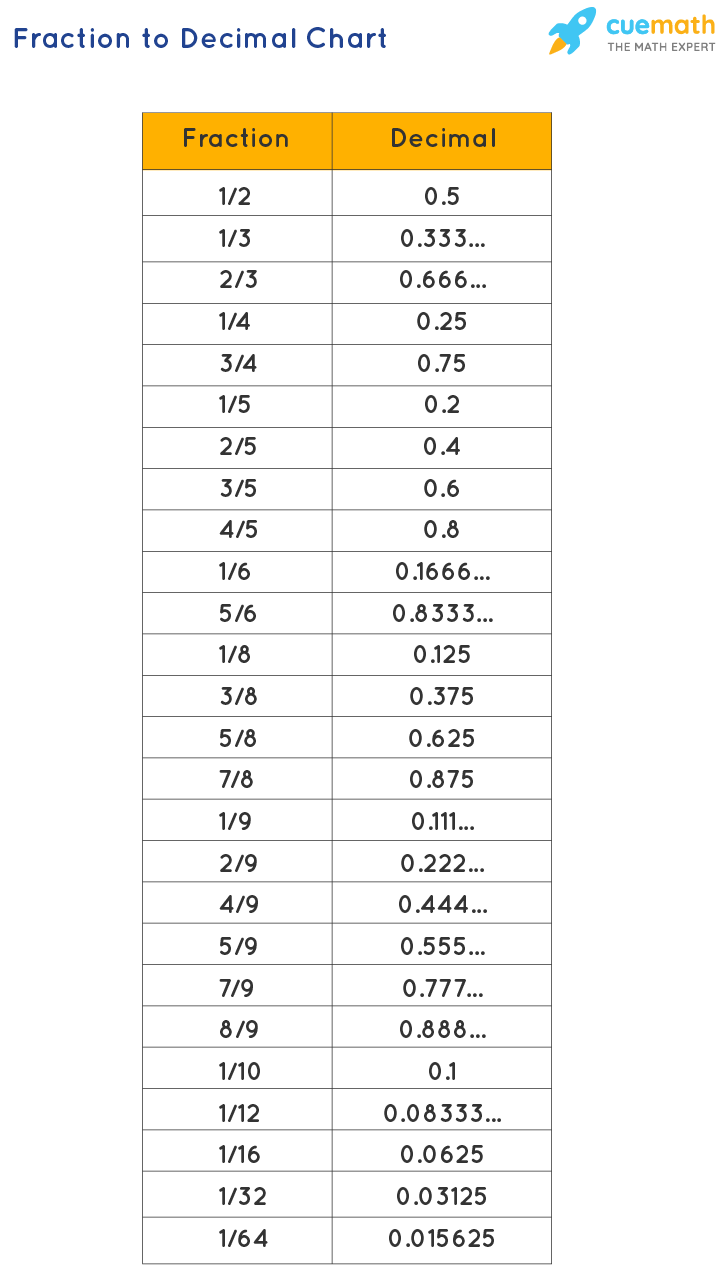
At first glance, the question “what is 9/10 in decimal form” might seem like a trivial arithmetic problem, best suited for an elementary school classroom. The immediate answer, of course, is 0.9. Simple, straightforward, and undeniably correct. However, to dismiss this question as merely academic would be to overlook a profound truth: understanding this fundamental conversion, and indeed the broader concepts of fractions and decimals, is not just a mathematical exercise but an indispensable cornerstone of genuine financial literacy.
In the complex and often intimidating world of money – from personal budgeting and investment strategies to business finance and online income generation – precision is paramount. Every interest rate, every percentage discount, every profit margin, and every investment return relies on a solid grasp of how numbers relate to each other, often expressed in the nuanced language of decimals and fractions. Without this foundational understanding, individuals and businesses alike risk miscalculations that can lead to significant financial setbacks, missed opportunities, and a general feeling of disempowerment.

This article delves beyond the simple arithmetic answer to explore why comprehending concepts like “9/10 in decimal form” is critical within the “Money” niche. We will uncover how this basic principle underpins virtually every aspect of our financial lives, transforming abstract numbers into actionable insights and empowering us to make smarter, more informed monetary decisions.
The Indispensable Role of Decimals and Fractions in Personal Finance
Personal finance is the bedrock of financial stability and future prosperity. It involves managing income, expenses, savings, and investments to achieve individual financial goals. At every turn, decimals and fractions play a crucial, often subtle, role.
Budgeting and Expense Tracking: More Than Just Whole Numbers
Effective budgeting is about allocating your income across various categories like housing, food, transportation, and savings. While we often think in terms of whole dollars, the reality is far more granular. Imagine you aim to spend no more than 30% of your income on housing. If your monthly income is $4,500, then 30% means calculating 0.30 x $4,500 = $1,350. Here, the percentage (30/100) is converted to a decimal (0.30) to facilitate the calculation.
Similarly, when tracking expenses, every purchase, from a coffee at $4.75 to a grocery bill of $123.89, involves decimal precision. Ignoring these fractional parts can lead to significant discrepancies in your budget over time. A “round-number” mentality might suggest you’re within budget, but the accumulation of those “pennies and dimes” can easily push you over the edge. Understanding that $4.75 is $4 and 75/100 of a dollar reinforces the importance of accounting for every fractional component. This level of detail ensures that your budget accurately reflects your spending habits and prevents financial leakage.
Savings Goals and Debt Repayment: Visualizing Progress
Setting savings goals, whether for a down payment on a house, a new car, or retirement, often involves saving a specific fraction or percentage of your income. For instance, financial advisors often recommend saving 10% to 15% of each paycheck. If you aim to save 1/10 (or 0.10) of your $2,000 bi-weekly paycheck, you know exactly that $200 needs to be set aside. This clear, decimal-based target makes progress tangible and measurable.
On the flip side, debt repayment also heavily relies on understanding decimals. Interest rates on credit cards, personal loans, and mortgages are almost universally expressed as percentages (e.g., 18.99% APR, 4.25% mortgage rate). Converting these percentages to decimals (0.1899, 0.0425) is the first step in calculating interest accrual and understanding the true cost of borrowing. A slight difference in the decimal point, say between 4.25% and 4.75%, might seem small, but over the life of a 30-year mortgage, this 0.5% (or 0.005 in decimal form) difference can amount to tens of thousands of dollars in extra interest paid. Accurate calculations empower you to assess loan offers and make informed decisions that minimize your financial burden.
Navigating the World of Investments with Decimal Precision
Investing is where the rubber meets the road for decimals and fractions. From stock prices to compound growth, every calculation demands meticulous attention to detail that only a strong grasp of these numerical concepts can provide.
Stock Prices, Returns, and Dividends: The Numbers Game
The stock market is a prime example of a financial domain where decimals reign supreme. Stock prices are quoted with cents, like $150.75 or $32.42. Understanding these values means understanding that the 75 cents represents 75/100 of a dollar, or 0.75. When you buy 10 shares at $150.75, your total investment is $1,507.50 – a calculation impossible without decimal comprehension.
Calculating returns on investments also inherently involves decimals. If an investment grows from $1,000 to $1,090, it has a 9% return. As a decimal, this is 0.09. Expressing growth as a decimal is essential for comparing different investment performances, especially when considering periods less than a year, where annualized returns require careful calculations. Similarly, dividend yields, which represent the annual dividend payment per share as a percentage of the share price, require converting a fraction (dividend/price) into a decimal for comparison and analysis. The rise of fractional share investing further underscores this point, allowing investors to buy, for example, 0.5 of a share, making even small amounts of money work harder.
Interest Rates and Compound Growth: The Power of Small Percentages
The concept of compound interest, famously dubbed the “eighth wonder of the world” by Albert Einstein, is fundamentally driven by decimals. Whether it’s the interest earned on a savings account, the return on a bond, or the growth of a retirement fund, compounding means earning interest on your initial principal and on the accumulated interest. Even a seemingly small interest rate, like 0.9% (or 0.009), when compounded over decades, can lead to substantial wealth accumulation.
Consider two savings accounts: one offering 0.9% interest and another offering 1.0%. Over 30 years with regular contributions, that seemingly tiny 0.1% (0.001) difference in the decimal can translate into thousands of dollars less in the lower-interest account. Understanding Annual Percentage Yield (APY) versus Annual Percentage Rate (APR) is another critical distinction rooted in decimals. APY takes compounding into account, offering a more accurate representation of the effective annual return, which is derived from complex decimal calculations over the compounding periods. Without a firm grasp of how these percentages convert to decimals and influence calculations, investors risk underestimating growth potential or overestimating debt costs.

Decimals and Fractions in Business and Online Income
For entrepreneurs, small business owners, and those generating online income, the precision offered by decimals and fractions is not just beneficial; it’s absolutely vital for profitability and growth.
Profit Margins and Pricing Strategies: The Edge of a Point
Every successful business meticulously tracks its profit margins. A profit margin, often expressed as a percentage, is calculated by dividing net profit by revenue. For example, if a business earns $100,000 in revenue and has $10,000 in net profit, its profit margin is 10% (0.10). In competitive markets, even a few tenths of a percentage point difference in profit margin can separate a thriving business from one struggling to break even.
Pricing strategies frequently involve fractional adjustments. A product priced at $19.99 versus $20.00 might seem like a psychological trick, but it’s a direct application of decimal pricing. Calculating discounts (e.g., 25% off, or a multiplication by 0.75 to find the new price) or understanding cost per unit down to several decimal places is crucial for setting competitive prices while ensuring profitability. Businesses must understand the exact cost of goods sold, including fractional parts, to accurately determine optimal selling prices and promotional offers.
Commissions, Royalties, and Revenue Sharing: Fair Distribution
Many online income models and business partnerships are built on commission, royalty, or revenue-sharing structures. An affiliate marketer might earn a 9% commission on sales. If they drive $5,000 in sales, they earn $5,000 x 0.09 = $450. A content creator might receive a 1/10 royalty on each unit sold, or a percentage of ad revenue. Accurately calculating these payouts requires a solid understanding of how to convert fractions and percentages into their decimal equivalents and apply them correctly.
Discrepancies, even minor ones caused by rounding errors or misinterpretations of fractional terms, can lead to significant financial disputes or unfair compensation over time. Ensuring that contracts clearly define these percentages and that calculations are performed with decimal precision is essential for maintaining trust and fair business practices.
Data Analysis and Financial Reporting: Beyond the Raw Numbers
In business, raw numbers alone often tell only part of the story. Financial statements, sales reports, and market analyses become truly insightful when data is converted into ratios, percentages, and growth rates – all of which rely on decimals. For instance, comparing the current quarter’s growth rate of 4.7% (0.047) against the previous quarter’s 3.9% (0.039) immediately highlights a trend. Calculating market share, customer acquisition cost, or return on advertising spend all involve expressing relationships between numbers as decimals or percentages. These precise insights empower businesses to identify strengths, weaknesses, and opportunities, driving strategic decisions that impact the bottom line.
Bridging the Gap: From Fractional Understanding to Financial Empowerment
The journey from understanding that “9/10 in decimal form” is 0.9 to confidently navigating complex financial scenarios requires continuous learning and application.
The Cost of Numerical Illiteracy: Missed Opportunities and Misunderstandings
The inability to confidently work with fractions and decimals can be a costly handicap in the financial world. Individuals might misinterpret loan interest rates, leading them to choose more expensive financing options. They might fail to grasp the true impact of inflation, eroding their purchasing power over time. Entrepreneurs might miscalculate profit margins, leading to unsustainable pricing or inventory decisions.
Common pitfalls include:
-
Misinterpreting Discounts: Confusing “1/3 off” with “30% off” when they are slightly different (0.333 vs 0.30).
-
Overlooking Hidden Fees: Failing to convert fractional charges or percentage fees into concrete dollar amounts.
-
Underestimating Compound Interest: Not realizing the long-term power of small percentage returns or the snowball effect of compounding debt.
These misunderstandings can lead to poor financial decisions, reduced wealth accumulation, and increased financial stress.
Tools and Strategies for Enhancing Your Financial Math Skills
Fortunately, enhancing one’s financial math skills is entirely achievable.
-
Embrace Calculators and Spreadsheets: Modern tools like financial calculators and spreadsheet software (e.g., Excel, Google Sheets) are invaluable. They perform complex calculations with precision, but understanding the underlying decimal and fractional logic is crucial for inputting the correct formulas and interpreting the results.
-
Practice Everyday Scenarios: Actively engage with financial numbers in your daily life. Calculate discounts while shopping, figure out tip percentages, estimate interest on your savings, or project your mortgage payments. The more you practice, the more intuitive these conversions become.
-
Seek Educational Resources: Numerous online courses, books, and workshops are dedicated to financial literacy and practical math skills. Investing time in these resources can significantly boost your confidence and competence.
-
Don’t Shy Away from Questions: If a financial statement, investment prospectus, or loan document contains numbers you don’t fully understand, ask for clarification. Financial professionals are there to help you interpret these figures.
Conclusion
The seemingly simple question, “what is 9/10 in decimal form,” serves as a powerful reminder of the fundamental numerical concepts that underpin our entire financial ecosystem. The answer, 0.9, is not just a mathematical fact but a gateway to a deeper understanding of how money works. From managing personal budgets and investing wisely to running profitable businesses and generating online income, precision in understanding fractions and decimals is non-negotiable.
Embracing this precision empowers individuals to make more informed decisions, navigate complex financial landscapes with confidence, and ultimately achieve their monetary goals. In a world where every percentage point, every interest rate, and every profit margin can have significant implications, a solid grasp of basic arithmetic – starting with concepts like converting fractions to decimals – transforms abstract numbers into tools for real-world financial empowerment. It’s not just about knowing the answer; it’s about understanding its profound significance.
aViewFromTheCave is a participant in the Amazon Services LLC Associates Program, an affiliate advertising program designed to provide a means for sites to earn advertising fees by advertising and linking to Amazon.com. Amazon, the Amazon logo, AmazonSupply, and the AmazonSupply logo are trademarks of Amazon.com, Inc. or its affiliates. As an Amazon Associate we earn affiliate commissions from qualifying purchases.