
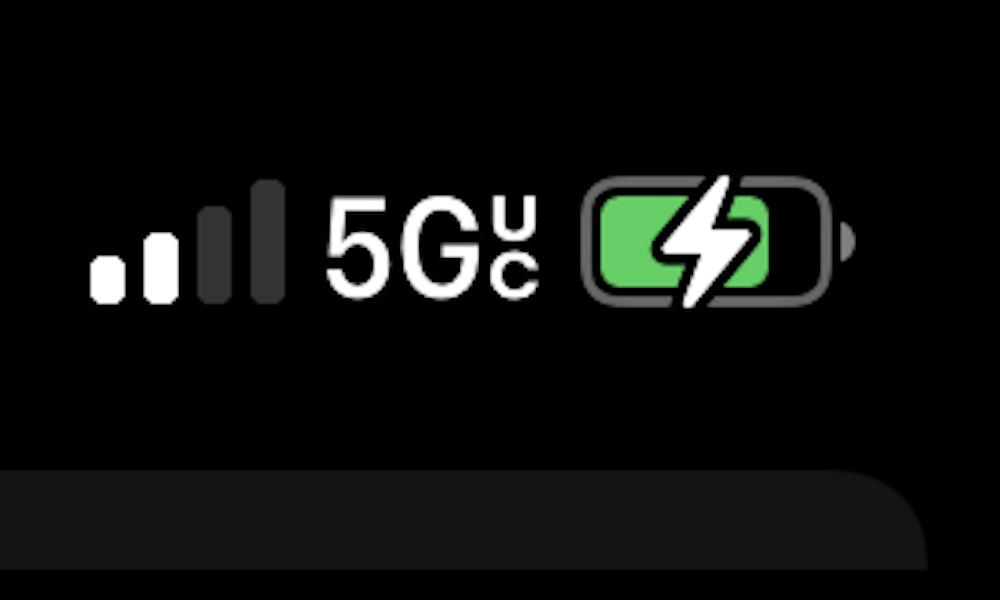
In the rapidly evolving landscape of telecommunications, the transition from 4G LTE to 5G has been marked by a confusing array of icons, acronyms, and marketing buzzwords. For T-Mobile subscribers, one specific symbol has sparked more curiosity than most: the “5G UC” icon appearing in the status bar of modern smartphones. While it may seem like a minor aesthetic change, 5G UC represents a significant technological milestone in mobile networking.
Standing for “Ultra Capacity,” 5G UC is T-Mobile’s designation for its high-performance 5G network layers. Unlike the standard 5G indicator, which often signifies a connection to low-band frequencies designed for broad coverage, the UC badge indicates that a user is connected to the “sweet spot” of 5G technology. This article explores the technical architecture of 5G UC, the hardware required to access it, and how it fundamentally alters the digital experience for consumers and enterprises alike.

Decoding the Acronym: What Does 5G UC Actually Mean?
To understand 5G UC, one must first understand the “Layer Cake” strategy T-Mobile employed during its network rollout. Not all 5G is created equal; the technology operates across different radio frequency spectrums, each with its own strengths and limitations regarding range and speed.
The Difference Between Extended Range and Ultra Capacity
T-Mobile divides its 5G network into two primary categories. The first is “Extended Range 5G,” which utilizes low-band spectrum (600MHz). This layer is designed to travel long distances and penetrate buildings effectively, providing the foundational coverage map that reaches rural areas. However, because the frequency is low, the data speeds are often only marginally faster than advanced 4G LTE.
5G UC, or Ultra Capacity, occupies the mid-band and high-band layers. When you see the UC icon, your device is utilizing the 2.5 GHz (mid-band) or mmWave (high-band) spectrum. This is where the true promise of 5G—fiber-like speeds and ultra-low latency—is realized. By moving to these higher frequencies, the network can carry significantly more data simultaneously, preventing the “congestion” often felt in crowded urban environments.
The Visual Indicator: Identifying the 5G UC Icon
For the average user, the most immediate interaction with this technology is the icon itself. On iPhones (starting with the iPhone 12) and modern Android devices, the “5G” text will append a small “UC” when the device handshakes with an Ultra Capacity tower. It serves as a real-time signal to the user that they have entered a zone capable of handling high-bandwidth tasks, such as 4K video conferencing or massive file downloads, without the typical lag associated with mobile data.
The Spectrum of Success: Mid-Band and Millimeter Wave Technologies
The technical backbone of 5G UC is a combination of two distinct frequency sets. T-Mobile’s strategic acquisition of Sprint played a pivotal role here, as it allowed the carrier to repurpose a vast amount of mid-band spectrum that competitors lacked at the time.
Mid-Band (2.5 GHz): The Sweet Spot of Speed and Range
The vast majority of the 5G UC footprint is powered by the 2.5 GHz mid-band spectrum. Engineers often refer to this as the “Goldilocks” frequency. It is high enough to deliver download speeds ranging from 300 Mbps to 1 Gbps, yet low enough that a single cell tower can cover several miles. This balance is what allowed T-Mobile to deploy 5G UC across thousands of cities rather than just a few downtown blocks.
Mid-band technology utilizes Massive MIMO (Multiple Input, Multiple Output). This tech uses dozens of antennas on a single tower to focus “beams” of data directly to individual users, rather than broadcasting a signal in all directions. This efficiency is a core component of the UC experience.
mmWave: Extreme Speeds in Dense Urban Hubs
The “high-band” portion of Ultra Capacity is Millimeter Wave (mmWave). These are extremely high frequencies (24 GHz to 39 GHz) that can deliver staggering speeds of 2 Gbps or higher. However, mmWave has a very short range—usually less than a thousand feet—and can be blocked by trees, windows, or even a user’s hand. T-Mobile deploys mmWave primarily in high-density locations like sports stadiums, airports, and major urban intersections where thousands of people are using data simultaneously.
Carrier Aggregation: Combining Frequencies for Peak Performance
One of the most sophisticated aspects of 5G UC is “Carrier Aggregation.” This technology allows a smartphone to connect to multiple frequency bands at the same time. For example, a phone might use low-band 5G for its primary “upload” connection to ensure stability, while simultaneously pulling data down via 2.5 GHz mid-band to achieve Ultra Capacity speeds. This seamless blending of frequencies ensures that the user doesn’t experience a “drop” in connection when moving between different types of towers.
Speed, Latency, and the User Experience

While technical specifications are important for engineers, the value of 5G UC for the end-user is measured in performance. The leap from standard 5G to Ultra Capacity is often the difference between a functional connection and a transformative one.
Real-World Benchmarks vs. Theoretical Maximums
In laboratory settings, 5G can reach speeds that seem impossible. In the real world, 5G UC typically delivers download speeds between 300 Mbps and 600 Mbps. To put this in perspective, the average home Wi-Fi connection in the United States hovers around 150-200 Mbps. With 5G UC, a mobile user often has faster internet in their pocket than they do through their wired router at home. This has led to the rise of 5G Home Internet, where T-Mobile uses the UC network to provide broadband to households.
Impact on Gaming, Streaming, and Remote Work
Latency—the delay between sending a request and receiving a response—is perhaps more critical than raw speed for modern apps. Standard 4G networks usually have a latency of 50-100 milliseconds. 5G UC aims to bring this down to under 20 milliseconds.
For competitive mobile gamers, this reduced “ping” is the difference between winning and losing. For remote professionals, it means that “Screen Sharing” on Zoom or Microsoft Teams happens in real-time without the pixelated lag that plagues slower networks. Furthermore, 5G UC enables “Cloud Gaming” services like Xbox Game Pass or NVIDIA GeForce Now to function smoothly on the go, effectively turning a smartphone into a high-end gaming console.
Device Compatibility and Network Requirements
Not every 5G phone can see the 5G UC icon. Accessing this high-tier network requires specific hardware capabilities and software configurations.
Hardware Requirements: Do You Need a New Phone?
The modem inside your smartphone dictates which frequencies it can “hear.” Older 5G phones, or budget models, may only support low-band frequencies. To access 5G UC, a device generally needs to be a flagship or mid-range model released after late 2020.
- Apple: iPhone 12 series and newer.
- Samsung: Galaxy S21 series and newer, along with many A-series models.
- Google: Pixel 5 and newer.
These devices contain modems (usually from Qualcomm) capable of “Mid-Band TDD” and “mmWave,” the two pillars of Ultra Capacity.
Software and Plan Constraints
Even with a compatible phone, users must be on a T-Mobile plan that includes 5G access. Fortunately, T-Mobile has been aggressive in including 5G in almost all of its current postpaid and prepaid plans. Additionally, ensuring your device’s firmware is up to date is crucial; carriers frequently release “Carrier Settings” updates that optimize how a phone interacts with new UC towers as they are activated.
The Future of 5G UC and the Competitive Landscape
T-Mobile was the first to market with a widely available mid-band network, but the industry is not standing still. The evolution of 5G UC is paving the way for even more advanced networking concepts.
Standalone 5G (SA) and Network Slicing
Most early 5G deployments were “Non-Standalone” (NSA), meaning they still relied on a 4G LTE core to manage the connection. T-Mobile is aggressively moving toward “Standalone 5G” (SA) for its Ultra Capacity network. This removes the 4G crutch entirely, further reducing latency and improving battery life, as the phone no longer has to maintain two simultaneous connections to the tower.
Standalone 5G also enables “Network Slicing.” This allows T-Mobile to virtually partition its 5G UC bandwidth. For example, a “slice” of the network could be dedicated exclusively to emergency services or autonomous vehicles, ensuring they have a guaranteed, lag-free connection even if thousands of people nearby are streaming video.
How T-Mobile Compares to Verizon and AT&T
While T-Mobile uses “UC,” its competitors have their own branding for similar technologies. Verizon uses “5G Ultra Wideband” (5G UW), and AT&T uses “5G+” (5G Plus). Originally, Verizon focused heavily on mmWave (very fast but very short range), while T-Mobile focused on mid-band (fast and broad range). Recently, the competitors have begun catching up by deploying their own mid-band spectrum (C-Band). However, T-Mobile’s head start in the 2.5 GHz space remains a significant technical advantage in terms of geographic footprint and signal penetration.
In conclusion, 5G UC is more than just a marketing label. It is the realization of the “True 5G” promise, utilizing sophisticated mid-band and mmWave spectrum to deliver a mobile experience that rivals or exceeds traditional wired connections. As T-Mobile continues to expand this footprint and refine Standalone 5G architecture, the UC icon will become the standard expectation for mobile users, powering the next generation of digital innovation from augmented reality to the Internet of Things (IoT).
aViewFromTheCave is a participant in the Amazon Services LLC Associates Program, an affiliate advertising program designed to provide a means for sites to earn advertising fees by advertising and linking to Amazon.com. Amazon, the Amazon logo, AmazonSupply, and the AmazonSupply logo are trademarks of Amazon.com, Inc. or its affiliates. As an Amazon Associate we earn affiliate commissions from qualifying purchases.