
The term “411 search” harks back to an era when a simple phone call was the gateway to locating people, businesses, and essential information. In its original incarnation, 411 was the universal telephone number for directory assistance, a service that connected callers with human operators who would search vast, physical directories to provide contact details. In today’s hyper-connected, digital landscape, the concept of 411 search has undergone a profound transformation, evolving from a telephonic service to a sophisticated suite of online tools and digital platforms powered by advanced algorithms, extensive databases, and artificial intelligence. Understanding “what is 411 search” now requires delving into the underlying technologies that enable instant access to a world of information at our fingertips.

The Legacy of Traditional 411 and Its Technological Underpinnings
The conventional 411 service was a critical piece of infrastructure in the pre-internet age. Its primary purpose was to bridge the gap between a user’s need for information and the availability of that information within structured directories.
The Original Purpose: Phone Directory Assistance
Before the ubiquity of personal computers and smartphones, finding a phone number for an individual or a business meant consulting a printed phone book or dialing 411. This service was invaluable for urgent lookups or for finding numbers outside one’s immediate geographical area where physical directories were unavailable. The demand was enormous, leading to a complex operational system.
How it Worked: Operators and Databases
At its core, traditional 411 relied on large teams of trained operators equipped with specialized computer terminals. These terminals provided access to vast, electronically stored databases of telephone listings. When a caller requested a number, the operator would input the name, location, or business type into their system. The system would then query its database, retrieve potential matches, and display them to the operator, who would verbally relay the information to the caller. This process, while seemingly simple, required robust database management systems (DBMS) to store and retrieve millions of records efficiently, often across geographically dispersed networks, long before the internet as we know it existed. These early systems were proprietary, often developed by telecommunications companies, and represented significant technological achievements for their time in terms of data storage, indexing, and retrieval speed.
Limitations of the Analog Era
Despite its utility, traditional 411 had inherent limitations. Its reliance on human operators made it susceptible to call volume bottlenecks and operational costs. Information was only as current as the last database update, which could be infrequent. Furthermore, the search criteria were often limited to exact matches or simple parameters, making complex or fuzzy searches impossible. The primary output was a phone number, with little to no additional context or related information. These constraints laid the groundwork for the digital revolution that would redefine information retrieval.
The Evolution to Digital 411 Services
The advent of the internet marked a paradigm shift, transforming the concept of 411 search from a primarily voice-based, operator-assisted service to an expansive, self-service digital ecosystem. This evolution leveraged nascent web technologies and rapidly expanding digital infrastructure.
From Voice Calls to Web Directories
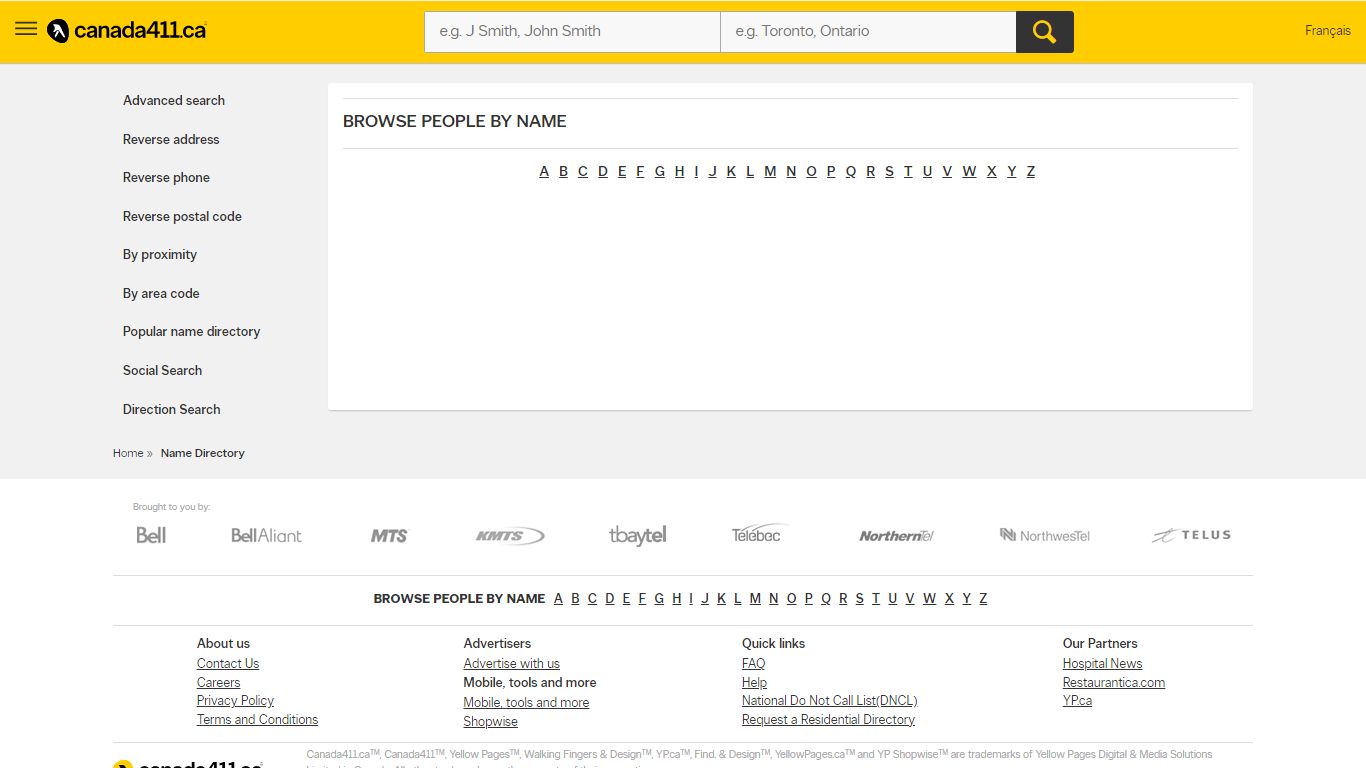
The earliest digital iterations of 411 services emerged as simple web directories, replicating the printed phone book experience online. Websites like YellowPages.com and WhitePages.com provided users with search fields to look up businesses by name or category, and individuals by name, often requiring a city and state for refinement. These platforms were essentially large, publicly accessible databases fronted by a graphical user interface (GUI), accessible via a web browser. The initial technological hurdle was digitizing vast amounts of data and developing efficient web servers and database architectures that could handle concurrent user queries.
The Rise of Online White and Yellow Pages
As internet speeds improved and web development frameworks matured, online white and yellow pages became more sophisticated. They moved beyond simple alphabetical listings to incorporate interactive maps, customer reviews, business hours, websites, and even multimedia content. The underlying technology evolved to include more complex database schemas, advanced indexing techniques for faster search results, and geographic information systems (GIS) integration to visualize business locations. Search algorithms began to incorporate basic relevance ranking, presenting more pertinent results based on search queries and user location.
Integration with Search Engines
Perhaps the most significant leap for digital 411 services was their integration into general-purpose search engines like Google and Bing. Instead of visiting a dedicated directory website, users could simply type a query like “plumbers near me” or “John Doe California” into a search engine. These search engines, with their powerful web crawlers and indexing capabilities, began to aggregate and categorize directory information from countless sources, making it a seamless part of the broader web search experience. This integration demonstrated the power of universal search and the ability of advanced algorithms to understand user intent and deliver highly specific, location-aware results.
Types of Modern 411 Search
Today’s digital 411 encompasses a diverse array of specialized search tools, each designed to retrieve specific types of information using advanced data aggregation and retrieval methodologies.
People Search Engines (White Pages Online)
These platforms specialize in locating individuals, often providing not just phone numbers but also addresses, email contacts, and sometimes even public records. Technologies involved include extensive data aggregation from public records, social media, and other online sources, employing sophisticated matching algorithms to link disparate data points to a single individual. Privacy concerns are significant in this area, prompting ongoing debates about data accessibility and control.
Business Directories (Yellow Pages Online)
Beyond basic contact information, modern business directories offer rich profiles including services offered, opening hours, customer reviews, photos, virtual tours, and even direct booking capabilities. The technology leverages user-generated content, API integrations with business management software, and advanced semantic search to help users find services tailored to their specific needs, often with real-time availability updates.
Reverse Phone Lookups
This increasingly popular service allows users to input a phone number and identify the associated individual or business. This requires access to vast proprietary databases of phone number ownership, often cross-referenced with public records and caller ID data. The underlying technology needs to be robust enough to handle frequently changing subscriber information and accurately link numbers to entities, often in real-time.
Geo-Location and Map-Based Search
Integrated with mapping services like Google Maps or Apple Maps, these tools allow users to search for businesses or services within a specific geographical radius. This functionality relies heavily on GIS technology, GPS data, and location-based algorithms to plot businesses on a map and provide turn-by-turn directions. Proximity searching and filtering by various criteria (e.g., ratings, cuisine type) are key features.
Specialized Industry Directories
Many sectors, from healthcare to legal services, have their own specialized digital directories. These platforms often incorporate professional licenses, certifications, and peer reviews, requiring specific data validation and integration with industry-specific regulatory bodies. Technologies here focus on data accuracy and the ability to verify professional credentials against official databases.
The Technology Powering 411 Lookups
The advanced capabilities of modern 411 search are a testament to significant technological advancements in data science, software engineering, and artificial intelligence.
Database Management Systems (DBMS)
The foundation of any 411 service is its DBMS. Modern systems employ relational databases (like PostgreSQL, MySQL) for structured data or NoSQL databases (like MongoDB, Cassandra) for handling vast quantities of unstructured or semi-structured data, such as reviews and social media profiles. These systems are optimized for rapid querying, scalability, and high availability, often distributed across multiple data centers.
Web Crawling and Data Aggregation
To build comprehensive directories, digital 411 services utilize sophisticated web crawlers that scour the internet for publicly available information. These crawlers use algorithms to identify and extract relevant data from websites, public records, social media, and other online sources. Data aggregation tools then cleanse, normalize, and merge this disparate data, resolving inconsistencies and duplicates to create a unified profile for each entity.
APIs and Data Integration
Application Programming Interfaces (APIs) are crucial for integrating various data sources and services. For instance, a 411 search platform might use APIs to pull real-time reviews from Yelp, map data from Google Maps, or business registration data from government databases. APIs also allow third-party developers to embed 411 search capabilities into their own applications, extending reach and utility.
Algorithmic Search and Ranking
At the heart of an effective 411 search is a powerful search algorithm. These algorithms go beyond simple keyword matching, using techniques like natural language processing (NLP) to understand the semantic meaning of queries, context, and user intent. They also employ sophisticated ranking factors—such as relevance, proximity, popularity, and recency—to present the most useful results at the top.
Machine Learning for Data Accuracy and Personalization
Machine learning (ML) plays a vital role in refining 411 search. ML models are used for entity resolution (identifying if different data points refer to the same person or business), deduplication, and anomaly detection to ensure data accuracy. Furthermore, ML algorithms analyze user behavior to personalize search results, suggesting businesses or individuals based on past searches, location history, and stated preferences, making the experience more intuitive and efficient.
Security and Privacy Considerations in 411 Search
While the convenience of modern 411 search is undeniable, it raises significant security and privacy concerns, especially given the vast amounts of personal and business data being aggregated.
Publicly Available Information vs. Privacy Concerns
Many 411 services justify their data collection by stating they only use publicly available information. However, the aggregation of multiple publicly available data points can create a comprehensive profile that individuals might not wish to be easily accessible. This raises questions about the definition of “public” in the digital age and the right to informational self-determination.
Data Breaches and Misuse
The centralized storage of extensive personal and business data makes 411 service providers attractive targets for cyberattacks. Data breaches can expose sensitive information, leading to identity theft, fraud, or targeted harassment. Misuse of data, even within legal frameworks, can also occur, such as for unsolicited marketing or background checks without proper consent.
Opt-Out Mechanisms and Data Control
Many modern 411 services offer opt-out mechanisms, allowing individuals to request the removal of their personal information from their databases. However, the effectiveness and ease of these processes vary widely, and data may reappear from other sources. Technologies for data control are evolving, with an increasing focus on user-managed privacy settings and transparent data handling policies.
Regulatory Frameworks (e.g., GDPR, CCPA)
Governments worldwide are implementing robust data protection regulations, such as the General Data Protection Regulation (GDPR) in Europe and the California Consumer Privacy Act (CCPA) in the United States. These regulations impose strict requirements on how personal data is collected, stored, processed, and shared, significantly impacting the operation of 411 search platforms and forcing them to adopt more privacy-by-design principles and stronger security protocols.
The Future of Information Retrieval
The evolution of 411 search is far from over. Future advancements will likely integrate more deeply with emerging technologies, making information retrieval even more seamless, intuitive, and predictive.
Voice Assistants and Conversational AI
The integration of 411 search with voice assistants like Amazon Alexa, Google Assistant, and Apple Siri is already prevalent. The future will see more sophisticated conversational AI, allowing users to make complex, multi-turn queries naturally and receive highly contextualized answers without ever looking at a screen. This relies on advanced natural language understanding (NLU) and generation (NLG) capabilities.
Augmented Reality Overlays
Imagine walking down a street and using your smartphone or AR glasses to “see” overlaid information about businesses as you pass them: live reviews, current deals, or even a virtual menu. This technology, requiring precise object recognition, spatial mapping, and real-time data feeds, could revolutionize how we discover local information.
Predictive Search and Proactive Information Delivery
Leveraging AI and machine learning, future 411 systems could anticipate user needs. Based on your calendar, location, and past behavior, your device might proactively suggest a nearby restaurant for lunch, or remind you of an acquaintance’s contact details just before a meeting, moving from reactive search to proactive information delivery.

Decentralized Data and Blockchain Applications
Emerging technologies like blockchain could offer new paradigms for data management in 411 services. Decentralized identity and self-sovereign data management could give individuals more direct control over their information, deciding who can access it and for how long, potentially addressing many of the current privacy concerns. This would require robust distributed ledger technologies and new consensus mechanisms for data validation and access control.
In conclusion, “what is 411 search” has transformed from a simple phone service to a complex, multi-faceted digital endeavor. It is a testament to the continuous innovation in technology, from robust database systems to advanced AI, all aimed at making the vast ocean of information increasingly accessible, intelligent, and, ideally, user-centric and secure.
aViewFromTheCave is a participant in the Amazon Services LLC Associates Program, an affiliate advertising program designed to provide a means for sites to earn advertising fees by advertising and linking to Amazon.com. Amazon, the Amazon logo, AmazonSupply, and the AmazonSupply logo are trademarks of Amazon.com, Inc. or its affiliates. As an Amazon Associate we earn affiliate commissions from qualifying purchases.