
The evolution of mobile telecommunications is defined by generational leaps, each bringing a fundamental shift in how we connect, share, and consume data. While today’s landscape is dominated by 5G and the promise of near-instantaneous connectivity, the foundation of the modern mobile internet was laid by the third generation of wireless technology, known as 3G. Introduced in the early 2000s, 3G represented a monumental departure from its predecessors, moving mobile phones from simple voice-communication devices to functional, internet-ready pocket computers.
The Technological Leap: From Voice to Data
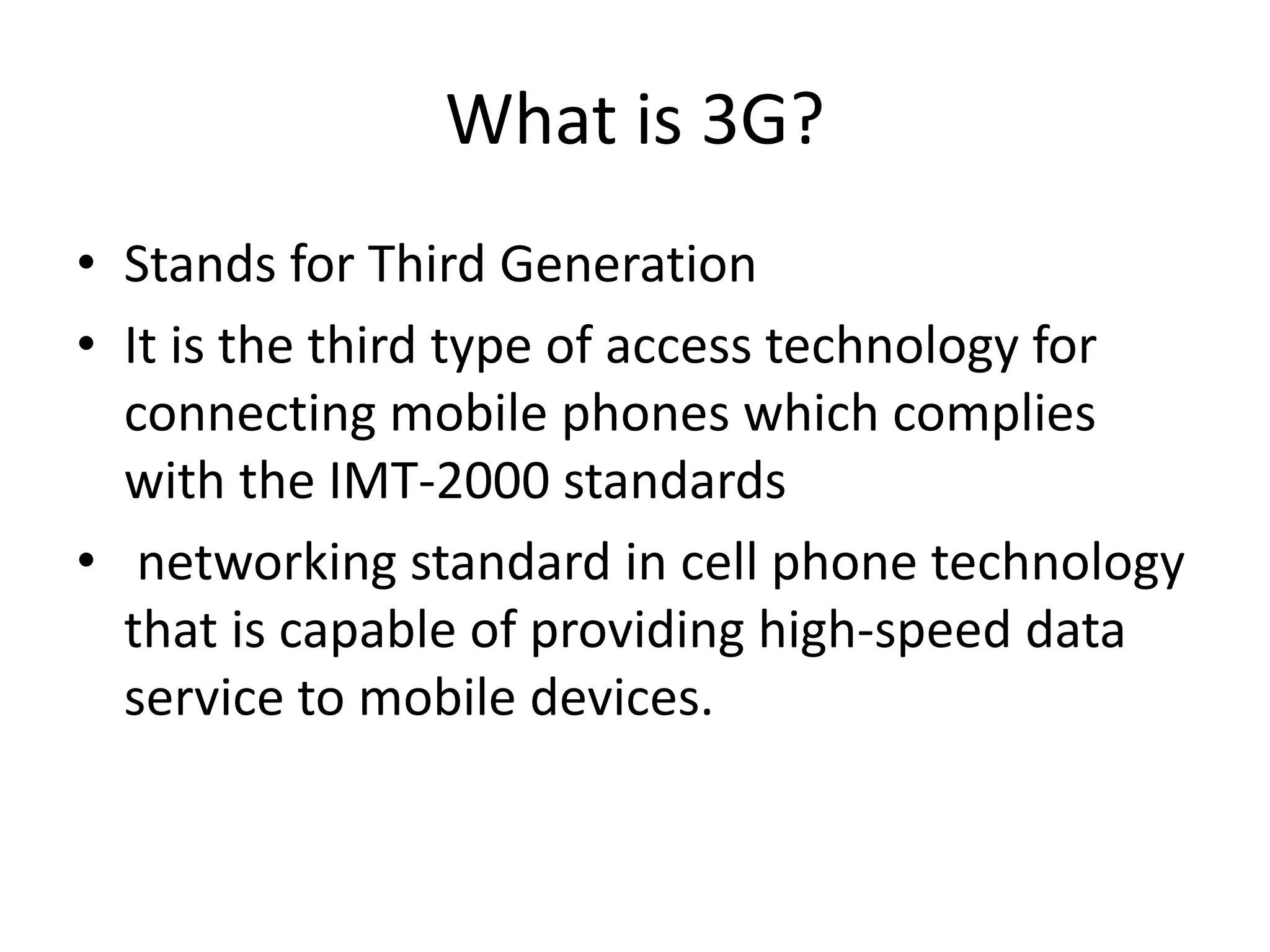
At its core, 3G (the third generation) was the first set of standards that enabled mobile devices to reliably access the internet. Before 3G, the world of mobile telecommunications was dominated by 1G (analog voice) and 2G (digital voice and simple text messaging). 2G, particularly the GSM standard, revolutionized connectivity by enabling SMS and basic circuit-switched data, but it lacked the bandwidth necessary for browsing the web.
The Shift to Packet Switching
The brilliance of 3G lay in its transition from a circuit-switched network to a packet-switched network for data. In a circuit-switched network, a dedicated line is kept open for the duration of a call. This is efficient for voice but highly inefficient for the bursty, unpredictable nature of internet traffic. Packet switching breaks data into small packets, sends them across various routes, and reassembles them at the destination. This allowed for constant, “always-on” internet connections, a prerequisite for the modern mobile web.
Key Technical Standards
3G was not a single technology but a collection of standards governed by the International Telecommunication Union (ITU) under the IMT-2000 framework. The primary standard in the United States and many parts of the world became Universal Mobile Telecommunications System (UMTS), which utilized Wideband Code Division Multiple Access (WCDMA). This technology allowed for much higher data rates by spreading information across a wider frequency band, effectively reducing interference and increasing capacity for multiple users simultaneously.
How 3G Changed the Digital Landscape
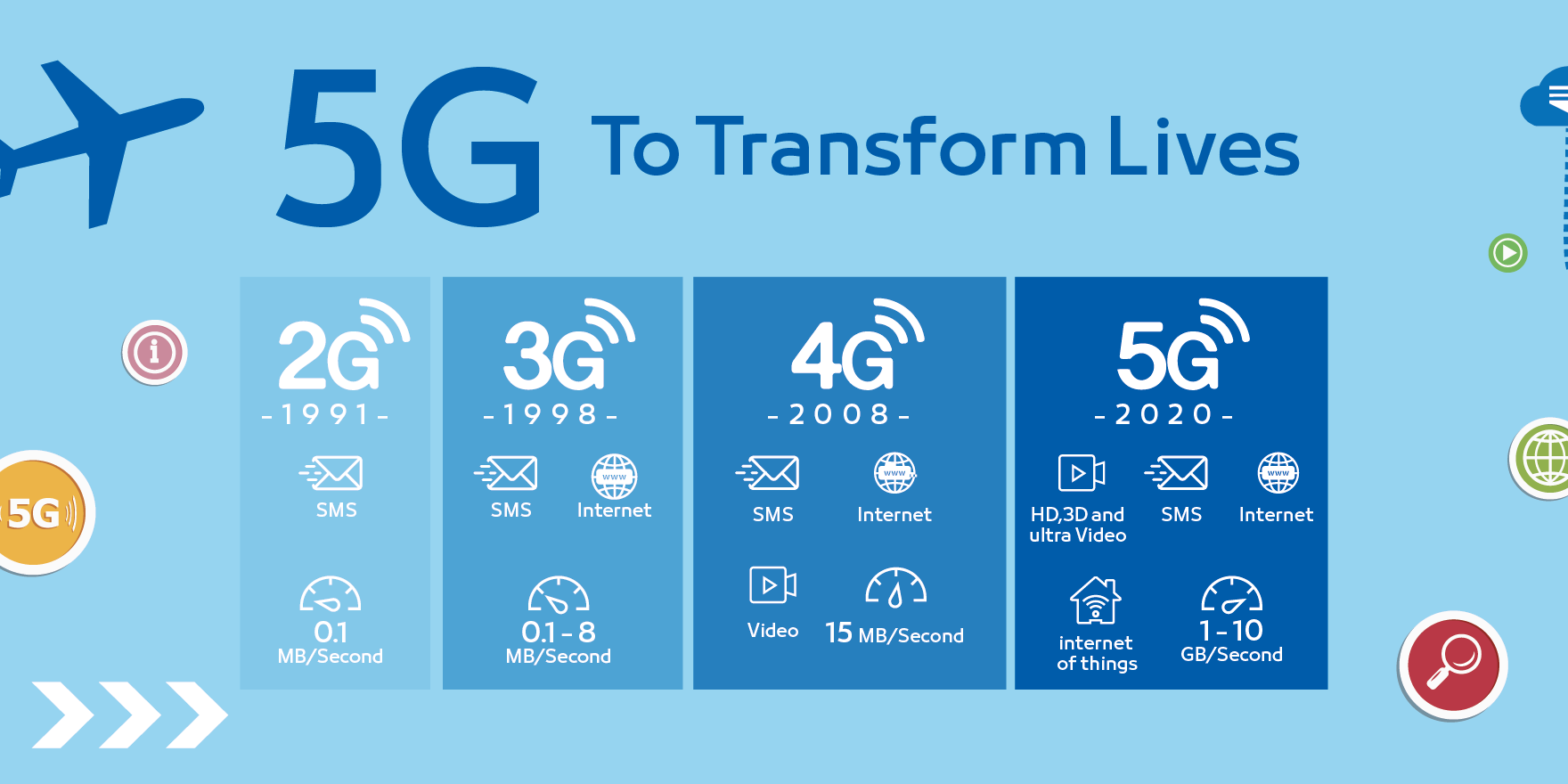
The implementation of 3G did more than just improve download speeds; it fundamentally altered consumer behavior and catalyzed the growth of the mobile application ecosystem. By providing mobile data speeds that reached between 200 Kbps and a few Mbps—vastly faster than the kilobit speeds of 2G—3G opened the door to services that were previously tethered to desktops.
The Birth of the App Economy
Before 3G, the concept of an “app store” was virtually non-existent because devices lacked the connectivity to download software updates or cloud-based content on the fly. 3G enabled the rise of early mobile browsers, email on the go, and social media connectivity. When devices like the iPhone 3G arrived in 2008, the synergy between 3G connectivity and a capable mobile interface created a platform for developers to build software that relied on cloud data. This was the spark that ignited the multi-billion dollar app industry we see today.
The Rise of Multimedia Consumption
3G introduced the ability to stream low-resolution video, download music tracks over the air, and participate in video calling for the first time. While these experiences would be considered sluggish by today’s standards, at the time, they were transformative. Consumers could now check the weather, look up movie times, or navigate using early versions of mobile GPS services, essentially turning the mobile phone into an indispensable personal assistant.
The Architecture and Frequency Spectrum
Understanding 3G requires a look at the infrastructure that supports it. Unlike later generations that shifted toward higher-frequency bands to manage data congestion, 3G operated largely in the 850 MHz, 1900 MHz, and 2100 MHz bands. These frequencies were chosen for their balance between coverage area and data throughput.
Base Stations and Coverage
The deployment of 3G required a significant infrastructure overhaul. Carriers had to install new base stations (NodeBs) and integrate them with high-capacity backhaul connections. Because lower frequencies travel further and penetrate buildings better than higher frequencies, the 3G rollout provided robust coverage in both urban and suburban environments, making it the first truly accessible mobile broadband technology.
Evolutions: HSPA and HSPA+
As the demand for data grew, the 3G standard evolved. Engineers introduced HSPA (High-Speed Packet Access) and later HSPA+, which were often marketed as “3.5G” or “4G” by carriers. These iterations refined the modulation techniques used in WCDMA, significantly increasing throughput without requiring a wholesale replacement of the underlying network hardware. HSPA+ effectively squeezed the maximum possible efficiency out of the 3G spectral allocation, providing a bridge to the true 4G LTE technology that would eventually follow.
The Legacy of 3G in a 5G World
As of the current decade, the role of 3G has shifted from being the primary vehicle for mobile traffic to being a legacy service. Most telecommunications providers globally are in the process of decommissioning their 3G networks to repurpose the precious spectrum for 4G LTE and 5G New Radio.
Sunset Periods and Spectrum Refarming
The “3G Sunset” is a necessary evolution. Spectrum is a finite resource. By shutting down 3G, carriers can refarm those frequencies to host 4G and 5G networks, which are significantly more spectrum-efficient. A 5G carrier can move vastly more data per megahertz of spectrum than a 3G carrier could, making the transition not just desirable, but essential for the sustainability of mobile networks.
Impact on IoT and Legacy Devices
The sunsetting of 3G has had a notable impact on the Internet of Things (IoT). Many early smart meters, alarm systems, and vehicle telematics units relied on 3G modems. As networks go dark, these devices often require physical hardware upgrades to remain connected. This serves as a cautionary tale in technology management: the reliance on older protocols can create significant technical debt as the underlying infrastructure inevitably evolves.
A Foundational Achievement
Despite being replaced by more robust technologies, 3G remains one of the most significant engineering achievements in history. It bridged the gap between the era of the telephone and the era of the internet-connected device. It taught the industry about network congestion, data prioritization, and the consumer appetite for mobility.
When we look at a modern device streaming 4K video or engaging in sub-millisecond gaming, it is easy to overlook 3G. However, those advancements exist only because 3G proved that a user could be truly mobile while maintaining a persistent, reliable link to the global internet. The third generation of wireless connectivity was the catalyst for the mobile revolution; it moved the internet from our desks to our pockets, and in doing so, it changed the fabric of modern society. Today, as we move into the era of the industrial internet, autonomous vehicles, and the metaverse, we recognize 3G not just as an outdated standard, but as the moment when the world finally became truly mobile.
aViewFromTheCave is a participant in the Amazon Services LLC Associates Program, an affiliate advertising program designed to provide a means for sites to earn advertising fees by advertising and linking to Amazon.com. Amazon, the Amazon logo, AmazonSupply, and the AmazonSupply logo are trademarks of Amazon.com, Inc. or its affiliates. As an Amazon Associate we earn affiliate commissions from qualifying purchases.