
In the vast, pixelated world of Old School RuneScape (OSRS), players are frequently confronted with challenges that transcend simple combat or resource gathering. Among the most frequent hurdles for those pursuing high-level rewards are the cryptic puzzles found within Clue Scrolls and specific quests. One of the most common questions that arises during these logic-based encounters is a fundamental mathematical query: “What is 3 to the power of 0?” While the answer is a simple “1,” the context of this question within the game serves as an entry point into a much deeper discussion regarding game design, algorithmic logic, and the technical infrastructure of one of the world’s most enduring MMORPGs.
Understanding the Mathematical Foundation of OSRS Challenges
Old School RuneScape relies heavily on a combination of RNG (Random Number Generation) and static logic gates to ensure that its content remains engaging and difficult to automate. When a player encounters a mathematical riddle like “3 to the power of 0,” they are interacting with the game’s attempt to bridge the gap between basic computational literacy and virtual progression.
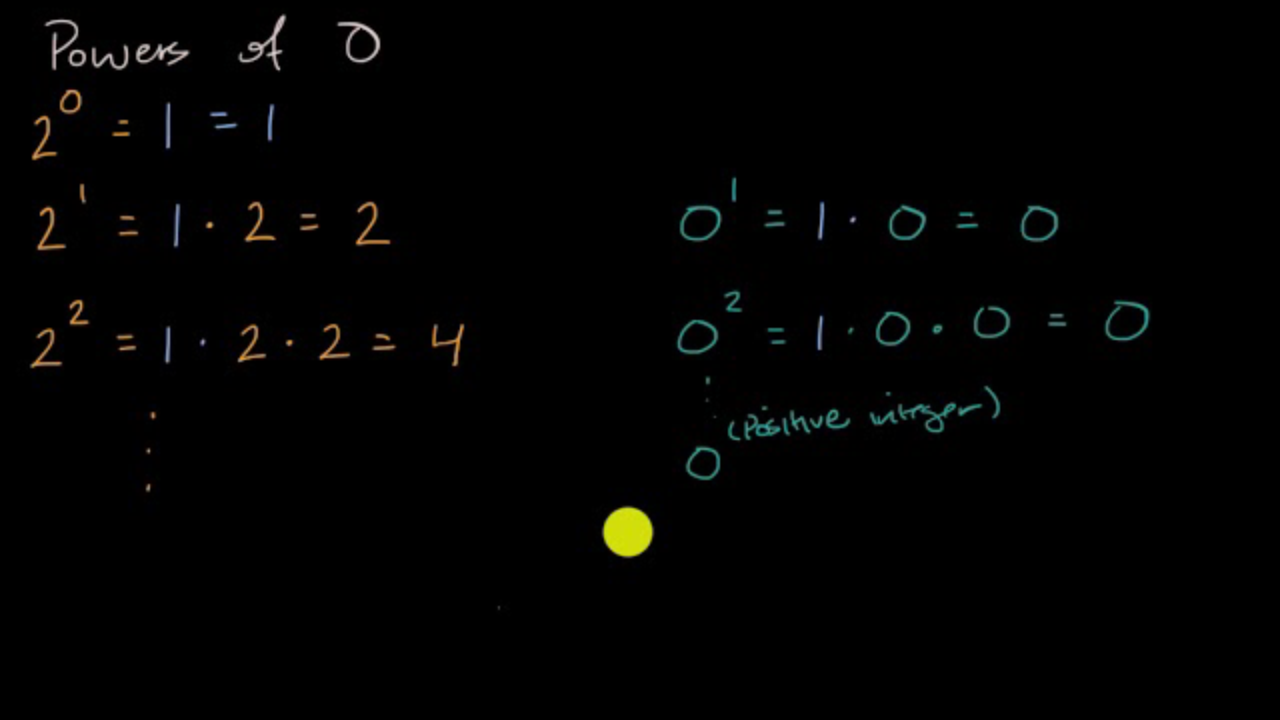
The Zero Exponent Rule in Game Logic
To understand why “1” is the answer, one must look at the mathematical law of exponents. Any non-zero number raised to the power of zero is defined as one. In the context of OSRS, this isn’t just a trivia point; it is a representation of how the game’s underlying software handles variables. In programming languages like Java—which OSRS was famously built upon—the handling of exponents and powers is a fundamental aspect of the math libraries used to calculate everything from damage output to experience gain.
In game development, logic puzzles serve as a “soft” security measure. While a bot can be programmed to recognize patterns, simple arithmetic questions require the user to interface with a text-based input system that mirrors the early days of computing. This specific question is often found in “Challenge Scrolls,” where an NPC asks a question that must be answered correctly to receive the next step of a Clue Scroll. By integrating basic algebra and exponents, the developers at Jagex force a momentary shift in the player’s cognitive load, moving from rhythmic clicking to analytical thinking.
Algorithmic Thinking in Old School RuneScape
OSRS is essentially a series of interconnected spreadsheets and timers. Every action—from the 0.6-second “tick” system to the probability of a “Purple” drop in a Raid—is governed by algorithms. The inclusion of mathematical riddles is a thematic nod to the computational nature of the game. When a player calculates their “Max Hit” or optimizes their “Ticks per hour,” they are using the same logic required to solve 3 to the power of 0.
The game’s engine, known as RuneScript, allows developers to create these triggers. RuneScript is a bespoke scripting language that simplifies complex Java operations for content designers. When an NPC poses a riddle, the engine is waiting for a specific integer input. If the input equals “1,” the logic gate opens. This binary “pass/fail” state is the backbone of digital security within the game’s questing and clue systems.
Software Tools and Plugins: Streamlining the Puzzle Experience
As OSRS has evolved, so has the technology used to play it. The transition from browser-based play to sophisticated third-party clients has changed how players approach logic puzzles. While knowing that 3 to the power of 0 is 1 is useful, modern players often rely on software to handle these calculations for them.
The Rise of the RuneLite Client
RuneLite has become the industry standard for OSRS players, offering an open-source platform that enhances the graphical and functional aspects of the game. For many, the “Tech” side of OSRS is synonymous with RuneLite’s plugin ecosystem. When a player encounters a mathematical riddle or a complex light-box puzzle, RuneLite’s “Clue Scroll” plugin often highlights the answer or provides the necessary logic in an overlay.
This raises an interesting technological debate: does the software diminish the value of the puzzle? From a software engineering perspective, these plugins are marvels of OCR (Optical Character Recognition) and screen scraping. The plugin reads the text appearing in the game’s chatbox or interface, references a database of known riddles, and displays the answer (in this case, “1”) directly on the screen. This integration of third-party software into the core gaming experience demonstrates the high level of technical proficiency within the OSRS community.
Puzzle Solver Plugins: How They Work Under the Hood
The technology behind an OSRS puzzle solver is quite complex. It typically involves:
-
State Recognition: The software identifies that a puzzle interface is open by monitoring the game’s memory or screen pixels.
-
Logic Processing: For mathematical riddles, the software uses a simple lookup table. For spatial puzzles (like the sliding tiles found in Hard Clues), it uses an A* search algorithm or a similar pathfinding heuristic to find the most efficient solution.
-
UI Overlay: Using a graphical API, the software draws the solution directly onto the game window, providing a seamless user experience.

By automating the answer to “3 to the power of 0,” these tools allow players to maintain their “efficiency”—a key metric in the modern OSRS tech stack.
The Technical Evolution of Quest and Clue Design
The riddles in OSRS are not just static relics of 2007; they are part of an evolving philosophy of game design. Over the years, Jagex has shifted from simple math questions to complex, multi-layered puzzles that require a high degree of digital literacy.
From Basic Arithmetic to Complex Scripting
Early OSRS puzzles, like the ones involving 3^0, were designed to be solved with a basic calculator or general knowledge. However, as the player base became more tech-savvy, the developers had to increase the complexity. Modern quests like “Song of the Elves” or “Desert Treasure II” feature puzzles that involve light refraction, frequency tuning, and complex pattern matching.
These newer puzzles are built using more robust scripting within the game engine. They often require the player to manipulate the game environment in real-time, which involves complex state-tracking on the server side. Every time a player moves a mirror in a light puzzle, a packet is sent to the server, processed, and the new state is broadcast back to the client. This highlights the robust networking infrastructure required to maintain a synchronous experience for thousands of players across different geographical regions.
UI/UX Considerations in Retro Game Engines
One of the greatest technical challenges for Jagex is implementing complex puzzles within a legacy UI. The OSRS interface is constrained by a fixed grid and a limited color palette. Designing a puzzle that is both challenging and legible requires a deep understanding of UX (User Experience) design. The “3 to the power of 0” riddle is successful because it fits within the chatbox—a simple, non-intrusive UI element. In contrast, larger puzzles require custom interfaces that must be optimized to ensure they don’t cause lag or “frame drops” on lower-end hardware, such as mobile devices.
Security, Rewards, and the Digital Economy of Knowledge
In the world of OSRS, knowledge is a form of currency. Understanding the mechanics of the game—including the answers to mathematical riddles—is what separates “noobs” from “pros.” This digital economy is protected by the very puzzles that players often seek to bypass.
Protecting Rare Assets through Complexity
The rewards for Clue Scrolls can range from a few gold pieces to items worth billions (like the 3rd Age Pickaxe). If these rewards were too easy to obtain, the game’s economy would suffer from hyperinflation. The puzzles act as a “Proof of Work” mechanism. Just as Bitcoin mining requires computational power to secure the network, OSRS puzzles require “brain power” (or at least the technical setup to solve them) to secure the rarity of high-tier items.
By requiring a correct answer to 3^0, the game adds a layer of friction. This friction is essential in a digital environment where automation is a constant threat. While a simple math question won’t stop a sophisticated bot, the cumulative effect of hundreds of different riddles, puzzles, and “click-intensive” tasks makes it harder for malicious actors to flood the market with rare items.
The Value of Computational Literacy in Gaming
The intersection of OSRS and technology has created a generation of players who are remarkably tech-savvy. Many players who started by looking up “what is 3 to the power of 0 OSRS” have gone on to learn about client-side scripting, database management for gear optimization, and even the basics of cybersecurity to protect their accounts.
The game acts as a sandbox for digital experimentation. Whether it’s using a spreadsheet to calculate the most cost-effective way to reach level 99 Smithing or using a plugin to solve a Master Clue, players are constantly engaging with technical tools. The answer “1” is more than just a number; it represents the first step in understanding the logical framework that governs both the virtual world of Gielinor and the digital world at large.
In conclusion, while the question “what is 3 to the power of 0” may seem like a simple detour in a player’s journey, it is a microcosm of the technical complexity that defines Old School RuneScape. From the mathematical logic of the RuneScript engine to the sophisticated third-party clients that help solve these riddles, OSRS remains a premier example of how gaming, technology, and logic intersect in the modern digital landscape. As players continue to optimize their gameplay, the tools and techniques they use will only become more advanced, further blurring the line between a simple game and a complex technical simulation.
aViewFromTheCave is a participant in the Amazon Services LLC Associates Program, an affiliate advertising program designed to provide a means for sites to earn advertising fees by advertising and linking to Amazon.com. Amazon, the Amazon logo, AmazonSupply, and the AmazonSupply logo are trademarks of Amazon.com, Inc. or its affiliates. As an Amazon Associate we earn affiliate commissions from qualifying purchases.