
At first glance, the question “what is 1/4 of 1/2?” might seem like a relic from an elementary school math class. A quick calculation reveals the answer: 1/4 multiplied by 1/2 equals 1/8. Simple enough, right? Yet, within the seemingly straightforward mechanics of this humble fraction lies a profound lesson, a cornerstone for building robust financial literacy and making astute decisions in the complex world of money.
In finance, whether personal or corporate, numbers rarely stand in isolation. They are almost always relative, representing portions, shares, ratios, and percentages of a larger whole. Understanding “what is 1/4 of 1/2” is not merely about arithmetic; it’s about grasping the fundamental concept of proportional thinking. It’s about recognizing how segments of an existing portion contribute to or subtract from your financial picture. From allocating your personal budget and diversifying your investment portfolio to dissecting corporate balance sheets and understanding revenue shares, the ability to intuitively work with and interpret these fractional relationships is an non-negotiable skill for anyone aiming for financial mastery.
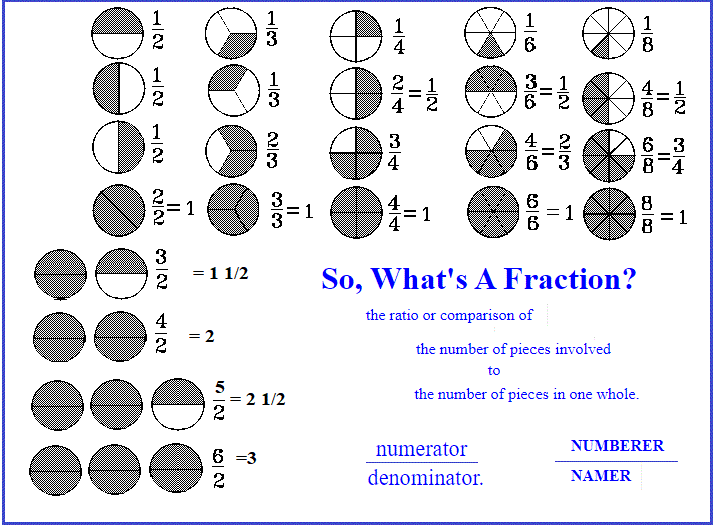
This article delves into why this seemingly simple mathematical operation is a powerful lens through which to view and manage your finances. We will explore how proportional thinking underpins key financial strategies, empowers better decision-making, and ultimately contributes to building and preserving wealth.
The Foundational Math: Why 1/8 Matters More Than You Think
The journey to financial fluency often begins with mastering the basics. The problem “1/4 of 1/2” serves as an excellent entry point, illustrating how multiple fractional operations combine to define a smaller, yet significant, component of a larger whole. This principle is not just academic; it mirrors countless real-world financial scenarios.
Deconstructing “Of”: Multiplication in Financial Contexts
In mathematics, the word “of” when used with fractions or percentages signifies multiplication. When we ask for “1/4 of 1/2,” we are literally asking to multiply these two fractions:
1/4 × 1/2 = 1/8
This operation is incredibly common in finance. Consider these examples:
-
Budgeting: “I allocate 1/2 of my discretionary income to entertainment, and 1/4 of that specific portion goes to dining out.” Here, dining out represents 1/8 of your total discretionary income.
-
Investing: “I want to put 1/2 of my investment capital into growth stocks, and 1/4 of that allocation specifically into tech startups.” In this case, your tech startup investment is 1/8 of your total investment capital.
-
Business: “Our marketing budget is 1/2 of our total operational expenses, and 1/4 of that marketing budget is dedicated to digital advertising.” Digital advertising here consumes 1/8 of the operational expenses.
Understanding that “of” implies multiplication allows for precise calculations and clear comprehension of how different financial layers interact and break down. It prevents overspending or misallocation by defining strict boundaries within larger categories.
From Fractions to Percentages: The Universal Language of Finance
While fractions are precise, percentages often provide a more intuitive and universally understood language in the financial world. Converting 1/8 to a decimal and then to a percentage helps to bridge this gap:
-
1/8 = 0.125
-
0.125 × 100 = 12.5%
So, 1/4 of 1/2 is equivalent to 12.5% of the whole. This conversion is crucial because financial products, interest rates, growth forecasts, and economic indicators are predominantly expressed as percentages.
-
“Your investment fund returned 12.5% last year.”
-
“The discount offered is 12.5% off the original price.”
-
“Your allocation to emerging markets should not exceed 12.5% of your portfolio.”
Being comfortable interchanging fractions, decimals, and percentages is a hallmark of financial literacy. It allows individuals to quickly compare financial products, evaluate risks, and understand the real impact of financial decisions, translating abstract numbers into tangible proportions of their wealth or debt.
Budgeting and Personal Finance: Allocating Your Financial Pie
At the heart of sound personal finance lies budgeting—the intentional allocation of your hard-earned money. Proportional thinking, exemplified by “1/4 of 1/2,” is not just useful but essential for creating a budget that reflects your priorities and goals.
The 50/30/20 Rule and Beyond: Dividing Your Income
A popular budgeting guideline, the 50/30/20 rule, is a prime example of proportional allocation: 50% for needs, 30% for wants, and 20% for savings and debt repayment. But life is rarely so neat, and within these broad categories, further fractional divisions are often necessary.
Imagine you adhere to the 50/30/20 rule. Your “wants” budget is 30% of your net income. Now, consider the “1/4 of 1/2” scenario:
-
You decide to spend 1/2 of your “wants” budget on leisure activities (e.g., dining, entertainment).
-
Of that leisure budget, you dedicate 1/4 specifically to trying new restaurants.
In this instance, trying new restaurants accounts for 1/8 of your entire “wants” budget, or a mere (1/8 of 30% =) 3.75% of your total net income. Without proportional thinking, it’s easy for these smaller, nested allocations to become ambiguous, leading to overspending in one area and underfunding in another. This method ensures that even the smallest slices of your financial pie are accounted for, allowing for conscious spending decisions rather than reactive ones.
Managing Debt and Savings: The Power of Incremental Contributions
The principle of “1/4 of 1/2” also demonstrates the power of incremental contributions to debt repayment and savings growth. Small, consistent allocations can lead to significant outcomes over time, particularly when coupled with compound interest.
-
Debt Repayment: Suppose you receive an unexpected bonus. You decide to dedicate 1/2 of this bonus to accelerating debt repayment. Then, to target high-interest debt aggressively, you allocate 1/4 of that debt payment portion specifically to your highest-APR credit card. That 1/8 of your bonus, though seemingly small, can make a meaningful dent in your interest charges and repayment timeline.
-
Savings Goals: Conversely, if you allocate 1/2 of your monthly savings to a long-term goal (e.g., retirement), and 1/4 of that to a more immediate, high-priority goal (e.g., a down payment on a house), you are effectively directing 1/8 of your total monthly savings toward that immediate goal. Consistency in these fractional allocations is key to meeting diverse financial objectives. This strategy ensures that even smaller, secondary goals receive dedicated funding without derailing primary objectives.
Investing and Wealth Building: Understanding Proportional Growth and Risk
In the realm of investing, proportional thinking moves beyond simple allocation to encompass risk management, diversification, and the calculation of returns. Fractions and percentages are the bedrock of investment strategy.
Portfolio Diversification: Spreading Your Bets with Fractions

Diversification is the golden rule of investing, designed to mitigate risk by spreading investments across various asset classes, industries, and geographies. This is fundamentally an exercise in proportional allocation. An investor might decide:
-
1/2 of their portfolio should be in equities (stocks).
-
1/4 in fixed income (bonds).
-
1/4 in alternative assets (e.g., real estate, commodities).
Now, let’s apply our “1/4 of 1/2” concept further within this structure:
- Within the equity portion (1/2 of your total portfolio), you might decide that 1/4 of that should be allocated to international stocks.
Therefore, international stocks would constitute 1/8 (12.5%) of your entire investment portfolio. This layered approach to allocation, where portions are further subdivided, is critical for achieving granular control over diversification and risk exposure. It allows investors to construct a portfolio that is both broadly diversified and specifically tailored to their risk tolerance and financial goals.
Calculating Returns and Equity Stakes: The Real-World Impact
Investment returns are almost always expressed as a percentage of the initial investment, making fractional understanding essential. A “1/8” return, or 12.5%, can represent significant growth when applied to a large principal.
Furthermore, in venture capital, private equity, and startup ecosystems, understanding equity stakes is paramount. When an angel investor acquires 1/8 of a budding startup in exchange for seed funding, they own 12.5% of the company. Subsequent funding rounds often involve selling further fractions of the company, diluting earlier stakes proportionally. Grasping these fractional ownership dynamics is crucial for founders, investors, and employees alike when evaluating the value of their shares and the impact of future financing.
Risk Management: Quantifying Downside with Proportions
Proportional thinking is also vital for managing investment risk. Investors often set limits on how much of their portfolio they are willing to expose to a single asset or a particular volatile sector.
-
“I will not allocate more than 1/8 (12.5%) of my total portfolio to any single cryptocurrency.”
-
“If any stock in my portfolio drops by 1/4 (25%) from its purchase price, I will consider selling it to limit further losses.”
These fractional thresholds act as guardrails, preventing catastrophic losses and ensuring that no single investment can disproportionately harm the overall portfolio. By quantifying risk in these proportional terms, investors can make more disciplined and emotionally detached decisions.
Business Finance and Operational Efficiency: Fractional Optimization
Beyond personal finance and investing, the principles embedded in “1/4 of 1/2” permeate the operational and strategic decisions within businesses of all sizes. Companies constantly analyze and divide resources, profits, and responsibilities using fractional relationships to optimize performance and ensure fair distribution.
Revenue Share and Profit Allocation: Dividing the Pie Among Stakeholders
In the business world, revenues and profits are frequently distributed proportionally among various stakeholders.
-
Partnerships: A common arrangement might see a founding partner taking 1/2 of the profits, with two other partners splitting the remaining 1/2 equally, meaning each takes 1/4 of the total profit. This ensures clear financial boundaries and expectations.
-
Royalty Agreements: Authors, artists, and inventors often receive royalties, which are a fraction of the sales generated by their work (e.g., 1/8 of net sales goes to the creator).
-
Employee Profit-Sharing: Some companies allocate a fraction of their annual profits to an employee profit-sharing pool, which is then further divided among employees based on various factors.
These fractional distributions are legally binding and form the backbone of many commercial agreements, underscoring the importance of precise proportional understanding.
Resource Allocation and Budgeting: Making Every Fraction Count
Just as individuals budget their income, businesses meticulously allocate their capital across departments, projects, and strategic initiatives.
-
A company might allocate 1/2 of its annual budget to core operations, 1/4 to research and development (R&D), and the remaining 1/4 to marketing and sales.
-
Within the R&D budget (1/4 of the total), 1/2 might be dedicated to developing new product features, and 1/4 of that specific portion could be assigned to a proof-of-concept for a revolutionary new technology. This means that revolutionary tech project receives 1/8 of the entire R&D budget.
This granular allocation ensures that limited resources are deployed efficiently to achieve strategic objectives. Fractional improvements in operational efficiency—such as reducing waste by 1/8 or shortening a production cycle by 1/4—can cumulatively lead to significant cost savings and increased profitability.
Beyond the Numbers: The Mindset of Proportional Financial Literacy
Ultimately, the ability to effortlessly answer “what is 1/4 of 1/2” and apply that thinking to complex financial scenarios cultivates more than just mathematical aptitude; it fosters a critical financial mindset.
Developing an Intuition for Financial Proportions
True financial literacy goes beyond merely performing calculations; it involves developing an intuition for financial proportions. It’s about being able to quickly estimate what “a small fraction” or “a significant portion” truly means in monetary terms. When you hear about an investment returning 12.5%, your mind should immediately link it to 1/8, providing a tangible sense of its magnitude relative to your principal. This intuitive grasp allows for quicker, more confident financial decision-making and a deeper understanding of financial news and market dynamics.
The Power of Small Changes: Compounding Fractions over Time
Perhaps the most profound lesson from our initial problem is the power of combining fractions, even small ones, to achieve a larger outcome. Just as 1/4 of 1/2 results in a smaller fraction (1/8), the consistent application of small financial changes can lead to monumental results.
-
Consistently saving an extra 1/8 of your discretionary income each month.
-
Dedicating 1/4 of any unexpected windfall to accelerate debt repayment.
-
Even marginally improving operational efficiency by a small fraction each quarter.
These seemingly minor proportional adjustments, when compounded over time, can significantly impact your net worth, reduce your debt burden, or boost a company’s bottom line. Financial mastery isn’t always about grand gestures or massive windfalls; often, it’s about the diligent and insightful management of fractions that accumulate into a significant whole.

Conclusion
The question “what is 1/4 of 1/2?” provides far more than a simple numerical answer; it offers a foundational lesson in proportional thinking that is indispensable in the world of money. From crafting a precise personal budget and strategically diversifying investment portfolios to optimizing business operations and distributing profits, the ability to understand and manipulate fractional relationships is a non-negotiable skill.
Mastering this concept allows you to move beyond superficial numbers, gaining a deeper, more intuitive understanding of how different components of your financial life interrelate. It empowers you to make informed decisions about resource allocation, risk management, and wealth creation. In an environment where every percentage point, every fraction of ownership, and every segment of a budget can have a profound impact, embracing the humble fraction is not just good math—it’s intelligent finance. Financial success is often built on the careful and conscious management of these intricate proportional relationships, ensuring that every financial piece contributes effectively to the larger picture of your economic well-being.
aViewFromTheCave is a participant in the Amazon Services LLC Associates Program, an affiliate advertising program designed to provide a means for sites to earn advertising fees by advertising and linking to Amazon.com. Amazon, the Amazon logo, AmazonSupply, and the AmazonSupply logo are trademarks of Amazon.com, Inc. or its affiliates. As an Amazon Associate we earn affiliate commissions from qualifying purchases.