
Understanding the Federal Poverty Level (FPL) and its various percentage thresholds is fundamental for navigating the landscape of personal finance, especially when seeking or providing financial assistance. Among these thresholds, 133% of the FPL stands out as a critical benchmark, serving as a gateway to essential services and support programs for millions of Americans. It’s not merely an arbitrary number but a carefully defined eligibility criterion that dictates access to vital resources, impacting household budgets, healthcare decisions, and overall financial stability.
Deconstructing the Federal Poverty Level (FPL)
The Federal Poverty Level (FPL) is a measure of income issued annually by the Department of Health and Human Services (HHS). It is used to determine eligibility for many federal programs and benefits. Essentially, it represents the minimum amount of gross income a family needs to afford basic necessities like food, shelter, and clothing.
The Foundation of Poverty Measurement
The FPL was first established in the 1960s based on a formula developed by Mollie Orshansky of the Social Security Administration. Her methodology calculated the cost of a minimum food diet for families of various sizes and then multiplied that cost by three, based on the assumption that food costs represented about one-third of a household’s total expenses. While the original methodology has faced scrutiny and calls for modernization over the decades, it remains the foundational framework, adjusted annually for inflation.
How the FPL is Determined Annually
Each year, the HHS issues poverty guidelines, which are a simplified version of the federal poverty thresholds used for administrative purposes, such as determining program eligibility. These guidelines are updated to reflect inflation as measured by the Consumer Price Index (CPI). The FPL varies significantly based on household size, with larger families having higher poverty thresholds. For instance, the poverty guideline for a single individual will be considerably lower than that for a family of four. This annual adjustment is crucial as it attempts to keep pace with the rising cost of living, though its effectiveness in fully capturing actual living expenses is often debated.
The Impact of Household Size
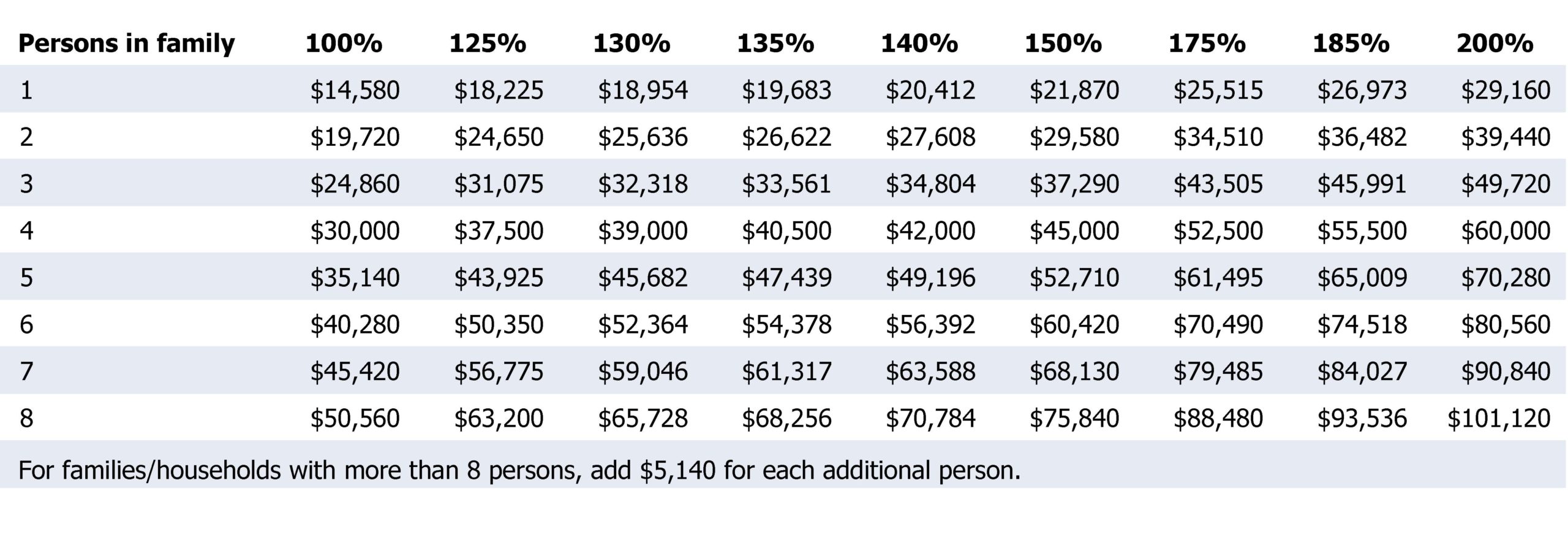
The number of people in a household directly dictates its FPL threshold. A single individual might have an FPL of around $14,580 in 2023, while a family of four might see their FPL closer to $30,000. This tiered structure acknowledges that larger families generally incur greater expenses for basic needs. When discussing 133% of the FPL, it’s therefore imperative to specify the household size, as the actual dollar amount corresponding to this percentage will differ significantly. A common mistake is to apply a single dollar figure to all households, overlooking this critical variable. Financial planning and eligibility assessments must always account for the specific household composition.
The Critical Threshold: Why 133% Matters
The specific percentage of 133% of the FPL holds immense significance because it acts as a primary income eligibility criterion for a multitude of crucial federal and state assistance programs. Crossing this threshold can mean the difference between accessing vital support and being deemed ineligible.
Gateway to Vital Assistance Programs
Many federal programs are designed with income limits tied directly to the FPL. While some programs set their limit at 100% or 150% of the FPL, 133% is a particularly common and important benchmark, especially in healthcare. For individuals and families earning incomes at or below this level, access to a safety net of financial, nutritional, and housing assistance becomes a possibility, significantly impacting their ability to meet basic needs and improve their financial well-being. This threshold aims to capture not just those in deep poverty, but also the working poor who, despite employment, struggle to make ends meet.
Medicaid Eligibility and Healthcare Access
Perhaps the most prominent example of 133% FPL’s importance is its role in Medicaid eligibility, particularly in states that have expanded their Medicaid programs under the Affordable Care Act (ACA). In these expansion states, adults with incomes up to 133% of the FPL are typically eligible for Medicaid. Due to a statutory “income disregard” of an additional 5% of the FPL, the effective income eligibility level for Medicaid expansion is actually 138% of the FPL. This provision has dramatically expanded healthcare access for millions of low-income individuals who previously fell into a “coverage gap” – earning too much for traditional Medicaid but too little for ACA marketplace subsidies. For these households, Medicaid provides comprehensive health coverage, alleviating the immense financial burden of medical costs and allowing them to address health issues without fear of bankruptcy.
Beyond Healthcare: Other Federal and State Benefits
While Medicaid is a prime example, the 133% FPL threshold, or similar percentages, also plays a role in eligibility for other critical programs. These can include:

- Children’s Health Insurance Program (CHIP): Many states offer CHIP to children and pregnant women with incomes above Medicaid eligibility but below higher FPL percentages, often including thresholds around 133% or higher.
- Subsidies for Health Insurance Marketplaces: Individuals and families with incomes between 100% and 400% of the FPL are generally eligible for premium tax credits (subsidies) to help them afford health insurance purchased through the ACA marketplaces. While not directly 133% FPL, it highlights how percentages of the FPL are used to scale financial aid for healthcare.
- Other State-Specific Programs: Many states and local governments mirror federal guidelines, setting their own assistance program eligibility at or around 133% of the FPL for services ranging from energy assistance to child care subsidies, and even certain educational grants. These programs are vital for complementing federal aid and providing a comprehensive support system.
Financial Implications and Planning at 133% FPL
For individuals and families hovering around 133% of the FPL, understanding the financial implications is paramount. Effective budgeting, strategic planning, and awareness of the “benefit cliff” are crucial for maintaining stability and progressing towards greater financial independence.
Understanding the “Benefit Cliff” Phenomenon
The “benefit cliff” is a significant challenge for those near the FPL thresholds. It describes a situation where a modest increase in earned income can lead to a disproportionately large decrease or outright loss of public assistance benefits. For example, an individual whose income rises slightly above 133% of the FPL might lose access to Medicaid, and the cost of replacing that healthcare coverage could far exceed their small income gain. This creates a disincentive to increase earnings, as it can inadvertently worsen a household’s net financial position. Navigating the benefit cliff requires careful financial planning, often involving calculations to understand the net impact of income changes on both earnings and benefits.
Budgeting and Resource Maximization
For households operating at or below 133% of the FPL, every dollar counts. Effective budgeting becomes not just a recommendation but a necessity. This involves:
- Tracking Income and Expenses: Meticulously recording all incoming funds and outgoing expenditures to identify spending patterns and areas for reduction.
- Prioritizing Needs: Differentiating between essential needs (housing, food, utilities, healthcare) and discretionary wants, ensuring that core necessities are always covered first.
- Leveraging Available Benefits: Actively applying for and utilizing all eligible federal, state, and local programs. This includes not just healthcare but also food assistance (SNAP), housing subsidies, energy assistance programs, and free or reduced-cost school meal programs. Many financial assistance tools and calculators are available online to help identify eligibility.
- Building an Emergency Fund (However Small): Even a modest emergency fund can provide a buffer against unexpected expenses, preventing a financial crisis from escalating.
Strategies for Sustainable Financial Progress
Moving beyond 133% of the FPL without falling victim to the benefit cliff requires strategic thinking. This might include:
- “Stacking” Benefits: Some programs are designed to complement each other without immediate sharp cutoffs, allowing for a more gradual transition. Understanding these interplays is key.
- Targeted Skill Development: Investing in education or vocational training that leads to higher-paying jobs with good benefits can be a long-term strategy, but careful planning is needed during the transition period.
- Exploring Work Supports: Some states offer “work supports” or programs that provide transitional benefits, allowing individuals to gradually phase out of assistance as their income rises, mitigating the impact of the benefit cliff.
- Financial Counseling: Seeking guidance from non-profit financial counselors or credit counseling agencies can provide personalized strategies for managing money, debt, and planning for upward mobility while navigating benefit thresholds.
Case Studies and Real-World Scenarios
To fully appreciate the impact of the 133% FPL threshold, examining real-world scenarios helps illuminate the challenges and opportunities it presents for diverse populations.
A Single Parent’s Journey to Stability
Consider a single mother with two children, earning an income that places her just below 133% of the FPL. In a Medicaid expansion state, she and her children would likely qualify for comprehensive health insurance through Medicaid. This alleviates the immense financial pressure of healthcare costs, allowing her to focus her limited income on rent, food, and childcare. If she were to receive a raise that pushed her income slightly above this threshold, she could potentially lose her Medicaid benefits. Suddenly, she would face the daunting task of finding affordable health insurance, potentially paying hundreds of dollars in premiums each month, which could negate the financial benefit of her raise, illustrating the harsh reality of the benefit cliff.
The Elderly and Disabled: Navigating Complex Benefits
For the elderly and individuals with disabilities, FPL thresholds are particularly significant. Many rely on a combination of Social Security, Supplemental Security Income (SSI), and various other state and federal programs. Eligibility for programs like Medicaid or Medicare Savings Programs (which help pay for Medicare premiums and deductibles) often hinges on income limits tied to 133% of the FPL or similar percentages. Navigating these complex benefit structures requires meticulous record-keeping and often professional assistance to ensure they maximize their aid without inadvertently exceeding income limits and losing crucial support.

The Working Poor: Bridging the Gap
Millions of Americans are classified as the “working poor,” individuals who are employed but whose earnings are insufficient to meet basic needs without assistance. For these households, being at or below 133% of the FPL means access to programs like SNAP (food stamps) or housing assistance. These programs act as a crucial bridge, allowing them to remain employed while supplementing their income to achieve a basic standard of living. Without these thresholds and the programs they unlock, many more working families would face severe hardship, homelessness, and food insecurity, underscoring the vital role these financial benchmarks play in the broader economic safety net.
aViewFromTheCave is a participant in the Amazon Services LLC Associates Program, an affiliate advertising program designed to provide a means for sites to earn advertising fees by advertising and linking to Amazon.com. Amazon, the Amazon logo, AmazonSupply, and the AmazonSupply logo are trademarks of Amazon.com, Inc. or its affiliates. As an Amazon Associate we earn affiliate commissions from qualifying purchases.