
The simple question, “What is 13:00?”, might seem trivial on the surface. However, delving into its meaning reveals a fascinating interplay of historical evolution, standardized systems, and its pervasive influence in our modern, technology-driven lives. This exploration will focus on how the concept of 13:00 is fundamentally a technological construct, impacting everything from software design and digital communication to the efficiency of global systems.
The Foundation: From 24-Hour Cycles to Standardized Time
Before the digital age, the way we told time was far more localized and less standardized. The concept of “13:00” as a distinct point in a 24-hour cycle is a direct product of human ingenuity and the need for greater precision and coordination.

Historical Context: The Evolution of the 24-Hour Clock
While sundials and water clocks marked the passage of time, the division of the day into 24 hours has ancient roots. The Egyptians are often credited with dividing the day into 12 hours and the night into 12 hours, influenced by their astronomical observations and the number of fingers on their hands. However, this was not a universally applied system, and the length of these “hours” could vary significantly with the seasons.
The development of mechanical clocks in the late Middle Ages began to standardize the length of an hour. As these clocks became more accurate and widespread, the need for a consistent way to denote time across different regions and for various purposes grew. The 24-hour clock, also known as military time, gained traction precisely because it eliminated the ambiguity of the 12-hour AM/PM system. No longer did one have to wonder if “3 o’clock” referred to morning or afternoon.
The 24-Hour System: Clarity and Precision
The 24-hour clock, where 13:00 represents 1 PM, offers a straightforward, unambiguous representation of time. Each hour of the day is assigned a unique number from 00 to 23. This system is particularly advantageous in contexts where precision is paramount and misinterpretation could have serious consequences. From scheduling flights and train departures to coordinating military operations, the 24-hour format ensures that everyone is operating on the same temporal framework.
The adoption of the 24-hour clock is a testament to the human drive for order and efficiency, a precursor to the highly synchronized digital world we inhabit today. It’s a system designed to reduce cognitive load and streamline communication, foundational principles that underpin much of modern technology.
The Digital Realm: 13:00 as Code and Convention
In the realm of technology, the 24-hour clock and, by extension, 13:00, are not just markers of time but fundamental components of software, data structures, and communication protocols. The digital world operates on a logic that thrives on precision and avoids ambiguity.
Programming and Data Representation
When developers write code, they often work with time in a 24-hour format. This is because it simplifies calculations and comparisons. Representing time as a single integer value from 0 to 23 for the hour is far more efficient than dealing with AM/PM designations. For instance, calculating the duration between two events or checking if a certain time falls within a defined window is straightforward with 24-hour timestamps.
Databases and APIs that store or transmit time-sensitive information typically use ISO 8601, an international standard for representing dates and times. This standard heavily favors the 24-hour format, often combined with seconds and milliseconds, and includes timezone information to avoid further confusion. Therefore, when a system displays “13:00,” it’s not just a visual representation; it’s a data point with a clear, unambiguous meaning within the digital ecosystem.
User Interfaces and User Experience
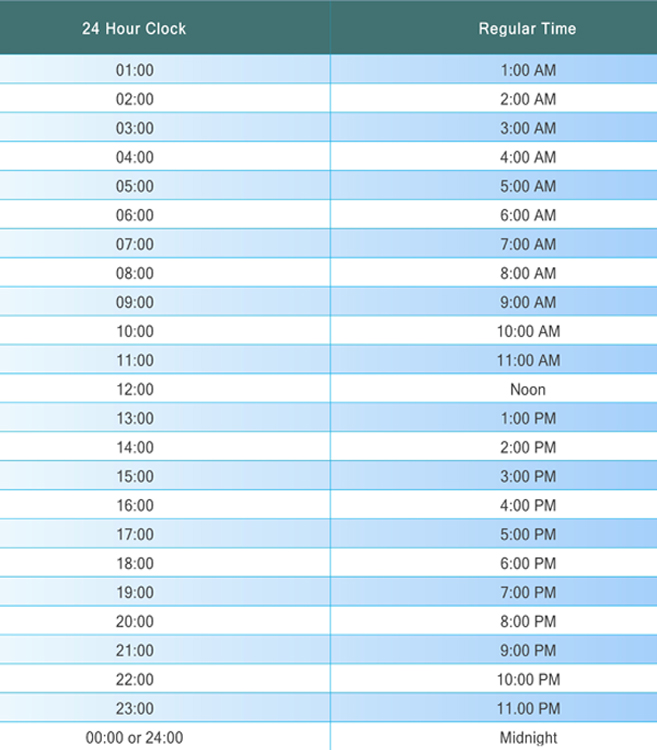
Even for end-users, the 24-hour clock has become increasingly common in digital interfaces. Many operating systems, smartphones, and applications allow users to choose their preferred time format. However, the prevalence of the 24-hour option in global software suggests its inherent advantages for a diverse user base. It simplifies the design of time pickers, calendar views, and scheduling tools, ensuring consistency across different locales.
Consider a calendar application. If it natively supports 24-hour time, the user can easily select 13:00 for an appointment without any mental gymnastics. This seamless integration of timekeeping into user interfaces is a critical aspect of good user experience (UX), and the 24-hour format plays a significant role in achieving that.
Global Synchronization: 13:00 in Networks and Communications
The interconnected nature of our world, facilitated by technology, necessitates precise synchronization. 13:00, as a component of standardized time, is crucial for the smooth functioning of global communication networks and distributed systems.
Network Protocols and Synchronization
In computer networking, precise time synchronization is vital. Protocols like Network Time Protocol (NTP) are used to synchronize the clocks of computers over a network. This is essential for logging events accurately, ensuring the integrity of transactions, and enabling distributed applications to function correctly. When systems communicate, their timestamps must be consistent. The 24-hour format simplifies these synchronization processes by providing a universal reference point.
Imagine a global financial transaction. The precise sequence of events, recorded with timestamps, is critical for auditing and dispute resolution. If different systems used ambiguous AM/PM notations, coordinating these events and ensuring their order would be a monumental challenge. The clarity of 13:00, within a standardized time zone, is a silent enabler of this global financial infrastructure.
Communication Systems and Scheduling
Beyond technical networks, communication systems rely on time. From the scheduling of broadcast signals to the coordination of video conferencing, accurate timekeeping is paramount. The 24-hour clock removes potential confusion when individuals in different parts of the world are trying to connect or coordinate activities. A meeting scheduled for 13:00 UTC is universally understood, whereas “1 PM” could lead to misinterpretations if time zones are not explicitly considered.
The ability to set and adhere to a shared understanding of time, represented by points like 13:00, is a cornerstone of modern technological collaboration. It allows for seamless interaction across geographical boundaries, fostering efficiency and reducing errors in communication-dependent operations.
The Future of Timekeeping: Precision and Ubiquity
As technology continues to advance, the need for even greater precision and seamless integration of timekeeping will only grow. The concept of 13:00, as part of the 24-hour system, is well-positioned to remain a fundamental element of this evolution.
Beyond Simple Time: Epochs and Time Series Data
In many technological contexts, time is not just a marker but a continuous stream of data. Epoch time, the number of seconds that have elapsed since January 1, 1970, is a common way to represent time in many programming languages and systems. This numerical representation is directly derived from the continuous progression of time, where 13:00 on any given day fits into this larger numerical sequence.
Time series data, which records observations or measurements over a period of time, relies heavily on accurate timestamps. Whether it’s tracking sensor readings, financial market fluctuations, or website traffic, each data point is associated with a precise moment, often represented in a 24-hour format with high precision (milliseconds, microseconds). The ability to analyze trends, detect anomalies, and make predictions from this data hinges on the integrity of these timestamps, where 13:00 is a recognizable segment within these data streams.

The Enduring Value of Standardization
The question “What is 13:00?” ultimately points to the power of human-created systems for order and efficiency. The 24-hour clock, and its representation of 1 PM as 13:00, is a prime example of a technological solution that has become deeply embedded in our digital infrastructure. Its clarity, precision, and global applicability make it an indispensable tool in a world increasingly reliant on synchronized, accurate, and unambiguous temporal information. As technology evolves, the fundamental principles of standardized timekeeping, embodied by concepts like 13:00, will continue to be essential for enabling seamless global interaction and driving innovation.
aViewFromTheCave is a participant in the Amazon Services LLC Associates Program, an affiliate advertising program designed to provide a means for sites to earn advertising fees by advertising and linking to Amazon.com. Amazon, the Amazon logo, AmazonSupply, and the AmazonSupply logo are trademarks of Amazon.com, Inc. or its affiliates. As an Amazon Associate we earn affiliate commissions from qualifying purchases.