
In the realm of elementary mathematics, the question “What is 1/3 of 6?” yields a simple, unequivocal answer: two. However, when we transition from the classroom to the high-stakes environment of personal finance, corporate strategy, and global investing, this basic fraction takes on a much more profound significance. In finance, ratios are the primary language of health, growth, and sustainability. Understanding how to divide resources—whether they are represented by a single digit like six or a multi-billion dollar portfolio—is the cornerstone of strategic wealth management.
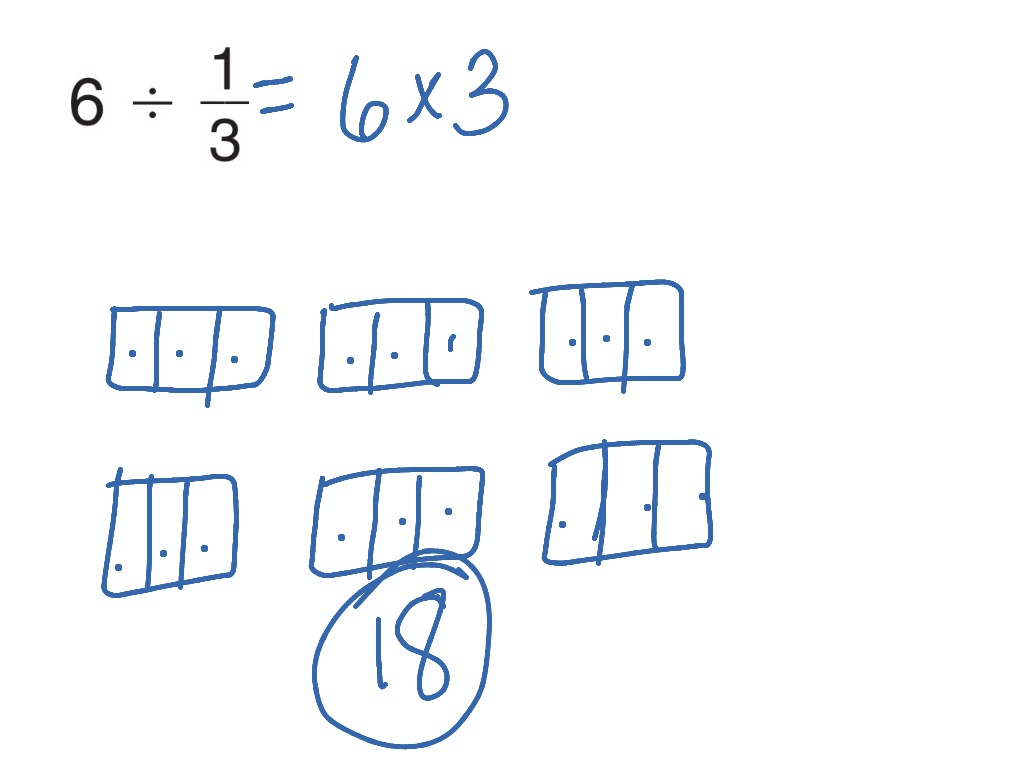
The “one-third” benchmark, or the rule of thirds, has long been a guiding principle for savvy investors and business leaders. It represents a balance between stability, growth, and liquidity. By examining the mathematical simplicity of 1/3 of 6, we can uncover deep insights into how to structure capital, manage risk, and optimize returns in an increasingly complex financial landscape.
The Power of Ratios: Why 1/3 is the Golden Mean of Financial Planning
Ratios are more than just numbers; they are indicators of proportion and priority. When an investor looks at 1/3 of a total sum, they are looking at a cornerstone—a significant enough portion to move the needle, but small enough to leave room for diversification. In the context of “6” representing a total pool of resources, the resulting “2” acts as a modular unit that can be deployed across various asset classes.
The Logic of Modular Allocation
Financial planning often fails because it becomes too granular or too broad. Using simple fractions like thirds allows for a “modular” approach to capital. If you view your total net worth as six distinct units, allocating two units (one-third) to a specific strategy provides a clear visual and logical framework. This prevents the “paralysis by analysis” that often occurs when dealing with complex percentages like 16.5% or 22.8%. By simplifying the target to 1/3, investors can maintain a macro-level perspective on their financial health.
From Arithmetic to Tactical Analysis
In professional finance, 1/3 of 6 is often the starting point for “margin of safety” calculations. If a business expects a certain level of revenue (6), and its fixed costs represent 1/3 of that revenue (2), the remaining 2/3 (4) provides a buffer for variable costs, taxes, and net profit. Analyzing these proportions allows a CFO or a personal investor to determine how much pressure a financial system can withstand before it breaks. It is the fundamental exercise of determining what portion of the whole is committed and what portion is discretionary.
The Business of Thirds: Managing Margins and Operational Efficiency
For entrepreneurs and corporate managers, the ratio of 1/3 is a vital benchmark for operational efficiency. Many successful business models are built on the “Rule of Three,” where revenue is strategically divided into three equal parts to ensure the longevity of the enterprise. When a company earns 6 units of revenue, the allocation of those 2-unit segments (the thirds) determines the company’s trajectory.
The 33% Rule in Cost of Goods Sold (COGS)
In industries ranging from software development to food service, the 33% rule is a standard for profitability. If the price of a product is 6, and the cost to produce it is 2 (1/3 of the total), the business maintains a healthy 66% gross margin. This ratio is critical because it leaves enough “room” for the other 2/3 of the revenue to cover administrative overhead, marketing, and, ultimately, net profit. When the cost of production exceeds 1/3, the business begins to lose its ability to scale, as the remaining capital is spread too thin across necessary operational expenses.
Scaling Revenue Models Using Fractional Benchmarks
As a business grows from 6 units of revenue to 600,000, the ratio remains the anchor. Scalability is the process of maintaining these proportions while increasing the absolute numbers. Strategic leaders use the 1/3 of 6 logic to determine hiring cycles and R&D investment. For instance, if 1/3 of a company’s budget is dedicated to innovation, it ensures that while the present operations are funded (the other 2/3), the future of the company is also being secured. This fractional thinking prevents “short-termism,” where a company spends its entire “6” on immediate needs, leaving nothing for the next cycle of growth.
Personal Wealth Architecture: The Three-Bucket Approach

For the individual investor, the “1/3 of 6” concept is best applied through the “Three-Bucket” strategy. This approach categorizes wealth into three distinct areas: Liquidity, Growth, and Lifestyle. By treating your total financial life as a set of six units, you can ensure that each bucket receives its necessary two-unit share.
The Liquidity Bucket: Short-Term Security
The first 1/3 (or 2 units out of 6) should be dedicated to liquidity. This includes emergency funds, high-yield savings accounts, and short-term cash equivalents. This bucket is not designed for high returns; it is designed for accessibility and peace of mind. In financial planning, having 1/3 of your accessible capital in liquid form protects you against market downturns, allowing you to avoid selling long-term assets at a loss when a crisis occurs. It is the “safety net” that allows the other 2/3 to work harder in more volatile environments.
The Growth Bucket: Long-Term Compounding
The second 1/3 of your wealth is the growth engine. This is where capital is deployed into equities, real estate, or business ventures. Here, the goal is compounding. By dedicating a clean 1/3 of your resources to growth, you ensure that you are participating in the appreciation of the global economy. This segment of the “6” is meant to be left untouched for decades, benefiting from the mathematical miracle of compound interest.
The Lifestyle and Legacy Bucket
The final 1/3 is often the most neglected in traditional finance: the Lifestyle and Legacy bucket. This represents the capital used to enhance your quality of life, pay down a primary residence, or fund philanthropic goals. Wealth is a tool, not just a scoreboard. By consciously allocating 1/3 of your financial energy to your current well-being and future legacy, you create a balanced life that avoids the “frugality trap,” where one accumulates wealth but never learns how to utilize it effectively.
Risk Mitigation through Fractional Diversification
Diversification is the only “free lunch” in finance, and the “1/3 of 6” logic provides a simplified path to achieving it. Modern Portfolio Theory (MPT) suggests that an optimized portfolio should be spread across non-correlated assets. While complex algorithms can find the exact decimal point for these allocations, the 1/3 rule offers a robust alternative for the average investor.
Balancing Volatility with the Rule of Three
Imagine an investment portfolio worth $6 million. A strategic allocation might place $2 million (1/3) in aggressive growth stocks, $2 million in stable fixed-income bonds, and $2 million in alternative assets like real estate or gold. This 1/3-1/3-1/3 split is a classic “all-weather” strategy. If the stock market (growth) drops, the bonds (stability) and alternatives (inflation hedges) act as a counterbalance. You are never fully exposed to the failure of a single asset class. The simplicity of dividing 6 into 3 equal parts ensures that no single market event can wipe out your entire “6.”
Real-World Applications in Portfolio Rebalancing
Portfolio rebalancing is the process of bringing your assets back to their original target ratios. If your growth bucket grows so much that it now represents 1/2 of your total instead of 1/3, you sell the excess and move it back into the underperforming buckets. This disciplined “sell high, buy low” behavior is naturally baked into the 1/3 of 6 framework. It forces the investor to harvest gains and reinvest in areas of value, ensuring the long-term health of the total 6 units.
The Future of Fractional Investing: Micro-Equity and Accessibility
The digital age has changed the way we view “1/3 of 6.” In the past, owning 1/3 of a high-value asset—like a commercial building or a rare piece of art—was reserved for the ultra-wealthy. Today, fractional investing platforms have democratized these ratios.
Democratizing High-Value Assets
Through tokenization and fractional shares, an investor with only $6 can now own $2 worth (1/3) of a blue-chip stock or a diversified real estate fund. This shift is revolutionary for personal finance because it allows the same sophisticated “1/3 of 6” strategies used by hedge funds to be applied by retail investors. The ability to break assets down into smaller, fractional units means that diversification is no longer a matter of how much money you have, but how you choose to allocate the portions you do have.
Conclusion: The Strategic Mindset
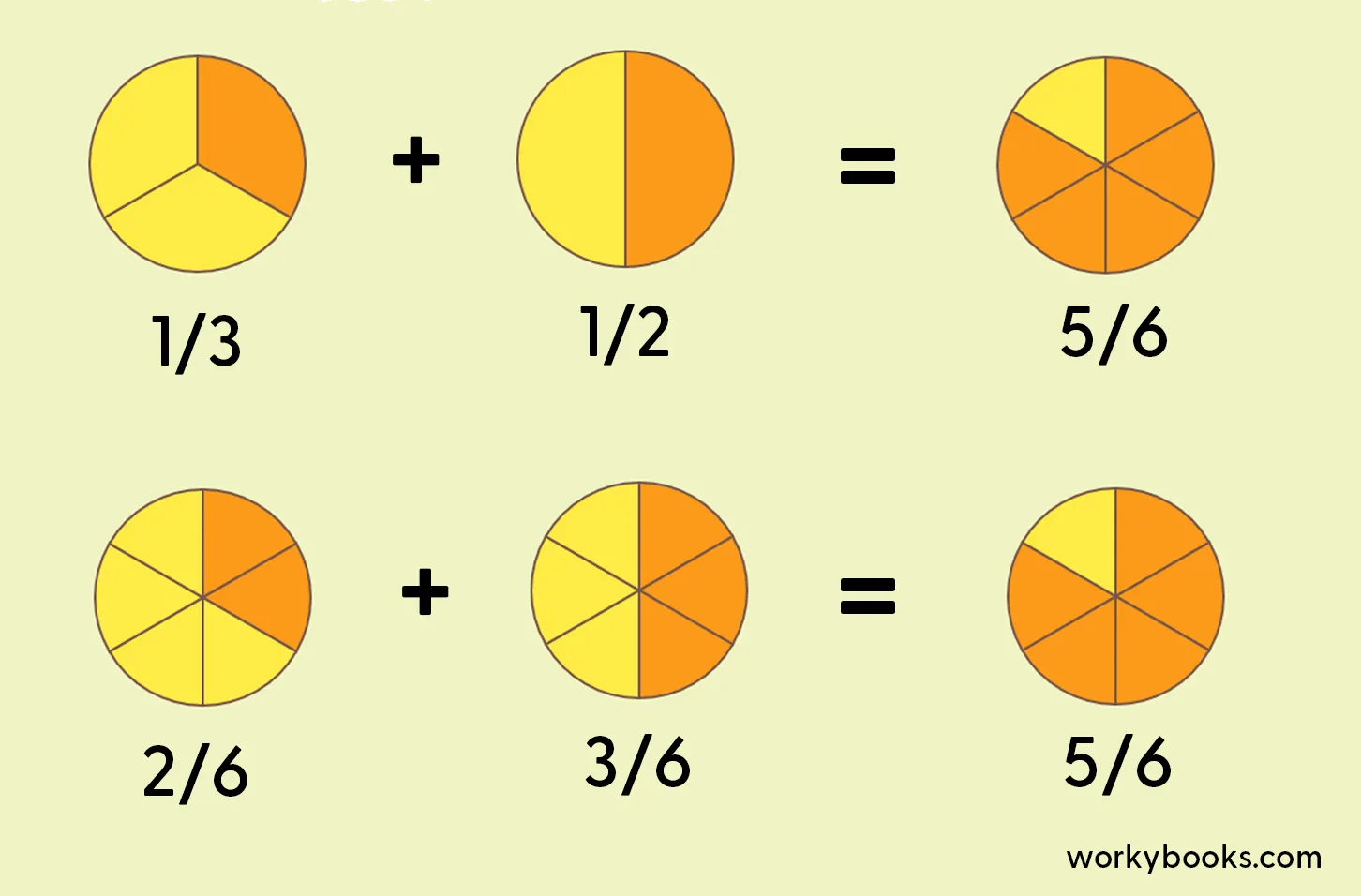
Ultimately, “What is 1/3 of 6?” is a question about perspective. In the world of money, the answer is not just “2”; the answer is “Strategy.” It is about understanding that every whole is made of parts, and how we choose to divide those parts determines our financial destiny. Whether you are managing a household budget, a small business, or a multi-asset investment portfolio, the logic of fractional allocation remains the most effective tool for building sustainable, long-term wealth. By mastering the ratios of your resources today, you ensure the abundance of your “6” tomorrow.
aViewFromTheCave is a participant in the Amazon Services LLC Associates Program, an affiliate advertising program designed to provide a means for sites to earn advertising fees by advertising and linking to Amazon.com. Amazon, the Amazon logo, AmazonSupply, and the AmazonSupply logo are trademarks of Amazon.com, Inc. or its affiliates. As an Amazon Associate we earn affiliate commissions from qualifying purchases.