
Radio communication remains the backbone of law enforcement, emergency services, and private security operations. Despite the rise of digital encrypted messaging, the speed and clarity of radio remain unparalleled in high-pressure situations. Central to this system is the use of standardized codes. Among these, the “10-code” system—also known as the Ten-Code or Ten-Signals—was developed to provide concise, intelligible communication over radio channels prone to static and interference. Understanding what these codes mean, specifically the 10-32, is essential for anyone interested in the tactical logistics of professional emergency management and the evolution of communication technology.

The Origins and Evolution of the 10-Code System
The 10-code system was established in 1937 by Charles “Charlie” Hopper, the communications director for the Indiana State Police. At the time, radio technology was still in its infancy; bandwidth was limited, transmission quality was poor, and the latency in radio bursts made long, descriptive sentences difficult to transmit clearly.
The primary genius of the 10-code system lies in the use of the number “10” as a signal prefix. This was a deliberate technical decision. The very first syllable of a transmission is often cut off or garbled due to the delay in the transmitter’s signal “squelch” opening. By starting every transmission with “10,” radio operators ensured that even if the “10” was clipped, the actual informational signal—the number following the prefix—would be heard clearly.
Why Codes Are Still Relevant in the Digital Age
While modern digital radio systems (such as P25 or TETRA) have eliminated the analog static of the 1930s, the speed of code-based communication remains relevant. In an active emergency, brevity is a safety feature. Providing an alphanumeric code allows dispatchers and officers to exchange complex status updates in a fraction of a second, leaving the radio channel open for other critical traffic.
The Problem of Non-Standardization
One of the most significant challenges with 10-codes is that they are not globally standardized. While many codes, such as “10-4” (acknowledgment), have reached universal status, others vary significantly by jurisdiction. A code used by the Los Angeles Police Department might mean something entirely different to the New York Police Department or a rural sheriff’s office in the Midwest. This discrepancy is why many modern public safety agencies have moved toward “Plain Language” (or “Clear Speech”) protocols to avoid life-threatening misunderstandings during inter-agency cooperation.
Defining 10-32: The Specifics of the Signal
The designation “10-32” is one of the more common signals utilized within the law enforcement lexicon, though its exact definition is highly contingent on the specific agency’s manual. In the majority of jurisdictions across the United States, 10-32 is officially defined as “Subject/Person with a Gun” or “Man with a Gun.”
The Operational Context of 10-32
When a dispatcher broadcasts “10-32,” it is treated as a high-priority call. It implies that an individual has been spotted displaying, brandishing, or carrying a firearm in a manner that causes public alarm or poses a direct threat to safety. The utility of this code is to communicate the nature of the threat immediately without providing a long-form explanation that could tie up the frequency.
Sub-Classifications of the 10-32 Call
Dispatchers often append additional information to the 10-32 signal to provide tactical awareness to responding units. These additions usually include:
- Description: The physical appearance of the subject, clothing, and any distinguishing features.
- Location: The exact geographic coordinates or landmarks near the subject.
- Intent: Any observed actions, such as pointing the weapon or threatening bystanders.
- Weapon Type: Whether the dispatch has information on whether the firearm is a handgun, rifle, or long gun.
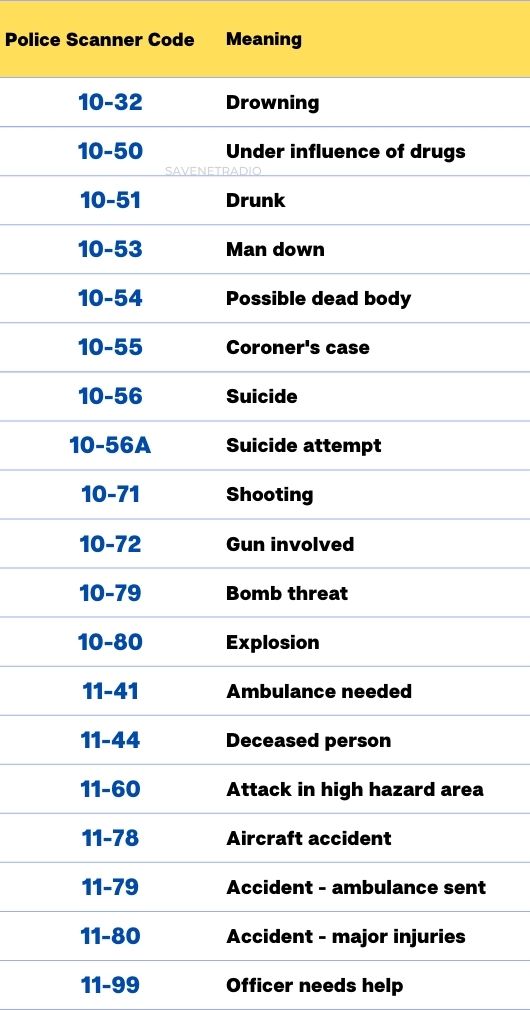
Because 10-32 involves a firearm, it inherently changes the tactical posture of every officer receiving the transmission. Responding units will typically transition to an “officer safety” mode, approaching with heightened caution, staging at a distance, or waiting for backup before making contact.
Variability and Regional Differences
As noted previously, the 10-code system is not a federally mandated set of rules. This lack of centralized regulation is a historical artifact of local governance, where each department developed its own internal “shorthand.” Consequently, 10-32 does not always mean a firearm.
When 10-32 Means Something Else
In some administrative or specialized units, 10-32 may be repurposed for internal operational needs. Examples include:
- Traffic Enforcement: In a few jurisdictions, 10-32 is used to signal a “Breathalyzer test” or an “Intoxicated Subject.”
- Medical Services: Some EMS squads have used similar numerical codes to indicate “Suicidal Subject” or “Mental Health Crisis,” though this is becoming less common as medical dispatchers prioritize descriptive, plain language to ensure proper triage.
- Maintenance: In private security or corporate campus settings, codes are often customized to fit the facility. A 10-32 in a corporate office building might simply mean “Keypad access requested” or “Security escort needed for high-value asset.”
The Move Toward Plain Language
Due to the confusion caused by these regional variations—especially during catastrophic events like natural disasters or large-scale active shooter scenarios where multiple agencies from different counties must work together—the Federal Emergency Management Agency (FEMA) and the Department of Homeland Security have strongly advocated for the “Plain Language” mandate. Under this system, dispatchers are encouraged to drop codes entirely and say, “Subject with a firearm” instead of “10-32.” This reduces the cognitive load on officers and prevents errors during high-stress inter-agency operations.
The Future of Tactical Communication
The study of 10-codes like 10-32 provides a window into the evolution of emergency management. As technology advances, the reliance on short-burst codes is being supplemented by digital data systems.
Integrated Dispatch Software
Modern dispatch centers now utilize Computer-Aided Dispatch (CAD) systems that allow information to be pushed to mobile data terminals (MDTs) inside patrol vehicles. A dispatcher can transmit a 10-32 call while simultaneously sending a digital file to the officer’s screen containing a map, the suspect’s history, and photos. The radio code now serves as a “trigger” to alert the officer to look at their digital display, rather than serving as the sole source of information.
The Role of Encryption and Security
Digital communication has also ushered in an era of enhanced security. Traditional analog radios were easily monitored by scanners; today’s encrypted P25 digital radios prevent the public or potential suspects from listening to police movements. While the codes remain, the medium through which they are transmitted is now a high-tech, multi-layered digital network. This ensures that when a 10-32 is called, the tactical surprise remains with the responding officers.

Maintaining Institutional Memory
Despite the shift toward digital, there is still a deep-seated tradition in keeping the 10-code system alive. It serves as a form of professional language that fosters a sense of camaraderie and efficiency among veteran personnel. Many officers feel that saying “10-32” carries more urgency than a plain-language sentence, as it has been ingrained through years of academy training and field experience.
Ultimately, while the technical definition of 10-32 remains tethered to the concept of an armed subject, its real-world application is a testament to the need for clear, rapid, and standardized communication in the face of danger. Whether agencies choose to stick with the traditional 10-code shorthand or adopt the modern plain-language approach, the goal remains the same: the safe, efficient, and precise coordination of resources to protect the public. Understanding these codes is not just about learning a list of definitions; it is about appreciating the complex logistical framework that supports modern public safety.
aViewFromTheCave is a participant in the Amazon Services LLC Associates Program, an affiliate advertising program designed to provide a means for sites to earn advertising fees by advertising and linking to Amazon.com. Amazon, the Amazon logo, AmazonSupply, and the AmazonSupply logo are trademarks of Amazon.com, Inc. or its affiliates. As an Amazon Associate we earn affiliate commissions from qualifying purchases.