
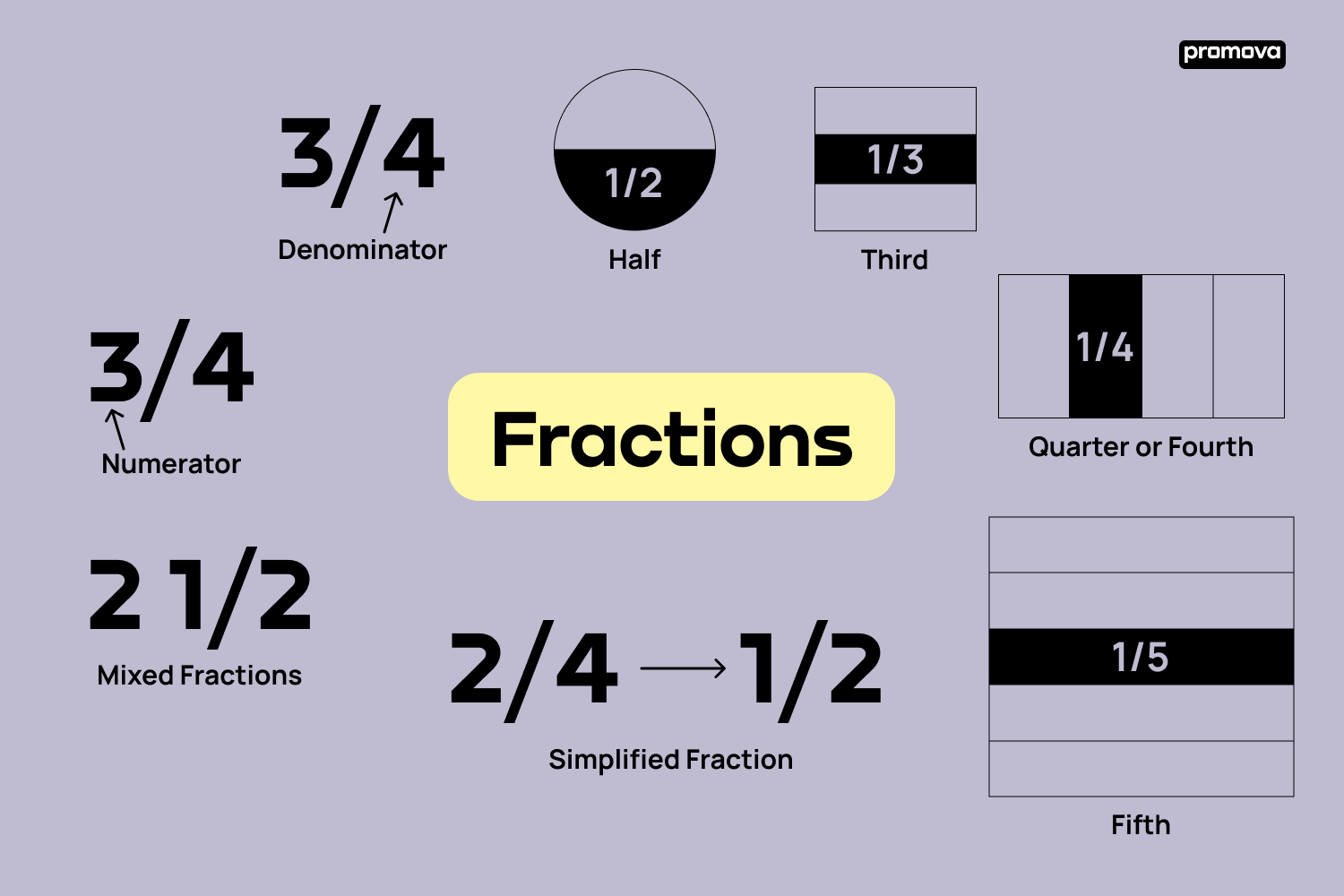
At first glance, “what is 1 and 1/3?” seems like a question pulled directly from an elementary school mathematics textbook. It’s a fundamental concept: a mixed number representing one whole unit and an additional third of a unit. In its simplest form, it converts to an improper fraction (4/3) or a repeating decimal (1.333…). However, within the intricate world of finance, such seemingly simple fractions, particularly 1 and 1/3, carry a surprising weight and profound significance. They underscore the critical importance of precision, nuance, and granular understanding that separates amateur financial management from sophisticated strategizing.
Beyond basic arithmetic, 1 and 1/3, or any fractional value, represents a critical element in various financial computations, from investment returns and interest rates to economic indicators and business valuations. It signifies the non-binary nature of financial reality, where outcomes are rarely perfect whole numbers and where even a third of a percentage point can translate into millions, if not billions, over time. This article will delve into the multifaceted role of 1 and 1/3 within the financial landscape, demonstrating why understanding and accurately interpreting such fractional values is indispensable for investors, businesses, and individuals alike. We’ll explore how these seemingly small components drive complex financial decisions, shape economic policy, and ultimately impact our wealth.
The Foundational Understanding: Deciphering “1 and 1/3” in a Financial Context
To appreciate the financial implications of 1 and 1/3, we must first firmly grasp its mathematical identity and then swiftly pivot to why this precision matters beyond the classroom. It’s not just about knowing what the number is, but understanding what it represents in a world where every decimal point can influence fortunes.
From Mixed Number to Decimal Equivalence: The Numerical Identity
Mathematically, 1 and 1/3 is a mixed number. It signifies a quantity that is greater than one but less than two. When converted to an improper fraction, it becomes 4/3. As a decimal, it’s approximately 1.333…, where the ‘3’ repeats infinitely. This seemingly simple conversion holds the key to its use in financial models and calculations. Financial software and spreadsheets typically work with decimals, so understanding this conversion is a prerequisite for accurate input and analysis.
However, the infinite nature of 1/3 as a decimal (0.333…) introduces a critical point of discussion: rounding. In everyday life, rounding 0.333… to 0.33 might seem innocuous. In finance, it can be catastrophic. The choice to round, or the precision with which a financial system handles repeating decimals, can lead to discrepancies that compound over time, altering final figures significantly. This brings us to the core issue of financial precision.
The Imperative of Precision: Why Fractions Aren’t Just for School
In finance, precision is paramount. Unlike general estimation, where “about a third” might suffice, financial transactions, calculations, and reporting demand exactitude. A difference of 1/3 of a percentage point in an interest rate on a large loan, a growth rate for a major economy, or a valuation multiple for a multi-billion dollar company can equate to millions or even billions of dollars.
Consider an investment growing by 1 and 1/3% versus 1.3% or 1.33%. Over 30 years with significant capital, the seemingly minor difference between 1.33% and 1.33333…% can lead to a substantial divergence in the final investment value. This is why financial instruments often quote rates to several decimal places, and sophisticated financial models are designed to minimize rounding errors. “1 and 1/3” therefore serves as a potent reminder that financial literacy extends beyond whole numbers, demanding an appreciation for the subtle yet powerful impact of fractional values. It emphasizes that every fraction, no matter how small, contributes to the overall financial picture and must be accounted for with meticulous care.
1 and 1/3 in Investment and Portfolio Management
The realm of investment is where the practical application of 1 and 1/3 truly comes alive. Modern investing is far more granular than simply buying and selling whole units. Fractional values permeate how assets are owned, how returns are calculated, and how portfolios are diversified.
Fractional Shares and Modern Investing
Traditionally, an investor would purchase whole shares of a company’s stock. However, with the rise of commission-free trading and micro-investing platforms, fractional shares have become commonplace. This means an investor can own, for example, 1 and 1/3 shares of a company, rather than being restricted to just one or two whole shares.
-
Accessibility: Fractional shares democratize investing, allowing individuals with smaller capital to invest in high-priced stocks they otherwise couldn’t afford. Owning “1 and 1/3” of a $1,000 share (i.e., $1333.33 worth) is now feasible.
-
Diversification: Investors can spread their capital across a wider range of companies by buying fractional amounts, leading to more diversified portfolios even with limited funds.
-
Dividend Reinvestment Plans (DRIPs): When dividends are reinvested, they often purchase fractional shares. If a dividend payment is $50 and a share costs $30, the reinvestment would buy 1 and 2/3 shares (or 1.666… shares). If it bought $40 worth, it would be 1 and 1/3 shares. This automatically adds fractional units to holdings over time.
-
Stock Splits: While less common for such precise fractions, a reverse stock split could theoretically result in a shareholder owning 1 and 1/3 shares if their original holdings don’t perfectly align with the split ratio.
Understanding that portfolios can legitimately hold 1 and 1/3 shares of a company is crucial for accurate valuation and tracking of investment performance.
Valuing Assets and Returns: Beyond Whole Numbers
When assessing the performance of investments or the value of assets, fractions frequently appear, and 1 and 1/3 can represent various metrics.
-
Growth Rates: “The portfolio grew by 1 and 1/3 percent this quarter.” This precise figure, 1.333…%, isn’t rounded down to 1% or up to 1.5%. It reflects the exact growth needed for accurate performance comparison and future projections. Over many quarters or years, this precise fractional growth rate will yield a significantly different cumulative return than a rounded figure.
-
Yields and Multiples: A dividend yield or an earnings yield might be 1 and 1/3 percent. A price-to-earnings (P/E) ratio could theoretically be 1 and 1/3 times earnings, though these are typically expressed as decimals (1.33x). These fractional values provide a granular view of an asset’s profitability or valuation relative to its price, crucial for analysts making buy/sell recommendations.
-
Volatility: Measures of market volatility or risk might express an asset’s standard deviation as 1 and 1/3 percentage points, indicating a specific level of price fluctuation.
Ignoring the 1/3 in these contexts would lead to an incomplete or misleading picture of an investment’s true performance or valuation, potentially resulting in suboptimal financial decisions.
Economic Indicators and Business Finance
On a macro scale, and within corporate financial management, 1 and 1/3 (or similar precise fractions) are not just common but essential for understanding trends, making forecasts, and reporting performance. These fractional values provide the critical detail required to assess the health of economies and individual businesses.
GDP Growth and Inflation Rates: A Fractional View
Government agencies and economic institutions frequently report key economic indicators with a high degree of precision, where fractions play a vital role.
-
Gross Domestic Product (GDP) Growth: Economic growth rates are often reported down to tenths or even hundredths of a percentage point. A country’s economy growing by “1 and 1/3 percent” (1.33%) for a quarter is a common example. This isn’t rounded to 1% or 1.5% because even these small fractional differences can signal significant shifts in economic momentum, influencing policy decisions by central banks and governments. A 1/3 percentage point difference in GDP for a trillion-dollar economy represents billions of dollars in output.
-
Inflation Rates: Similarly, inflation figures, which measure the rate at which prices for goods and services are rising, are often quoted with fractional precision. An inflation rate of “1 and 1/3 percent” directly impacts purchasing power and wage negotiations. Central banks closely monitor these fractional changes to determine whether to adjust interest rates, highlighting the profound impact of what appears to be a minor fraction.
-
Unemployment Rates: While often reported to one decimal place, even unemployment figures can be understood in terms of their fractional movements, where a decline of 1/3 of a percentage point can represent hundreds of thousands of jobs gained or lost, significantly impacting public sentiment and policy.
Business Performance Metrics and Projections
Within corporate finance, precise fractional values are indispensable for internal analysis, external reporting, and strategic planning.
-
Profit Margins: A company’s net profit margin might be “1 and 1/3 percent,” indicating that for every dollar of revenue, 1.33 cents remain as profit. Comparing this precise figure against industry benchmarks or historical performance is crucial for assessing financial health.
-
Market Share: If a company captures an additional “1 and 1/3 percent” of the market, this represents a tangible increase in revenue and influence, often the result of significant strategic efforts.
-
Operational Efficiency: Metrics like “reduction in waste by 1 and 1/3 times previous levels” or “efficiency improvement of 1 and 1/3 percent” provide concrete, measurable targets and outcomes for operational teams.
-
Financial Projections: When forecasting future revenue, costs, or capital expenditures, analysts often build models that incorporate growth rates or efficiency gains expressed as precise fractions. Rounding these figures prematurely could lead to significantly inaccurate long-term projections, impacting investor confidence and strategic decision-making.
In essence, 1 and 1/3, or any similar fraction, in business finance, provides the granularity required for accurate performance measurement, realistic forecasting, and robust strategic development.
Personal Finance and Debt Management
Even at the individual level, the concept of 1 and 1/3 holds relevance, particularly when dealing with interest rates, savings goals, and budgeting. While we might not typically express personal finance metrics in mixed numbers, the underlying principle of fractional precision is vital.
Interest Rates and Loan Calculations
Interest rates are a prime example where 1 and 1/3 percentage points can have a considerable impact on personal wealth over time.
-
Savings Accounts & Investments: If your savings account offers “1 and 1/3 percent” interest (1.33%), it will yield more over a year than an account offering 1.0% and less than one offering 1.5%. While the difference might seem small monthly, compounded over years, it significantly affects total earnings.
-
Loan Interest: Conversely, a loan with an interest rate of “1 and 1/3 percent” can accumulate substantial interest charges over the loan’s lifetime. For mortgages, auto loans, or personal loans, even a fraction of a percentage point difference in the Annual Percentage Rate (APR) can mean thousands of dollars more or less paid over the term. Understanding that your effective rate might be 1.33% and not just 1.3% is crucial for budgeting and comparing loan offers.
-
Partial Periods: If you take out a loan for “1 and 1/3 years” (16 months), the fractional component (the extra 4 months) needs to be correctly factored into interest calculations to determine the exact total repayment amount.
Budgeting and Savings Goals
In personal budgeting and planning for financial goals, fractions contribute to a precise understanding of financial health.
-
Savings Rate: An individual might aim to save “1 and 1/3 times” their monthly income as an emergency fund, or commit to saving “1 and 1/3 percent” of their paycheck specifically for a long-term goal. These precise targets help in diligent tracking and ensure consistency.
-
Expense Allocation: A budget might allocate “1 and 1/3 times” as much to housing as it does to food, or designate a specific “1 and 1/3 percent” of discretionary income to entertainment. While often simplified to percentages, these underlying fractional relationships guide spending habits.
-
Retirement Planning: Calculating how much you need to save to achieve a comfortable retirement often involves growth rate assumptions and withdrawal rate estimates that are expressed with fractional precision. Over decades, the cumulative effect of a 1/3 of a percentage point difference in your assumed investment return can equate to hundreds of thousands of dollars in your retirement nest egg.
Leveraging Technology for Fractional Financial Calculations
The ability to accurately handle and process fractional values like 1 and 1/3 is heavily reliant on modern financial technology. These tools ensure that the precision demanded by finance is met without manual errors.
Spreadsheets and Financial Software
Software like Microsoft Excel, Google Sheets, and specialized financial modeling applications are indispensable for dealing with precise fractional values.
-
Exact Calculations: These tools can carry out calculations to many decimal places, minimizing rounding errors that might occur if calculations were done manually. When you input “4/3” or “1+1/3” into a cell, the software retains its full decimal precision (1.33333333333333) for subsequent calculations, only displaying a rounded version based on formatting.
-
Complex Modeling: Financial analysts build intricate models for valuation, risk assessment, and forecasting that depend on the accurate propagation of fractional interest rates, growth rates, and other variables across numerous interconnected formulas. Without this technological capability, such models would be prone to significant cumulative errors.
-
Scenario Analysis: Professionals can easily adjust fractional inputs (e.g., change a growth rate from 1.33% to 1.34%) to perform sensitivity analysis and understand how minor changes in these fractional values impact the overall financial outcome.
Algorithmic Trading and High-Frequency Finance
At the cutting edge of finance, in areas like algorithmic trading and high-frequency trading (HFT), fractional values become even more critical, driving automated decisions often in milliseconds.
-
Arbitrage Opportunities: Algorithms constantly scan markets for minute price discrepancies, which might be a fraction of a cent or a fraction of a percentage point. A pricing difference that translates to a return of 1 and 1/3 basis points (0.0133%) might be sufficient for an HFT firm to execute millions of trades, capitalizing on these fleeting, fractional opportunities.
-
Risk Management: Automated systems manage exposure to risk based on highly granular calculations, where a position might be adjusted based on a fractional change in volatility or a fractional movement in a currency pair.
-
Market Microstructure: Even the pricing of bid-ask spreads and the determination of transaction costs involve fractions, where understanding values beyond whole numbers is fundamental to profitability and efficient market operation.
In these advanced applications, the ability of technology to process and act on fractional information with speed and accuracy is not merely advantageous; it is the cornerstone of their operation.

Conclusion
The question “what is 1 and 1/3?” might appear simplistic, but its implications within the financial world are anything but. From foundational understanding to sophisticated investment strategies, economic analysis, personal finance management, and technological applications, fractional values like 1 and 1/3 are critical components that demand rigorous attention and accurate interpretation.
They underscore the imperative of precision in finance, where seemingly minor differences can accumulate into significant financial outcomes over time. Whether you’re tracking fractional shares in your investment portfolio, analyzing a country’s GDP growth, managing your loan interest, or simply setting a detailed budget, recognizing and accurately incorporating these nuanced fractional values is fundamental. Ignoring the 1/3 in financial calculations is akin to ignoring a crucial piece of the puzzle; it leads to incomplete pictures, inaccurate forecasts, and potentially costly financial missteps.
Ultimately, understanding “1 and 1/3” in finance is about appreciating the granular reality of money – that it rarely conforms to perfect whole numbers, and that true financial mastery lies in meticulously accounting for every fraction, however small. It is this dedication to detail that empowers individuals and institutions to make informed decisions, optimize returns, mitigate risks, and navigate the complex financial landscape with confidence and competence.
aViewFromTheCave is a participant in the Amazon Services LLC Associates Program, an affiliate advertising program designed to provide a means for sites to earn advertising fees by advertising and linking to Amazon.com. Amazon, the Amazon logo, AmazonSupply, and the AmazonSupply logo are trademarks of Amazon.com, Inc. or its affiliates. As an Amazon Associate we earn affiliate commissions from qualifying purchases.