
At first glance, the question “what is 1/6 of 6?” seems almost elementary, a basic arithmetic problem posed to a child. The answer, of course, is 1. Simple, undeniable, and seemingly trivial. Yet, to dismiss this fundamental calculation as merely basic is to overlook a profound truth about financial literacy and the intricate world of money management. In finance, simplicity often underpins complexity. The ability to grasp foundational mathematical concepts, like fractions and proportions, is not just a prerequisite for balancing a checkbook; it is the cornerstone upon which sound personal finance, strategic investing, and robust business operations are built.
This article will delve beyond the mathematical answer of ‘1’ and explore how the principle embedded in “1/6 of 6” illuminates critical aspects of the Money domain. From budgeting and saving to investing and business strategy, understanding how parts relate to a whole is indispensable. We will unravel the practical applications of proportional thinking, demonstrating that even the most sophisticated financial decisions often distill down to a clear comprehension of basic arithmetic. By embracing this foundational understanding, individuals and businesses can gain unparalleled clarity, make more informed choices, and ultimately, build a more secure financial future.
The Power of Basic Fractions in Personal Finance
Personal finance is, at its heart, an exercise in allocation. Every dollar earned, spent, saved, or invested represents a fraction of one’s total financial picture. Understanding these fractions is not just good practice; it’s essential for achieving financial well-being. The simple concept of “1/6 of 6” provides a powerful analogy for how we can dissect and manage our personal financial resources.
Budgeting with Proportional Thinking
Budgeting is often perceived as a restrictive chore, but it is, in fact, a liberating tool when approached with a clear understanding of proportions. If you view your total income as a ‘whole’ (like the ‘6’ in our equation), then allocating portions of it to different categories becomes an application of fractional thinking. For example, you might decide to allocate 1/6 of your income to housing, 1/6 to savings, 1/6 to debt repayment, and the remaining 3/6 to essential living expenses and discretionary spending.
The “1/6 of 6” concept teaches us that by understanding what a specific fraction represents within the entirety, we can make conscious decisions about our spending and saving habits. It’s the foundational principle behind popular budgeting frameworks like the 50/30/20 rule (50% for needs, 30% for wants, 20% for savings and debt repayment), which is merely a more sophisticated application of fractional budgeting. Without a clear picture of what each percentage or fraction of your income represents, you risk financial drift, where money disappears without a clear purpose or measurable impact.
Understanding Savings Goals and Progress
Setting savings goals, whether for a down payment, retirement, or an emergency fund, becomes far more manageable when broken down into fractional steps. Imagine a savings goal of $6,000. What is 1/6 of that? It’s $1,000. Knowing this allows you to set achievable interim targets. If you aim to save $1,000 each month, you’ll reach your $6,000 goal in six months. This fractional breakdown provides a clear roadmap, turning an intimidating lump sum into a series of manageable achievements.
Moreover, if you consistently save a particular fraction of your income (say, 1/6), you can project when you’ll reach various financial milestones. This not only keeps you motivated but also provides a sense of control and clarity over your financial trajectory. The power lies in transforming a large, abstract number into concrete, actionable steps, each representing a valuable fraction of the ultimate objective.
Debt Management and Repayment Strategies
Debt can feel overwhelming, but proportional thinking is a potent weapon in its conquest. Understanding the components of your debt—principal versus interest—is a direct application of fractions. A significant portion of early mortgage or loan payments, for instance, often goes towards interest rather than chipping away at the principal. Knowing what fraction of your payment is allocated to each helps demystify the repayment process.
Furthermore, applying the “1/6 of 6” mindset to additional debt payments can accelerate freedom. If you receive a bonus or find extra income, dedicating a specific fraction (e.g., 1/6 of that extra income) towards debt can dramatically reduce your repayment timeline and total interest paid. This strategic allocation, driven by fractional understanding, empowers individuals to actively manage and mitigate their debt burden, rather than passively accepting it.
Investing and Wealth Building: Deconstructing Returns and Shares
The world of investing often appears complex, filled with jargon and intricate models. However, at its core, investing involves allocating capital in expectation of returns—a process intrinsically linked to understanding proportions and fractions. The principle of “1/6 of 6” provides a clear lens through which to examine portfolio composition, calculate returns, and manage risk.
Fractional Ownership and Asset Allocation
In modern investing, fractional shares have become increasingly common, allowing investors to buy portions of expensive stocks rather than full shares. This is a direct, literal application of our core concept – owning 1/6 of a share that would otherwise be out of reach. Beyond this literal interpretation, the spirit of fractional ownership extends to asset allocation. If your total investment portfolio is viewed as a ‘whole’ (e.g., ‘6’ categories), you might strategically allocate 1/6 of your capital to growth stocks, 1/6 to bonds, 1/6 to real estate, and so forth.
This proportional distribution is crucial for diversification, ensuring that no single asset class or investment dominates your portfolio, thereby spreading risk. Whether it’s a 1/6 stake in a promising startup or allocating 1/6 of your investment capital to emerging markets, understanding these fractions is vital for constructing a balanced and resilient investment strategy tailored to your risk tolerance and financial goals.
Calculating Returns and Yields
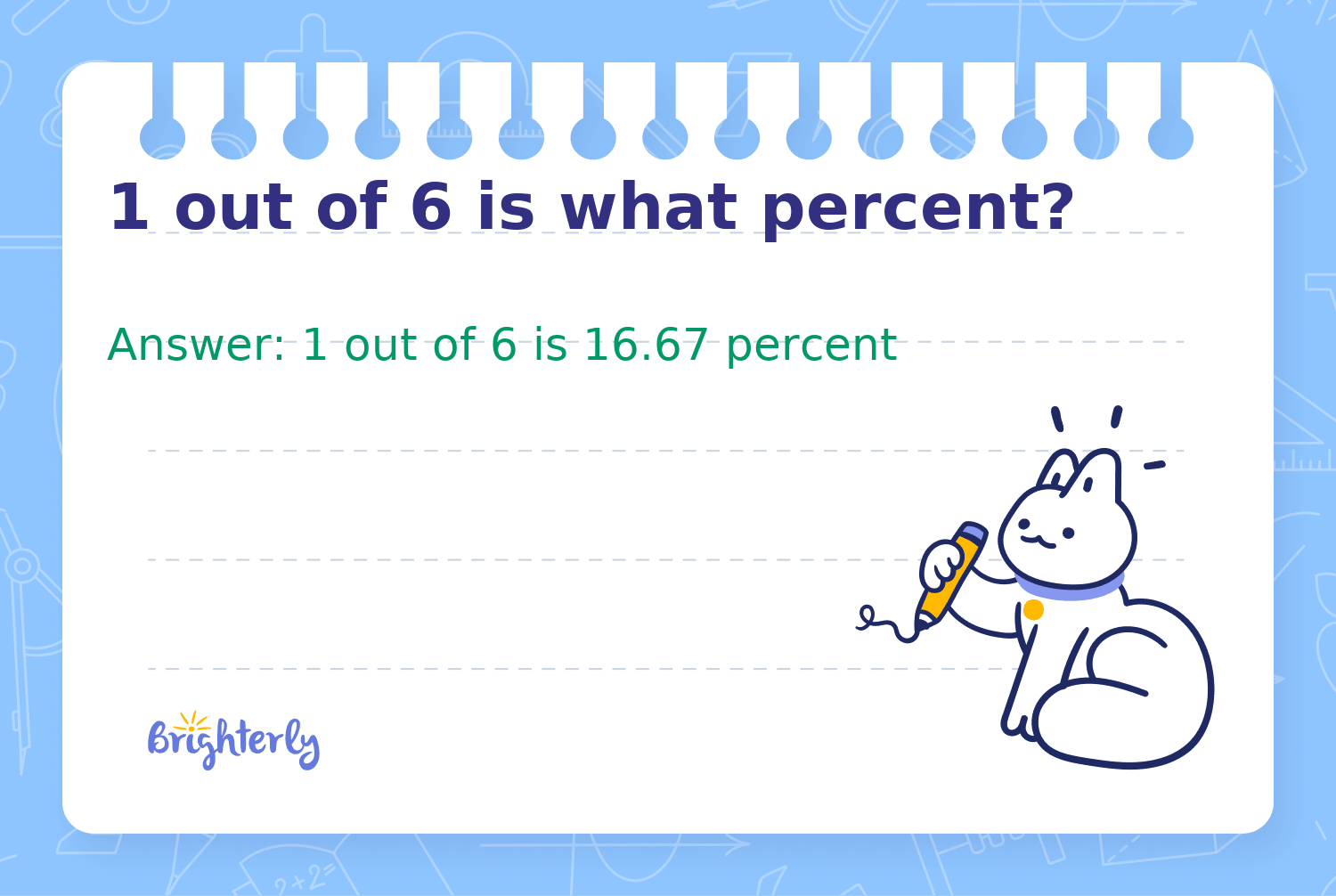
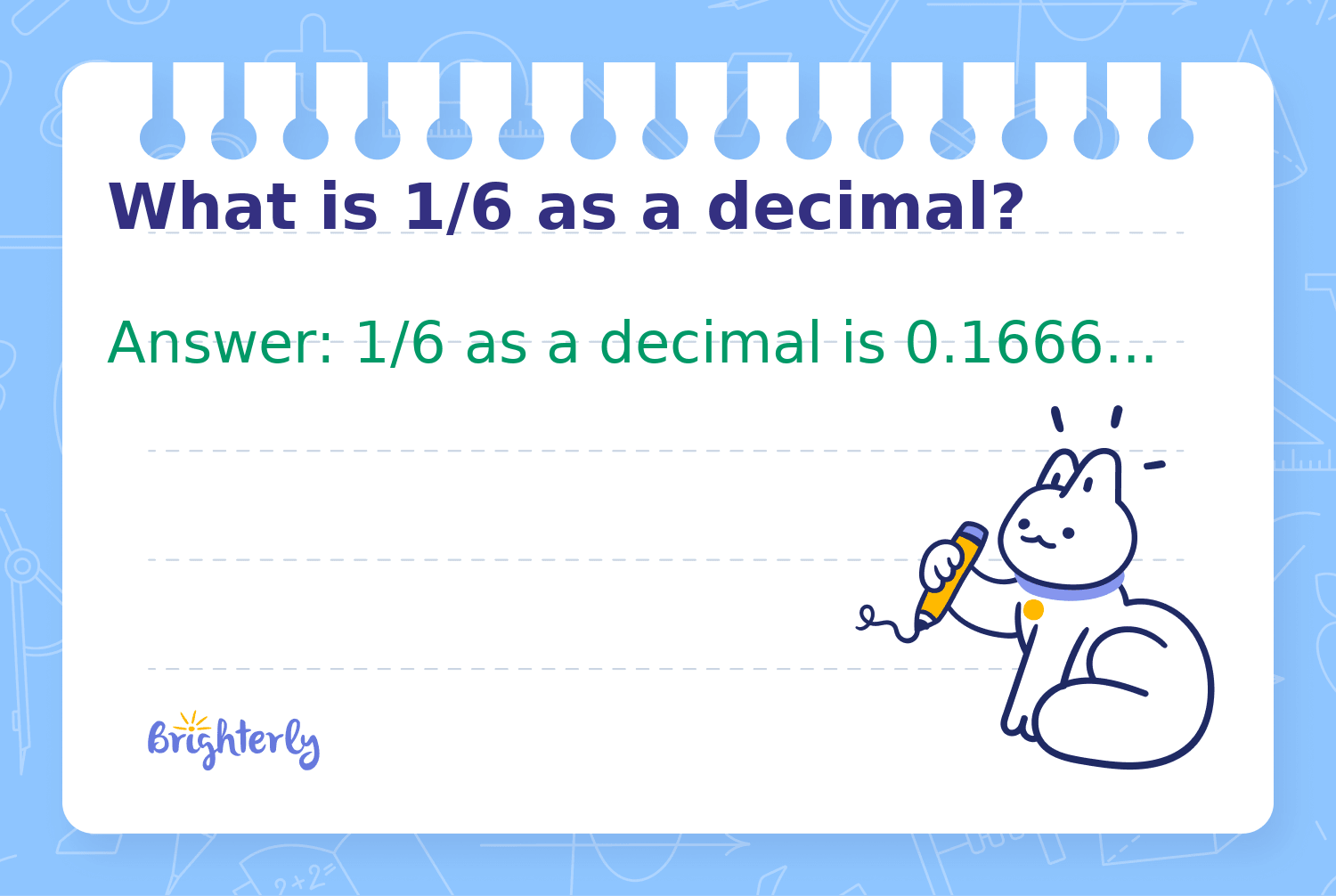
Calculating investment returns is another area where basic fractional understanding shines. If you invest $6 and it yields $1 in profit, that’s a 1/6 return on your investment. While typically expressed as a percentage (16.67%), the underlying concept is purely fractional. Understanding how to derive these figures allows investors to accurately assess performance, compare different investment opportunities, and make informed decisions about where to deploy their capital.
Similarly, understanding dividend yields (the dividend per share divided by the share price) involves grasping what fraction of the share price is returned to the investor annually. These seemingly simple calculations are fundamental to gauging the profitability and income-generating potential of an investment, moving beyond mere speculation to data-driven decision-making.
Diversification and Risk Management
The age-old adage, “Don’t put all your eggs in one basket,” is a classic example of risk management through fractional thinking. If you consider your entire investment capital as ‘6 units’ and you invest all ‘6’ units into a single stock, you expose yourself to immense concentration risk. However, by diversifying and allocating ‘1’ unit (or 1/6) into six different, uncorrelated assets or sectors, you significantly mitigate that risk.
Each ‘1/6’ portion of your portfolio contributes to the overall risk profile and potential returns. A well-diversified portfolio aims to balance these fractional exposures, ensuring that a downturn in one area does not decimate your entire financial standing. This strategic division and allocation is a testament to the enduring power of proportional understanding in protecting and growing wealth.
Business Finance and Operational Efficiency
The clarity provided by basic fractional understanding extends beyond personal finance into the intricate world of business. From profit distribution to resource allocation and market analysis, businesses rely on proportional insights to drive strategy, enhance efficiency, and ensure sustainability.
Profit Sharing and Equity Distribution
In many business structures, especially partnerships or startups, the distribution of profits and equity is a direct application of fractional understanding. If a business has 6 founding partners, and each agrees to an equal share, then each partner receives 1/6 of the profits and owns 1/6 of the company’s equity. This clear, proportional division forms the basis of agreements, incentivizes collaboration, and sets expectations for ownership and returns.
Employee stock option plans (ESOPs) also heavily rely on fractional principles, where employees are granted the right to purchase a specific fraction of the company’s shares. Understanding these fractional entitlements is crucial for both management (in structuring compensation) and employees (in evaluating their stake and potential future wealth).
Resource Allocation and Cost Management
Businesses constantly grapple with allocating limited resources—time, budget, personnel—to achieve maximum impact. This is a direct analogue to our “1/6 of 6” problem. If a project has a total budget (the ‘6’), how much (what ‘1/6’) should be allocated to research and development, to marketing, to production, or to overhead? Strategic resource allocation, informed by proportional budgeting, ensures that funds are directed where they can generate the most value and that no single area disproportionately drains resources.
Similarly, cost management requires identifying where fractions of operational expenses are going. Pinpointing that 1/6 of the company’s monthly costs are attributed to a particular department or process can highlight areas for efficiency improvements, cost cutting, or strategic investment. This analytical approach, rooted in understanding cost fractions, is vital for maintaining profitability and operational health.
Market Share and Competitive Analysis
In the competitive landscape, understanding market share is paramount. If the total addressable market for a product or service is conceptualized as ‘6 units’ of potential sales, and a company captures ‘1 unit’ of those sales, then it holds 1/6 of the market share. This metric, simple in its fractional essence, provides critical insights into a company’s competitive standing, growth potential, and overall industry influence.
Fractional understanding also extends to customer segmentation and target audience analysis. Identifying that a specific demographic constitutes 1/6 of your customer base allows for tailored marketing strategies and product development, ensuring that resources are optimally directed to capture and serve valuable market segments.
Beyond the Calculator: The Mindset of Financial Literacy
The question “what is 1/6 of 6?” transcends its mathematical simplicity. It serves as a powerful metaphor for the mindset required to navigate the complex financial world successfully. It’s not merely about arriving at the correct answer, but about developing a proportional understanding that demystifies finance and empowers informed decision-making.
Bridging Simple Math to Complex Decisions
The journey from “1/6 of 6 = 1” to managing a multi-faceted investment portfolio or running a multi-million-dollar business is one of scalability. All complex financial decisions, when broken down, are comprised of simpler, calculable parts. The ability to deconstruct a large financial problem into manageable, fractional components is a hallmark of true financial literacy. It allows individuals and businesses to see the forest and the trees, preventing overwhelm and fostering strategic thinking. This fundamental skill empowers us to analyze interest rates, compare investment options, evaluate debt structures, or understand profit margins, all by applying variations of proportional reasoning.
The Confidence in Knowing Your Numbers
There’s an undeniable confidence that comes with truly understanding your numbers. When you can articulate what fraction of your income goes to housing, what proportion of your portfolio is in growth stocks, or what percentage of your revenue comes from a particular product line, you gain a sense of mastery. This confidence reduces reliance on external “experts” whose advice might not always align with your best interests. It fosters critical thinking, allowing you to question assumptions, evaluate financial products more discerningly, and identify potential pitfalls or opportunities that others might miss. Knowing your numbers—even the seemingly trivial ones like “1/6 of 6″—is a powerful antidote to financial anxiety and a catalyst for proactive decision-making.

Lifelong Learning and Continuous Improvement
The financial landscape is ever-evolving, with new products, regulations, and economic shifts constantly emerging. However, the fundamental principles of mathematics, including fractions and proportions, remain constant. Embracing this foundational understanding fosters a mindset of continuous learning and improvement in financial literacy. It encourages individuals to always seek to understand the underlying mechanics of financial tools and strategies, rather than merely accepting them at face value. Just as the simple act of calculating 1/6 of 6 can be applied to myriad financial scenarios, the continuous application of basic math to increasingly complex financial problems is a lifelong journey towards greater financial acumen and resilience.
In conclusion, the seemingly simple query “what is 1/6 of 6?” holds a profound lesson for anyone engaged with money. The answer, ‘1’, is less important than the proportional thinking it represents. This foundational concept underpins budgeting, saving, debt management, investing, and even complex business operations. By mastering the art of breaking down a whole into its constituent fractions, individuals and organizations can gain unparalleled clarity, make empowered decisions, and ultimately forge a more robust and prosperous financial future. Embrace the power of basic math, for it is the invisible architecture of sound financial success.
aViewFromTheCave is a participant in the Amazon Services LLC Associates Program, an affiliate advertising program designed to provide a means for sites to earn advertising fees by advertising and linking to Amazon.com. Amazon, the Amazon logo, AmazonSupply, and the AmazonSupply logo are trademarks of Amazon.com, Inc. or its affiliates. As an Amazon Associate we earn affiliate commissions from qualifying purchases.