
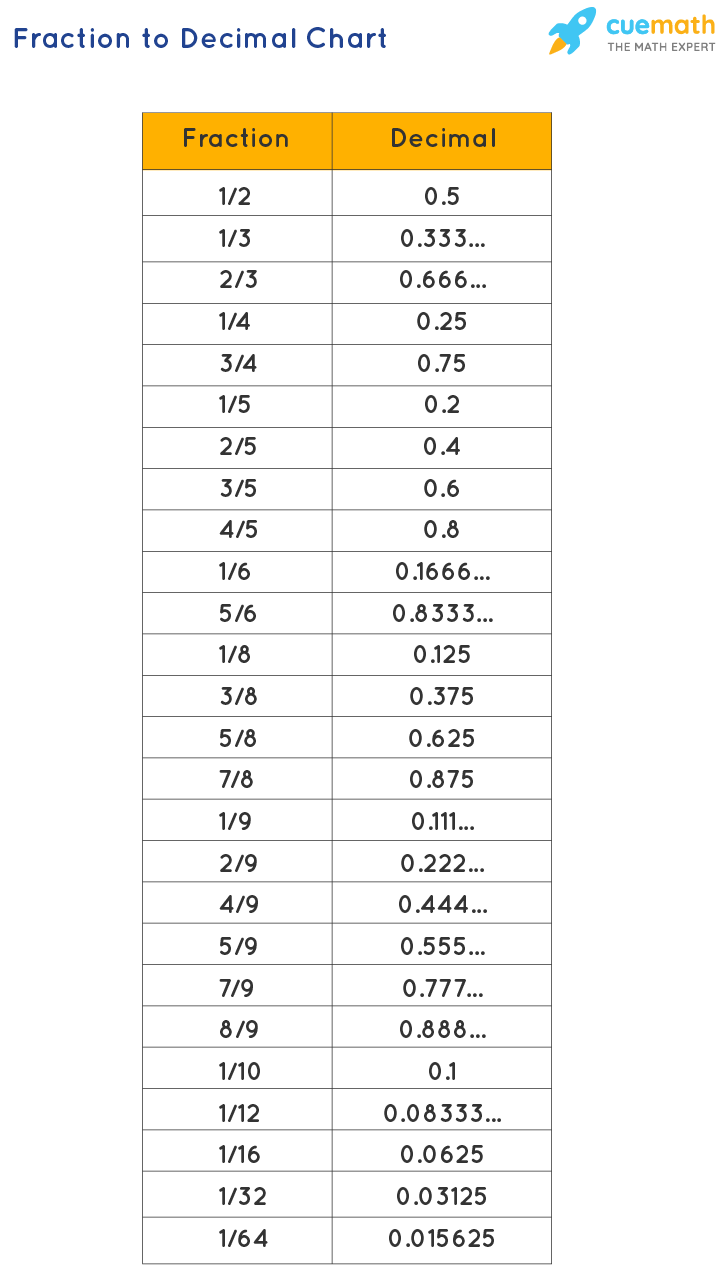
The seemingly simple mathematical query, “what is 1/6 of 1/2,” yields a straightforward answer: 1/12. On its surface, this appears to be a basic arithmetic problem, far removed from the complexities of financial markets or personal budgeting. However, dismissing it as merely elementary would be to overlook a profound principle that underpins nearly every facet of sound financial management: fractional thinking.
In the world of money, understanding how small parts relate to larger wholes – how percentages, proportions, and fractions interact – is not just an academic exercise; it’s a critical skill for informed decision-making. From calculating investment returns and allocating assets to optimizing budgets and managing debt, financial success often hinges on our ability to deconstruct complex monetary situations into understandable, manageable fractions. This article delves into why mastering this “fractional mindset” is indispensable for anyone looking to build wealth, achieve financial independence, and navigate the intricate landscape of modern finance with precision and confidence. It’s about recognizing that even the smallest fraction, when understood and applied correctly, holds significant power in shaping your financial destiny.
The Foundation: Deconstructing Financial Proportions
At its core, finance is the art and science of managing money, and a significant part of that involves understanding how resources are divided, allocated, and multiplied. Whether we’re conscious of it or not, fractions and their close relatives – percentages and ratios – are the universal language of financial operations.
Why Simple Fractions Underpin Complex Finance
Consider the question “1/6 of 1/2.” This isn’t just about multiplying two fractions; it represents the concept of taking a proportion of an existing proportion. This idea is fundamental to a myriad of financial scenarios. For instance, imagine you own 1/2 of a small business, and you decide to sell 1/6 of your stake. Your remaining ownership would be 1/2 – (1/6 of 1/2) = 1/2 – 1/12 = 5/12. This kind of calculation, involving fractions of existing fractions, is vital for understanding ownership structures, profit-sharing agreements, and even investment fund compositions.
Every investment portfolio, every budget, and every financial plan is, in essence, a collection of fractions. When you allocate 25% of your portfolio to bonds, you’re allocating 1/4. When you save 10% of your income, you’re setting aside 1/10. These aren’t just arbitrary numbers; they are deliberate fractions designed to achieve specific financial outcomes. Overlooking the foundational role of these simple mathematical constructs can lead to miscalculations, suboptimal decisions, and a general lack of clarity in your financial life. The power lies in recognizing that even the most sophisticated financial models are built upon these elementary proportional relationships.
From Percentages to Portfolios: The Common Denominator
While most financial discussions lean heavily on percentages, it’s crucial to remember that percentages are merely fractions expressed out of 100. Fifty percent is 1/2, approximately 16.67% is 1/6, and so on. Understanding this interchangeability is key to gaining a deeper insight into financial figures.
Take portfolio allocation, a cornerstone of investing. A common strategy might suggest a portfolio is 60% stocks and 40% bonds. Within the stock portion, an investor might decide that 1/3 should be in technology stocks and 1/6 of that technology allocation should focus on emerging AI companies. This layered decision-making process is a perfect real-world application of “1/6 of 1/2” thinking. If 60% (or 3/5) of your portfolio is in stocks, and 1/3 of that is in technology, then (1/3 * 3/5) = 1/5 of your total portfolio is in technology. If 1/6 of that technology allocation is in AI, then (1/6 * 1/5) = 1/30 of your entire portfolio is dedicated to AI. This granular understanding is vital for managing risk, ensuring diversification, and aligning your investments with your specific financial goals and risk tolerance. Without this fractional mindset, these complex allocations remain abstract, making it difficult to truly grasp your financial exposure.
Practical Applications of Fractional Thinking in Personal Finance
The relevance of fractional thinking extends far beyond theoretical investment models; it profoundly impacts the day-to-day management of personal finances, shaping budgets, savings strategies, and debt repayment plans.
Budgeting Beyond the Basics: Granular Allocation
Most people approach budgeting with broad categories: housing, food, transportation, savings, and discretionary spending. While this is a good starting point, true financial optimization often requires a more granular approach – dissecting these broad categories into smaller, manageable fractions.
For example, if your discretionary “wants” budget is $500 per month, how do you allocate it? You might decide that 1/2 of it goes to entertainment, 1/3 to dining out, and the remaining 1/6 to personal care items. But you can go even further: of the 1/3 allocated to dining out, you might discover that 1/2 of that fraction (or 1/6 of your total discretionary budget) is consistently spent on morning coffee and snacks. Recognizing these smaller fractions allows you to identify “spending leaks” and make conscious decisions about where your money truly goes. That seemingly insignificant daily coffee, if it represents 1/6 of your dining out budget, and your dining out budget is a significant fraction of your overall income, actually has a quantifiable impact on your financial health. By understanding these proportions, you gain control, transforming abstract budget lines into actionable financial insights.
Savings Goals and Compound Growth
The journey to financial security is often paved with consistent, albeit sometimes small, contributions. Fractional thinking helps illuminate the power of these seemingly minor efforts over time, especially when coupled with the magic of compound interest.
Imagine dedicating just 1/10 (10%) of every paycheck to savings. While 1/10 might not feel substantial in isolation, understanding its cumulative effect is empowering. Over months and years, these small fractions accumulate, eventually forming a significant principal. When this principal then starts earning interest, and that interest itself begins to earn interest, you’re witnessing compound growth in action. Each fractional gain on your investment contributes to an ever-growing principal, setting the stage for even larger fractional gains in the future. The simple act of consistently setting aside even 1/6 of your disposable income, when viewed through the lens of long-term compounding, transforms into a powerful wealth-building engine. It underscores that consistent effort with small fractions can lead to exponential financial growth.
Debt Management and Accelerated Payoff
Fractional thinking can be a potent tool in the battle against debt. While making minimum payments keeps you current, understanding the impact of even slightly larger payments, or “fractions more,” can dramatically reduce interest paid and accelerate your debt-free date.
Consider a loan where you’re making a minimum payment. If you commit to adding an extra 1/6 of your minimum payment to the principal each month, the effect can be profound. This additional fraction goes directly towards reducing the principal, meaning less interest accrues over the life of the loan. While 1/6 might seem small, the compounding effect works in reverse for debt. By chipping away at the principal faster, you reduce the base on which interest is calculated, thereby saving a larger fraction of money in interest over time. This targeted application of a small extra fraction can shave years off a mortgage or significantly shorten the life of a credit card balance, freeing up capital for other financial goals.
Investing with Precision: Leveraging Fractional Understanding
In the dynamic world of investing, precision and a nuanced understanding of how different components interact are paramount. Fractional thinking provides the framework for this precision, enabling smarter allocation, clearer understanding of returns, and more accessible investment strategies.

Asset Allocation and Diversification Strategies
Sophisticated investors don’t just put money into “stocks” or “bonds”; they meticulously carve their portfolios into specific fractions dedicated to various asset classes, sectors, geographies, and risk profiles. This detailed asset allocation is a prime example of fractional thinking in action.
You might decide that 70% of your portfolio is in equities, 20% in fixed income, and 10% in alternative investments. But the fractional breakdown doesn’t stop there. Within your 70% equity allocation, you might further decide that 1/3 is in large-cap growth stocks, 1/4 in international equities, and the remaining fraction split between emerging markets and small-cap value. Going even deeper, if 1/6 of your large-cap growth allocation targets a specific high-growth sector like renewable energy, you are again performing a “fraction of a fraction” calculation. This granular approach, derived from understanding how each small fraction contributes to the overall portfolio, is crucial for effective diversification, risk management, and aligning your investments with your specific financial goals and risk tolerance. It allows you to visualize and manage your exposure to different market forces.
Understanding Returns and Dividend Yields
When assessing the performance of your investments, understanding returns often boils down to fractional calculations. Your capital gain is a fraction of your initial investment, expressed as a percentage. A stock’s dividend yield is the annual dividend payment expressed as a fraction of its current share price.
For example, if a stock pays a $1.00 dividend on a $60 share price, its yield is 1/60. If you also understand that this $1.00 dividend represents 1/6 of the company’s total earnings per share, you gain a deeper insight into the company’s payout ratio and sustainability. Reinvesting these dividends means that your fractional return is compounding, purchasing more shares and thus generating even more dividends in the future. Moreover, corporate actions like stock splits (e.g., a 2-for-1 split meaning you get 2 shares for every 1 you own, effectively halving the price per share but maintaining the total value) or stock buybacks (reducing the total number of shares, thereby increasing the fractional ownership of existing shareholders) fundamentally alter the fractional ownership or perceived value without changing total wealth. A clear grasp of these fractional movements is essential for accurately tracking investment performance and understanding underlying value shifts.
Fractional Shares and Accessibility
The advent of fractional share investing platforms has democratized access to high-priced stocks, offering a tangible example of how fractional thinking can enhance accessibility and precision in investing. Historically, if a stock traded at $1,000 per share, you needed at least $1,000 to buy it. With fractional shares, you can invest any dollar amount you choose, effectively owning a fraction of a share.
This capability aligns perfectly with granular fractional thinking. An investor with $50 to spare can own 1/20 of that $1,000 stock. This allows for more precise dollar-cost averaging, enabling investors to allocate exact dollar amounts across a diversified portfolio, regardless of individual stock prices. For instance, if you have a budget of $100 for a particular sector and want to invest in six different companies within that sector, you can allocate $16.67 to each, thereby owning a specific fraction of each company’s share. This precise allocation, often down to several decimal places, directly embodies the “what is 1/6 of 1/2” principle by allowing investors to strategically allocate small fractions of their capital to achieve specific diversification and investment goals.
Avoiding Pitfalls: The Dangers of Ignoring Fractional Nuances
While understanding fractions empowers financial decision-making, neglecting their nuances can lead to significant financial missteps and eroded wealth. The cumulative effect of seemingly small, overlooked fractions can be surprisingly detrimental.
The Cumulative Effect of Small Leaks
Just as small, consistent savings accumulate wealth, small, consistent expenses or “leaks” can erode it. These often manifest as subscription services you don’t use, recurring fees, or impulse purchases that seem insignificant individually but add up over time.
Consider a streaming service costing $15 per month. This might seem like a negligible fraction of your monthly income. However, over a year, it’s $180, and over a decade, it’s $1,800, not accounting for potential price increases. If you have several such services, or if these small fractions are multiplied across various categories, they begin to represent a significant portion of your disposable income. The “death by a thousand cuts” analogy applies perfectly here: individually, each small fractional expense seems harmless, but their cumulative effect can be a substantial drain on your financial resources. A fractional mindset encourages vigilance against these “small leaks,” pushing you to evaluate if the value derived from each fractional expense justifies its cost.
Misinterpreting Risk and Reward
A common pitfall in investing is misinterpreting the true impact of percentage changes, especially when dealing with different capital amounts. A 1/6 (approximately 16.67%) loss on a small investment might be negligible, but the same fractional loss on a substantial capital sum can be devastating. Conversely, a small fractional gain on a tiny investment will not move the needle significantly.
Without a solid grasp of how fractions of a percentage translate to actual dollar amounts, investors can fall into the trap of disproportionate risk-taking. For instance, focusing heavily on an asset that promises a 1/2 (50%) gain, but only investing a tiny fraction of your portfolio in it, means its overall impact on your total wealth will still be small, even if it performs exceptionally well. Conversely, allocating a large fraction of your portfolio to a highly volatile asset that loses 1/6 of its value quickly can significantly impair your financial health. Understanding “fractions of a basis point” (a basis point is 1/100 of a percentage point, or 1/10,000) is also crucial in institutional finance, where even tiny fractional differences can translate to millions in profit or loss on large transactions.
The Illusion of Insignificance
Perhaps the most dangerous pitfall is the psychological tendency to dismiss small fractions as insignificant. The human brain is often wired to focus on large, whole numbers, underestimating the power of small percentages or fractions. “It’s only 1/6 of a small amount,” one might think, or “a 1% fee is barely anything.”
This illusion of insignificance can lead to complacency. That 1% annual management fee on a mutual fund might seem tiny, but over 30 years, it can cumulatively siphon off a significant fraction of your potential investment returns. Similarly, overlooking minor adjustments in interest rates, small increases in living expenses, or tiny discrepancies in financial reports, just because they are “small fractions,” can compound into substantial financial problems. True financial acumen lies in recognizing that in the world of money, every fraction, no matter how small, contributes to the overall picture. Ignoring them is akin to building a house and disregarding the fractional measurements for its foundation – the consequences will eventually manifest in instability.
Conclusion
The question “what is 1/6 of 1/2” transcends its humble mathematical origins to become a powerful metaphor for the meticulous, proportional thinking essential for financial success. Its answer, 1/12, symbolizes the granular detail and precise calculations that underpin effective money management. From the simplest household budget to the most complex investment portfolio, finance is fundamentally about understanding how parts relate to the whole, and how these relationships evolve over time.
Adopting a “fractional mindset” empowers individuals to dissect financial challenges, make informed decisions, optimize resource allocation, and strategically plan for the future. It allows us to see beyond the broad strokes and appreciate the cumulative impact of seemingly small decisions – whether it’s an extra fraction saved, a small percentage gain compounded, or a tiny fee overlooked. In an increasingly complex financial landscape, where information overload can obscure critical details, the ability to think fractionally provides clarity, control, and confidence.
Ultimately, mastery of personal finance and investing is not about understanding grand, sweeping economic theories alone. It is equally about the patient, precise understanding of the granular details, the subtle proportional shifts, and the compounding effect of small actions. Embracing fractional thinking is not just about doing the math; it’s about seeing the complete financial picture, recognizing the power of every single piece, and leveraging that insight to build a more secure and prosperous future.
aViewFromTheCave is a participant in the Amazon Services LLC Associates Program, an affiliate advertising program designed to provide a means for sites to earn advertising fees by advertising and linking to Amazon.com. Amazon, the Amazon logo, AmazonSupply, and the AmazonSupply logo are trademarks of Amazon.com, Inc. or its affiliates. As an Amazon Associate we earn affiliate commissions from qualifying purchases.