
At first glance, the question “What is 1/4th of 12?” appears to be a basic arithmetic problem, easily answered with a swift “3.” While mathematically correct, the true power of this seemingly simple query lies not in the immediate solution, but in its profound implications for financial understanding and decision-making. In the complex world of money, where budgets, investments, and expenses often seem daunting, mastering fundamental concepts like fractions and proportions is not merely an academic exercise; it is an indispensable skill that underpins financial literacy and empowers individuals to navigate their economic landscape with confidence.
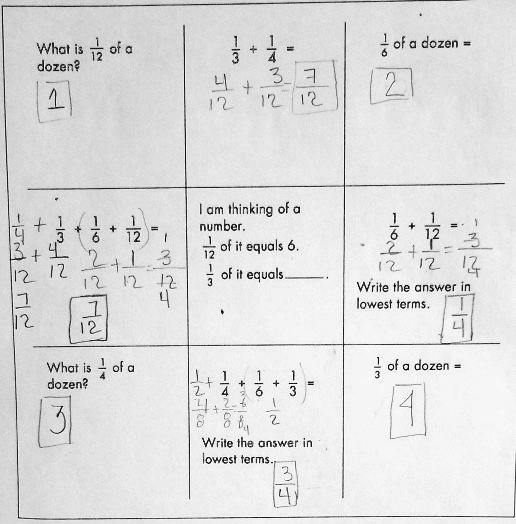
This article delves into why understanding “1/4th of 12″—and the broader principle it represents—is critical for personal finance, investing, business, and online income generation. It’s about moving beyond the rote calculation to grasp the conceptual framework that allows you to effectively manage, grow, and leverage your financial resources.
The Foundation of Financial Literacy: More Than Just Numbers
The ability to break down whole amounts into manageable parts is a cornerstone of financial intelligence. Whether you’re dividing your income, allocating investment capital, or dissecting a business’s revenue streams, understanding fractions and percentages provides the clarity needed to make informed choices.
Deciphering the “1/4th”: Fractions as Financial Building Blocks
A fraction, by definition, represents a part of a whole. In the context of “1/4th of 12,” we are looking for one part when the total is divided into four equal parts. This concept translates directly into countless financial scenarios:
-
Percentages: “1/4th” is equivalent to 25%. This conversion is vital for understanding interest rates, discounts, tax brackets, and investment returns, which are almost universally expressed as percentages.
-
Shares and Proportions: When you own 1/4th of a company, it defines your share of ownership, profit, and decision-making power. When you commit 1/4th of your monthly income to a specific expense, it dictates a crucial proportion of your budget.
-
Time Horizons: Thinking in “quarters” often relates to financial reporting periods (quarterly earnings) or breaking down annual goals into more manageable chunks (e.g., achieving 1/4th of a savings goal each quarter).
The number “12” in our original question can represent anything from $12,000 in savings, 12 months in a year, 12 hours of work, or 12 units of product. The principle remains constant: understanding how to find a fraction of that total is fundamental to financial planning and analysis.
Why Basic Math is Non-Negotiable in Money Matters
Many people shy away from numbers, yet neglecting basic arithmetic skills can have significant financial repercussions. Without a firm grasp of fractions, percentages, and proportions, individuals are susceptible to:
-
Misunderstanding Loan Terms: Failure to calculate actual interest paid over time, or the impact of an extra payment equivalent to 1/4th of your monthly installment.
-
Ineffective Budgeting: Inability to accurately allocate income to various categories, leading to overspending or missed savings opportunities.
-
Poor Investment Decisions: Misinterpreting returns, fees, or portfolio diversification strategies.
-
Falling for Misleading Promotions: Not being able to quickly calculate the true value of a “25% off” sale or a “buy one, get one 1/4 price” offer.
Mastering these basic mathematical concepts isn’t about becoming a mathematician; it’s about equipping yourself with the essential tools for everyday financial navigation and long-term wealth building.
Practical Applications in Personal Finance: Your Money in Pieces
The principle behind “1/4th of 12” finds immediate and powerful application in personal finance, enabling smarter budgeting, more effective saving, and strategic debt management.
Budgeting: Dividing Your Income Pie
Effective budgeting is essentially an exercise in fractional allocation. When you earn income, you’re faced with the task of dividing that “whole” into various “parts” for expenses, savings, and discretionary spending.
-
The 50/30/20 Rule: A popular budgeting guideline suggests allocating 50% of your income to needs, 30% to wants, and 20% to savings and debt repayment. While not strictly “1/4th,” this rule exemplifies the power of fractional thinking, breaking your income into manageable percentages. You might decide to allocate 1/4th (25%) of your take-home pay directly to housing, or 1/4th of your discretionary budget to entertainment.
-
Calculating Expense Categories: If your monthly income is $4,800, what is 1/4th of that? It’s $1,200. This could be your maximum rent payment, or the amount you designate for groceries and dining out. Understanding these simple divisions allows for clear boundaries and conscious spending.
Savings Goals: Reaching Milestones in Quarters
Large savings goals can feel overwhelming. Breaking them down into fractional targets makes them more achievable and less daunting.
-
Example: If you aim to save $12,000 for a down payment on a car or a significant vacation, knowing that 1/4th of that goal is $3,000 provides a concrete, quarterly target. Saving $1,000 per month means you’ll hit each “quarter” of your goal in three months.
-
Automated Savings: Many financial tools allow you to automatically transfer a specific percentage (e.g., 25% or 1/4th) of your paycheck directly into a savings account, making consistent progress towards your goals effortless.
Debt Management: Tackling Loans in Segments
Understanding fractions is also crucial for effectively managing debt, from credit cards to mortgages.
-
Principal vs. Interest: A portion of every loan payment goes towards the principal (the original amount borrowed) and another portion to interest. Understanding these fractions helps you see how much of your payment is truly reducing your debt versus covering the cost of borrowing.
-
Accelerated Payments: Deciding to pay an extra 1/4th of your minimum payment each month can significantly reduce the overall interest paid and shorten the life of a loan. Calculating the impact of such fractional additions can save thousands over time.
Investing and Returns: Understanding Your Share and Growth
In the investment world, fractions and percentages are the lingua franca for discussing portfolio allocation, returns, and ownership.
Portfolio Allocation: Diversifying Your Financial Pie

Wise investors understand the importance of diversification, spreading their capital across different asset classes to mitigate risk. This is inherently a fractional exercise.
-
Asset Classes: An investor might decide to allocate 1/4th (25%) of their portfolio to stocks, 1/4th to bonds, 1/4th to real estate, and 1/4th to alternative investments. This fractional division is a core strategic decision based on risk tolerance and financial goals.
-
Rebalancing: Over time, market fluctuations can shift these allocations. If your stock portion grows to 30% of your portfolio, you might rebalance by selling a fraction of your stocks to bring it back down to 25%, and reallocate that money to underperforming assets.
Calculating Returns and Gains: The Power of Compound Fractions
Investment growth is almost always expressed in fractional or percentage terms.
-
Simple Returns: If you invest $12,000 and it grows by 1/4th, you’ve earned $3,000 in profit, bringing your total to $15,000. This simple calculation allows you to quickly assess the performance of an investment.
-
Compound Interest: The true magic of investing lies in compound interest, where your initial investment and its accumulated earnings (fractions of the initial capital that have grown) generate further returns. Even small fractional gains, compounded over long periods, can lead to substantial wealth accumulation.
Share Ownership and Dividends: Your Stake in the Whole
When you own shares in a company or a small business, your ownership stake is a fraction of the total.
-
Equity: Owning a certain number of shares means you own a specific fraction of the company. This fraction dictates your portion of any profits (dividends) and your voting power in corporate decisions. If you own 1/4th of a private business that earns $120,000 profit, your share is $30,000.
-
Dividends: Many companies pay dividends, which are distributions of a fraction of their earnings per share. Understanding these fractions allows investors to calculate their potential passive income from an investment.
Beyond Personal Finance: Business and Online Income Insights
The principles of fractional thinking extend seamlessly into the realms of business management, entrepreneurship, and generating online income.
Business Profit Margins and Cost Analysis
Businesses live and die by their numbers, and understanding how different costs constitute fractions of total revenue is paramount to profitability.
-
Cost of Goods Sold (COGS): If the COGS for a product is 1/4th of its selling price, a business owner needs to understand the implications for their gross profit margin. If a product sells for $12 and its COGS is $3 (1/4th), that leaves $9 for operating expenses and profit.
-
Operational Expenses: Rent, salaries, marketing — these are all fractions of total revenue. Identifying which expenses consume the largest fractions of income helps businesses optimize spending and improve efficiency.
Online Income and Side Hustles: Scaling Up by the Quarter
For those pursuing online income or side hustles, fractional thinking is key to setting goals, tracking progress, and analyzing performance.
-
Revenue Targets: If your main goal is to earn an additional $12,000 per year from your side hustle, understanding that 1/4th of that is $3,000 means you need to aim for $250 per month. Breaking it down further, this might mean selling 12 units of a $25 product ($300 total, leaving a fraction for profit).
-
Conversion Rates: In online marketing, conversion rates (the fraction of visitors who take a desired action, like making a purchase) are vital. If 1/4th (25%) of your website visitors convert into buyers, and you have 100 visitors, you’ll make 25 sales. Understanding this ratio helps you strategize for traffic growth.
-
Affiliate Commissions: Many affiliate programs offer a fixed percentage or fraction of a sale as commission. Calculating potential earnings requires a strong grasp of these fractional values.
Taxation and Deductions: Navigating Fractional Obligations
Even taxes, often perceived as complex, are based on fractional principles.
-
Tax Brackets: Your income falls into different tax brackets, where varying fractions (percentages) of your income are taxed at different rates. Understanding these fractions allows for tax planning.
-
Deductions and Credits: Many deductions and credits allow you to reduce your taxable income or tax liability by a certain fraction. For instance, if 1/4th of your home is used for business, you might be able to deduct a similar fraction of your utility bills or mortgage interest.
Cultivating Fractional Financial Intelligence: Your Path to Empowerment
The journey from answering “What is 1/4th of 12?” to achieving comprehensive financial mastery is paved with a continuous commitment to understanding and applying these fundamental principles.
The Importance of Continuous Learning
Embrace the idea that financial literacy is an ongoing process. Regularly reviewing your budgets, investment performance, and business metrics, always asking “what fraction of the whole does this represent?” will deepen your understanding. Read books, listen to podcasts, and engage with financial education resources that reinforce these core concepts.
Tools and Techniques for Fractional Management
Leverage technology to assist you. Budgeting apps, spreadsheets, and online calculators can automate the fractional division of your income and expenses. Visualizing your financial data through pie charts and percentage breakdowns can make complex information more digestible and actionable.

From “What is 1/4th of 12?” to Financial Mastery
The simple question “what is 1/4th of 12?” serves as a powerful reminder that complex financial success often stems from a solid grasp of foundational mathematical concepts. By internalizing the meaning of fractions and proportions, you transform abstract numbers into concrete insights. This empowers you to make smarter decisions about how you earn, save, spend, invest, and grow your money, ultimately leading to greater financial control and security. It’s not just about the answer “3”; it’s about the countless financial decisions that “3” can help you unlock.
aViewFromTheCave is a participant in the Amazon Services LLC Associates Program, an affiliate advertising program designed to provide a means for sites to earn advertising fees by advertising and linking to Amazon.com. Amazon, the Amazon logo, AmazonSupply, and the AmazonSupply logo are trademarks of Amazon.com, Inc. or its affiliates. As an Amazon Associate we earn affiliate commissions from qualifying purchases.