
At first glance, this question might seem like a simple arithmetic problem, a relic from a grade-school math textbook. “What is 1/3 of 1/5?” The answer, mathematically, is straightforward: 1/15. But to dismiss it as merely a trivial calculation would be to overlook a profound truth about financial literacy. In the intricate world of personal finance, investing, and business strategy, fractions are not just abstract numbers; they are the bedrock upon which sound financial decisions are built. They dictate how we allocate our income, diversify our investments, split profits, and understand the true cost of goods.
The ability to grasp fractional concepts, and to extend them beyond simple multiplication, is a critical skill for anyone looking to navigate the complexities of their financial life with confidence and precision. This article delves into the seemingly simple question, “what is 1/3 of 1/5?”, not just to provide the numerical answer, but to unpack its significance as a gateway to deeper financial understanding. We will explore why these seemingly basic mathematical principles are indispensable tools for managing money, building wealth, and making informed economic choices in a world often dominated by percentages, ratios, and splits. From budgeting to portfolio management, and from business partnerships to understanding market shares, the humble fraction holds more power than many realize, making it an essential component of comprehensive financial acumen.
The Foundational Math: Understanding Fractions in Finance
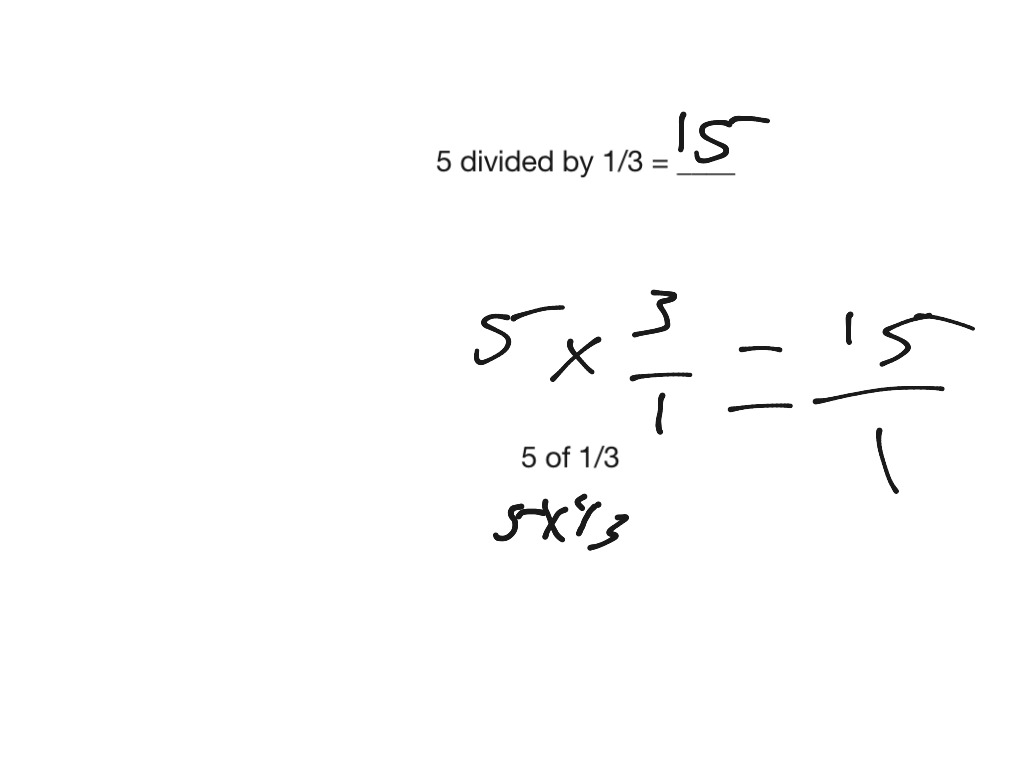
Before we can appreciate the broad financial implications of fractions, it’s essential to solidify our understanding of the basic operation itself. The phrase “what is 1/3 of 1/5?” is a direct instruction to multiply these two fractions. In mathematics, the word “of” often signifies multiplication, especially when dealing with fractions or percentages.
To multiply fractions, you simply multiply the numerators (the top numbers) together and the denominators (the bottom numbers) together.
So, for 1/3 of 1/5:
Numerator: 1 × 1 = 1
Denominator: 3 × 5 = 15
The result is 1/15.
This simple calculation, yielding 1/15, represents a fundamental principle that underpins countless financial scenarios. It’s not just about getting the right answer; it’s about understanding the mechanism that allows us to determine a portion of a portion, which is a common occurrence in financial planning. Imagine you allocate 1/3 of your discretionary income to savings, and within that savings, 1/5 is earmarked for a specific long-term investment. That specific investment then represents 1/15 of your total discretionary income. This immediate, practical application highlights why even basic fractional operations are far from trivial in the financial realm. Without this foundational understanding, navigating more complex financial instruments or strategies becomes significantly harder. It’s the starting point for calculating layered financial commitments, understanding multi-tiered investment returns, or even deciphering complex business profit-sharing models.
Deciphering “Of”: Multiplication in Fractional Contexts
The word “of” in mathematical problems, particularly when dealing with fractions or percentages, is a linguistic shortcut for multiplication. This seemingly small detail carries significant weight in financial calculations. When a financial advisor talks about “1/3 of your portfolio” or a “1/5 stake of the company’s profits,” they are implicitly asking you to perform a multiplication. For example, if your portfolio is worth $150,000, and 1/3 of it is allocated to growth stocks, you would calculate $150,000 * (1/3) = $50,000. If 1/5 of those growth stocks are in tech companies, you’d further calculate $50,000 * (1/5) = $10,000. This layered understanding, enabled by deciphering “of” as multiplication, allows for precise financial segmenting and analysis. Misinterpreting “of” can lead to significant errors in budgeting, investment allocation, and understanding financial commitments, underscoring the importance of this basic mathematical principle in practical finance.
Beyond Simple Calculations: Why Fractions Matter for Financial Literacy
Financial literacy extends beyond knowing how to calculate interest or read a stock chart; it fundamentally involves understanding proportions, relationships, and how various parts contribute to a whole. Fractions are the purest mathematical expression of these concepts. They empower individuals to think critically about how their money is divided, multiplied, or reduced. For instance, understanding that contributing 1/10 of your income to a retirement fund might seem small initially, but over decades, with compound interest, it can become a substantial portion of your total wealth. Similarly, grasping that a 1/4 share in a small business can yield significantly more than 1/1000th of a large corporation requires a solid grip on fractional values. Fractions allow for a nuanced understanding of risk, reward, and allocation, enabling smarter decisions about savings, investments, and debt. They demystify financial jargon, allowing individuals to break down complex financial products or situations into understandable, manageable components.
Converting Fractions to Decimals and Percentages for Easier Analysis
While fractions are excellent for conceptualizing parts of a whole, for practical comparison and calculation in finance, converting them into decimals or percentages is often more convenient.
1/3 ≈ 0.3333 or 33.33%
1/5 = 0.20 or 20%
1/15 ≈ 0.0667 or 6.67%
These conversions are crucial because most financial tools, statements, and reports utilize decimals or percentages. Investment returns, interest rates, loan payments, and budget allocations are almost universally presented in these formats. For example, a mutual fund’s expense ratio might be 0.75%, or a savings account might offer an APY of 1.25%. Understanding that 1/4 is 0.25 or 25% allows you to quickly interpret financial data and compare different options effectively. It bridges the gap between theoretical fractional understanding and the practical application of financial figures, ensuring you can speak the financial language fluently and make swift, accurate comparisons between various financial products or scenarios.
Practical Applications of Fractions in Personal Finance
The impact of fractions extends deeply into the realm of personal finance, influencing everything from daily spending habits to long-term financial security. Understanding how to work with fractions allows individuals to gain a clearer picture of their financial health and to implement strategies that lead to greater economic stability and growth. It’s not merely an academic exercise; it’s a practical skill that underpins effective money management.
Budgeting and Income Allocation
One of the most immediate and impactful applications of fractions in personal finance is in budgeting. Many popular budgeting methodologies are inherently fractional. The 50/30/20 rule, for example, suggests allocating 50% of your after-tax income to needs, 30% to wants, and 20% to savings and debt repayment. These percentages are simply fractions of your total income (1/2, 3/10, 1/5 respectively). Similarly, setting aside 1/10 of every paycheck for an emergency fund, or dedicating 1/4 of your bonus to a down payment, are direct applications of fractional thinking. By understanding these proportions, you can accurately track where your money is going, ensure you’re living within your means, and make conscious decisions about your spending and saving priorities. Fractions provide a clear framework for dividing your financial pie, making abstract goals tangible and actionable.
Debt Management and Repayment Strategies
Fractions also play a significant role in managing debt effectively. When you’re trying to pay down high-interest debt, you might decide to allocate an additional fraction of your discretionary income specifically to accelerated payments. For instance, if you have $500 in discretionary income each month, and you commit an extra 1/5 of that ($100) to your highest-interest credit card, you can significantly reduce the total interest paid and the time it takes to become debt-free. Understanding the fraction of your minimum payment that goes towards principal versus interest is also crucial – often, a large fraction of early payments goes to interest, which motivates strategies like the debt snowball or avalanche method. Fractions help you quantify the impact of different repayment strategies, enabling you to make informed decisions that accelerate your journey out of debt.
Understanding Discounts, Sales Tax, and Tips
Everyday transactions are rife with fractional calculations. Discounts are often presented as fractions or percentages off the original price (e.g., “1/4 off” or “25% markdown”). Sales tax adds a small fraction to your purchase total, and calculating tips at restaurants typically involves adding a fraction (like 1/5 or 15%) to the bill. For example, if an item is $40 and you get 1/4 off, you save $10. If the sales tax is 1/20 (5%), you add $2. If the service was good, you might add a 1/5 tip, another $8. Being able to quickly calculate these fractions mentally or with a calculator ensures you know the true cost of items, can verify charges, and confidently manage your spending in real-time. This practical ability saves money, prevents overspending, and builds financial confidence in daily interactions.
Fractions in Investment and Wealth Building
Beyond personal budgeting, fractions are the very language of investment and wealth accumulation. From how you structure your portfolio to understanding your ownership stake in a company, fractional concepts are omnipresent and critical for making strategic decisions that foster long-term financial growth.
Portfolio Allocation and Diversification
One of the cornerstones of sound investment strategy is diversification, which is inherently a fractional concept. Investors are constantly advised to allocate specific fractions of their portfolio across different asset classes – stocks, bonds, real estate, commodities, etc. For instance, a common rule of thumb might suggest keeping 1/3 of your portfolio in international stocks, 1/5 in bonds, and the remainder in domestic equities. Similarly, an aggressive investor might hold 4/5 of their portfolio in equities, while a conservative investor might hold 1/2 in bonds. Understanding these fractional allocations is vital for managing risk and optimizing returns. If a specific asset class constitutes too large a fraction of your portfolio, you expose yourself to greater risk if that sector underperforms. Fractions allow you to visualize your investment mix, rebalance as needed, and maintain a diversified strategy tailored to your risk tolerance and financial goals.
Understanding Share Ownership and Equity
When you invest in stocks, you are buying a fraction of a company. Whether you own 1 share out of 100 million or 10,000 shares out of a billion, your ownership is fundamentally a fraction of the total outstanding shares. This fractional ownership translates into your proportional claim on the company’s assets and earnings, and your voting rights in corporate decisions. For example, if you own 1/10,000 of a company, you have a proportional claim on its profits and assets. In private equity or startup investments, partners often own a specific fraction of the company (e.g., 1/3, 1/4, or 1/2), which dictates their share of profits and control. Grasping this fractional basis of equity is fundamental to understanding the mechanics of stock markets, venture capital, and partnership structures, and is crucial for calculating potential returns or losses from your investments.
Calculating Returns and Compound Interest
Fractions are integral to calculating investment returns and understanding the power of compound interest. A 1/10 (or 10%) annual return means your investment grows by that fraction each year. Compound interest means that your initial principal, plus the accumulated interest, then earns interest in subsequent periods. While often expressed as a percentage, the underlying mechanism is fractional growth: your investment increases by a certain fraction of its current value repeatedly. Understanding that even small fractions of return, compounded over long periods, can lead to substantial wealth accumulation is a powerful financial insight. For example, consistently earning an extra 1/100 (1%) return each year can result in tens of thousands more dollars over a few decades compared to a lower return, illustrating the profound long-term impact of seemingly small fractional differences.
Business Finance and Fractional Insights
In the world of business, fractions transcend individual financial planning to become the bedrock of operational analysis, profit distribution, and strategic decision-making. From startup partnerships to multinational corporate finance, fractional understanding is essential for assessing performance and structuring deals.
Profit Sharing and Partnership Agreements
In entrepreneurial ventures and partnerships, fractions are explicitly used to define ownership stakes and dictate profit-sharing arrangements. A common scenario involves two partners who agree to a 1/2 split of profits, or three partners with a 1/3 share each. More complex arrangements might involve different fractional shares based on capital contribution, workload, or expertise (e.g., one partner gets 2/5, another 1/2, and a third 1/10). Understanding these fractional agreements is critical for ensuring fair distribution of earnings, establishing clear responsibilities, and avoiding future disputes. Without a clear grasp of what constitutes a “fair” fraction or how to calculate the actual dollar amount corresponding to a fractional share, businesses risk internal conflict and financial instability. The fundamental question of “what is 1/3 of 1/5?” can, in a business context, relate to understanding what fraction of an existing partner’s share a new investor might acquire, creating layers of fractional ownership that must be precisely managed.
Inventory Management and Cost Allocation
Businesses also utilize fractional concepts in managing inventory and allocating costs. For example, a retailer might track what fraction of their total inventory is slow-moving versus fast-moving to make informed purchasing decisions. Manufacturing businesses might allocate a fraction of overhead costs to each unit produced to determine accurate per-unit profitability. If 1/5 of a factory’s electricity bill is attributable to a specific production line, that fraction helps in understanding the true cost of goods sold for products manufactured on that line. These fractional allocations ensure that costs are distributed accurately, allowing for precise pricing strategies, identifying inefficiencies, and optimizing resource utilization. Miscalculating these fractional costs can lead to underpricing, lost profits, or overpricing, making products uncompetitive.
Financial Ratios and Performance Metrics
Many crucial financial ratios and performance metrics used in business analysis are essentially fractions. The debt-to-equity ratio, profit margins (net profit divided by revenue), current ratio (current assets divided by current liabilities), and return on investment (ROI) are all expressed as fractions or their decimal/percentage equivalents. For example, a profit margin of 1/10 (10%) means that for every dollar of revenue, the company retains 10 cents as profit. A debt-to-equity ratio of 1/2 means the company has half as much debt as equity. These fractional insights provide a concise snapshot of a company’s financial health, operational efficiency, and profitability. Investors, lenders, and management teams rely on these fractional ratios to benchmark performance, assess risk, and make strategic decisions about growth, expansion, or restructuring.
Bridging the Gap: From Basic Math to Financial Empowerment
The seemingly simple question “what is 1/3 of 1/5?” serves as a powerful reminder that fundamental mathematical principles are the backbone of financial empowerment. Overlooking or underestimating the importance of fractions can create significant blind spots in managing one’s money or understanding business operations. Embracing these concepts, however, unlocks a deeper level of financial literacy, enabling more informed and confident decision-making.
Avoiding Common Fractional Misunderstandings
One of the biggest pitfalls in finance is a misunderstanding of how fractions, percentages, and proportions truly work. For instance, people often conflate “percentage point” changes with “percentage” changes (e.g., an interest rate moving from 4% to 5% is a 1 percentage point increase, but a 25% percentage increase). Similarly, a discount of “1/2 off the second item” is often better than “1/4 off the total bill” when buying two items of similar price, but without precise fractional thinking, the better deal can be missed. These misunderstandings can lead to poor financial choices, from taking on inappropriate loans to misjudging investment returns. A solid grasp of fractional arithmetic and its direct application in financial contexts helps in clearly distinguishing between different offers, accurately assessing risks, and making decisions based on solid quantitative understanding rather than intuition.
Leveraging Financial Tools for Fractional Calculations
While understanding the underlying math is crucial, modern financial tools and technologies are designed to simplify complex calculations. Budgeting apps automatically calculate the fractions of your income spent on various categories. Investment platforms display portfolio allocations as percentages and help you rebalance with a few clicks. Mortgage calculators instantly show what fraction of your payment goes to principal and interest over time. Leveraging these tools does not diminish the need for fractional understanding; rather, it empowers individuals to apply that understanding at scale. Knowing the “why” behind the numbers allows you to critically evaluate the outputs of these tools, identify potential errors, and interpret the data meaningfully, ensuring you remain in control of your financial destiny rather than blindly relying on algorithms.

The Long-Term Impact of Small Fractional Decisions
Ultimately, the journey from understanding “1/3 of 1/5” to achieving financial empowerment is paved with countless small, fractional decisions. The fraction of your income you save each month, the fraction of your portfolio allocated to growth, the fraction of debt you decide to pay down early – each seemingly small decision, when compounded over time, can lead to drastically different financial outcomes. Consistently saving an extra 1/100 of your income could mean retiring years earlier. Reducing your annual investment fees by just 1/200 (0.5%) could add tens of thousands to your wealth over a lifetime. These small fractions, meticulously managed and strategically deployed, are the building blocks of substantial wealth creation and long-term financial security. By truly internalizing the power of fractions, individuals transform from passive participants in their financial lives to active, informed architects of their future.
aViewFromTheCave is a participant in the Amazon Services LLC Associates Program, an affiliate advertising program designed to provide a means for sites to earn advertising fees by advertising and linking to Amazon.com. Amazon, the Amazon logo, AmazonSupply, and the AmazonSupply logo are trademarks of Amazon.com, Inc. or its affiliates. As an Amazon Associate we earn affiliate commissions from qualifying purchases.