
At first glance, the question “what is 1/3 in decimal?” might appear to be a simple arithmetic exercise, a relic from grade school mathematics. However, for anyone navigating the complexities of personal finance, investing, business operations, or online income generation, understanding this seemingly basic conversion—and others like it—is profoundly significant. Financial literacy hinges on a solid grasp of how fractions translate into decimals, as this underpins everything from calculating interest rates and budgeting percentages to understanding equity stakes and profit distribution.
In the world of money, precision is paramount. While a fraction like 1/3 intuitively represents a portion of a whole, its decimal equivalent, 0.333…, provides a universal, calculable value that is indispensable for financial modeling, reporting, and decision-making. This article delves into the critical role that understanding 1/3 as a decimal plays across various financial domains, demonstrating why this fundamental concept is far more than just a mathematical curiosity—it’s a cornerstone of sound financial intelligence.

The Core Concept: From Fraction to Decimal – Why it Matters Financially
Before we explore the practical applications, let’s establish the fundamental conversion. A fraction represents a part of a whole, with the numerator (top number) being divided by the denominator (bottom number). Thus, 1/3 simply means 1 divided by 3.
Basic Conversion Explained: 1 Divided by 3
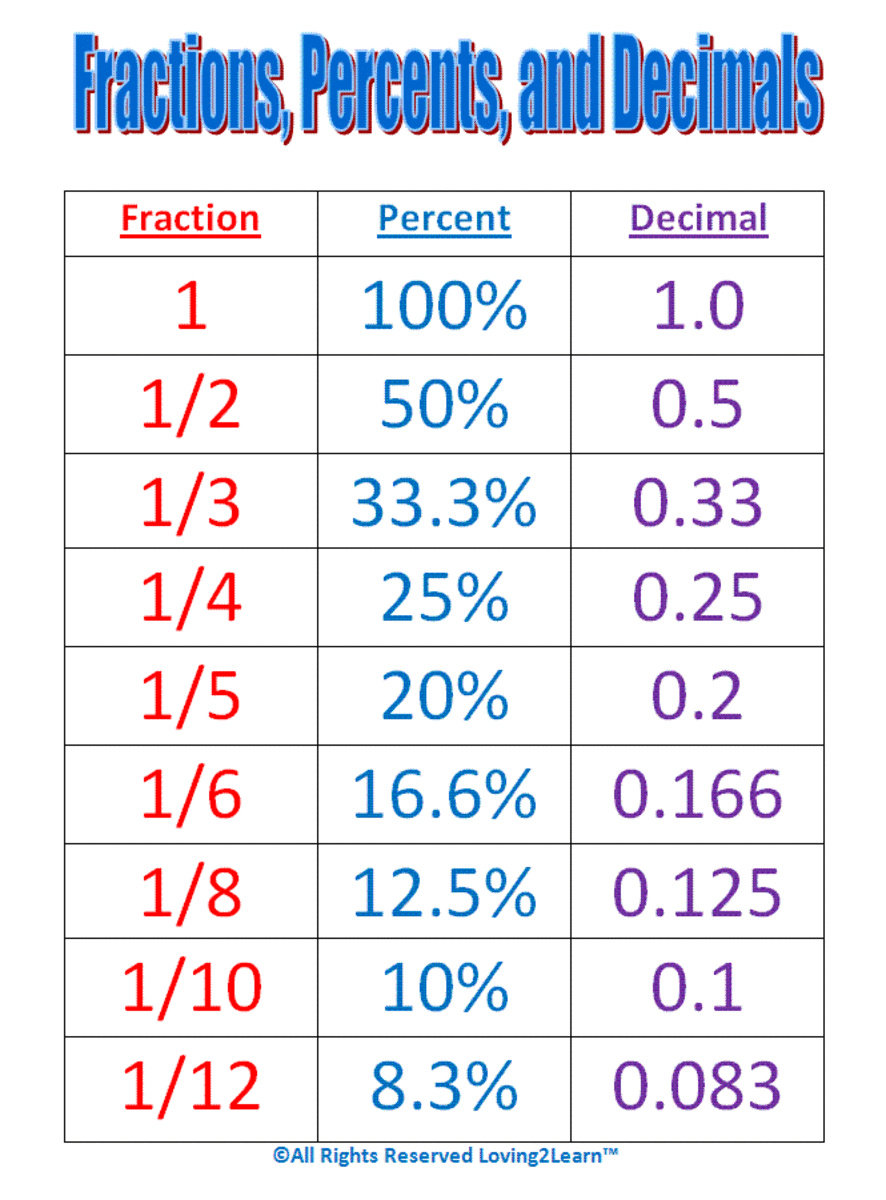
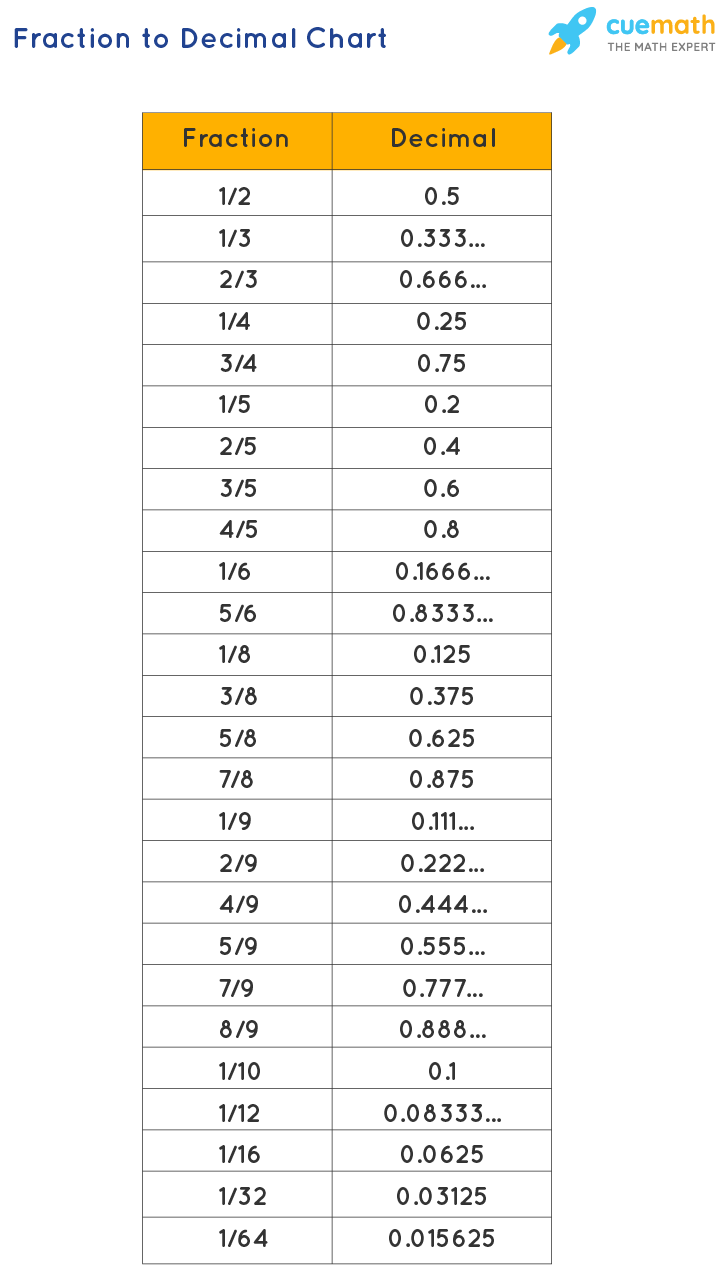
When you perform the division 1 ÷ 3, the result is 0.3333… This is a repeating decimal, where the digit ‘3’ continues infinitely. In financial contexts, it’s often rounded to a practical number of decimal places, such as 0.33 or 0.333, depending on the required level of precision. However, understanding its true nature as an infinite repeater is crucial, particularly when dealing with large sums or sensitive calculations where even tiny rounding errors can compound.
The Significance of Repeating Decimals in Finance
The infinite nature of 0.333… presents unique challenges and considerations in finance. Unlike exact decimals such as 0.5 (for 1/2) or 0.25 (for 1/4), 1/3 can never be expressed perfectly with a finite number of decimal places. This means that any practical application will involve a degree of rounding. For example, if you need to calculate 1/3 of $100, you’d get $33.33 (rounded to two decimal places). If you tried to distribute $100 exactly into three equal parts, you’d find yourself with a tiny remainder ($0.01) after distributing $33.33 to two parties and $33.34 to the third, or more complex arrangements.
This concept of approximate representation is vital for financial professionals. It informs how transactions are rounded, how profits are allocated, and how financial software handles these calculations to minimize discrepancies. Understanding this inherent imperfection helps in setting realistic expectations and preparing for potential rounding adjustments in budgets, financial statements, and investment returns.
Why Precision Matters (and When Approximation Is Okay)
In financial operations, the level of precision required varies significantly. For personal budgeting on a small scale, rounding 1/3 to 0.33 might be perfectly acceptable. When splitting a restaurant bill, for instance, a few cents difference is rarely a concern. However, in large-scale corporate finance, intricate investment calculations, or highly regulated financial reporting, even minute rounding discrepancies can have substantial legal, tax, or market implications.
Imagine calculating 1/3 of a billion-dollar portfolio. A difference of 0.0001 (representing $100,000) due to rounding could be material. Financial institutions and software developers spend considerable effort ensuring that calculations involving repeating decimals are handled consistently and transparently, often using more significant figures than the two decimal places we commonly see for currency. Knowing when to demand high precision versus when to accept practical approximation is a hallmark of financial acumen.
1/3 in Personal Finance: Budgeting and Savings Strategies
Personal finance is perhaps the most immediate area where understanding fractions as decimals becomes an indispensable skill. From structuring budgets to calculating savings, 1/3 is a common proportion that can significantly influence financial well-being.
The 50/30/20 Rule and its Relatives
One of the most popular budgeting frameworks is the 50/30/20 rule, which suggests allocating 50% of your after-tax income to “needs,” 30% to “wants,” and 20% to “savings and debt repayment.” While this rule uses exact percentages, many people intuitively break down their income into rough thirds or similar proportions for different categories. For example, some might allocate approximately 1/3 (or 33.3%) to housing, 1/3 to other living expenses, and 1/3 to savings/discretionary spending.
Understanding that 1/3 equals approximately 33.3% allows individuals to quickly conceptualize and estimate these allocations, even if they later refine them with more precise figures. It simplifies mental math and helps in quickly assessing if spending categories are out of balance relative to income.
Calculating Your Savings Rate
A common financial goal is to save a certain percentage of your income. Many financial advisors recommend saving at least 15-20% of your income, but ambitious savers might aim for 1/3 (33.3%) or even more. If you earn $3,000 per month after taxes and decide to save 1/3 of it, you immediately know you’re targeting $1,000 in savings each month (0.333 * $3,000).
This simple calculation empowers individuals to set clear savings targets, track progress, and evaluate their financial habits against their goals. It makes abstract savings goals concrete and actionable, directly impacting how quickly one can achieve financial independence, save for a down payment, or build an emergency fund.
Dividing Expenses Among Partners/Housemates
Sharing expenses is a common scenario, whether with a spouse, partner, or housemates. If responsibilities or income are not perfectly equal, proportional divisions often arise. If one person contributes 1/3 of the household income, it might be fair for them to cover 1/3 of the shared expenses.
For example, if the monthly rent is $1,500 and you are responsible for 1/3, you would pay $500 (0.333 * $1,500). Being able to make this conversion quickly ensures fair division and avoids disputes, fostering better financial harmony in shared living or partnership arrangements.
1/3 in Investing: Portfolio Allocation and Returns Analysis
In the realm of investing, decimals derived from fractions are critical for constructing portfolios, understanding ownership, and evaluating performance.
Understanding Share Ownership and Equity Stakes
When you invest in a company or a private venture, you often acquire a fractional share of ownership, or an equity stake. In a small startup, for example, a founder might own 1/3 of the company, or an angel investor might take a 1/3 stake for their capital injection. Knowing that this translates to 33.3% of the company means they have a significant, but not controlling, interest. This percentage dictates their share of profits, voting rights, and potential proceeds from a sale or liquidation.
For publicly traded stocks, fractional shares are becoming increasingly common, allowing investors to buy portions of expensive stocks. Owning 1/3 of a share of a high-value stock allows investors to participate with smaller capital outlays, and the value is, again, precisely calculated using its decimal equivalent.
Calculating Investment Growth and Losses
Imagine an investment that grows by 1/3 of its value. If you initially invested $10,000, a 1/3 growth means an additional $3,333.33 (0.3333 * $10,000), bringing your total to $13,333.33. Similarly, if an investment loses 1/3 of its value, you would subtract $3,333.33, leaving you with $6,666.67.
These calculations are fundamental to tracking investment performance, assessing capital gains or losses, and making informed decisions about buying, holding, or selling assets. The ability to quickly translate fractional changes into decimal values allows investors to accurately gauge their portfolio’s health.
Diversification Strategies
Diversification is a cornerstone of prudent investing, involving spreading investments across various asset classes, industries, or geographies to mitigate risk. An investor might decide to allocate 1/3 of their portfolio to equities, 1/3 to fixed income (bonds), and 1/3 to alternative investments like real estate or commodities.
This 1/3 allocation ensures a balanced portfolio strategy. For a $300,000 portfolio, this would mean $100,000 in each category. Regular rebalancing might involve adjusting these amounts to maintain the 1/3 split as market values fluctuate, a process heavily reliant on accurate decimal calculations.
Interpreting Dividends and Fractional Shares
Companies often pay dividends based on the number of shares owned. If you own fractional shares, your dividend payment will also be fractional, calculated based on your precise decimal ownership. For instance, if a company pays a $1.00 dividend per share and you own 1/3 of a share, you’d receive $0.33. Accurate decimal conversion ensures you receive your rightful share of income from investments.
1/3 in Business Finance and Online Income: Profit Sharing and Revenue Models
For entrepreneurs, small business owners, and those generating online income, understanding 1/3 as a decimal is crucial for structuring agreements, analyzing financial performance, and managing partnerships.
Partnership Agreements and Equity Distribution
In business partnerships, equity (ownership) is often divided fractionally. If three partners start a business and agree to equal shares, each owns 1/3. This 1/3 ownership directly translates to 33.3% of the company’s profits, liabilities, and decision-making power. Clear understanding of this decimal equivalent is vital for drafting fair legal agreements and preventing future disputes.
Similarly, when raising capital, investors might take a fractional stake in the business. Knowing how that 1/3 stake affects founders’ remaining ownership and control is a critical aspect of financial planning and negotiation.
Royalty and Commission Structures
Many online income models, especially in creative fields like writing, music, or app development, involve royalty or commission structures. A common royalty rate might be 1/3 of the net profit from sales. If a product generates $300 in net profit, the creator receives $100 (0.333 * $300).
For sales professionals, a commission of 1/3 on sales could represent a significant portion of their income. Accurately calculating these commissions based on total sales figures requires converting the fractional rate to its decimal form to ensure correct payment and to forecast earnings effectively.
Analyzing Revenue Streams and Cost Structures
Businesses often categorize their revenue sources and costs to understand profitability. For instance, a company might find that 1/3 of its total revenue comes from a single product line or service. Understanding this proportion (33.3%) helps in strategic planning, resource allocation, and identifying potential areas for growth or diversification.
Similarly, analyzing cost structures might reveal that 1/3 of operational expenses are attributable to a specific department or category. This decimal insight allows management to target cost-saving measures effectively, improving overall profit margins.
Leveraging Financial Tools for Decimal Precision
While mental math and basic calculators are useful, financial professionals and savvy individuals rely on advanced tools to handle decimal calculations, especially those involving repeating fractions.
Calculators and Spreadsheets (Excel/Google Sheets Functions)
Modern calculators and spreadsheet software like Microsoft Excel or Google Sheets are indispensable. When you input “1/3” into a cell, Excel will automatically convert it to 0.333333333333333 (or similar precision) and use this full decimal for subsequent calculations, minimizing rounding errors. Functions like ROUND() can then be applied to display results to a desired number of decimal places without affecting the underlying calculation precision. Mastering these tools is crucial for accurate financial modeling, budgeting, and analysis.
Online Financial Calculators and Apps
Numerous online calculators and financial apps are designed to handle complex conversions and calculations. These tools provide quick, accurate results for everything from loan payments and investment returns to budgeting allocations, often embedding the necessary decimal conversions behind the scenes. Leveraging these tools saves time and reduces the likelihood of human error, especially when dealing with repeating decimals.
Avoiding Common Miscalculations and Rounding Errors
The biggest pitfall with repeating decimals like 1/3 is premature or incorrect rounding. If you round 1/3 to 0.33 too early in a multi-step calculation, the final result could be significantly off, particularly with large numbers. Financial best practices dictate carrying as many decimal places as possible through calculations and only rounding the final result to the required precision (e.g., two decimal places for currency). Understanding the difference between a display format and the underlying calculated value in a spreadsheet is also vital.
Conclusion: The Unseen Power of Basic Math in Finance
The question “what is 1/3 in decimal?” transcends a simple mathematical problem. It serves as a gateway to understanding critical financial concepts that underpin almost every aspect of money management. From personal budgeting and investment diversification to business profit sharing and online income generation, the ability to convert fractions to decimals—especially repeating ones like 0.333…—is an essential skill.
This seemingly elementary conversion empowers individuals and businesses to make more precise calculations, negotiate fairer agreements, analyze financial performance accurately, and ultimately, make more informed financial decisions. In a world where financial success often hinges on meticulous planning and clear understanding, the fundamental knowledge of how 1/3 translates to 0.333… is not just academic; it’s financially empowering. By embracing this basic mathematical concept, we unlock a deeper, more actionable understanding of our financial realities and opportunities.
aViewFromTheCave is a participant in the Amazon Services LLC Associates Program, an affiliate advertising program designed to provide a means for sites to earn advertising fees by advertising and linking to Amazon.com. Amazon, the Amazon logo, AmazonSupply, and the AmazonSupply logo are trademarks of Amazon.com, Inc. or its affiliates. As an Amazon Associate we earn affiliate commissions from qualifying purchases.